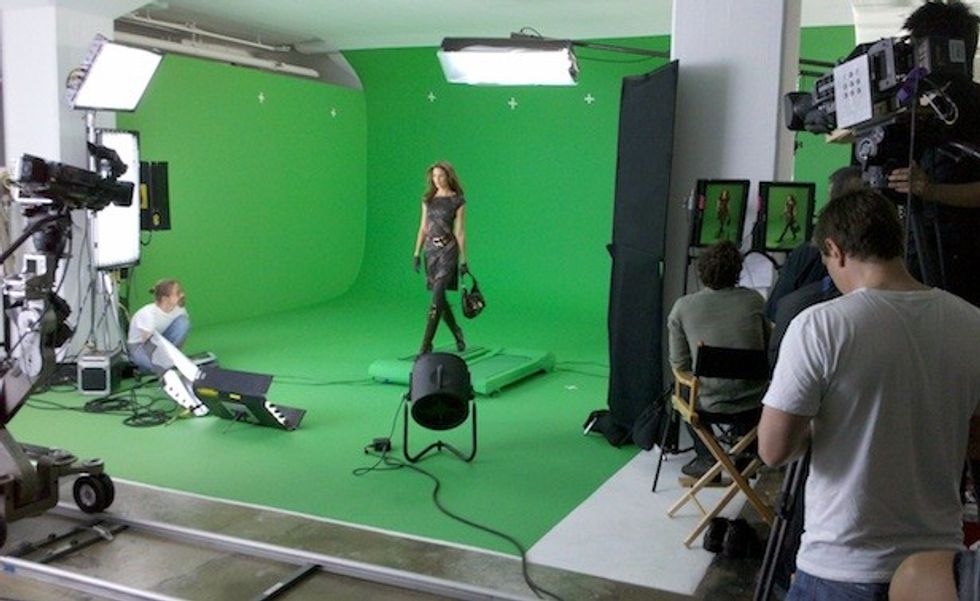
I was recently hired to be the A Camera operator on a fashion shoot for a company that will go unnamed. I'm not trying to be mysterious -- they had me sign a Non Disclosure Agreement, so I'm erring on the side of caution. Actually, posting nothing at all would probably be erring on the side of caution, but there were too many expensive tools and newfangled gadgets being put to use on the shoot for me not to share. As an indie used to low-budget DSLR shoots, getting my hands on a $200k camera was quite the departure.
The problem with signing NDAs is they are generally non-specific, so there's no discussion of what can be disclosed and what constitutes a breach of the agreement. I'm going to assume that no one cares if I talk about the equipment we used on the shoot and the overall technical approach. Everyone will remain anonymous and I'll be sure to not focus on the clothing itself, as perhaps these companies want to keep their upcoming lineups under wraps (which would be the only justification I could see for the NDA).
The setup
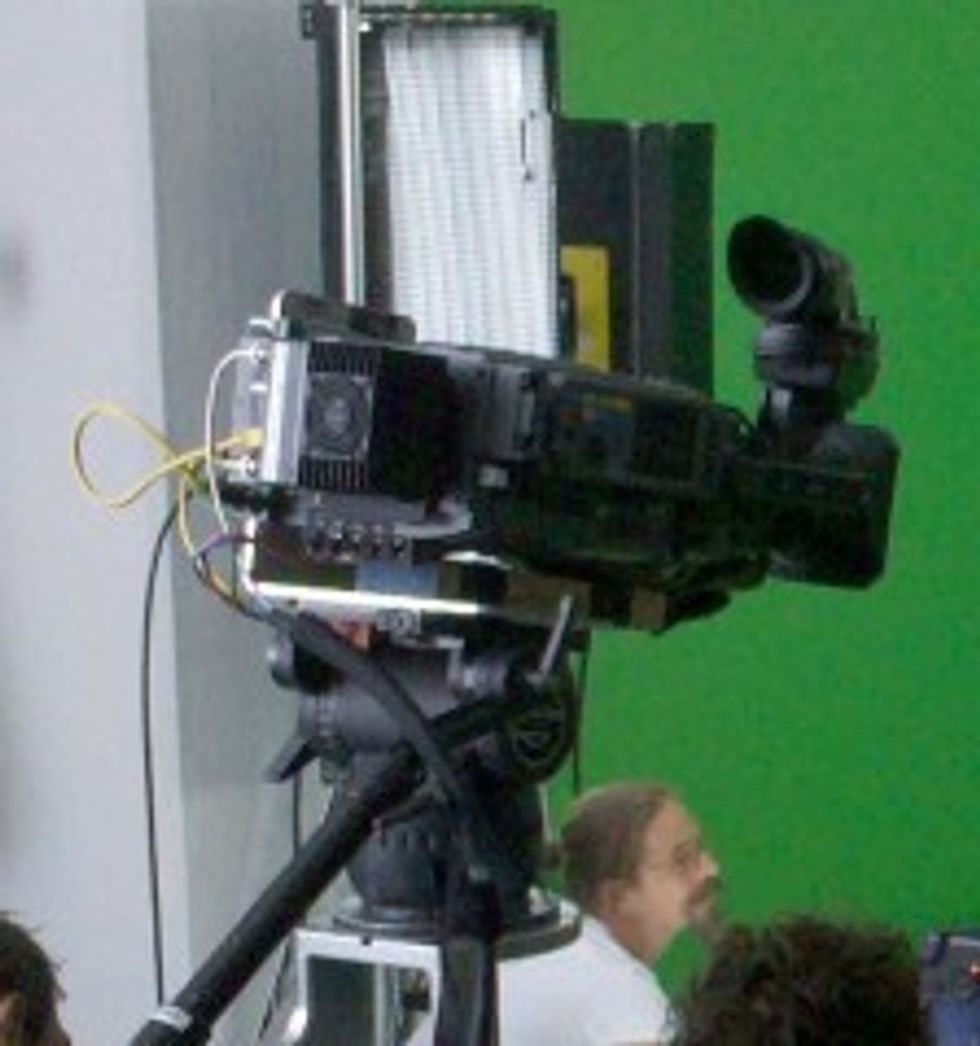 As you can see, we were shooting on a green screen. It's not quite an infinity cyc, where they corner is seamless and smooth, but the B and C cameras were fixed, and the A camera wasn't dollying past the point where the seam in the screen would often come into play. I was hired to operate the dolly cam seen at left, except it turned out the DP was also an operator, which left me without a job; I ended up data wrangling, as the data wrangler was pulled into more of a script supervision role (these things happen). I did do the equipment check out the the day before, however, and got a fair amount of face time with the camera (enough to realize that I hadn't shot with full-size cams in quite some time). If you look at the image at left (apologies for the quality of the cell-phone pics), you'll notice something out of the ordinary: the camera is on its side. To give the post house more resolution and flexibility, we shot with the cameras canted to the side 90 degrees, mounting them on L-brackets in order to frame the models head to toe (you can see this in the image up top on the right). Another method to mount the cameras sideways would've been to use a dutch head, but's it's rare that anyone has a need for three of them simultaneously, so they weren't easy to track down; it was easier to go with the brackets.
The camera
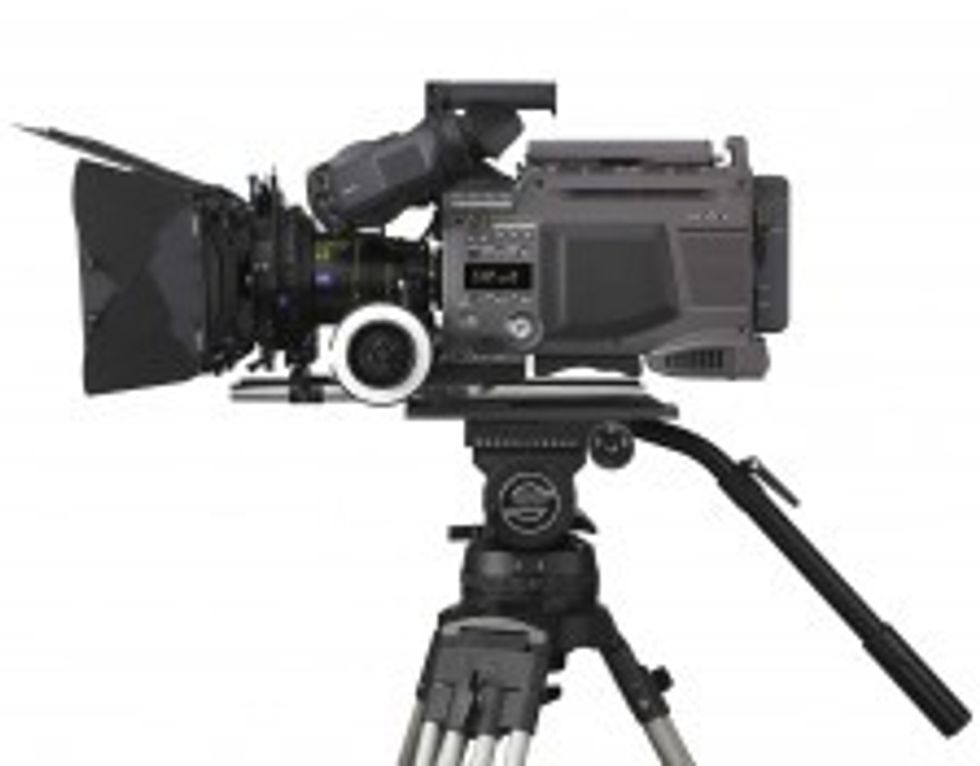 For this shoot, we used three Sony SRW-9000 camcorders. The body alone retails for $75k, so once you add on the lens, viewfinder, power supply, 4:4:4 expansion board, etc. the package is well into six figures. Of course, it's still significantly cheaper than the Sony F23, and produces equally excellent images (the 9000 is newer). The SRW-9000 has three 2/3" CCDs, which don't give you a particularly shallow depth-of-field, but as far as the fidelity of the image goes, they're amazing cameras. Sony's myriad Hypergamma settings pull in a lot of shadow detail and smoothly roll off the highlights. As an ungraded image coming off the sensor, I'm not a huge fan of the look -- it's very video-y, and I find that most projects shooting green screen leave the image too close to its initial appearance (chief example in my book: Speed Racer) -- but from a technical standpoint these cameras are impressive.
We shot on HDCAM SR tape at 1080p/23.98fps, 4:2:2. Because we usually had one camera running at 50p, data wrangling was a bit more complicated than it would've been otherwise; due to the varying tape speed, cameras were running out at different intervals and I had to actually use my brain to label the tapes correctly (timecode sync was also more of an issue because of the different frame rates).
Video village
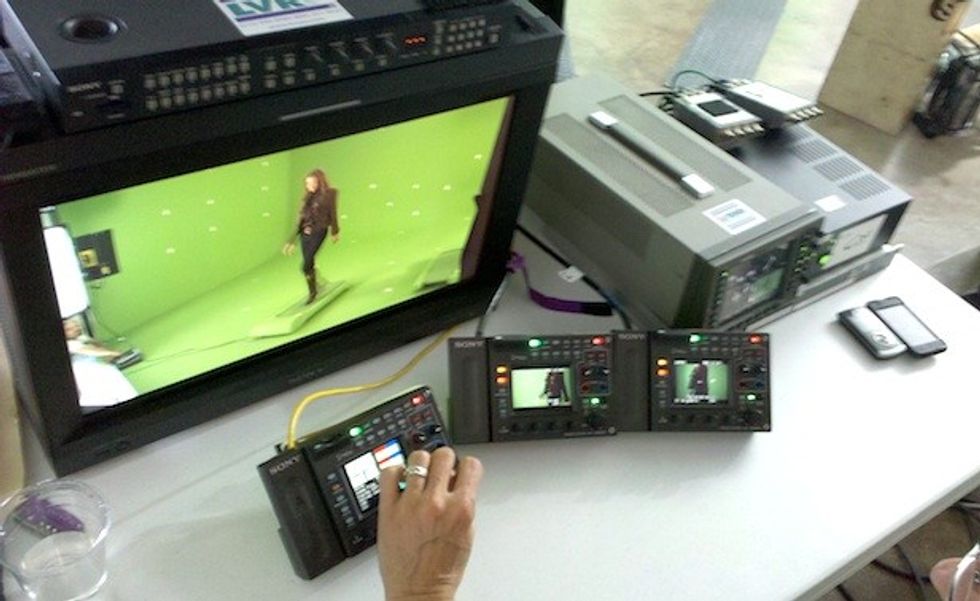
"Video village" is becoming a lot more than just a place where technicians monitor the image and the director watches the monitor. In fact, the Sony RMB-750 "paintbox" (of which a trio are seen above) allows the DIT to do just about everything shy of move the camera remotely (for that, you'd need a motion control rig): adjust exposure, gamma settings, and of course roll tape -- most of the tasks that used to be under a camera operator's purview. On run-and-gun shoots, of course, this workflow would be nigh impossible, but in a multi-camera, on-set environment like this, hanging out by video village definitely made me realize how much further cinematography is moving towards being more of a technical acquisition task (i.e., capturing the image flat and give the post house more control over the actual look). I should note that the above is a picture of only the DIT's hovel -- the director and others actually had a separate video village, which you can see in the top image on the right.
Green screen
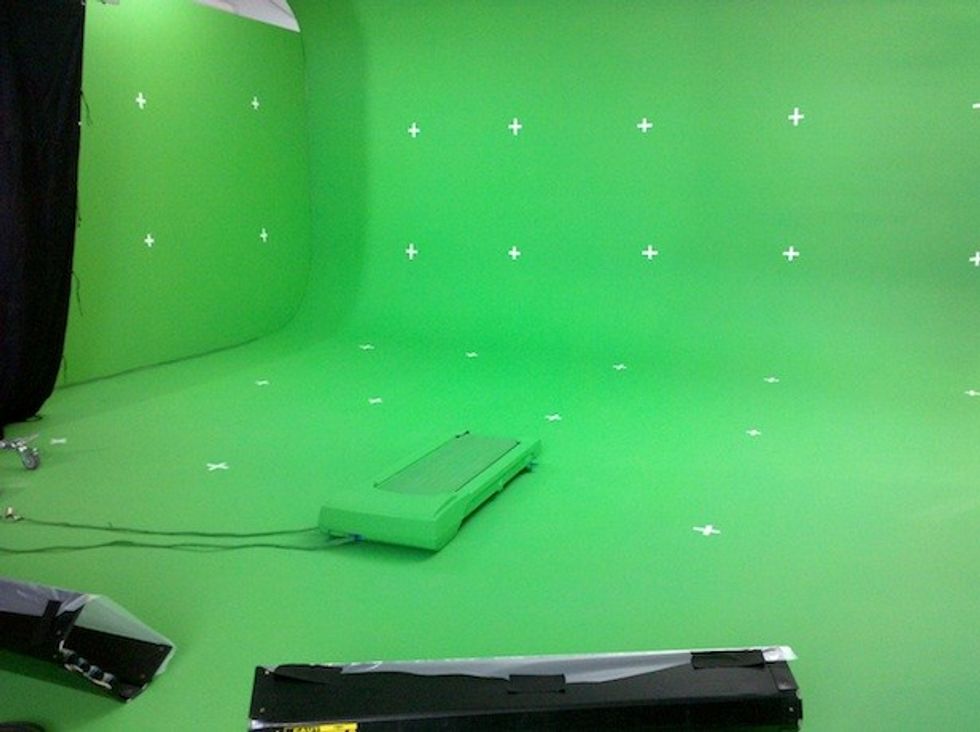
The models were walking on a painted green treadmill. It goes without saying, but everything but the girl (isn't that a band?) will be replaced in post. I chatted briefly with the VFX supervisor, and they're going to be using After Effects aided by the plugins PFTrack and boujou. The white masking tape Xs are for match moving -- they give the software better motion and depth cues. The important thing when placing the Xs is to try to avoid letting them run up against difficult areas to key (like someone's hair, or a piece of translucent clothing).
- Go Behind the Scenes of Some 2020 movies ›
- You Can Now Use Runway’s AI Editor to Add a Range of Precise Camera Controls | No Film School ›
- Why is Runway Actually Partnering With IMAX to Present an AI Film Festival? | No Film School ›
- You Won't Believe How Easy it is for AI to Manipulate These Light Sources | No Film School ›