In the world of digital content distribution, things are changing so quickly that if you blink, you miss it. With iTunes and iOS, Apple is the 800 lb gorilla in the room, and ever since the iPad became the fastest-selling gadget in history, the elephant in the room (too many analogous animals in the room now?) has been magazine subscriptions. The iPad has the perfect form-factor for reading magazines -- I personally like the Kindle more for reading books -- but until now, Apple didn't offer a standardized method of "subscribing" to a magazine. Until now. And as it turns out, Apple's new subscription terms are going to govern far more than magazine subscriptions, but applications sales, video distribution, and more.
The gist of it:
Apple® today announced a new subscription service available to all publishers of content-based apps on the App Store℠, including magazines, newspapers, video, music, etc... Subscriptions purchased from within the App Store will be sold using the same App Store billing system that has been used to buy billions of apps and In-App Purchases. Publishers set the price and length of subscription (weekly, monthly, bi-monthly, quarterly, bi-yearly or yearly). Then with one-click, customers pick the length of subscription and are automatically charged based on their chosen length of commitment (weekly, monthly, etc.). Customers can review and manage all of their subscriptions from their personal account page, including canceling the automatic renewal of a subscription. Apple processes all payments, keeping the same 30 percent share that it does today for other In-App Purchases.
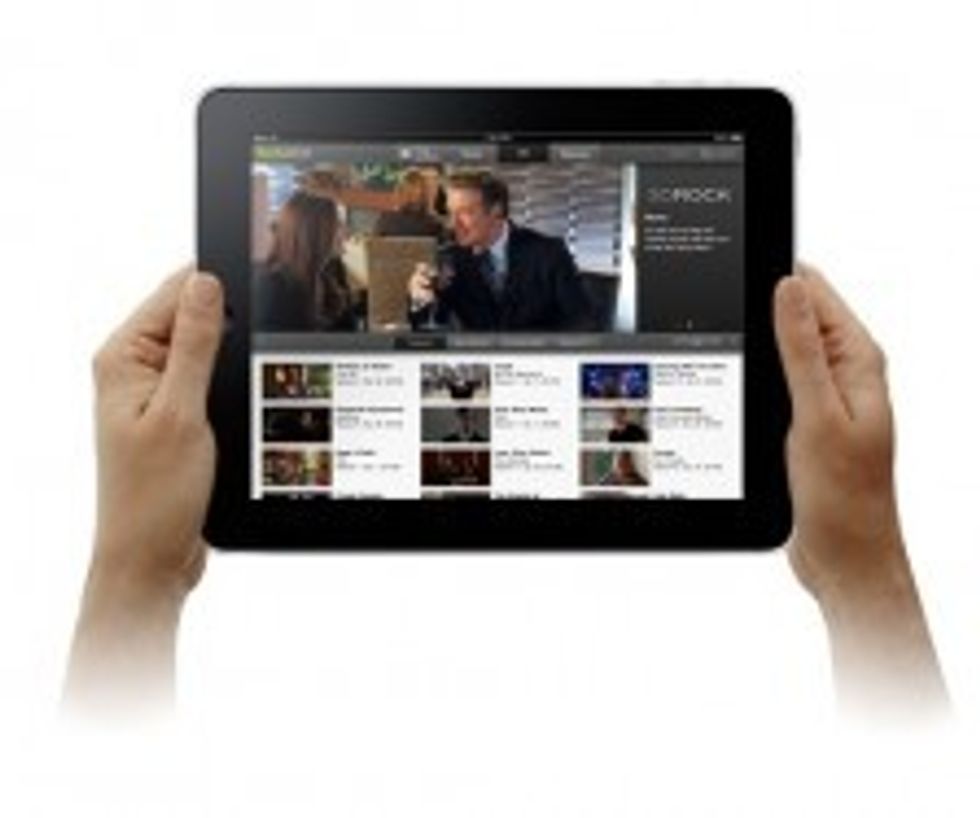 Pretty straightforward, right? Now anyone selling content through the App Store can roll out a paid subscription without the hassle of setting up their own billing and delivery mechanisms. The hope is that iOS users (and others in the iTunes ecosystem) will get accustomed to paying for content again, moving away from the "everything is free" internet-based model of the past decade, and allowing publishers small and large to earn more than the pittance they were through serving ads. As content creators, we should cautiously, optimistically, rejoice. A web series -- like, say my own show The West Side -- could actually charge money for a "season pass" in an intuitive and viable manner, without having to jump through hoops to get listed in the TV section of iTunes. No longer is episodic video content restricted to the ad-based business model (or no business model, as was the case with TWS). This could be as big a deal for independent filmmakers and multimedia artists as it is for magazine-publishing conglomerates.
Not all is roses, however. First of all, Apple is setting a precedent, which is they take 30% off the top of everything. Not just app purchases, as we're already accustomed to, but also subscription-based services or in-app purchases that were previously allowed to skirt the middle man. Many publishers would therefore be motivated to set up their own billing and delivery mechanisms, and serve content outside the App Store in order to keep the extra 30%. They could even charge less using their own methods, right? A $10 subscription purchased through the App Store would net the publisher the same amount as if they charged $7 on their own (credit-card processing fees aside), so why wouldn't a would-be Rupert Murdoch set up their own web site and offer an $8 subscription instead? Well, that's where the rest of Apple's announcement comes in. Because many magazine publishers already have their own subscription/payment ecosystems set up, here's Apple's take on differentiating between the two, via Steve Jobs himself:
“Our philosophy is simple—when Apple brings a new subscriber to the app, Apple earns a 30 percent share; when the publisher brings an existing or new subscriber to the app, the publisher keeps 100 percent and Apple earns nothing. All we require is that, if a publisher is making a subscription offer outside of the app, the same (or better) offer be made inside the app, so that customers can easily subscribe with one-click right in the app.”
Well, that makes sense -- Apple is allowing developers to continue to run their own stores, as long as they don't lower the price by 30% in order to entice customers to buy direct and cut out the middleman (Apple), as I'd just mentioned. But get this:
Apple does require that if a publisher chooses to sell a digital subscription separately outside of the app, that same subscription offer must be made available, at the same price or less, to customers who wish to subscribe from within the app. In addition, publishers may no longer provide links in their apps (to a web site, for example) which allow the customer to purchase content or subscriptions outside of the app.
 Apple is requiring that publishers don't tell customers that they can subscribe elsewhere; in other words, as far as anyone in iOS knows, the Apple way is the only way. So, would a company like Netflix, who offers a free iOS app, be required to turn over 30% of every dollar to Apple? Only if they offered a way for subscribers to sign up through iOS, it turns out. Because Netflix signs all of its customers up exclusively through its web site, they get a pass on the 30% Apple tax. This is getting a bit byzantine for a company like Apple, who constantly touts simplicity as a virtue. Still, I expect this new subscription mechanism to be a boon for independents, simply because it gives us an elegant and trusted way to charge for periodic/episodic content. My in-development transmedia murder mystery 3rd Rail, for example, could benefit hugely from this system, and I wouldn't mind turning 30% over to Apple in exchange for access to 150 million iOS customers.
However, at TechCrunch, Jason Kincaid makes some great points, about how the iOS ecosystem will grow to permeate all things Apple, and how this affects not only app subscriptions, but also things like Kindle books.
Not coincidentally, as soon as Apple announced their new subscription model, Google announced One Pass, a kindler, gentler, and likely to be less-adopted subscription enabler:
Why is it kindler and gentler? Because Google will only be taking a 10% cut, instead of Apple's 30%. At the end of the day, that's quite the difference -- with $1 million of revenue, a publisher would take home an extra $200,000 in the Google system, which is a few extra full-time staff positions for some publishers. Of course, that would be assuming the same sales figures. And not everything about Google's system is more friendly, as it turns out. There is another key difference between Google and Apple's subscription systems: Google's is opt-out, and Apple's is opt-in. What this means is, by default, Google will share your personal information with the publishers, whereas Apple will not unless you explicitly grant them permission to do so. In the world of magazines, personal information -- which publishers use for marketing purposes -- is solid gold. Still, the 90/10 split and friendlier (to publishers) information sharing may not be enough to launch Google's subscription system. Google may be the king of all things advertising and search, but Checkout still lags far behind Paypal, and until they can build a better content store for Android, they aren't nearly the player in content distribution that Apple is. Regardless, here are the deets:
By providing a system for user authentication, payment processing, and administration, Google One Pass lets publishers focus on creating high quality content for their readers. Publishers have flexibility over payment models and control over the digital content for which they charge and the content that is free for consumers. Google One Pass is easy to implement and simple to manage. The set up is minimal and content will be managed through a simple online interface, so publishers can try out different approaches to selling content with minimal development cost and see what works for their business.
Online content distribution deals
 As if the above subscription systems from two of the largest companies in America weren't evidence enough that online content distribution is changing rapidly, a couple of other recent deals caught my eye. The first just took place: the esteemed Criterion Collection announced that they were making their 800 films available on Hulu's paid (but not ad-free) service, Hulu Plus. Indie film buffs were all set to rejoice, given Criterion has one of the best libraries of classic and foreign films in existence. But then came news that their availability on Hulu Plus would come at the expense of Netflix, and one can't help but wonder if this is a harbinger of things to come for Netflix, whose streaming library has grown to date often through back-door deals that won't last forever. Up until now it's been fairly easy to differentiate Hulu Plus from Netflix: the former had a better selection of more recent TV shows, the latter had more feature films. But with this one move, Hulu's looking to make it a two-horse race for membership-based online film libraries. You can bet they won't be offering a "subscribe" button in their iOS app, however, as they'd then have to turn over $2.40 of their $8 subscription fee to Apple, every month, in perpetuity.
 The other deal that jumped out at me was AOL buying the Huffington Post for $315 million, which in my guesstimation was a good deal for AOL. We've come a long way since AOL bought Weblogs, Inc. (who I was writing for at the time, until DVguru was axed) for $25 million. By most accounts that acquisition has gone well for AOL, and at this point in time, no one's combining trashy SEO-friendly linkbait with quality writing from high-paid journalists as capably as Arianna and company. But the timing is interesting, given many publishers are scrambling to find a business model for paid subscriptions (Rupert Murdoch's The Daily was Apple's flagship launch publication), while The Huffington Post seems to have perfected the ad-based model.
Is this good for independent content creators?
Ultimately, the Apple story is the big story, and it's the same tale that you hear over and over again in a profit-driven, shareholder-based corporate world. Why did Apple decide to demand 30% of every transaction that takes place in their iOS ecosystem? Because they can. As a result, many are going to complain. But as I said earlier, I think Apple's new subscription model is going to be good for independents -- application programmers, game developers, filmmakers, writers, photographers, multimedia artists, and transmedia architects -- because up until now, we would've loved to hand over 30% to someone in an exchange for a business model that actually worked. 30% of nothing is nothing. And as it is, for the past decade anyone who's been distributing content online with an ad-based model has been handing over 32% to Google. As independent content creators, we now have two divergent paths: the free, ad-supported model, and the premium, paid-subscription model. To date, the only viable online content distribution strategy was the former, and it's great to have an alternative.
Related Links:
- Apple Launches Subscriptions on the App Store
- Apple’s Big Subscription Bet: Brilliant, Brazen, Or Batsh*t Crazy?
- Why Are You People Defending Apple?
- The Media Industry’s Biggest Fear: How Do We Know Next Year Apple Won’t Be Taking 50%?
- More on Netflix, Criterion, and Hulu
- The Criterion Collection on Hulu Plus