<?xml version="1.0" encoding="UTF-8"?><rss version="2.0"
	xmlns:content="http://purl.org/rss/1.0/modules/content/"
	xmlns:dc="http://purl.org/dc/elements/1.1/"
	xmlns:atom="http://www.w3.org/2005/Atom"
	xmlns:sy="http://purl.org/rss/1.0/modules/syndication/"
	xmlns:media="http://search.yahoo.com/mrss/"	>
<channel>
	<title>Comments on: Polaroid, Technicolor, Kodak: With the Branded Beast Extinct, What Becomes of the Brand?</title>
	<atom:link href="http://nofilmschool.com/2013/01/polaroid-technicolor-kodak-first-mft-camera/feed/" rel="self" type="application/rss+xml" />
	<link>http://nofilmschool.com/2013/01/polaroid-technicolor-kodak-first-mft-camera/</link>
	<description>read, discuss, learn: free film school for all</description>
	<lastBuildDate>Thu, 23 May 2013 16:34:01 +0000</lastBuildDate>
	<sy:updatePeriod>hourly</sy:updatePeriod>
	<sy:updateFrequency>1</sy:updateFrequency>
	<generator>http://wordpress.org/?v=3.5.1</generator>
	<item>
		<title>By: amber3000</title>
		<link>http://nofilmschool.com/2013/01/polaroid-technicolor-kodak-first-mft-camera/comment-page-1/#comment-327511</link>
		<dc:creator>amber3000</dc:creator>
		<pubDate>Sat, 23 Feb 2013 20:21:02 +0000</pubDate>
		<guid isPermaLink="false">http://nofilmschool.com/?p=40696#comment-327511</guid>
		<description><![CDATA[Yes the right words would be better... &#039;cause your not getting his point Thunderbolt]]></description>
		<content:encoded><![CDATA[<p>Yes the right words would be better&#8230; &#8217;cause your not getting his point Thunderbolt</p>
]]></content:encoded>
	</item>
	<item>
		<title>By: ThunderBolt</title>
		<link>http://nofilmschool.com/2013/01/polaroid-technicolor-kodak-first-mft-camera/comment-page-1/#comment-313357</link>
		<dc:creator>ThunderBolt</dc:creator>
		<pubDate>Fri, 01 Feb 2013 23:02:21 +0000</pubDate>
		<guid isPermaLink="false">http://nofilmschool.com/?p=40696#comment-313357</guid>
		<description><![CDATA[The entire post is off and not well researched, sorry Dave. The right words, context and facts would have gone a long way.]]></description>
		<content:encoded><![CDATA[<p>The entire post is off and not well researched, sorry Dave. The right words, context and facts would have gone a long way.</p>
]]></content:encoded>
	</item>
	<item>
		<title>By: c.d.embrey</title>
		<link>http://nofilmschool.com/2013/01/polaroid-technicolor-kodak-first-mft-camera/comment-page-1/#comment-313295</link>
		<dc:creator>c.d.embrey</dc:creator>
		<pubDate>Fri, 01 Feb 2013 20:55:44 +0000</pubDate>
		<guid isPermaLink="false">http://nofilmschool.com/?p=40696#comment-313295</guid>
		<description><![CDATA[What no-one is mentioning is that the new Kodak camera is NOT made by Kodak and Kodak will make NO PROFIT from the cameras that are sold. Kodak&#039;s profit was made by selling their name to another company. The NEW camera company could just as well bought the name Oldsmobile from General Motors. And sold their low-end camera line as Oldsmobile 88s and the high-end line as Oldsmobile 98s 8-)

Polariod is also another NEW company that bought the name after the original company went out of business.

Technicolor is still Technicolor. No-one has bought their name. Do you know about their satelitte distribution of movies?? http://www.technicolor.com/uploads/associated_materials/technicolor_satellite_distribution_system.pdf]]></description>
		<content:encoded><![CDATA[<p>What no-one is mentioning is that the new Kodak camera is NOT made by Kodak and Kodak will make NO PROFIT from the cameras that are sold. Kodak&#8217;s profit was made by selling their name to another company. The NEW camera company could just as well bought the name Oldsmobile from General Motors. And sold their low-end camera line as Oldsmobile 88s and the high-end line as Oldsmobile 98s 8-)</p>
<p>Polariod is also another NEW company that bought the name after the original company went out of business.</p>
<p>Technicolor is still Technicolor. No-one has bought their name. Do you know about their satelitte distribution of movies?? <a href="http://www.technicolor.com/uploads/associated_materials/technicolor_satellite_distribution_system.pdf" rel="nofollow">http://www.technicolor.com/uploads/associated_materials/technicolor_satellite_distribution_system.pdf</a></p>
]]></content:encoded>
	</item>
	<item>
		<title>By: web</title>
		<link>http://nofilmschool.com/2013/01/polaroid-technicolor-kodak-first-mft-camera/comment-page-1/#comment-312630</link>
		<dc:creator>web</dc:creator>
		<pubDate>Thu, 31 Jan 2013 23:50:59 +0000</pubDate>
		<guid isPermaLink="false">http://nofilmschool.com/?p=40696#comment-312630</guid>
		<description><![CDATA[Why companies make such bad products?
It&#039;s the MANAGEMENT.

There are superb designers to be had in most companies but it&#039;s the &#039;management&#039; who decides which way to proceed and which model to produce is a bad call, well, that&#039;s what you have. 
Steve Jobs was the management at Apple.
He knew what product to develop and market. He had full control over what was to be approved.

Kodak, Pola.. and the rest of them including Microsoft can&#039;t come up with a decent hardware because they have idiots decide which one to market. MS has great designers and tons of money but they don&#039;t let them do what&#039;s needed. 
Ya think Steve Balmer has something to do with that?
Heheh.

Come to think of it, a lot of companies are like that. They had the capability, money to do the first iPhone and I-whatever and no one had the guts but Steve Jobs. Am not defending Apple (don&#039;t own i-anything) but seeing it as is and Jobs was good at it.

Remember Bell and Howell (sic?) 
They sold their name and branding really crappy stuff and totally embarrassed to even see it, let alone buy anything under that name. Same is happening with Polaroid. They sold their name. 

Kodak would do better to sell everything and make film only. That would be a very tiny business but it would be suitable for better profit margin. Or... just sell the name because these brands are really dead. Current generation has no clue who are these companies.
Just sayin&#039;]]></description>
		<content:encoded><![CDATA[<p>Why companies make such bad products?<br />
It&#8217;s the MANAGEMENT.</p>
<p>There are superb designers to be had in most companies but it&#8217;s the &#8216;management&#8217; who decides which way to proceed and which model to produce is a bad call, well, that&#8217;s what you have.<br />
Steve Jobs was the management at Apple.<br />
He knew what product to develop and market. He had full control over what was to be approved.</p>
<p>Kodak, Pola.. and the rest of them including Microsoft can&#8217;t come up with a decent hardware because they have idiots decide which one to market. MS has great designers and tons of money but they don&#8217;t let them do what&#8217;s needed.<br />
Ya think Steve Balmer has something to do with that?<br />
Heheh.</p>
<p>Come to think of it, a lot of companies are like that. They had the capability, money to do the first iPhone and I-whatever and no one had the guts but Steve Jobs. Am not defending Apple (don&#8217;t own i-anything) but seeing it as is and Jobs was good at it.</p>
<p>Remember Bell and Howell (sic?)<br />
They sold their name and branding really crappy stuff and totally embarrassed to even see it, let alone buy anything under that name. Same is happening with Polaroid. They sold their name. </p>
<p>Kodak would do better to sell everything and make film only. That would be a very tiny business but it would be suitable for better profit margin. Or&#8230; just sell the name because these brands are really dead. Current generation has no clue who are these companies.<br />
Just sayin&#8217;</p>
]]></content:encoded>
	</item>
	<item>
		<title>By: ThunderBolt</title>
		<link>http://nofilmschool.com/2013/01/polaroid-technicolor-kodak-first-mft-camera/comment-page-1/#comment-312555</link>
		<dc:creator>ThunderBolt</dc:creator>
		<pubDate>Thu, 31 Jan 2013 21:31:20 +0000</pubDate>
		<guid isPermaLink="false">http://nofilmschool.com/?p=40696#comment-312555</guid>
		<description><![CDATA[Dave, while your post is actually topical, I think you&#039;re missing some important nuggets that provide greater clarity. Brand Identity used to be able to carry weight, but only if a company and it&#039;s culture is based on innovation. Your post doesn&#039;t take this into consideration and it&#039;s the most important component to make sense of what you&#039;re thinking and trying to convey. Distinct examples of entities that have succeeded through innovation would have also provided substance to the point you are trying to make.

Your quote: &quot;Can staying power predict future lifespan? The answer is a terrifying “maybe,” and in the cases where the answer is “yes,” it’s usually because of adaptation in conjunction with the weight a brand may have to throw around. This can occur even (or especially) on the crutches of adversity — IBM is a powerful example in consumer tech. These are some of the approaches Polaroid, Technicolor, and Kodak are taking to stay relevant.&quot;

Staying power implies success. Are you saying that success predicts future lifespan? If so, why ask the question? If you meant would brand recognition predict future lifespan, the answer would be no. Brand predicts nothing. It only represents a company and/or product.

Adaption refers to; a 2002 movie, biology, disambiguation, film scripts and a few others. To replace and use the word &quot;adapting&quot; also is a miss as this relates technology that is in step with current trends. None of your example companies can survive without one thing - INNOVATION. IBM once was an example of consumer tech. Now it&#039;s an example of services with Lenovo owning their once popular consumer space. Better example would be Oracle, Google and dare I say it, Apple. 

Polaroid and Kodak are no longer relevant and will never come back. In the mid 1980&#039;s Kodak took over a small company called Spin Physics that pioneered hyper-fast video capture for scientific use. This could have turned into Kodak owning much of the market share in today&#039;s prosumer world. Kodak in from 1982 through the 1990&#039;s lost a great deal of market share to Fuji and Ilford for not being as innovative in paper and film. Consider the days of the horse drawn carriage at the dawn of automobiles becoming affordable. Anyone that was in the buggy whip business would have to innovate when the market clearly was moving toward auto parts. Technicolor on the other hand was and still is about technical services. Short term they exist, long term they will exist by being innovative in creating software that that compliments video production. 

Choosing the right words and phrases will get your point across. I can see where you wanted to go with this, but it would need more thought and context.]]></description>
		<content:encoded><![CDATA[<p>Dave, while your post is actually topical, I think you&#8217;re missing some important nuggets that provide greater clarity. Brand Identity used to be able to carry weight, but only if a company and it&#8217;s culture is based on innovation. Your post doesn&#8217;t take this into consideration and it&#8217;s the most important component to make sense of what you&#8217;re thinking and trying to convey. Distinct examples of entities that have succeeded through innovation would have also provided substance to the point you are trying to make.</p>
<p>Your quote: &#8220;Can staying power predict future lifespan? The answer is a terrifying “maybe,” and in the cases where the answer is “yes,” it’s usually because of adaptation in conjunction with the weight a brand may have to throw around. This can occur even (or especially) on the crutches of adversity — IBM is a powerful example in consumer tech. These are some of the approaches Polaroid, Technicolor, and Kodak are taking to stay relevant.&#8221;</p>
<p>Staying power implies success. Are you saying that success predicts future lifespan? If so, why ask the question? If you meant would brand recognition predict future lifespan, the answer would be no. Brand predicts nothing. It only represents a company and/or product.</p>
<p>Adaption refers to; a 2002 movie, biology, disambiguation, film scripts and a few others. To replace and use the word &#8220;adapting&#8221; also is a miss as this relates technology that is in step with current trends. None of your example companies can survive without one thing &#8211; INNOVATION. IBM once was an example of consumer tech. Now it&#8217;s an example of services with Lenovo owning their once popular consumer space. Better example would be Oracle, Google and dare I say it, Apple. </p>
<p>Polaroid and Kodak are no longer relevant and will never come back. In the mid 1980&#8242;s Kodak took over a small company called Spin Physics that pioneered hyper-fast video capture for scientific use. This could have turned into Kodak owning much of the market share in today&#8217;s prosumer world. Kodak in from 1982 through the 1990&#8242;s lost a great deal of market share to Fuji and Ilford for not being as innovative in paper and film. Consider the days of the horse drawn carriage at the dawn of automobiles becoming affordable. Anyone that was in the buggy whip business would have to innovate when the market clearly was moving toward auto parts. Technicolor on the other hand was and still is about technical services. Short term they exist, long term they will exist by being innovative in creating software that that compliments video production. </p>
<p>Choosing the right words and phrases will get your point across. I can see where you wanted to go with this, but it would need more thought and context.</p>
]]></content:encoded>
	</item>
	<item>
		<title>By: CP</title>
		<link>http://nofilmschool.com/2013/01/polaroid-technicolor-kodak-first-mft-camera/comment-page-1/#comment-312532</link>
		<dc:creator>CP</dc:creator>
		<pubDate>Thu, 31 Jan 2013 21:15:28 +0000</pubDate>
		<guid isPermaLink="false">http://nofilmschool.com/?p=40696#comment-312532</guid>
		<description><![CDATA[The opportunity is there for some company that knows manufacturing, optics, and digital sensors to produce an ideal motion picture camera at the $3000 price point, a machine with full easy manual control that serious users want and need.  Nikon could do it,and  Kodak and Polaroid could have done it.  They have in common what killed Ampex, at one time the world leader in video recording.  To move on, they would have had to make obsolete their successful dominant products.  But all of these companies are full of people who only know how to keep their jobs and have no clue about providing real value.  Besides engineering expertise, it takes what Steve Jobs had, the willingness to move their customers to a new paradigm and cut the ties to the old, FCPX being the most current example.]]></description>
		<content:encoded><![CDATA[<p>The opportunity is there for some company that knows manufacturing, optics, and digital sensors to produce an ideal motion picture camera at the $3000 price point, a machine with full easy manual control that serious users want and need.  Nikon could do it,and  Kodak and Polaroid could have done it.  They have in common what killed Ampex, at one time the world leader in video recording.  To move on, they would have had to make obsolete their successful dominant products.  But all of these companies are full of people who only know how to keep their jobs and have no clue about providing real value.  Besides engineering expertise, it takes what Steve Jobs had, the willingness to move their customers to a new paradigm and cut the ties to the old, FCPX being the most current example.</p>
]]></content:encoded>
	</item>
	<item>
		<title>By: dixter</title>
		<link>http://nofilmschool.com/2013/01/polaroid-technicolor-kodak-first-mft-camera/comment-page-1/#comment-312368</link>
		<dc:creator>dixter</dc:creator>
		<pubDate>Thu, 31 Jan 2013 17:56:21 +0000</pubDate>
		<guid isPermaLink="false">http://nofilmschool.com/?p=40696#comment-312368</guid>
		<description><![CDATA[Maybe they should all merge into one company. They could call it PoKoTech or KodaTechAroid or KodaPolaColor or... OK, how about just KPT?]]></description>
		<content:encoded><![CDATA[<p>Maybe they should all merge into one company. They could call it PoKoTech or KodaTechAroid or KodaPolaColor or&#8230; OK, how about just KPT?</p>
]]></content:encoded>
	</item>
	<item>
		<title>By: Jorge Cayon</title>
		<link>http://nofilmschool.com/2013/01/polaroid-technicolor-kodak-first-mft-camera/comment-page-1/#comment-312330</link>
		<dc:creator>Jorge Cayon</dc:creator>
		<pubDate>Thu, 31 Jan 2013 17:01:39 +0000</pubDate>
		<guid isPermaLink="false">http://nofilmschool.com/?p=40696#comment-312330</guid>
		<description><![CDATA[It&#039;s saddening that great brands with huge history in our trade are suffering financially. But quite honestly I don&#039;t understand how they failed to see their own demise. Polaroid from the get go was a niche that provided a real life on the spot &quot;instagram&quot;. Imagine having only one copy of a great memory at an event. Sure you could pass said photo to others after you&#039;ve waved it around in order to &quot;develop&quot; it. But it&#039;s only one copy, and limited into what you can really archive. Nowadays, people snap a decent photo, upload, share and are content. Why spend money on expensive cartridges limited to 10 snaps in order to print on the spot. They didn&#039;t adapt in a free market driven by consumers. They should&#039;ve invented an app similar to instagram, before them.

Technicolor, for all it&#039;s worth and innovations in our cinematic history, failed to adapt. As huge and innovative as they are why didn&#039;t they come up with the industry standard for &quot;The Proffessional Codec&quot;? I mean the sudden drop for those using film stock over digital wasn&#039;t overnight. Someone gets a licensing right to H.264 or ProRes, think of the royalty checks to the engineers. It&#039;s great that they got with Canon and made a cute little profile for their cameras. But honestly for the money and the way things are with technology, I have better options than Canon, for me. I sold my 5DMK2 six months after the GH2 came out. It cost me less to operate, and my clients couldn&#039;t really tell the difference in my work at first. But as soon as the hacks started to stabilize I picked a few I liked and they noticed the differences right away. But I digress, it was an example of a business decision as a filmmaker that shows we should always go for whats best, for us. Technicolor failed to adapt by creating an industry accepting recording/playback codec suitable for our needs, like ProRes, .R3D, DNxHD, etc.

Kodak, kinda falls into a different category, but sorta hurts the most because they&#039;ve been around since the early days. Their history in cinema and photography is huge. But, they also failed to adapt. The list for them would be very long. 

I&#039;d like to think because of their failures to adapt we&#039;ve received so many technological innovations in our craft. Filmmaking is quite honestly one of the most difficult yet rewarding careers. The end result for me is what always keeps me going. Knowing that I don&#039;t have to &quot;pay to play&quot; with the big boys anymore is nuts. Today just about anyone can make a film and express themselves to world and find an audience. As an artist this is huge for me. I started off as a filmmaker using film, and I loved it for what it was. But like girlfriends past, I&#039;ve moved on. 

I hope these brands can survive, but if not at least their history will always be around.]]></description>
		<content:encoded><![CDATA[<p>It&#8217;s saddening that great brands with huge history in our trade are suffering financially. But quite honestly I don&#8217;t understand how they failed to see their own demise. Polaroid from the get go was a niche that provided a real life on the spot &#8220;instagram&#8221;. Imagine having only one copy of a great memory at an event. Sure you could pass said photo to others after you&#8217;ve waved it around in order to &#8220;develop&#8221; it. But it&#8217;s only one copy, and limited into what you can really archive. Nowadays, people snap a decent photo, upload, share and are content. Why spend money on expensive cartridges limited to 10 snaps in order to print on the spot. They didn&#8217;t adapt in a free market driven by consumers. They should&#8217;ve invented an app similar to instagram, before them.</p>
<p>Technicolor, for all it&#8217;s worth and innovations in our cinematic history, failed to adapt. As huge and innovative as they are why didn&#8217;t they come up with the industry standard for &#8220;The Proffessional Codec&#8221;? I mean the sudden drop for those using film stock over digital wasn&#8217;t overnight. Someone gets a licensing right to H.264 or ProRes, think of the royalty checks to the engineers. It&#8217;s great that they got with Canon and made a cute little profile for their cameras. But honestly for the money and the way things are with technology, I have better options than Canon, for me. I sold my 5DMK2 six months after the GH2 came out. It cost me less to operate, and my clients couldn&#8217;t really tell the difference in my work at first. But as soon as the hacks started to stabilize I picked a few I liked and they noticed the differences right away. But I digress, it was an example of a business decision as a filmmaker that shows we should always go for whats best, for us. Technicolor failed to adapt by creating an industry accepting recording/playback codec suitable for our needs, like ProRes, .R3D, DNxHD, etc.</p>
<p>Kodak, kinda falls into a different category, but sorta hurts the most because they&#8217;ve been around since the early days. Their history in cinema and photography is huge. But, they also failed to adapt. The list for them would be very long. </p>
<p>I&#8217;d like to think because of their failures to adapt we&#8217;ve received so many technological innovations in our craft. Filmmaking is quite honestly one of the most difficult yet rewarding careers. The end result for me is what always keeps me going. Knowing that I don&#8217;t have to &#8220;pay to play&#8221; with the big boys anymore is nuts. Today just about anyone can make a film and express themselves to world and find an audience. As an artist this is huge for me. I started off as a filmmaker using film, and I loved it for what it was. But like girlfriends past, I&#8217;ve moved on. </p>
<p>I hope these brands can survive, but if not at least their history will always be around.</p>
]]></content:encoded>
	</item>
	<item>
		<title>By: Clark Nikolai</title>
		<link>http://nofilmschool.com/2013/01/polaroid-technicolor-kodak-first-mft-camera/comment-page-1/#comment-312284</link>
		<dc:creator>Clark Nikolai</dc:creator>
		<pubDate>Thu, 31 Jan 2013 16:09:25 +0000</pubDate>
		<guid isPermaLink="false">http://nofilmschool.com/?p=40696#comment-312284</guid>
		<description><![CDATA[I remember Polaroid making VHS tapes and they were among the worst quality. It burned a lot of people from the name.
Kodak could have had a digital Brownie over ten years ago, well designed and simple to use and would have been a hit, but no, they threw together something that took bad pictures and was ergonomically poor.

But if these companies can figure out where to go from here then great.]]></description>
		<content:encoded><![CDATA[<p>I remember Polaroid making VHS tapes and they were among the worst quality. It burned a lot of people from the name.<br />
Kodak could have had a digital Brownie over ten years ago, well designed and simple to use and would have been a hit, but no, they threw together something that took bad pictures and was ergonomically poor.</p>
<p>But if these companies can figure out where to go from here then great.</p>
]]></content:encoded>
	</item>
	<item>
		<title>By: DIYFilmSchool.net</title>
		<link>http://nofilmschool.com/2013/01/polaroid-technicolor-kodak-first-mft-camera/comment-page-1/#comment-312245</link>
		<dc:creator>DIYFilmSchool.net</dc:creator>
		<pubDate>Thu, 31 Jan 2013 15:02:22 +0000</pubDate>
		<guid isPermaLink="false">http://nofilmschool.com/?p=40696#comment-312245</guid>
		<description><![CDATA[This is just my opinion, based on what I read in this article. I feel bad for Polaroid for how things have panned out for the company. I hope they recover, not because of some brand allegiance but because it&#039;s saddening.

Kodak, I think will probably be okay in the long run, but I&#039;m not an economist. If they put out a picture style, they could effectively capture some of their core film-stock market. Or, if they put together a looks package like Magic Bullet Looks.

Technicolor, to me, doesn&#039;t sound as innovative as they make their projections sound, but again, that&#039;s based on this article alone. It remains to be seen what they can pull off. A streaming service? Meh...]]></description>
		<content:encoded><![CDATA[<p>This is just my opinion, based on what I read in this article. I feel bad for Polaroid for how things have panned out for the company. I hope they recover, not because of some brand allegiance but because it&#8217;s saddening.</p>
<p>Kodak, I think will probably be okay in the long run, but I&#8217;m not an economist. If they put out a picture style, they could effectively capture some of their core film-stock market. Or, if they put together a looks package like Magic Bullet Looks.</p>
<p>Technicolor, to me, doesn&#8217;t sound as innovative as they make their projections sound, but again, that&#8217;s based on this article alone. It remains to be seen what they can pull off. A streaming service? Meh&#8230;</p>
]]></content:encoded>
	</item>
	<item>
		<title>By: Jason</title>
		<link>http://nofilmschool.com/2013/01/polaroid-technicolor-kodak-first-mft-camera/comment-page-1/#comment-312216</link>
		<dc:creator>Jason</dc:creator>
		<pubDate>Thu, 31 Jan 2013 14:19:00 +0000</pubDate>
		<guid isPermaLink="false">http://nofilmschool.com/?p=40696#comment-312216</guid>
		<description><![CDATA[I for one am glad they have stuck to making film stocks it means i can still shoot beautiful super 16 and 35mm shorts and docs, yes there is a cost but i still have a love for the images produced the texture, the latitude and with the scanning techniques available the end product looks beautiful and stands out in festivals from the dslr crowd... i love digital and i love film but kodak and (R.I.P) fuji know film and am glad you can still get there stocks for now leave the digital sensor to Arri, Sony and Red they are making big steps in that game... you wont miss big K? well it appears for now they are going nowhere and when they do a lot of filmmakers will.]]></description>
		<content:encoded><![CDATA[<p>I for one am glad they have stuck to making film stocks it means i can still shoot beautiful super 16 and 35mm shorts and docs, yes there is a cost but i still have a love for the images produced the texture, the latitude and with the scanning techniques available the end product looks beautiful and stands out in festivals from the dslr crowd&#8230; i love digital and i love film but kodak and (R.I.P) fuji know film and am glad you can still get there stocks for now leave the digital sensor to Arri, Sony and Red they are making big steps in that game&#8230; you wont miss big K? well it appears for now they are going nowhere and when they do a lot of filmmakers will.</p>
]]></content:encoded>
	</item>
	<item>
		<title>By: Luke</title>
		<link>http://nofilmschool.com/2013/01/polaroid-technicolor-kodak-first-mft-camera/comment-page-1/#comment-312180</link>
		<dc:creator>Luke</dc:creator>
		<pubDate>Thu, 31 Jan 2013 13:50:30 +0000</pubDate>
		<guid isPermaLink="false">http://nofilmschool.com/?p=40696#comment-312180</guid>
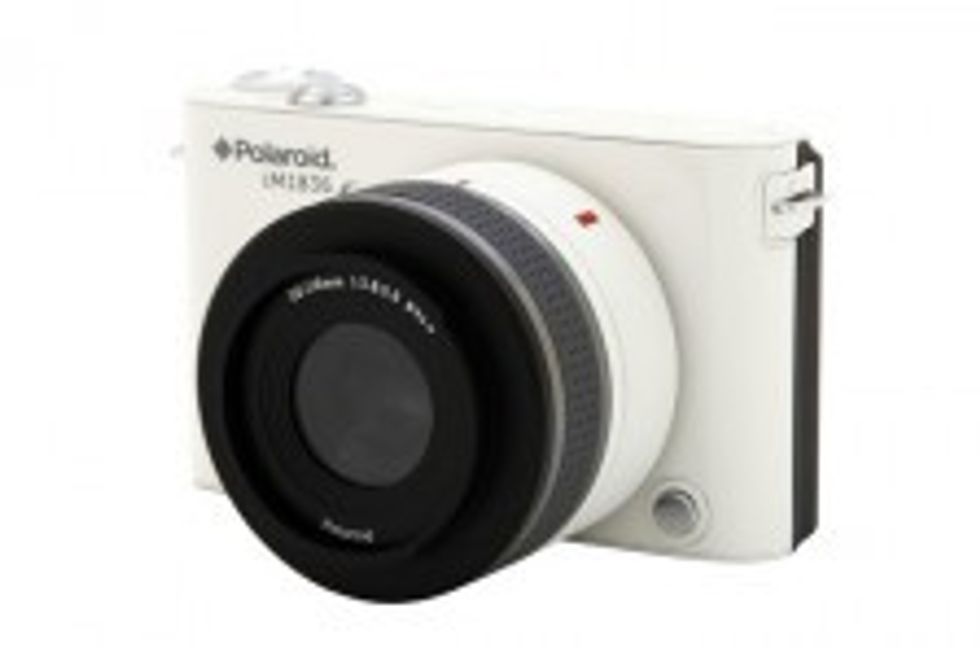
		<description><![CDATA[Apparently The Verge got that slightly wrong - the camera they previewed is the iM1030 (which doesn&#039;t have android), not the 1836. Engadget were somewhat more positive about the actual iM1836, although frankly it still doesn&#039;t sound that good. And it takes the strange approach of putting the sensor in the lens itself (as in, every lens has its own sensor).

http://www.engadget.com/2013/01/08/polaroids-interchangeable-lens-cameras-hands-on-video/]]></description>
		<content:encoded><![CDATA[<p>Apparently The Verge got that slightly wrong &#8211; the camera they previewed is the iM1030 (which doesn&#8217;t have android), not the 1836. Engadget were somewhat more positive about the actual iM1836, although frankly it still doesn&#8217;t sound that good. And it takes the strange approach of putting the sensor in the lens itself (as in, every lens has its own sensor).</p>
<p><a href="http://www.engadget.com/2013/01/08/polaroids-interchangeable-lens-cameras-hands-on-video/" rel="nofollow">http://www.engadget.com/2013/01/08/polaroids-interchangeable-lens-cameras-hands-on-video/</a></p>
]]></content:encoded>
	</item>
	<item>
		<title>By: Natt</title>
		<link>http://nofilmschool.com/2013/01/polaroid-technicolor-kodak-first-mft-camera/comment-page-1/#comment-312140</link>
		<dc:creator>Natt</dc:creator>
		<pubDate>Thu, 31 Jan 2013 13:06:24 +0000</pubDate>
		<guid isPermaLink="false">http://nofilmschool.com/?p=40696#comment-312140</guid>
		<description><![CDATA[Brand once meant the mark of quality. If only would have Kodak not made a mistake in the past and developed high quality sensor line internally (kind of like Sony), instead of selling the tech and patents a few years after it became clear they&#039;ve lost the battle to digital, they could&#039;ve tweak the color science and make themselves &quot;brand&quot; successor to quality of their film stocks. They could&#039;ve prevent all the mess, but nooooo. Let&#039;s stick with film until it dies and sell cheap third-party pocket cameras, that produce bland generic images.

I won&#039;t miss you, big K. You&#039;ve buried yourself by your own bare hands.]]></description>
		<content:encoded><![CDATA[<p>Brand once meant the mark of quality. If only would have Kodak not made a mistake in the past and developed high quality sensor line internally (kind of like Sony), instead of selling the tech and patents a few years after it became clear they&#8217;ve lost the battle to digital, they could&#8217;ve tweak the color science and make themselves &#8220;brand&#8221; successor to quality of their film stocks. They could&#8217;ve prevent all the mess, but nooooo. Let&#8217;s stick with film until it dies and sell cheap third-party pocket cameras, that produce bland generic images.</p>
<p>I won&#8217;t miss you, big K. You&#8217;ve buried yourself by your own bare hands.</p>
]]></content:encoded>
	</item>
</channel>
</rss>