 Apple has released iOS 4.2, which comes with a slew of improvements for iOS devices. However, iOS isn't the only kid on the block, with reports that Samsung's Android-powered iPad competitor shipped 600,000 units in the first month. Amid reports that Android phones are outselling iPhones (possibly 2-to-1), and the news that Apple and Google are locked into competition over who will premiere "tap to buy" first (which will allow us to use our smartphones as virtual credit cards), I thought I'd delve into No Film School's analytics to see what percentage of visitors are running iOS versus Android. Both mobile OSes will be a growing distribution platform for movies, but which OS will help independent filmmakers?
First let's look at No Film School's (mobile) readership:
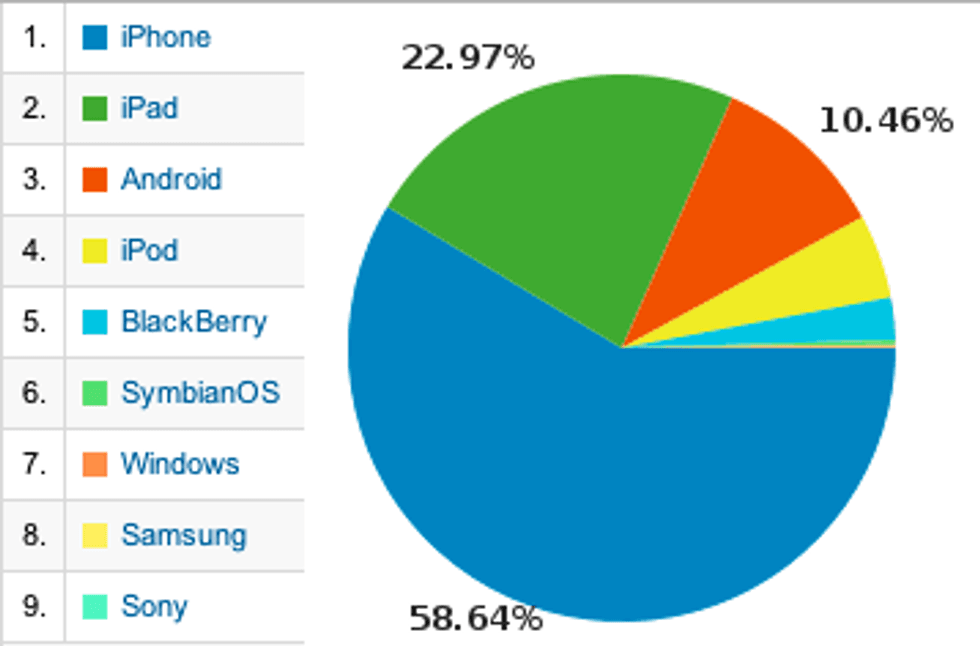
iOS-powered devices account for 80% of No Film School's mobile traffic, whereas Android is only responsible for 10%. Sure, iPhones have a sizable lead on Android phones, given the iPhone was released in 2007, and the current explosion of Android only happened in late 2009 with the release of Android 2.0 devices. But the iPad has only been on sale since April, and it already accounts for double the traffic of Android devices. Just because Android is shipping a lot of devices does not mean those phones are being used to access and consume content at anywhere near the same rate as iOS-powered devices.
More importantly than this web site's traffic, iOS is a much better engine for commerce. This article guesstimates that Android's market receives only 2% the commerce of iOS:
Overall we estimate that $6,000,000 has been paid out to developers for games, and $15,000,000 has been paid out on apps. That is a total of $21,000,000, nearly 1/50th the amount paid out to devs on iPhone.
Anecdotally, I only recently bought my first Android application -- the vintage photo processor Vignette -- but everyone I know running iOS has bought many applications. I can't say the same about my droid-based friends; anyone who's used Android's market knows it's terrible, and it's in fact restricted to the devices themselves, with no web equivalent (though the market is reportedly one of the main focuses of the next version). Thus the need for third-party Android app marketplaces like AppBrain: the default store is that bad.
As filmmakers and creatives who need to find new ways to monetize our content, the openness of Android is certainly a draw for development, as is the fact that it supports Flash. However, the OS suffers from extreme fragmentation problems, with hundreds of devices running dozens of different version of the OS at any given time, which can make development difficult (especially if you ask Steve Jobs). Some developers are even developing multiple versions of the same app for different Android devices, which will be a headache with hundreds of iterations in the wild. In my own experience, my Motorola Droid was a terrific phone -- until I updated to Android 2.2, and now the phone is bug-ridden and woefully slow. If it were a simple process to rollback to 2.1, I would, but I might have to reinstall all of my apps if I do so. Not an optimal experience, despite my appreciation of the platform's open philosophy.
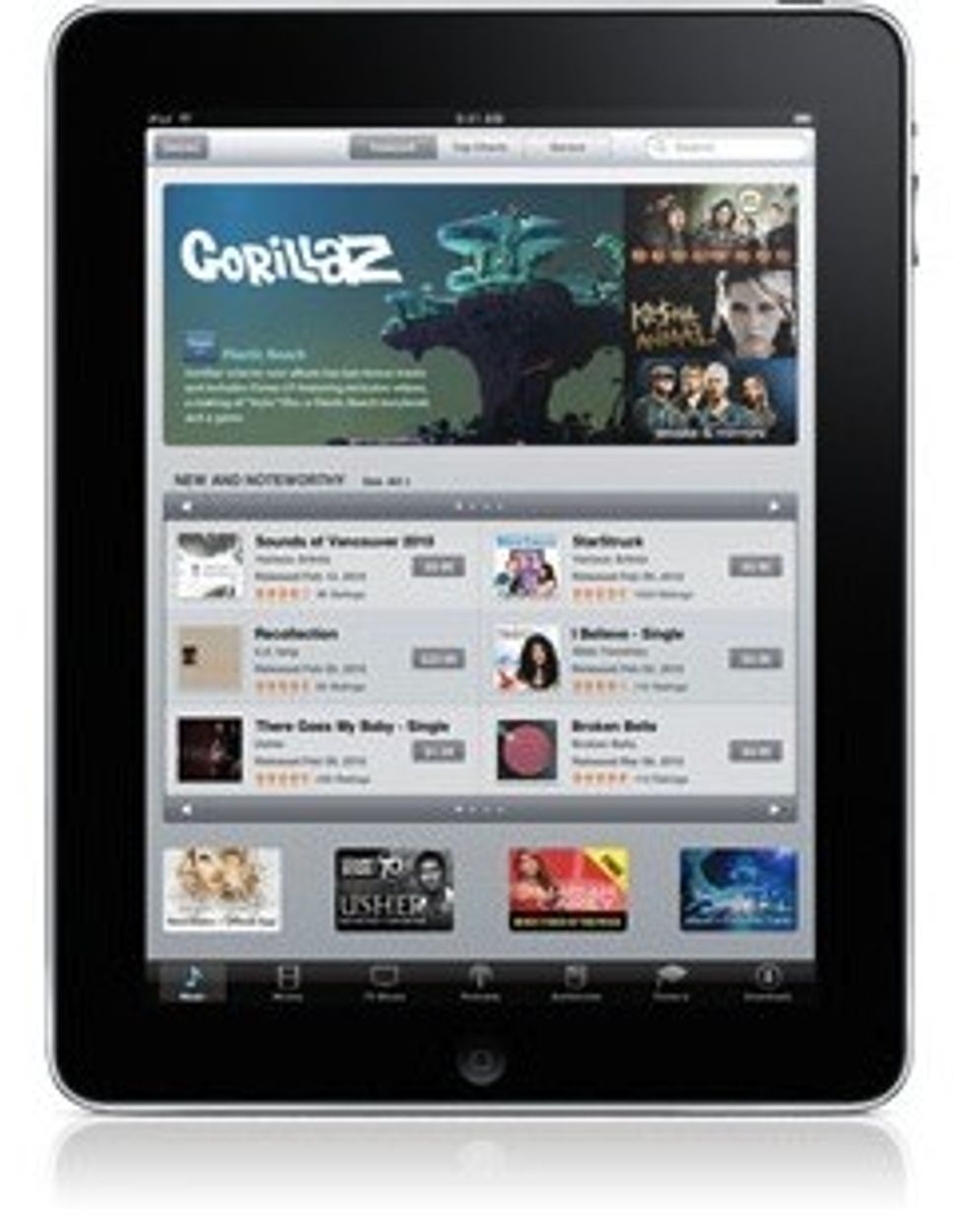 Finally, there is no iTunes equivalent on Android. While the difficulty in getting independent content into iTunes has been well-cataloged, at least there's a way to buy movies on iDevices. On Android, there's no easy way to buy a movie, and for that reason the platform fails filmmakers entirely. Though Google is reportedly working on releasing Google Music to enable song purchases on the device, the title of the service should be indicative that it's not a movie marketplace (though they could be making the same mistake Apple did when they named iTunes something music-specific, since it's now a video and app marketplace as well). There are also fundamental issues with Android's security and its ability to provide consistent Digital Rights Management controls, which is why only certain Android phones will be getting Netflix. That'd be like Netflix Instant Streaming working on PCs from Dell, but not HP. Fragmenting a consumer base only serves to decrease sales, and besides, there's no way distribute movies on Android yet anyway. In its current incarnation, when it comes to contributing to the future of film distribution, I'm afraid Droid Does Not.
Am I missing something? Have any thoughts on the future of these (or other) mobile platforms for film distribution? Chime in with a comment...