» Posts Tagged ‘audiorecorder’

Description image

Audio technology is a pretty stable industry, but manufacturers are continuing to experiment with new features to help sweeten the deal. This time, it’s an interesting approach from Shure: a shotgun mic with its own internal recording capabilities called the VP83F. Hit the jump for the details: More »

Description image

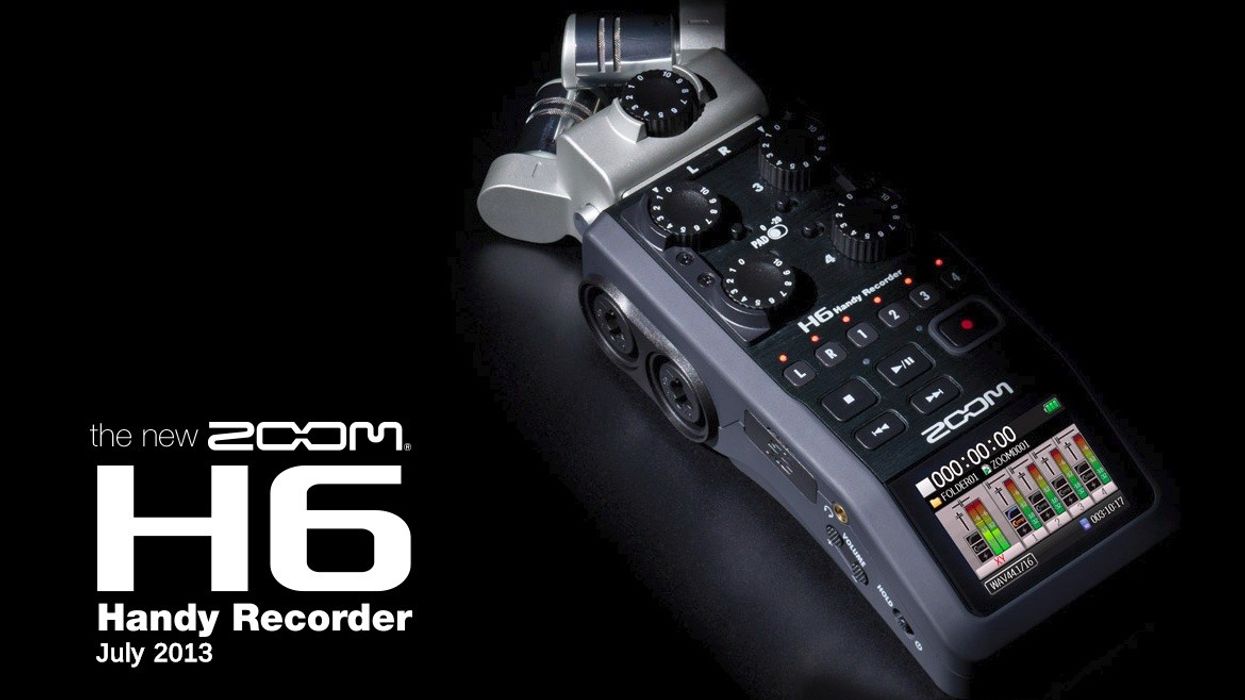
If you’ve been shooting video with DSLRs for the past couple of years, chances are you also own, or have at least used the Zoom H4N. It’s one of those devices that has seemingly become ubiquitous on low-budget shoots due to the fact that it’s incredibly easy to use and (relatively) affordable compared to other audio capture equipment. However, the H4N has always been a one-trick pony in that you are limited to either the XY mic atop the device, the two inputs on the bottom, or some combination thereof. For many sound recordists and location mixers, this combination of inputs simply wasn’t enough. Luckily for them, Zoom recently announced the big brother (and significant upgrade) from the H4N, the extremely modular and versatile H6. Check below for the details. More »

Description image

Despite all the advances in image resolution and quality, most DSLRs on the market still require separate audio recorders for quality sound capture. We’ve previously covered and compared affordable external audio recorders for DSLR filmmakers, and although great tools in themselves, if there’s one common drawback shared by these recorders it’s that they were designed for live music/event recording, rather than filmmaking. Enter Tascam’s new offering — the DR-60D — an audio recorder designed specifically with DSLR filmmakers in mind. Here are the details: More »

Description image

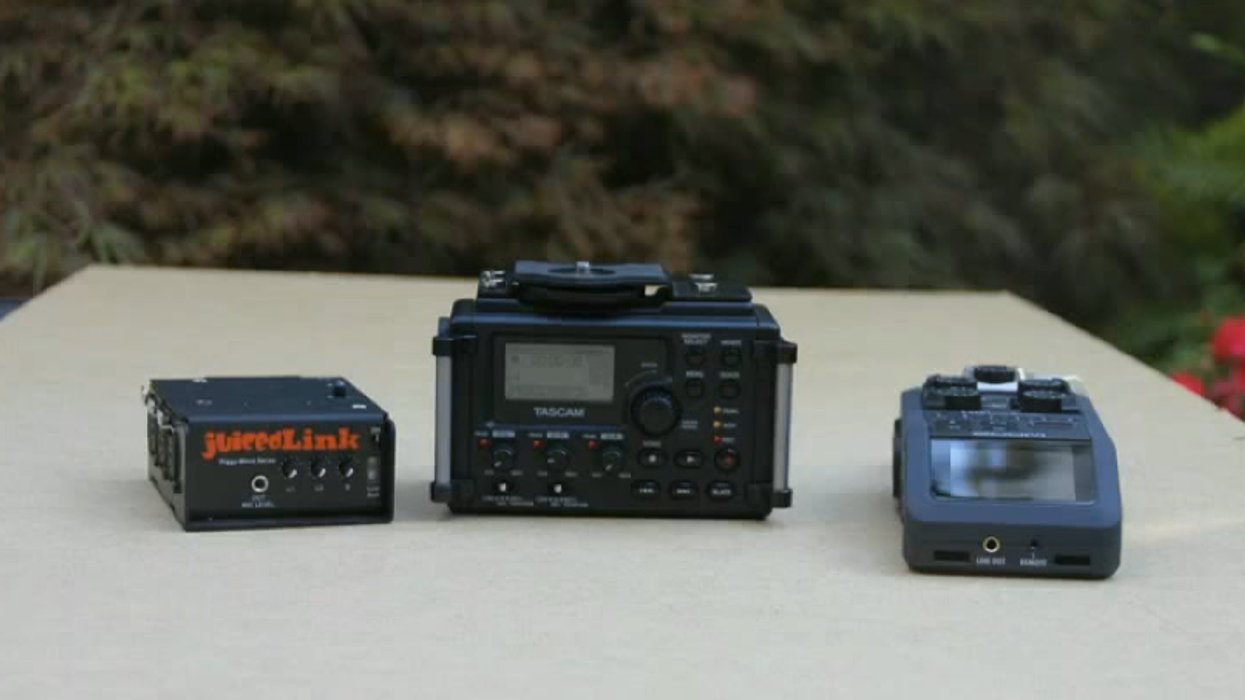
Last month a test was conducted by Robert Rozak, President of juicedLink, comparing the preamps from his company’s products with a similar offering from Beachtek, with both going right into the Canon 7D. He received so much feedback that he’s added a number of devices to the test and is now comparing the signal-to-noise ratio performance of the preamps of a number of devices, the Sound Devices 702, Zoom H4n, Tascam DR-100 MKII, Tascam DR-680, Edirol R44, Beachtek DXA-SLR PRO, and juicedLink Riggy Micro/Assist. Click through to see his results. More »

Description image

The conventional wisdom is that it’s difficult to get good audio when you record straight into a DSLR, and that you’re better off using an external audio recorder. At the very least, an external preamp can help boost your signal so that your camera’s audio system doesn’t have to work as hard to get a clean signal above the noise floor. juicedLink, maker of preamps, has put out a video showing (well, you’ll have to listen) that its preamps are actually capable of recording cleaner audio through a DSLR than using the competitive Beachtek preamp or even a Zoom H4N external audio recorder. More »

Description image

Audio recording internally to DSLRs has been mediocre at best. It’s great for scratch audio when you’re doing dual-system sound, but for the most part, it’s a real pain. I’ve been testing the 5D Mark III and the D800, but one of the tests I wasn’t able to do as thoroughly as I wanted was to test the internal audio recording of both cameras with a proper microphone. I know that many out there would ask why you’d ever plug directly into the DSLR without some other external preamp box, but sometimes (like at NAB), having the least amount of equipment that can fail is best. I met Dave Dugdale at NAB, and in this video he takes the time to test out both the Nikon D800 and the Canon 5D Mark III for the quality of their internal audio recordings. More »

Description image

If you’re a DSLR shooter, you know that having an independent audio recorder can be a must for getting quality sound. There are a lot of affordable flash recorders that can deliver great audio, but only a few of them have features like XLR inputs and multi-channel recording. Three models stand out: the Zoom H4n, the Tascam DR-100mkII, and more recently, the Tascam DR-40. How do they stack up in terms of features filmmakers want, and which one delivers the sound you need? I aim to delve into these questions and more, so read on! More »