» Posts Tagged ‘fieldrecorder’
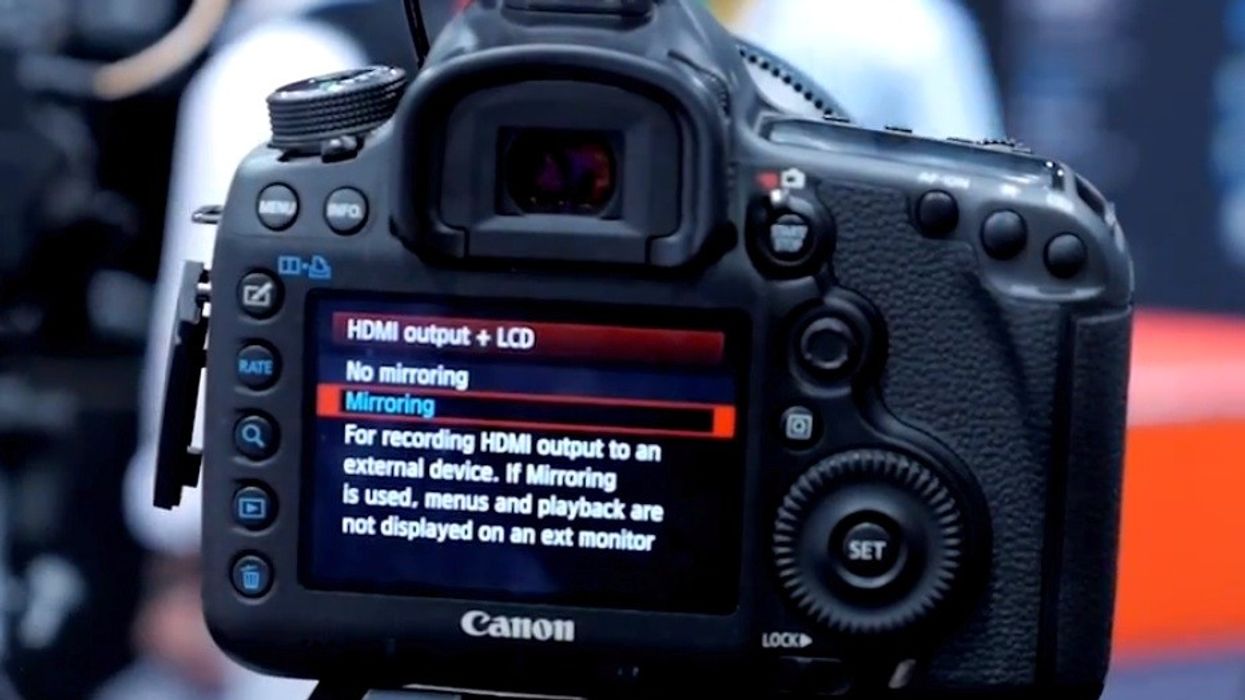
We still have about a week to go before the new Canon 5D Mark III firmware is released, and while attention has somewhat shifted since it was announced back in October, there are still many people looking forward to what uncompressed HDMI can bring to their setup. Canon has confirmed through their website that the firmware should be released April 30th, but in the meantime, we’ve got a sneak peek from the Atomos NAB 2013 booth thanks to OliviaTech. Check out the video below. More »
Tascam Targets DSLR Filmmakers with Its New 4-Channel Audio Recorder - the DR-60D
Despite all the advances in image resolution and quality, most DSLRs on the market still require separate audio recorders for quality sound capture. We’ve previously covered and compared affordable external audio recorders for DSLR filmmakers, and although great tools in themselves, if there’s one common drawback shared by these recorders it’s that they were designed for live music/event recording, rather than filmmaking. Enter Tascam’s new offering — the DR-60D — an audio recorder designed specifically with DSLR filmmakers in mind. Here are the details:
More »
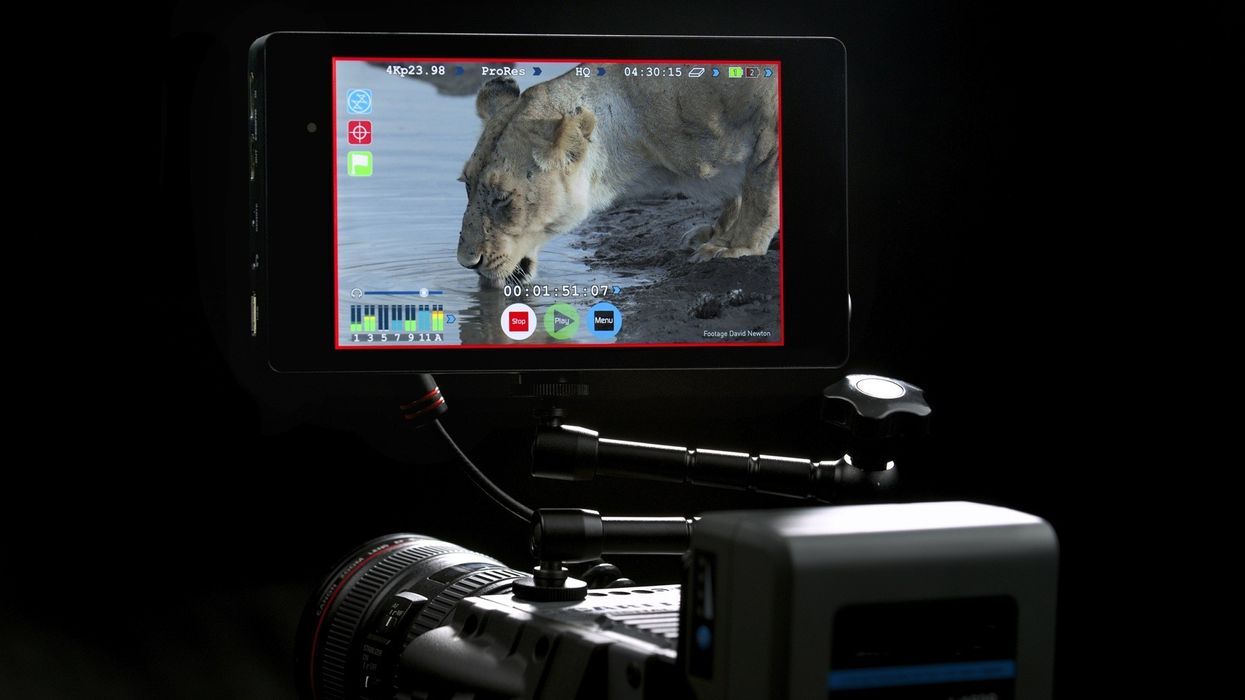
Announcements from this year’s NAB just keep coming! This time, we’re looking at the new Atomos Samurai Blade, a video field recorder inside a 5″ production monitor with a ton of useful features. Read on for the full specs, pricing information, and the video from Atomos: More »
The iPhone and app store is constantly evolving into an important tool for independent filmmakers. From camera manuals, to slates, to light meters, the versatility and ease of the device has impacted just about every filmmaker I know — and it’s here to stay. There are countless iPhone apps out there that can make life on location easier, all without breaking the bank. Click through to check out three that I use regularly. More »
Unless you’re shooting with cameras like the Blackmagic Cinema Camera or the Arri Alexa, you’re probably recording internally to a somewhat (or very highly) compressed format. Even though compression schemes have improved greatly since the humble beginnings of digital video, the image on many cameras can fall apart very easily if pushed too far in color grading or if serious noise reduction must be done. Matt Allard of DSLR News Shooter takes a look at an external recorder from Atomos called the Samurai, which features an HD-SDI input and ProRes recording (along with DNxHD with an optional upgrade). More »
After Atomos made quite the splash with their Ninja ProRes SSD external recorder, they announced at this year’s NAB an update to that model, the Ninja 2, as well as a new operating system called AtomOS 3.0. While users of the original Ninja recorder will not be able to benefit from the updated software and its new features, owners of the Atomos Samurai HD-SDI recorder can download the firmware update now. Here is an overview of some of the new additions in the brand new version of their operating system: More »
Atomos Unveils the Ninja 2 External Recorder with 800 X 480 Resolution Screen and HDMI Pass-through
At the recent NAB show, Atomos, the popular external recorder company who made a splash with the Ninja, introduced an updated version called the Ninja 2. Along with the new 3.0 version of their operating system, Atomos has made metadata a priority, much like the new Blackmagic Cinema Camera. Tagging clips is an essential part of the new OS, and I had a chance to talk with Matt Ivey from Atomos about the Ninja 2 as well as other products, including the very handy Connect HD-SDI and HDMI pass-through converters. More »
This is a guest post by Alexander Fox, founder of CrewOfOne.
Trying to sort out the best way to handle audio on a microbudget DSLR shoot can be a real challenge. Ideally, you’d hire a professional audio operator with a high-end field mixer who would adjust microphone levels on the fly, and record all the audio to a hard drive. Unfortunately, for every one of those shoots I get, I have ten one-man-band shoots. If you’re in a similar situation, you may be interested in the DSLR audio system I’ve developed: More »
One of the main differences between cameras costing >$10k and cheaper HD/DSLR camcorders is the recording codec. Out of necessity (or simply because manufacturers want to differentiate their lineups), the cheaper cameras generally ship with a lossy compression scheme that doesn’t hold up as well to color correction. The solution is an external recorder (provided your camera has a good HDMI or HD-SDI output), and the Aja Ki Pro Mini is a nicely-sized $2k recorder that uses Apple ProRes (pictured next to its bigger brother, the Ki Pro). The Ki Pro Mini has been out for a few months but it’s been fairly hard to find in terms of availability, and now it’s in stock at B&H Photo. For anyone who’s been thinking of upgrading their current rig with an external recorder, the Mini is a top candidate; here’s a review at ProVideo Coalition, and here’s a video overview from AbelCine: More »
NAB Roundup: Monitor/Field Recorders from Atomos, Sound Devices, Convergent Design, and Blackmagic
As large-sensor cameras at all price points become more prevalent, one of the most limiting factors to the image quality is the native video codec used for compression. Many of us are used to DSLR codecs that may hold up initially, only to fall apart during color correction (some codecs don’t even hold up very well initially, except for viewing on the web). One way to overcome this limitation is to buy a much more expensive camera with superior recording options, like a RED or ARRI ALEXA. Another way to overcome the same codec issue is to pair an external recorder with a cheaper camera. Here’s a roundup of the field recorders I saw on display at NAB. More »
The compact field recorder market sure got crowded in a hurry. In the past month alone the Atomos Ninja, Cinemartin, and Convergent Design Gemini have all been announced. Add the NanoFlash, AJA Ki Pro, Ki Pro Mini, and Cinedeck, and no matter what your external recording needs are, I’d say someone’s got you covered. The funny thing is, each recorder definitely has its own niche carved out. The latest entrant, the Atomos Samurai, is a higher-end cousin to the Ninja, adding a higher-resolution 5″ display, HD-SDI inputs, and timecode/genlock to the Ninja’s featureset. More »
Convergent Design, manufacturers of the popular NanoFlash flash-based recorder, have announced the Gemini, a new 4:4:4 uncompressed field recorder. The Gemini features twin SSD slots, which allow for simultaneous recording of an identical backup, or gapless spanning from one drive to the next for longer recording times. The Gemini also integrates an 800×480 5″ LCD screen in a package that’s roughly the same size as the SmallHD DP6 monitor: the Gemini is 5.4″ x 4.5″ x 1.1″ and tips the scales at a scant one pound. More »
With cameras such as the Sony F3 hitting the market — which will, with a $3,500 firmware upgrade, offer uncompressed 4:4:4 output — there’s a need for compact field recorders that can handle such high data rates. The Atomos Ninja, AJA Ki Pro Mini, and NanoFlash can handle 4:2:2 lossy codecs, and the Cinedeck handles 4:4:4 recording in the CineForm intermediate codec, but the first three products are priced from $1-3k and the Cinedeck is about $10k. There’s a lot of space in between, and that’s where new entrant Cinemartin is looking to premiere their SFV and SFVe, two field recorders that offer 4:4:4 and 4:2:2 recording, respectively. More »
I’ve mentioned the AJA Ki Pro Mini ($2,000) and Nanoflash ($3,000) in the past as the new kids on the block when it comes to compact field recorders. However, there’s a startup by the name of Atomos who is now shipping a $995 field recorder. The Atomos Ninja records an HDMI output direct to ProRes (HQ, 422, or LT), and despite its lower price, it also offers a touch LCD screen. Here’s a look at the announcement of the Atomos a few months ago from UrbanFox.tv: More »


Sergey: very interesting! Thanks. Old School 'Photoshop' Techniques That Still Apply: Touching Up Celluloid …
Joe Marine: I realize you'd normally take the cynical side, but making lenses faster, … Micro 4/3 Metabones Speed Booster Now Shipping for Leica R & Contax L…
Tyler: Depends how you look at it. I only want wide for light, not DoF. Most … Micro 4/3 Metabones Speed Booster Now Shipping for Leica R & Contax L…
john jeffries: Now you can get even MORE of that "film look" with super shallow depth of … Micro 4/3 Metabones Speed Booster Now Shipping for Leica R & Contax L…
Gene: Shhhhh, you're raining on the parade. ;-) Luke Neumann on Canon 5D Mark III RAW Video and a Comparison with the RED …