» Posts Tagged ‘zoom’

Description image

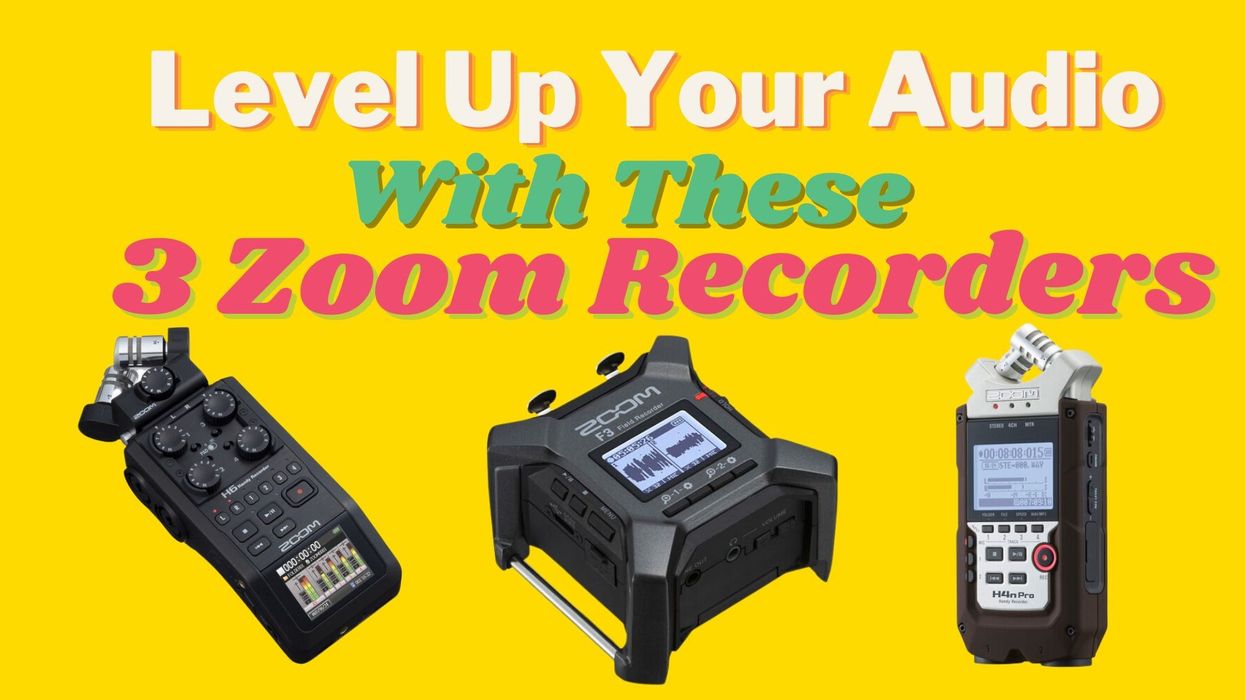
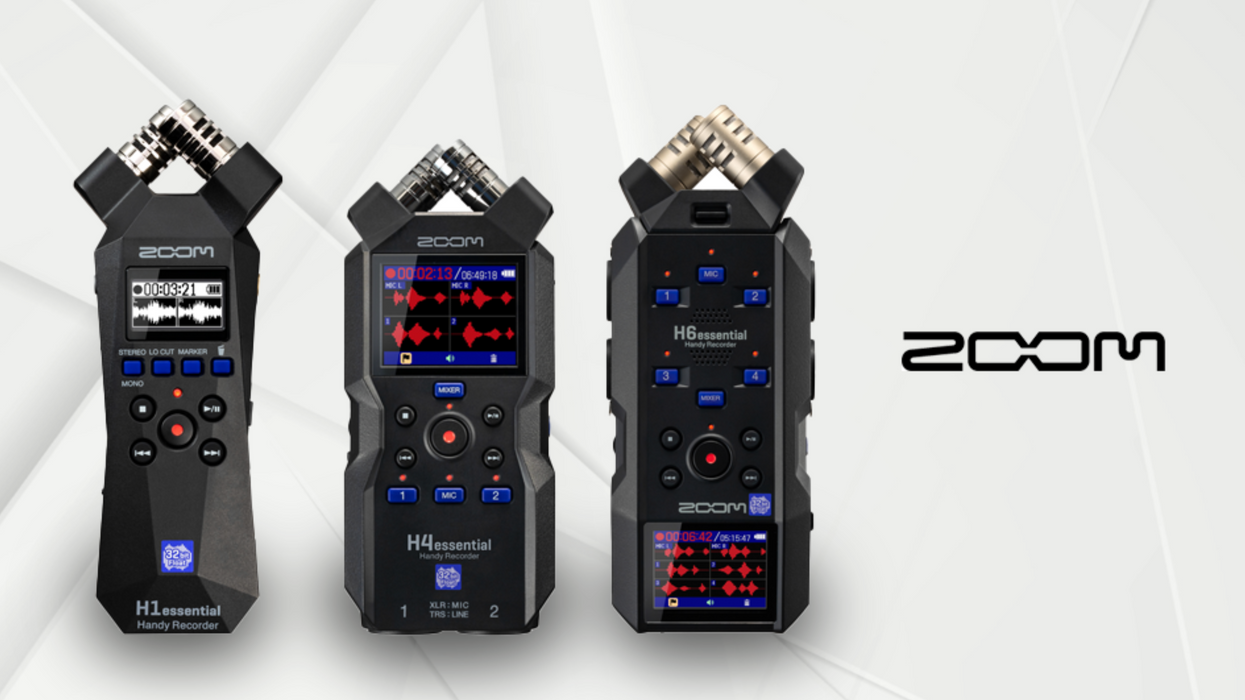
If you’ve been shooting video with DSLRs for the past couple of years, chances are you also own, or have at least used the Zoom H4N. It’s one of those devices that has seemingly become ubiquitous on low-budget shoots due to the fact that it’s incredibly easy to use and (relatively) affordable compared to other audio capture equipment. However, the H4N has always been a one-trick pony in that you are limited to either the XY mic atop the device, the two inputs on the bottom, or some combination thereof. For many sound recordists and location mixers, this combination of inputs simply wasn’t enough. Luckily for them, Zoom recently announced the big brother (and significant upgrade) from the H4N, the extremely modular and versatile H6. Check below for the details. More »

Description image

Not all glass is created equal. Some is shaped into things you drink out of. Some becomes windows, windshields, and portholes. And some become the tools you use every day to create beautiful images. Something as insanely resolute as 4K (or even 8K) broadcast and stereoscopic 48fps can only look so good with a junk piece of glass placed between the medium and the image — which can also work great if that’s the type of look you’re going for. Given all this, the birds and the bees of how lenses are made — and function, down to the basics — is definitely something many of us take for granted. More »

Description image

Kevin Good over at CrisisLab has recently published a comparison of both higher end (Canon and Nikon) and less expensive (Sigma and Tamron) lenses common for various types of DSLR shooting — 24-70mm f/2.8 zooms. The test compares overall clarity, both at the center of each lens as well as at the edges, the quality of bokeh, the amount of vignetting, and the ability for internal optical image stabilization. The results of each test were weighted against the going price for each lens, in order to determine which possesses the best overall value. Read on to check out the video — and which lens may have the most bang for your buck. More »

Description image

Last month a test was conducted by Robert Rozak, President of juicedLink, comparing the preamps from his company’s products with a similar offering from Beachtek, with both going right into the Canon 7D. He received so much feedback that he’s added a number of devices to the test and is now comparing the signal-to-noise ratio performance of the preamps of a number of devices, the Sound Devices 702, Zoom H4n, Tascam DR-100 MKII, Tascam DR-680, Edirol R44, Beachtek DXA-SLR PRO, and juicedLink Riggy Micro/Assist. Click through to see his results. More »

Description image

The conventional wisdom is that it’s difficult to get good audio when you record straight into a DSLR, and that you’re better off using an external audio recorder. At the very least, an external preamp can help boost your signal so that your camera’s audio system doesn’t have to work as hard to get a clean signal above the noise floor. juicedLink, maker of preamps, has put out a video showing (well, you’ll have to listen) that its preamps are actually capable of recording cleaner audio through a DSLR than using the competitive Beachtek preamp or even a Zoom H4N external audio recorder. More »

Description image

It looks like the wait is almost over. According to 43 Rumors, the new Lumix G X VARIO 12-35mm f2.8  should be shipping this week in Asia and Europe (no word yet on the U.S. and Canada), and the Olympus 75mm f1.8 should be coming in July. If you’ve had a hankering to see videos of these lenses in action then you’re in luck: More »

Description image

Audio recording internally to DSLRs has been mediocre at best. It’s great for scratch audio when you’re doing dual-system sound, but for the most part, it’s a real pain. I’ve been testing the 5D Mark III and the D800, but one of the tests I wasn’t able to do as thoroughly as I wanted was to test the internal audio recording of both cameras with a proper microphone. I know that many out there would ask why you’d ever plug directly into the DSLR without some other external preamp box, but sometimes (like at NAB), having the least amount of equipment that can fail is best. I met Dave Dugdale at NAB, and in this video he takes the time to test out both the Nikon D800 and the Canon 5D Mark III for the quality of their internal audio recordings. More »

Description image

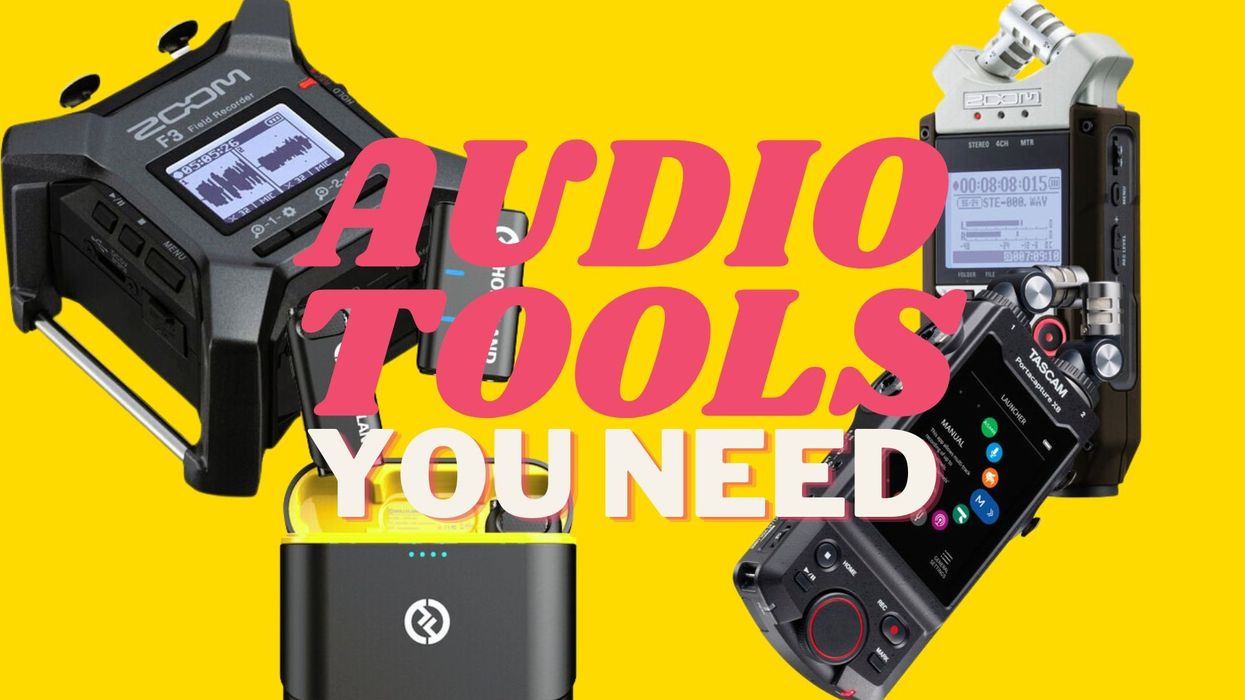
If you’re a DSLR shooter, you know that having an independent audio recorder can be a must for getting quality sound. There are a lot of affordable flash recorders that can deliver great audio, but only a few of them have features like XLR inputs and multi-channel recording. Three models stand out: the Zoom H4n, the Tascam DR-100mkII, and more recently, the Tascam DR-40. How do they stack up in terms of features filmmakers want, and which one delivers the sound you need? I aim to delve into these questions and more, so read on! More »

Description image

So you’ve been looking for a zoom rocker on your DSLR? This is one solution (but it’s PL only and expensive). While the zoom lenses for Canon cameras (or any DSLR for that matter) do not have proper teeth for a zoom control to grip to, VizTools has come up with a solution called the HandiZoom. After adding a gear to each lens, it gives you complete control of any zoom, and allows variable zooming with the attached zoom rocker controller. More »

Description image

It’s about time a great PL zoom has been announced from a company that is more or less the standard in ENG lenses. You can’t walk 10 feet into a TV station or broadcast studio and not see a camera with a Fujinon lens attached. From Fuji’s optical division comes this fantastic 19-90mm T2.9 zoom lens, which can be used easily with a standard follow focus by pulling off the zoom rocker. There is one pretty big catch for all you FS100 owners or other PL users. More »

Description image

Tascam is nipping at the heels of the Zoom H4n with its new firmware update for the Tascam DR-40.  If you’re not too familiar with the Tascam DR-40, here’s the recap – it’s one of the smallest flash audio recorders with XLR inputs, has most of the basic functions run-and-gun filmmakers want, and runs you roughly $130 cheaper than the H4n.  With the new firmware update it also eliminates one of its biggest disadvantages – setting independent gains on the two XLR inputs.  Why is that important?  Find out after the jump: More »