Being in the dark is scary, especially when you're alone. Even better if you're in an unfamiliar space and you hear a rustle in the night. Your imagination fills in the details of what's unseen, of who's with you, of what they want...
So obviously the deep dark shadows have become part and parcel of the horror genre. But you can't just put your audience in a dark room with a character. Darkness that reads as mud will lose them, no matter how great your sound design or jump scares are.
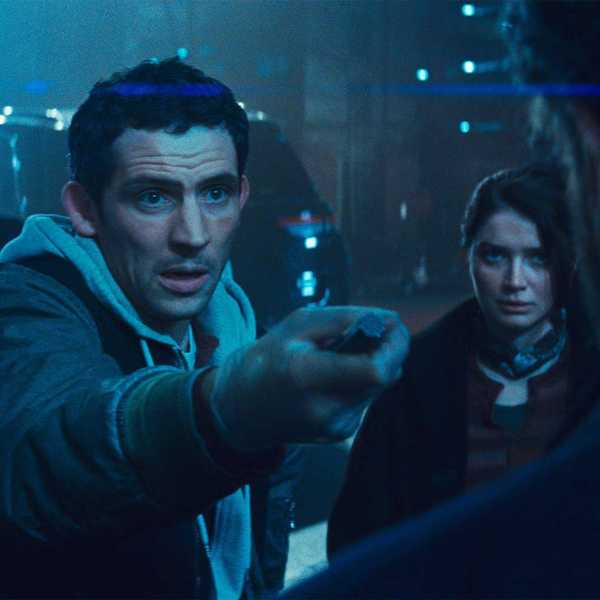
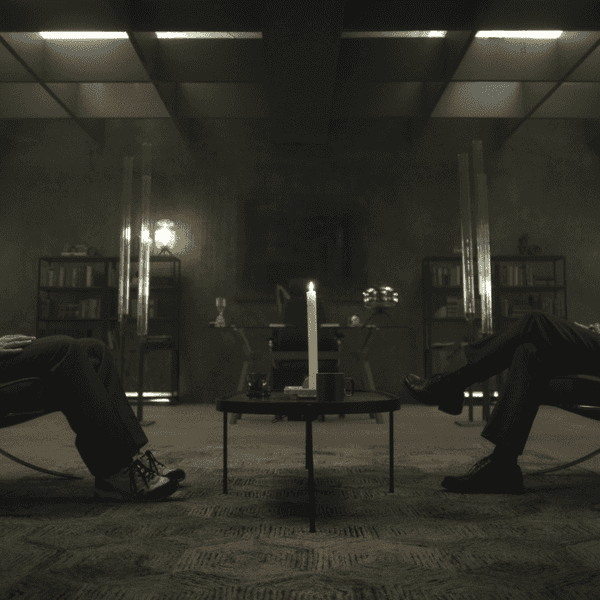
So cinematographers have to get creative. For example, this year's horror breakout Obsession is so dark. Curry Barker's lower-budget genre film had to get creative, but even on exterior night scenes (and that's a lot of the film), DP Taylor Clemons doesn't obscure the details we need.
Good horror darkness is built on purpose, through exposure, shape, motivation, and delivery. Today we'd like to look at three cinematographers to show the range, including Clemons for the digital indie, writer/director/DP Zack Snyder on a Netflix zombie epic, and Jarin Blaschke on 35mm studio gothic.
- YouTube www.youtube.com
Get Light Onto the Sensor
You'd expect a DP shooting a pitch-black horror movie to crank the camera's ISO. Clemons went the opposite way.
According to his essay in American Cinematographer, he kept the Alexa 35 at a low ISO of 160 or 200 for the whole shoot so the sensor would collect as much information as possible.
That made night exteriors tougher, so he leaned on Panavision's Ultra Speed lenses. This all might seem counterintuitive, but it clearly worked. He found that weighting the exposure toward the bottom of the camera's range gave the shadows something extra.
"It gives a feeling to the image that’s hard to describe," he wrote. "There’s a fuzzy, dream-like quality to the shadows in the camera reminiscent of a lo-fi PS1 video game."
The footage held far more exposure than the dark monitor image suggested, and he didn't pull it back in post. What looks dark on the monitor and what's recorded aren't the same thing, so don't be scared.
Snyder solved the same problem from the other end by opening the lens as wide as it would go. (I haven't meant to talk about Army of the Dead so much this week, but he really did some wild things on the film.)
He used custom RED Monstro cameras with 1960s Canon rangefinder lenses rehoused by Zero Optik. In Netflix's Snyder School episode, he explained why that choice made him take the DP job himself.
"There's never going to be a stop on any lens for the entire film, and I just feel like it's a rude thing to ask of a cinematographer. It was really about just sort of taking responsibility for the experimental nature of what I wanted to do. And then if it was a complete fuck up, then it would be my fault, and I'm fine with that."
Shooting wide open let him keep going as light disappeared.
Each route shifts the risk elsewhere, so there's a tradeoff. Shooting wide open trades depth of field for light, so focus becomes the danger. PetaPixel has pointed out that Obsession was also shot with the aperture consistently wide open, producing soft, unsettling background blur.
So actually the two films are closer than their budgets suggest.
- YouTube www.youtube.com
Give the Audience a Shape, Not Details
Once you protect the exposure, you decide what the audience doesn't get to see.
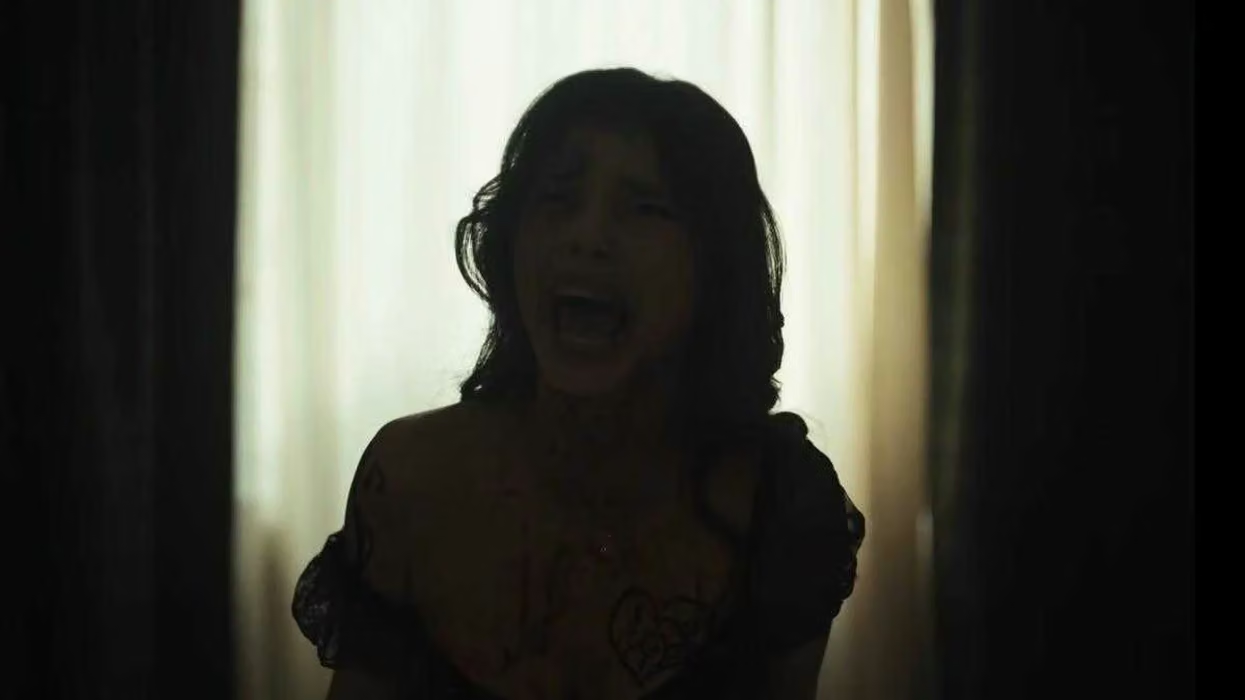
In Obsession, Nikki keeps appearing as a dark shape. Clemons writes in American Cinematographer that for her important porch scene, he had to build the night from nothing because the street had no existing light. A row of Astera Titan Tubes under the porch roof created the glow that turned her into a silhouette.
Her darkest, and maybe most eerie, moments came from an even simpler setup. Clemons told ShotDeck that in the darkest scenes, the team realized they needed a light mounted on the camera. VFX artist Peter Timberlake then enhanced the glint in Nikki's eyes.
"Those seem to be the scenes that everyone loves, and is the simplest thing, you know? Silhouette with an eye light."
Nosferatu doesn't let us see the monster full-on at first. Asked about the introduction of Count Orlok, DP Jarin Blaschke said the team threw every trick they had at hiding him.
"All the ways you could obscure this person, we used them all!" he told The Credits. "Silhouette with the lights behind him. Then we cut to the other side where Thomas is front-lit, but you only get Orlok’s back and his hands. At the end of the scene, Orlok is front-lit, but you do a chop and only see his hands because everything above is dark, or it’s a shot of his eyes, so you don’t see the rest [of his face]. Every which way, we exhausted all the options."
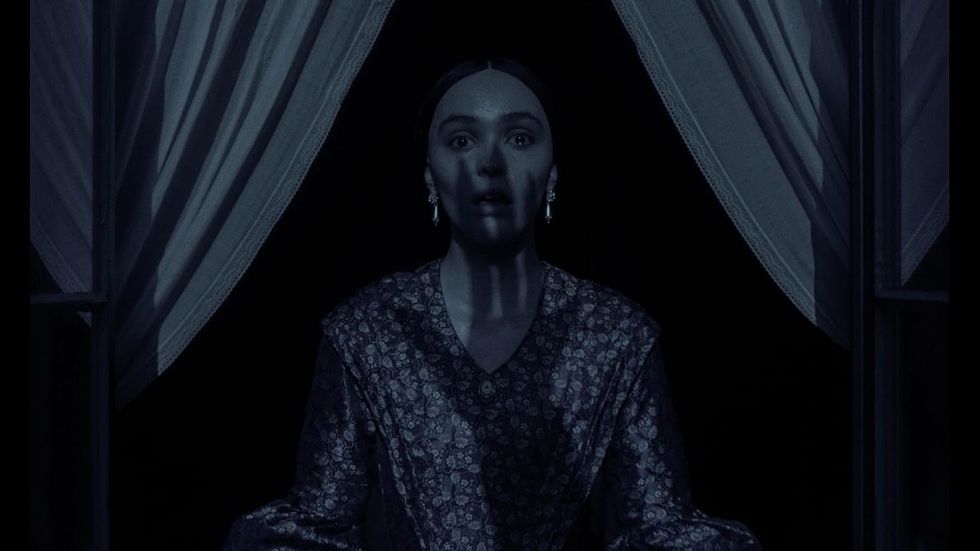 'Nosferatu' Credit: Focus Features
Motivate Your Light Source
This isn't an end-all-be-all, especially if you're shooting something more stylized, but it's nice to understand where your light is coming from.
Blaschke told British Cinematographer that his lighting grows out of observing real life, like how a window lights a room.
"My inspiration is going to be real life, like when I’m sitting next to a window, facing a certain direction, and it’s winter at a certain time of day, I’m forensically recreating the real-life experience that would be the most appropriate lighting for a scene.”
For the sunset in the crypt, he motorized a mirror that rotated as it lowered, so the shadows crept across the wall the way they would as the sun went down.
Snyder used the same logic with less gear. He had the actors carry their own light.
"A lot of the movie, the actors lit with flashlights, and I'd wear a white shirt," Snyder said. "I'd be like, 'Point the flashlight at my shirt, and you're going to light yourself,' and they'd be like, 'What?' And then I would have a flashlight attached to the camera ... We'd put a card on the ceiling, and I would be bouncing off the ceiling."
It's a cheap trick you can copy, and the light technically exists inside the story.