Sections
    PodcastNewsletterGear guides
    About
    Contact
    Advertise
    Terms
    Privacy
    Ethics Policy
    DMCA Takedown Notice
    No Film School
    • AI
    • Directing
      \e606
    • Screenwriting
      \e607
    • Cinematography & Cameras
      \e605
    • Documentary
      \e603
    • Editing & Post-Production
      \e602
    • Movies & TV
      \e60a
    • Producing
      \e608
    • Distribution & Marketing
      \e604
    • Festivals & Events
      \e611
    • Fundraising & Crowdfunding
      \e60f
    • Sound & Music
      \e601
    • Grants, Contests, & Awards
      \e60d
    • Film School
      \e610
    • Games & Transmedia
      \e60e
    • Jobs
      \e60c
    • Marketplace & Deals
      \e60b
    • Off Topic
      \e609
    • This Site
      \e600
    Cinematography & Cameras

    Learn the Importance of Lens Metadata with This New Seminar

    Lens metadata is a crucial part of workflow, but what is it exactly? Find out Feb. 22. 
    Follow us on DiscoverSee Us First on Google
    Lens_metadata
    NFS Staff
    Feb 17, 2021
    Follow us on DiscoverSee Us First on Google

    Lens metadata is increasingly playing an important role in productions. From helping focus pullers and DITs to informing real-time virtual productions like The Mandalorian, understanding how useful it can be is a must for any cinematographer or filmmaker. 

    If you ever picked up a Sony FE or Canon EF lens, you've probably noticed those little metal contact points on the mount. Those are electronic communication points that allow the lens to talk to the camera so features like autofocus function correctly. Other lenses allow metadata to pass through, providing information for focal length, iris, and focus settings.


    With that info, it allows teams to place virtual objects into scenes for preview or for talent interaction. 

    Metadata is also used by visual effects teams to build realistic elements that match seamlessly with what was shot practically. Instead of manually tracking or tracing the camera movement, the metadata allows them to skip that step in a way by offering a starting point for that scene. There are also some other cool things metadata can do like automatically calibrate your lens to save you time on set.

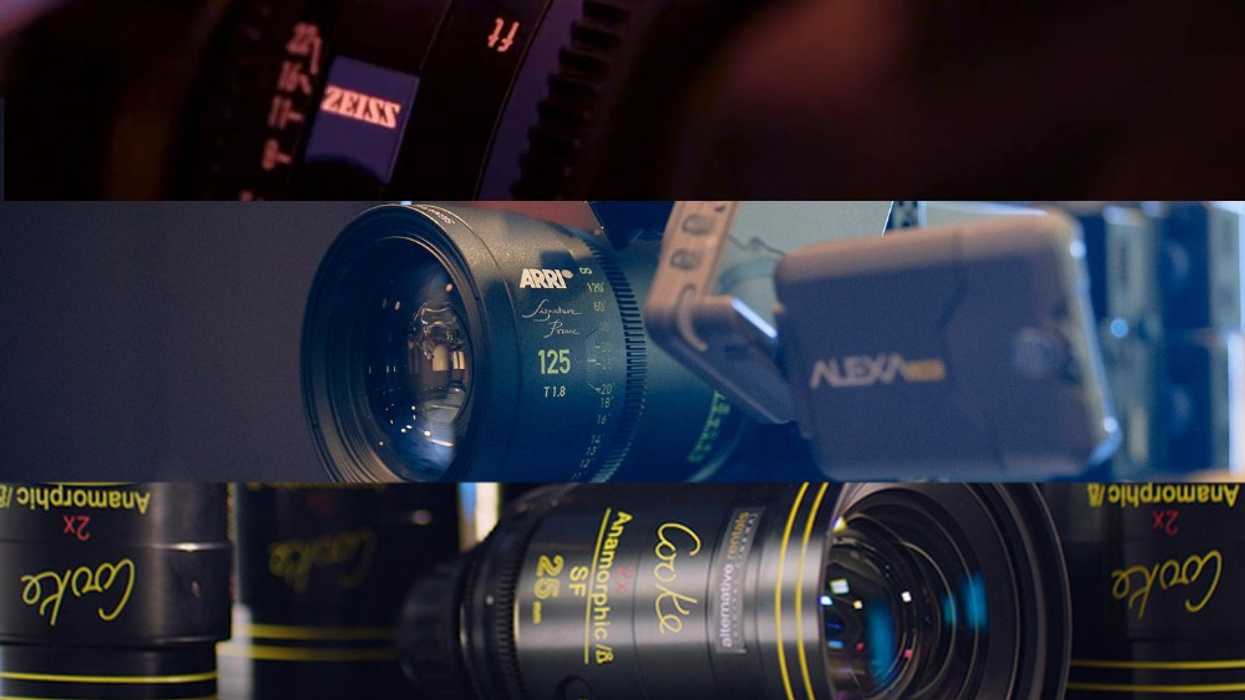
    Similar to lens mounts, there isn't a standard across the industry. Currently, there are three main players. There's Cooke i/Technology, ZEISS eXtended Data, and ARRI LDS (Lens Data System). 

    The metadata of all three are nearly identical, but there are some differences. Each can send focus, iris, and zoom settings, but i/Technology and ZEISS eXtended Data can only pass that information out, where LDS can be fully integrated into ARRI's lenses, cameras, and accessories. This way an ARRI lens can talk to an ARRI camera, or vice versa. 

    The catch with LDS is that it's generally only a part of ARRI camera systems because of a steeper licensing fee, while i/Technology is essentially open-source. Because of that, i/Technology has been widely adopted by lens and camera manufacturers, including ARRI. 

    But ZEISS eXtended Data might have an advantage over both. Not only does it pass through the same metadata, but it includes frame-by-frame information on lens distortion and shading characteristics. This can be helpful with virtual production and visual effects because the elements of distortion can be adjusted or replaced to create a more realistic-looking scene. 

    To get you up to speed about all three, the team over at Chrosziel is having a seminar where they will do a live readout of lens metadata for ARRI LDS, Cooke i/Technology, and ZEISS eXtended Data on Feb. 22, 2021, at 1 p.m. ET/10 a.m. PT. 

    You can register for the free seminar here.
    lensesmetadatacookeARRIzeiss
    Cinematography & Cameras

    Popular

    'The Outlaw Josey Wales'
    Movies & TVScreenwritingTopics

    Film Quote of the Day: The Line From Clint Eastwood's 1976 Western Classic That Became a Timeless Life Lesson

    Jason Hellerman
    Jul 06, 2026
    The 'Once Upon a Time in the West' Line
    Movies & TVScreenwritingTopics

    Film Quote of the Day: The 'Once Upon a Time in the West' Line That Made Frank One of Cinema's Greatest Villains

    Jason Hellerman
    Jul 02, 2026
    Grandpa, were you a hero in the war?
    Movies & TVScreenwritingTopics

    Film Quote of the Day: The 'Band of Brothers' Line That Sums Up the Sacred Bond of Soldiers

    Jason Hellerman
    Jul 05, 2026
    Sam Elliott Line From the 1989 Cult Classic
    Movies & TVScreenwritingTopics

    Film Quote of the Day: The Sam Elliott Line From the 1989 Cult Classic That Still Resonates Today

    Jason Hellerman
    Jun 26, 2026
    Most American Movies of All Time—Part 4
    Movies & TVEditorialHomepage Main FeaturedTopics

    The 40 Most American Movies of All Time: Your 4th of July Watchlist (Part 4)

    Jason Hellerman
    Jo Light
    Jul 03, 2026

    Latest

    'No Country For Old Men'
    Movies & TVTopics

    5 Best One-Scene Film Performances

    Jason Hellerman
    Jul 07, 2026
    Poor Things​ reading
    ScreenwritingTopics

    The Truth About Getting Your Script Read

    Jo Light
    Jul 07, 2026
    Beeble SwitchHDR
    AIEditing & Post-ProductionTopics

    Beeble Releases SwitchHDR, an AI Model for HDR Reconstruction From SDR Video

    Jourdan Aldredge
    Jul 07, 2026
    'Jane Austen’s Period Drama'
    DirectingEditorialPodcastTopics

    Secrets to an Oscar Short Film Campaign with Julia Aks and Steve Pinder

    Jo Light
    NFS Staff
    Jul 07, 2026
    True
    'Obsession'
    Movies & TVEditorialHomepage Main FeaturedTopics

    How $750,000 Indie 'Obsession' Just Shattered a 53-Year-Old Box Office Record

    Jason Hellerman
    Jul 07, 2026
    How to Write a Screenplay eBook
    Get our eBook "How to Write a Screenplay" FREE: