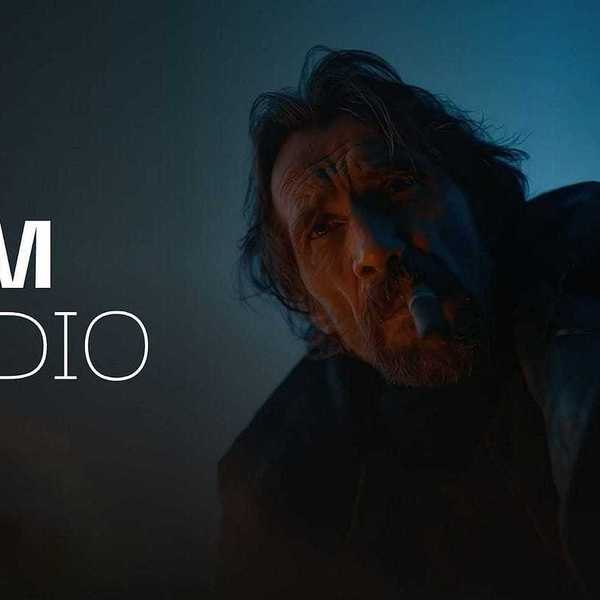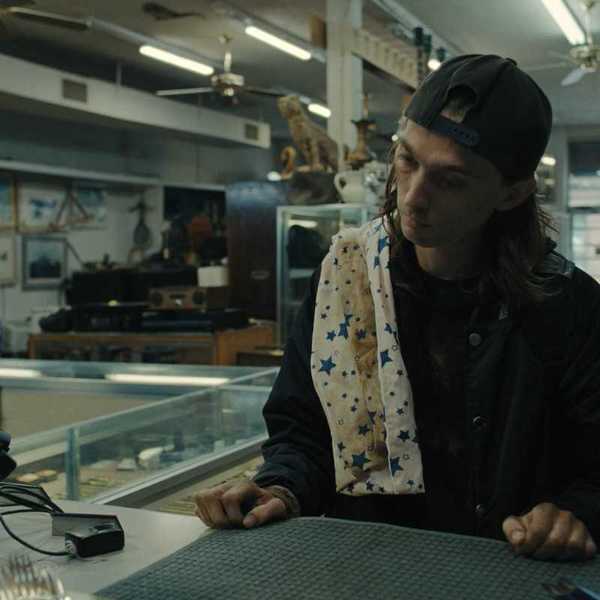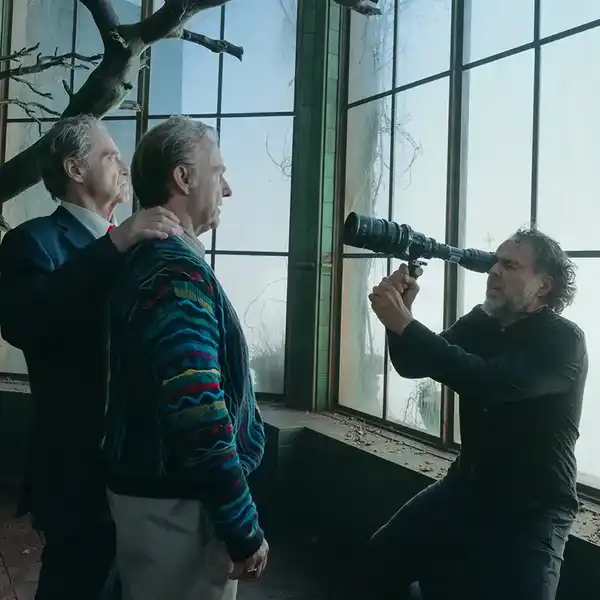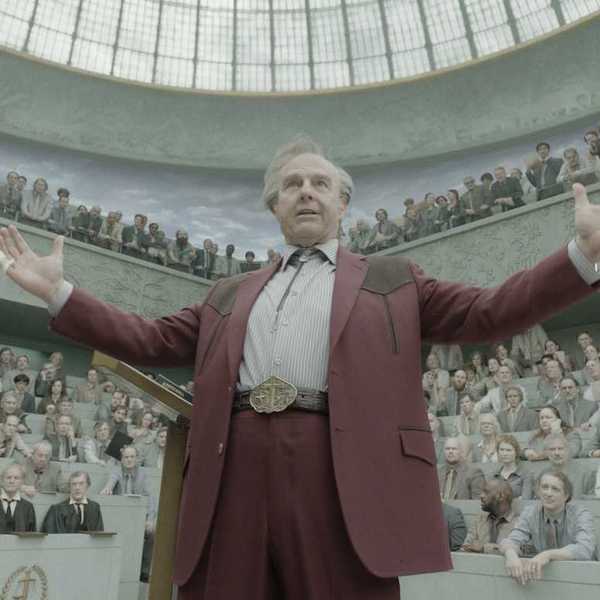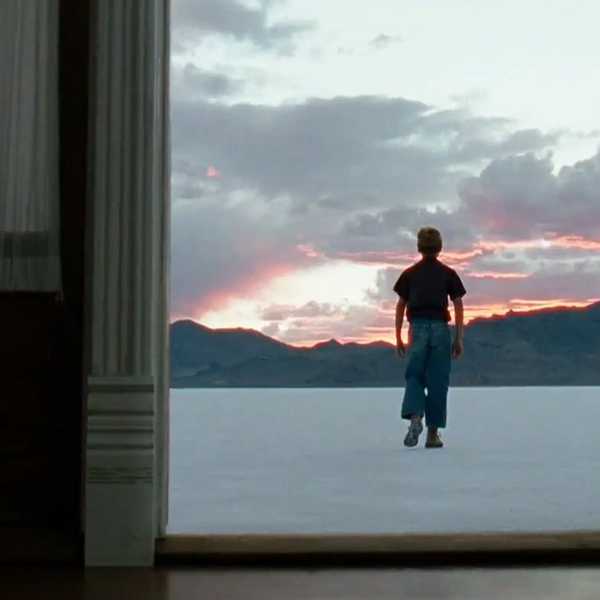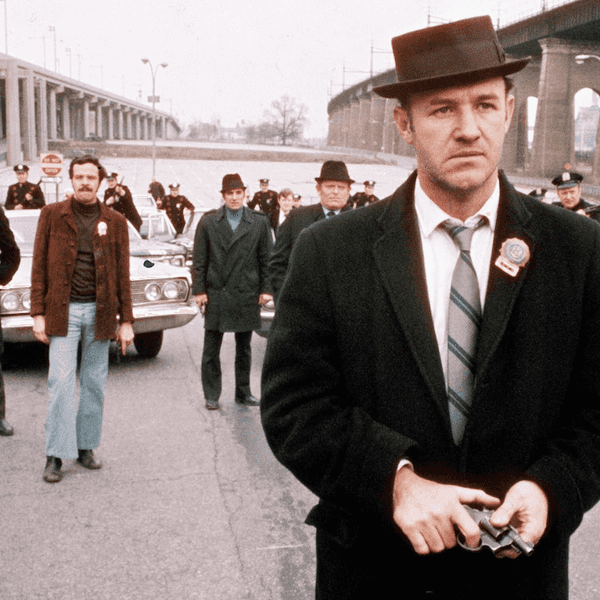
One look at Mathew Rudenberg’s filmography, and one question comes to mind: how does he do it all? The South African-born cinematographer has lensed everything from the moody, arthouse visuals of Ultrasound to the explosive comedy of Die Hart 2, from cult TV hits like Kroll Show to the Emmy-winning polish of Actors on Actors.
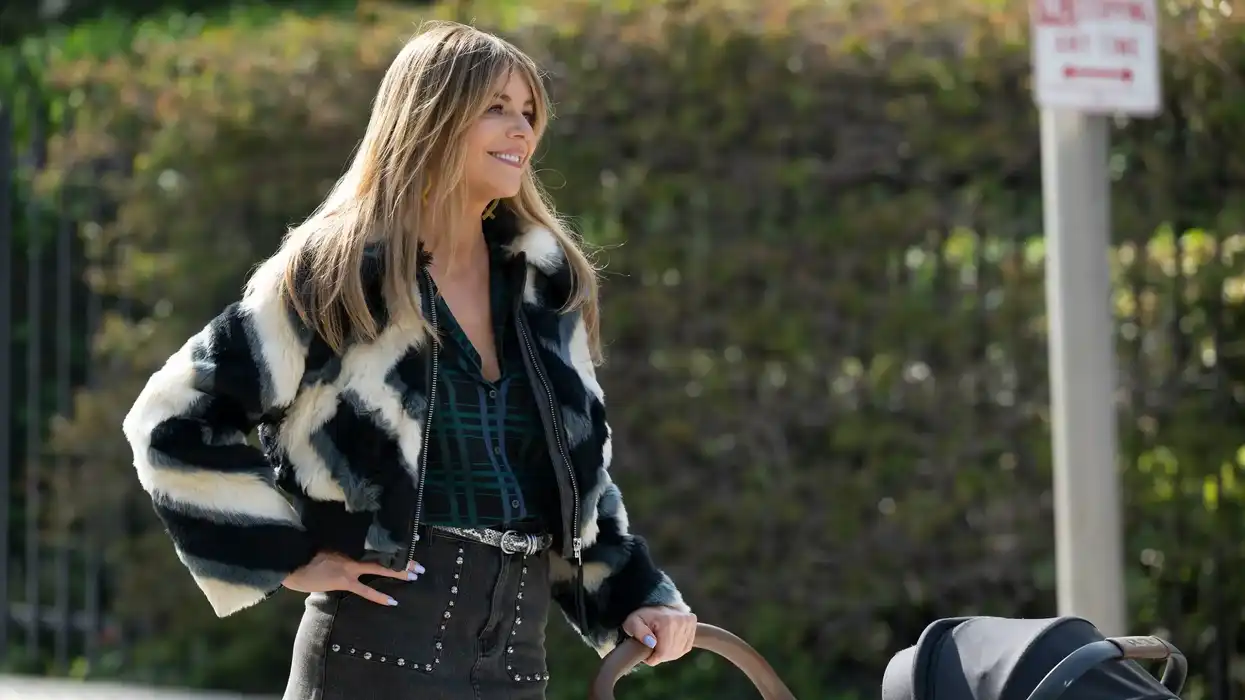
And now, he's crushing a few episodes on ABC and Hulu's High Potential.
But it’s his deep experience in documentary filmmaking—which has taken him from Folsom prison to a Juggalo rally and earned him a SXSW Grand Jury Prize for The Work—that may be the secret to his success.
We spoke with Mathew about his process and how nonfiction shooting informs his scripted work, and his advice for DPs looking to avoid being pigeonholed.
Let's dive in.
- YouTubewww.youtube.com
NFS: Hi Mathew! Having joined High Potential in its second season, how do you adapt to a show's existing visual language while also hoping to innovate upon it?
Mathew Rudenberg: One of the things I love most about shooting television is that it’s iterative. You can always look at what’s been done and ask, "How can we perfect this? "Joining High Potential in Season 2 was a great opportunity to take a step back, breathe, and really evaluate what was working and where we could elevate things.
Building a visual language always starts with story and character. At its core, High Potential is about an unconventional character, Morgan Gillory, whose presence brings color and unpredictability into a grounded police procedural world. There’s a natural tension in those two worlds colliding, and I wanted the visuals to reflect that.
For the police procedural side, my co-DP Amanda Treyz and I completely re-evaluated our camera and lens package. We spent days testing cameras, filters, and lenses at my longtime camera house, Keslow, and then reviewed the footage with our fantastic colorist, Cody Baker, at Company 3.
We decided to stay with the Alexa 35 because of its incredible range and skin tones, but Cody built a brand-new show LUT that really brought out the blues in the shadows. We also switched our main lens package to the Arri Master Primes, paired with zooms, for a clean but cinematic feel.
For Morgan’s interior world, my longtime collaborator and visionary producing director Nancy Hower encouraged me to really push things creatively. We zeroed in on the “Morgan Visions” as a place to experiment and elevate the show’s visual storytelling, taking them beyond what was done in Season 1.
NFS: Can you tell us more about the "Morgan Visions" that play such an essential role in the show? Do you have any favorites from this season?
MR: The “Morgan Visions” are moments where the audience gets to peek inside Morgan’s brilliant and quirky mind as she connects seemingly unrelated facts to solve a mystery. They have to deliver information, but always through her lens—her humor, her associations, her worldview.
Our showrunner, Todd Harthan, wanted to move away from greenscreen and stock footage and instead ground these moments in reality. That doesn’t mean we never use CG to augment things, but we try to do as much as possible practically—even if it’s imperfect. That handmade quality is part of the charm.
For example, we needed a time-lapse of a plant growing, but didn’t have time to shoot it practically. Instead of using CG, we built a fake square of ground, pulled the plant through a hole, and played it backward so it looked like it was sprouting. It’s silly, tactile, and it works beautifully.
To differentiate the look of these sequences, we use Ancient Optics Petzvelux lenses, probe lenses, and tilt-shift lenses to craft unusual visuals. Beyond that, we’ve created all kinds of looks—from 1940s newsreels to 8mm Vietnam hostage films to 1980s educational kids’ shows. There’s even a very special cameo I can’t spoil yet, but viewers are going to love it.
NFS: How does High Potential compare to your work on other series, such as Blue Mountain State or The Kroll Show?
MR: One of my primary goals as a DP is to find the right look for each show rather than impose a personal signature. I love using all the tools available to craft a style that best communicates the tone, characters, and story. In that sense, I think of my approach as a bit chameleonic—I’ve built totally different visual styles for comedies, horror, and sci-fi.
Every project expands my toolbox of techniques and ideas. Kroll Show, in particular, was a great primer for High Potential, because I worked with DP Christian Sprenger to design a variety of looks depending on the sketch or segment.
That experience of constantly shifting tone and texture—from heightened parody to naturalism—really helped prepare me for a show like High Potential, which walks the line between grounded drama and playful imagination.
We were shooting on an early RED camera that let us vary the sensor size. For the cinematic pieces, we’d use the full sensor with primes for a rich depth of field, while for the reality-style segments, we’d crop the sensor to 16mm size to mimic ENG cameras. I’ve taken a similar approach on High Potential using the Alexa.
And while Blue Mountain State was a cult comedy, there’s a similar sense of humor in High Potential that balances and heightens the dramatic moments.
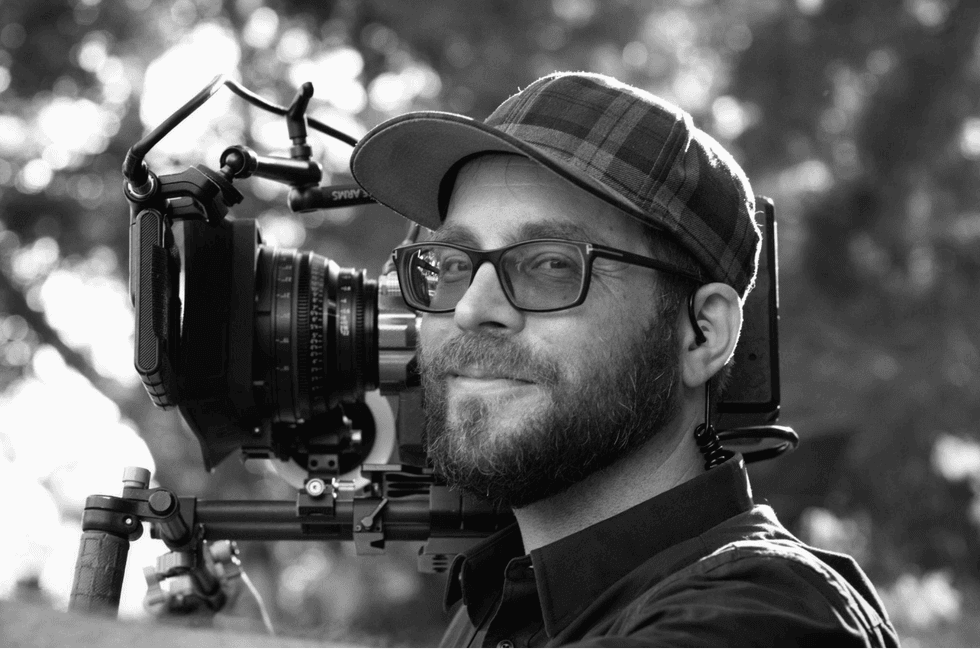 Mathew RudenbergPhoto by Rob Schroeder
NFS: I’m fascinated by your work as the cinematographer on Variety’s Actors on Actors series. What has that experience taught you about being a creative or the industry at large?
MR: I’ve shot Actors on Actors for about a decade now, and it’s been one of the most rewarding long-term projects I’ve been a part of. The show has evolved a lot—it started with more of a talk-show vibe, but after going remote during the pandemic, we returned with a much cleaner, minimal aesthetic that I really love.
That stripped-down approach puts all the focus on two actors having an intimate, honest conversation. Over the years, I’ve had the privilege of sitting just off-camera from almost every major actor in film and television, listening as they open up about their inspirations, struggles, and triumphs. It’s given me a much deeper appreciation for their humanity.
Across the industry, there’s a lot of talk about AI-generated stories and performances. But after witnessing these conversations firsthand, I’m convinced that no technology—no matter how advanced—can replace the lived experience, passion, and emotional truth of a real person.
NFS: High Potential deftly walks a tightrope between comedy and drama. How do you navigate that balance from a visual perspective?
MR: There’s a tendency in our industry to make binary distinctions— dividing shows into “comedy” and “drama.” But that’s really just a practical separation based on runtime. In truth, all good comedy has drama in it, and all good drama has humor.
I do have a little saying: “Comedy is clean, drama is dirty.” By that I mean that when shooting comedy, I often go for clean singles—especially since there’s usually improv and matching can be tricky—while in drama I like to include both actors in frame to feel the emotional weight between them. But that’s hardly a hard-and-fast rule.
In High Potential, the only moments that lean overtly comedic are the Morgan Visions, since they exist outside of reality. Sometimes we even end those with a wink to the camera, breaking the fourth wall. For the rest of the show, I don’t think in terms of comedy versus drama—I think in terms of emotional truth.
For example, my episode “11 Minutes” tells a heartbreaking story of two very different adult children trying to reconnect with their dying parents. If it were shot with a comedic sensibility, it wouldn’t land the same way emotionally.
NFS: What is the collaboration like among the department heads on High Potential?
MR: One of the most vital collaborations is with our production designer, Valerie Green, and art director, Ryan Suchon. Since we avoid greenscreen and stock footage, each Morgan Vision requires a physical set—often built for just a few seconds of screen time.
For example, one Morgan Vision was originally written as spinning magazine covers flying into frame—a simple post effect. I suggested we print each cover and physically throw them onto a small set dressed to match each headline. Val ended up building little environments—a swamp, a construction site, a gym—all just a few feet square.
For another scene, Ryan built a giant lock so we could push a probe lens on the camera through it to reveal a criminal picking it from the other side.
Our whole crew loves that we do things practically. I can see our special effects coordinator, Jonathan Kombrinck, light up every time we decide to achieve something in-camera, like figuring out a safe way to simulate a thermite reaction burning through glass.
NFS: Are there any other genres you’d like to explore?
MR: As I’ve said, I love tailoring a look to each project, and what excites me most is when I get to build an entire world through cinematography—as I’ve done on some of the sci-fi projects I’ve shot, like the Nolan-esque feature Ultrasound for Rob Schroeder, which played at Tribeca in 2021.
I grew up reading sci-fi paperbacks from my dad’s library, and I’ve always been inspired by the epic worlds of filmmakers like Villeneuve and Kubrick. But I’m just as amazed by what can be done on a smaller scale—films like Shane Carruth’s Upstream Color or Caldwell and Earl’s Prospect.
So a dream of mine would definitely be to shoot a sci-fi series, or a few more features in that space.
NFS: Is there anything else you’d like to share about High Potential or your upcoming work?
MR: I couldn’t end an interview without mentioning how incredible Kaitlin Olson is—both as an EP and as an actor. She’s the heart of the show and deeply involved in every aspect, from concept to performance. Working with her is an absolute joy, and I’m in awe of everything she brings to the production every single day.
We’re still in the middle of shooting Season 2, and there’s so much great stuff coming up that I can’t wait for audiences to see—including a killer car chase we shot right here in LA, with some of the best stunt drivers in the business, beautifully orchestrated by our stunt coordinator, Kimberly Shannon.
If anyone’s curious about the craft behind High Potential, I love sharing behind-the-scenes looks at our camera and lighting setups on Instagram — you can find me at @rudenberg_dp.