Why Over-Researching Can Ruin a Great Scene—and How to Fix It
Sometimes the best thing you can do is just to make sure the drama is there and worry about the facts another time.
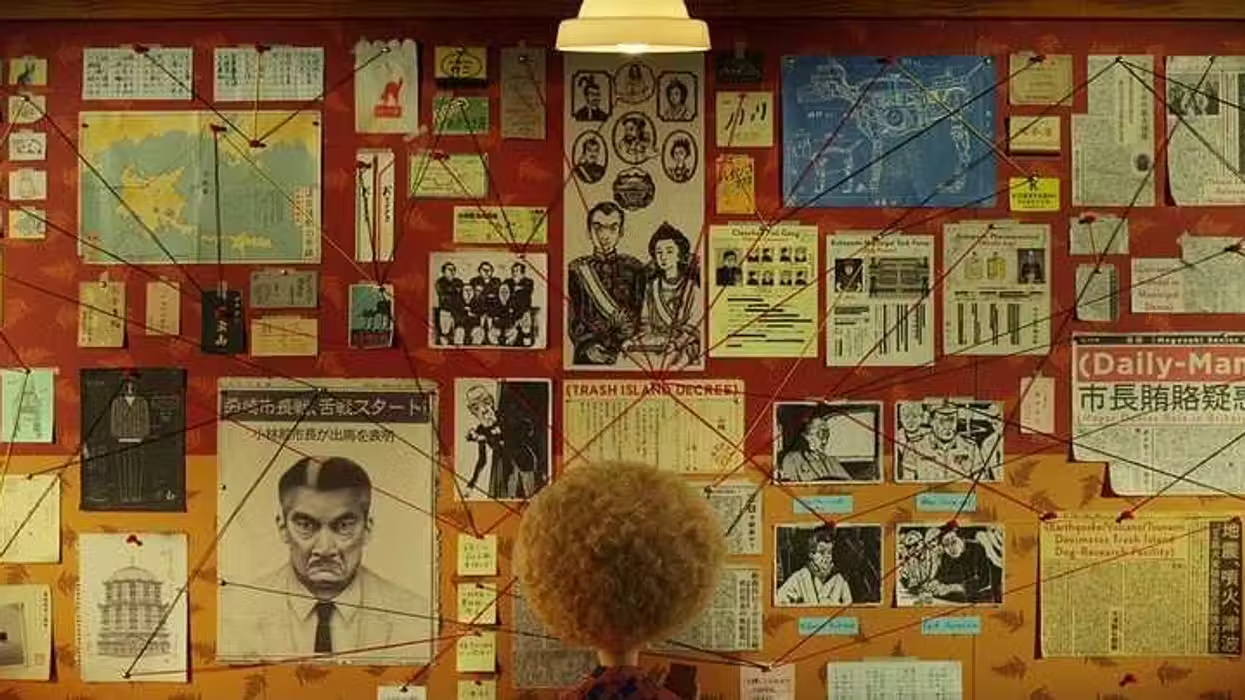
'Isle of Dogs'
Let me know if this has happened to you: you have a great idea for a scene, but the more you try to add details from your research or incorporate facts, the more you end up kind of ruining it.
That's because storytelling is not real life, and at the core of every scene should not be a bunch of facts; it should be a palpable soul.
Writers, actors, and directors all have the same issue when it comes to this kind of stuff. That's why I liked seeing a compilation of people talking about that very phenomenon on YouTube.
Today, I want to pick apart the idea that getting too hung up on reality can derail your film and stop your progress before you really get started.
Let's dive in.
- YouTube www.youtube.com
The Trap of "That’s Not How They Really Do It"
I have been working on this big movie with historical elements, and the thing that keeps holding me back is that nagging voice in my head saying, "But it didn't really happen that way."
Well, I hate you, I think, but your job is not to be a historian or the accuracy police; your job is to be entertaining.
When hyper-realism gets in the way of dramatic tension, the story loses.
People go to the movies to get some poetic license; if they didn't, they could just live real life or watch a stringent documentary.
Film is a medium of compression and poetic license.
Cinema relies heavily on visual metaphors to communicate quickly with the audience.
A scene that works dramatically will almost always serve the movie better than a scene that works procedurally.
So, what can filmmakers learn from all that?
Be Selective With Your Realism
Don't demand that every single movement or procedure matches real life or even real physics.
Identify the shorthand moments that grant your characters credibility, then let the narrative go where it needs to to service an entertaining story.
Research Builds Confidence
The primary purpose of deep research is the internal confidence it gives the artist to put forth something that feels authentic.
You want to be typing pages that feel informed, and you believe in the world where they exist.
When an actor or director thoroughly understands the world of the story, they can articulate what they need or how they should act in the scene in question.
Story Always Trumps Fact
If a detail slows things down or ruins an emotional payoff, just scrap it. Audience engagement depends on how they feel, not on what their brains know about a particular sword or historical date.
Summing It All Up
At the end of the day, all you need to do is enough research to make the story work, and let the rest of the stuff be something someone googles after the movie. Your primary job is to be entertaining and to keep the audience buying tickets because they're excited to participate in the tale.
Let me know what you think in the comments.