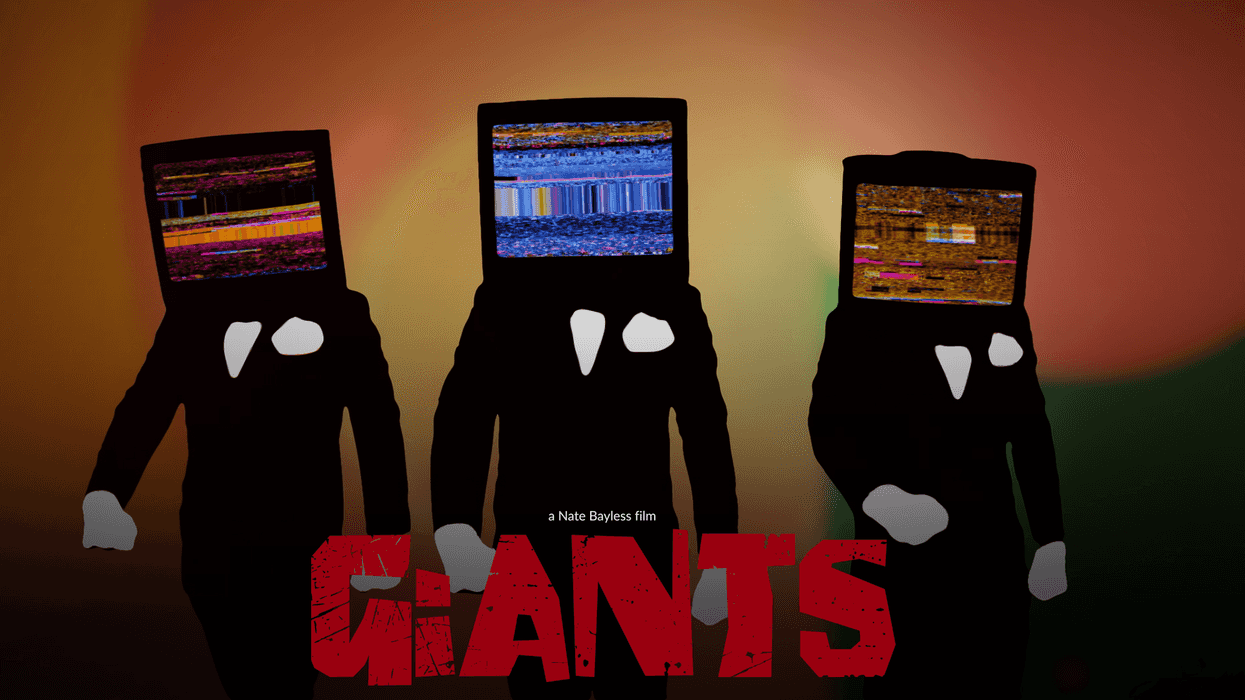
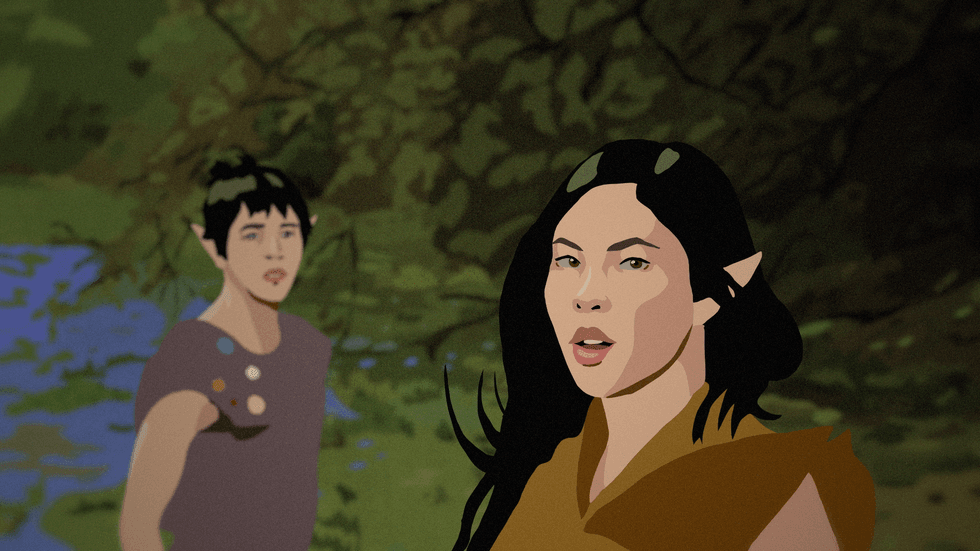
Another fun discovery at this year's Austin Film Festival was GIANTS, a five-minute short film in the festival’s Animated Shorts Program. It caught our attention for its DIY style and roots, and we were intrigued by the film’s journey: it began as a live-action short film shot over a decade ago before it was brought back to life and mutated into a stylized rotoscope-animated film.
We chatted with filmmaker Nate Bayless about the film’s history and how he brought it into a new, mutated version that screened at this year’s Austin Film Festival.
NFS: Tell us a bit about the inspiration and original idea for GIANTS?
Nate Bayless: It was one of those all-too-rare ideas that came into my head fully formed, all at once. In my experience, you have to follow those.
The film is mostly about growing up. I was 26 when I wrote and directed the live-action reference footage back in 2013, and there was a lot of eye-opening political stuff going on that has only grown more relevant as time progressed.
I don’t want to say much more than that about what it means to me personally and why the idea wouldn’t let me give up on it after so long, but it definitely wears its cinematic influences on its sleeve. Studio Ghibli, Lord of the Rings, all manner of dystopian science fiction from The Matrix to Brave New World, the rotoscope animated films of Ralph Bakshi, psychedelic 70s fare like the films of John Boorman, it’s kind of a hodgepodge of all my favorite things!
NFS: You mention that the film began as a live-action project before it mutated into stylized rotoscope animation. Could you tell us a bit about the film's history and this conversion?
NB: My two producer friends and I threw a fundraiser, did a little crowdfunding, and called in a ton of favors to organize a surprisingly professional three-day shoot in Austin, TX, with a sizeable crew, one day in the woods at the local Greenbelt and two days on a greenscreen soundstage.
The footage all looked great, but the issue was that I was way overestimating visual effects capabilities at the time. Given that it is a very effects-heavy film, I decided it would be best to put post-production on hold until my skills developed, but 2 years later I found myself working with Austin rotoscope studio Minnow Mountain and thought this might be the best way to realize the film, and that changed my whole perspective on it.
However, none of the designs I made felt right, and it took a long time to find a look I was happy with. In 2020, I became a father, which of course slowed things down too. That was OK, because I’d waited this long and there was no real rush to finish.
Then just last year in 2025, my passion for filmmaking got reignited after a successful year-long festival run for my short film, Shirime, and I just had so much fun with that that I wanted to keep the train rolling, so I dusted off GIANTS, and here we are!
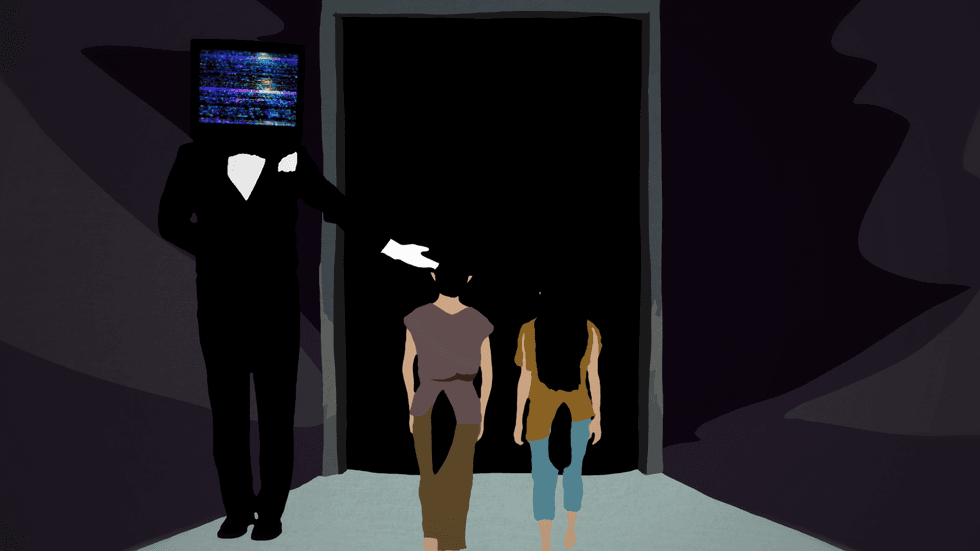
Outside of the visual style, the film is mostly the same as it was written, save for one big narrative and titular change. The film was originally about a couple of magical woodland creatures who stumble into a monolithic building where they discover a world of mesmerizing spectacle, only to uncover its nefarious secret.
But once the film became an animation and all limitations were gone, I decided to turn the building into a lumbering, rotting giant with a machine head that the creatures would enter through a metallic doorway that protrudes from the giant’s pelvic region… which is admittedly a lot weirder, but also more visually interesting, and led to a better ending that thematically fits a lot better with what the movie is about.
'Giants
Courtesy of Austin Film Festival
NFS: What camera did you originally shoot on? Were there any challenges with using footage for so long ago?
NB: We shot on the Blackmagic 4k Cinema Camera. Our DP, Dustin Supencheck, knew what he was doing, and the footage looked great, so luckily there were no challenges in using it as reference footage for the rotoscoping process.
'Giants'
Courtesy of Austin Film Festival
NFS: What appeals to you more at this point, live-action filmmaking or animation?
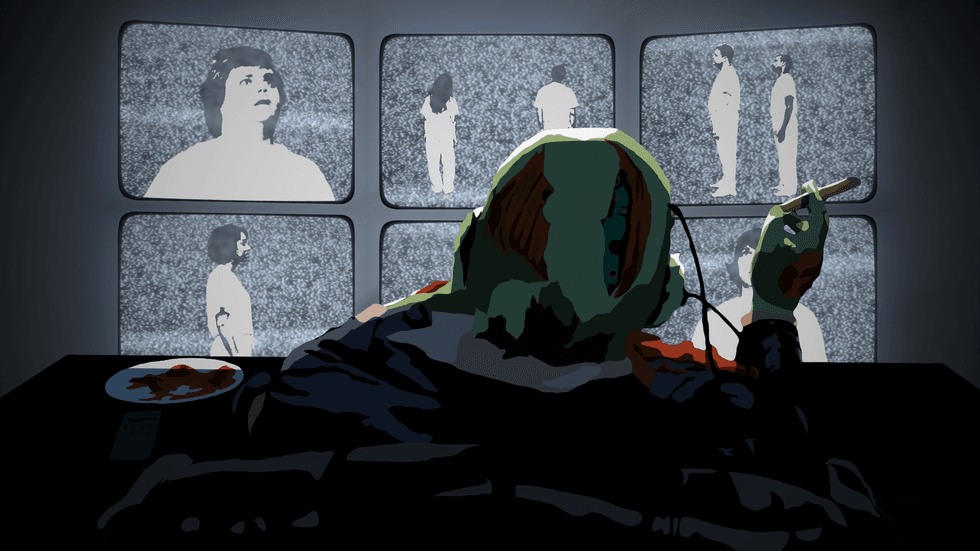
NB: That’s exactly why I love rotoscoping so much; it’s the best of both worlds! There’s nothing quite like the creative energy of being on set and the thrill of nailing the perfect take, but you also butt heads and run up against curveballs that force you to compromise your vision. Animation is great because you get to be the all-powerful god of the world of the movie you’re making, but it can get very lonely working for so long in the isolation animation requires.
With rotoscope animation, you get to work with others but not have to spend so long on lighting setups or spend so much money on sets, wardrobe, and props since you’ll be drawing everything eventually and can redesign it however you like while still getting the little touches that actors and happy accidents on set bring. But even before working in this medium, I’ve always found rotoscope animation to be sort of magical, just on the edge of real and unreal, like being in a dream; in other words, exactly what film does best.
'Giants'
Courtesy of Austin Film Festival
NFS: How has your experience been at the Austin Film Festival?
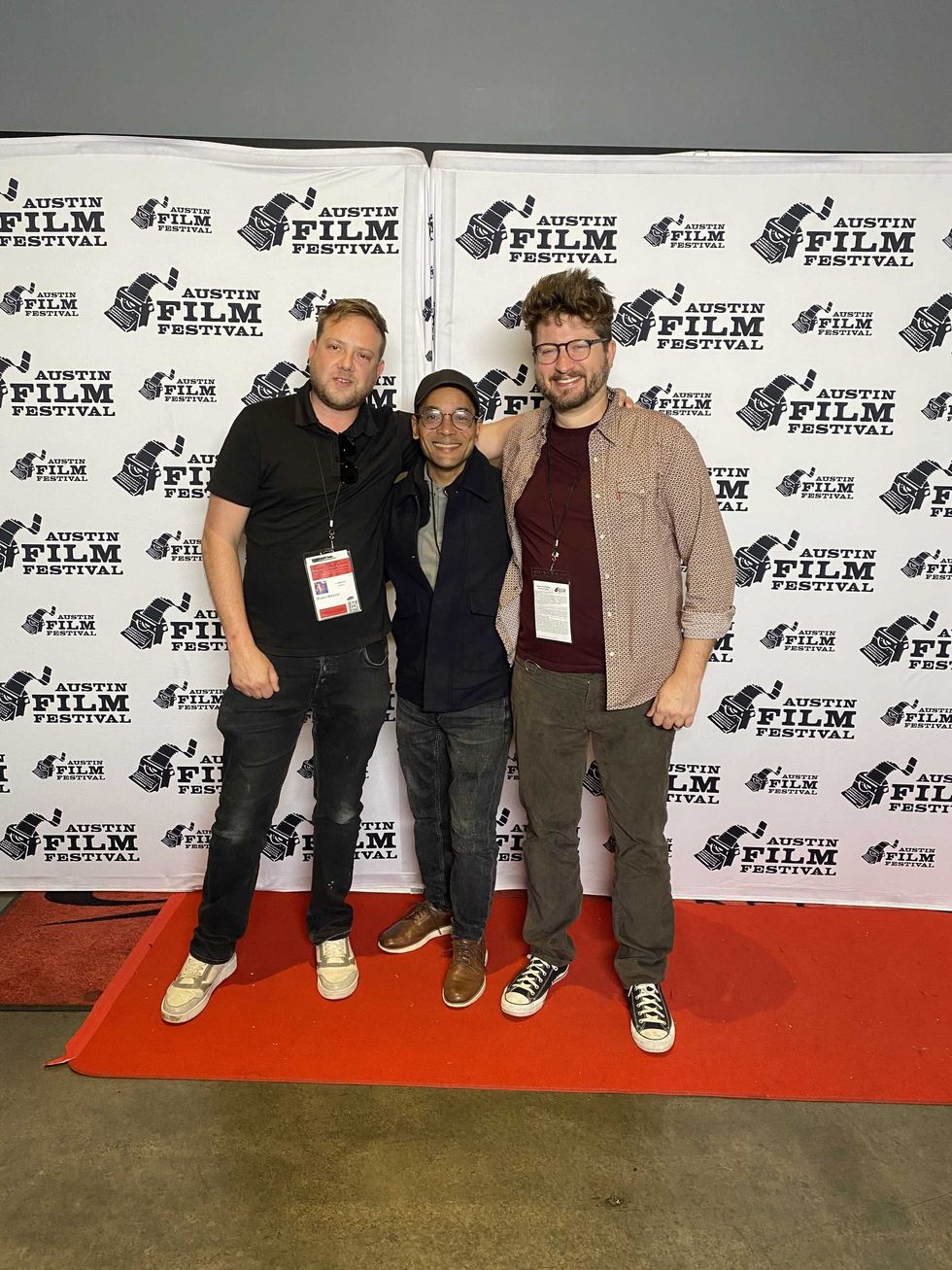
NB: Showing GIANTS at the Austin Film Festival was a dream come true. It’s been on my list for a long time, and I’m glad to be able to check it off. Great communication from the festival coordinators, tons of incredible films and filmmakers; it was an honor to be included. I’d highly recommend submitting, if any filmmakers reading are on the fence!
The 'GIANTS' team at the Austin Film Festival
Courtesy of Nate Bayless
NFS: If you could give any career insights to up-and-coming filmmakers, in live-action or animation, what advice would you share?
NB: I think “making it” in the film world in any meaningful way requires 3 things: A) You’re good at what you do, B) You know the right people, and C) You’re in the right place at the right time.
Study your craft, follow your interests and instincts, and never stop learning, so that you’re great at what you do and develop yourself as a unique professional.
It can be a lot more difficult to know the right people and be in the right place at the right time, but get involved as often as you can, however you can. You won’t be able to do either if you don’t get involved, and you never know when a contact will become the person who recommends you for a job because they’re talking to the right person. Go to the mixers, attend the festivals, try to work on sets as much as you can, and you’ll dramatically improve your odds.
And lastly, as corny as it sounds, try to build relationships rather than contacts. The vast majority of work that I’ve gotten over the years has been because I was friends with someone who recommended me for certain projects. And while I’ve recommended people because of their skill set, I’m always much more likely to recommend or hire someone because they’re my friends and I want to see them succeed. Worst-case scenario, you end up with more friends you can talk movies with, and that ain’t half bad.
- Filmmakers Are Outraged by the Academy's Disqualification of 'Apollo 10 1/2' ›
- What Is Rotoscoping? (Definition and Examples) ›
- A Beginner’s Guide to Rotoscoping in After Effects ›
- The Roto Brush from Adobe After Effects Makes Rotoscoping Painless ›
- Why Rotoscoping Can Be the Most Helpful and the Most Hated VFX Technique ›