Film Quote of the Day: 'The Departed' Back-and-Forth That Might Be Its Most Underrated
These lines reveal the film’s deeper themes.
'The Departed'
I feel like in 2006, people were calling The Departed Scorsese's makeup Oscar for snubs on Goodfellas and Raging Bull, and a few other titles, but the more I watch the movie, the more I think it really has a lot to say about American egos, more than we thought at the time.
People usually focus on the loudest moments of the movie, like the literal gunshots, bodies falling, and Jack Nicholson throwing cash around a strip club.
It's true that William Monahan’s Oscar-winning script is loaded with iconic lines and actors chewing scenery. But tucked right into the climax is a brief exchange between Matt Damon and Leonardo DiCaprio that hits every note about the theme of the film.
Let's dive in.
- YouTubewww.youtube.com
A Quick Recap of The Departed
We're in South Boston, where rookie cop Billy Costigan (Leonardo DiCaprio) is sent undercover to infiltrate the Irish mob syndicate run by the ruthless boss Frank Costello (Jack Nicholson).
Unbeknownst to the state police, Costello has placed his own mole, Colin Sullivan (Matt Damon), inside the Special Investigation Unit, where he is mentored by Captain Ellerby (Alec Baldwin) and assigned to track down Costello's informant.
Colin uses his access to feed information to Costello, who begins to suspect there is a mole in his unit. At the same time, Billy tries to gain the trust of Costello and his volatile enforcer, French (Ray Winstone).
Simultaneously, Billy and Colin are both having affairs with department psychiatrist Madolyn Madden (Vera Farmiga).
This is a movie about these two men as mirrors of society and how their society mirrors them, too. It's a cat-and-mouse game that begins under the supervision of Billy's only handlers, Captain Queenan (Martin Sheen) and Sergeant Dignam (Mark Wahlberg), but spirals out of anyone's grasp as the bodies continue to mount and Costello loses all trust in those who surround him.
The Scene in Question
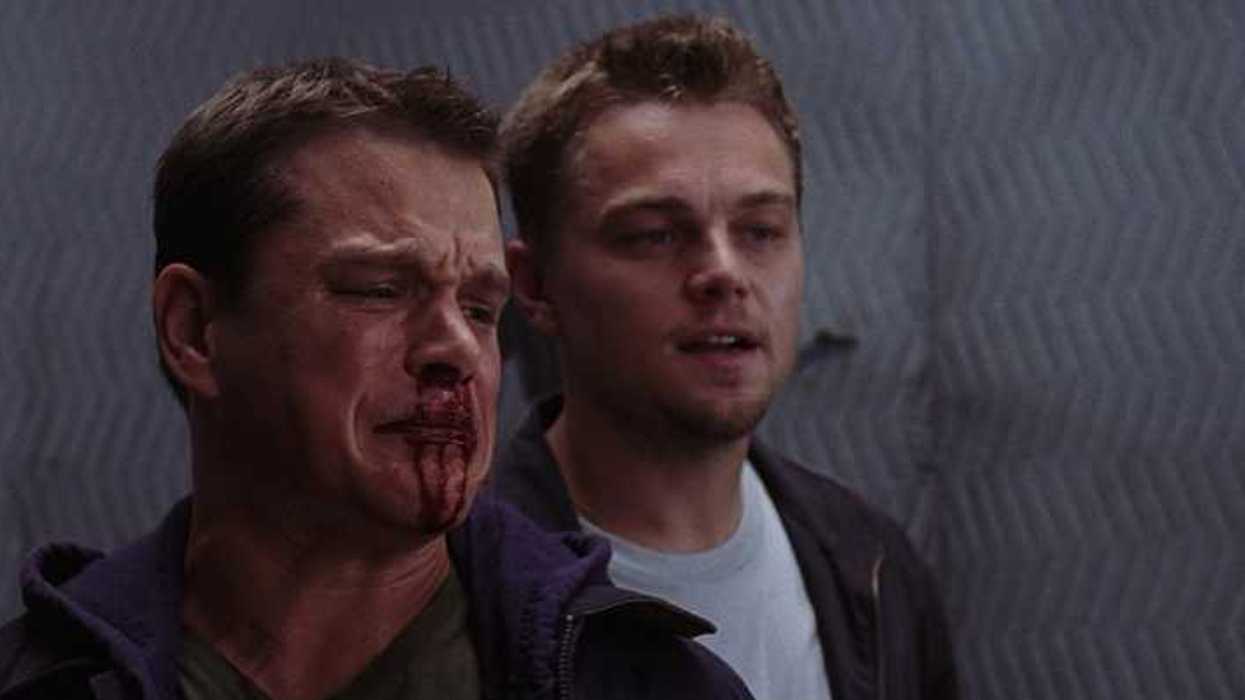
At this point in the third act of the film, the tension is suffocating. We're in the middle of the climax: Billy Costigan (DiCaprio), the undercover cop who spent years losing his mind inside Frank Costello’s mob, has finally caught Colin Sullivan (Damon), the rat who spent those same years becoming a rich and successful cop.
Billy snaps the handcuffs on Colin, drags him down from the roof of 344 Washington Street, and shoves him into a freight elevator. He's taking him to finally face justice, to finally own up to who he is and what he's done.
Colin knows that his precious masculine veneer has finally worn off, and the whole world will see him for who he is outside of his perfectly curated life.
This makes Colin just wish he were dead, in order to escape the consequences of his actions. Billy knows this and twists the knife a little to make Colin suffer.
Colin Sullivan: Just fucking kill me. Just fucking kill me.
Billy Costigan: I am killing you.
- YouTubewww.youtube.com
What The Quote Means
Well, Billy never really gets to relish the victory because he takes a bullet to the face moments after these lines come out. And then later, Colin gets his own bullet, too.
I think these poignant lines get lost in that circus of chaos, but I want to take a moment to reflect on them here.
On the surface, Colin thinks Billy is just stalling or being sadistic. But Monahan’s script is actually digging up a layer that's been there all along.
Colin is not afraid to die; he's afraid to be seen for who he really is, which is a fate much worse than death.
Getting dragged down into a courtroom, facing the press, losing his badge, his woman, and spending the rest of his life in maximum security as an exposed rat is nightmare fuel. So he begs for a way out of this mess.
Billy acknowledges those circumstances when he says, "I am killing you." he is taking away Colin’s life piece by piece, giving him what he deserves for the killing of the captain and for all the other bodies which have been stacked high.
This is Billy certifying that Colin deserved to suffer alongside him.
Summing It All Up
Screenwriters spend endless hours writing massive monologues to explain what their characters are going through, but sometimes all you need is a few words of confirmation.
Next time you rewatch The Departed, skip past the flashy insult barrages for a second and appreciate this quiet piece of subtext.
It may make the ending hit you even harder this time around.
Let me know what you think in the comments.