For decades, filmmakers have been asking the wrong question.
Is 35mm more cinematic than digital? Is 70mm worth the expense? Should we shoot open gate?
For me, these debates all overlook the true cinematic format: the 720p webcam of a 2009 iMac.
I discovered this format while preparing to adapt Homer’s Odyssey. My cinematographer originally approached me with cameras offering 4K, 8K, and even 12K resolution. But I am not focused on megapixels. I am focused on mega-performance.
Modern cameras capture extraordinary detail, but detail is not storytelling. Audiences do not leave the cinema discussing pixel quality. They leave, discussing whether they felt something.
And sometimes, to feel something, you need to remove almost 96% of the available pixels.
- YouTubewww.youtube.com
Limitations Liberate the Artist
The iMac webcam records at a maximum resolution of 1280 by 720. To some filmmakers, this may seem limiting. But filmmaking has always been about limitations.
The iMac cannot change lenses. It has no focus controls. It offers almost no dynamic range. You cannot adjust the shutter speed, aperture, or ISO. In fact, you cannot adjust anything.
This forces the director to concentrate on the only variable that truly matters: what is happening in front of the computer. This is filmmaking in its purest form.
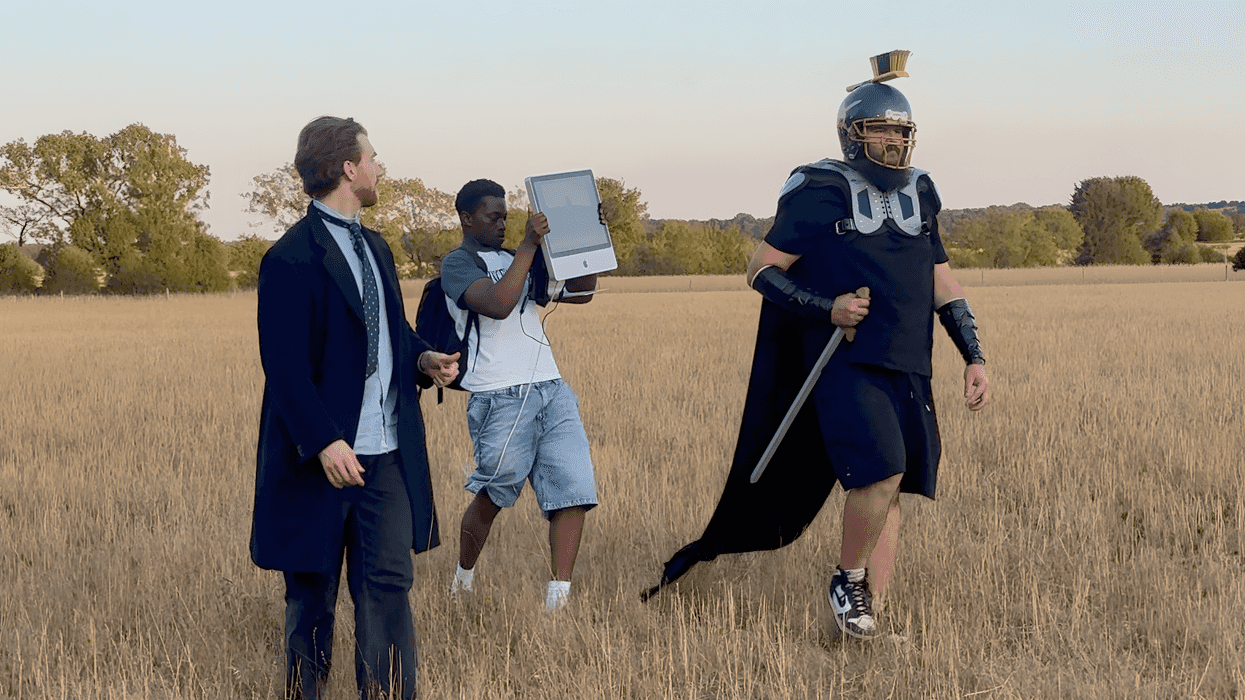
 'The Oddersy' BTS Credit: Will Norman
The Camera Becomes Part of the Performance
Filming with an iMac fundamentally changes the relationship between actor and camera. An iMac places a 21-inch live, mirrored image of the actor directly in front of their face. This means the performer must completely become a character from Homer’s ancient text while simultaneously watching themselves become that character in PhotoBooth. It requires enormous discipline.
For the close-ups, we had to move the computer within literal inches of the actor’s nose. There was nowhere for them to hide. Partly because of the emotional intimacy, but mainly because an entire desktop computer was blocking their face.
Great Cinema Requires Great Engineering
The greatest cinematic formats have always demanded specialist equipment. The 2009 iMac weighs approximately nine kilograms and must remain connected to a mains power supply.
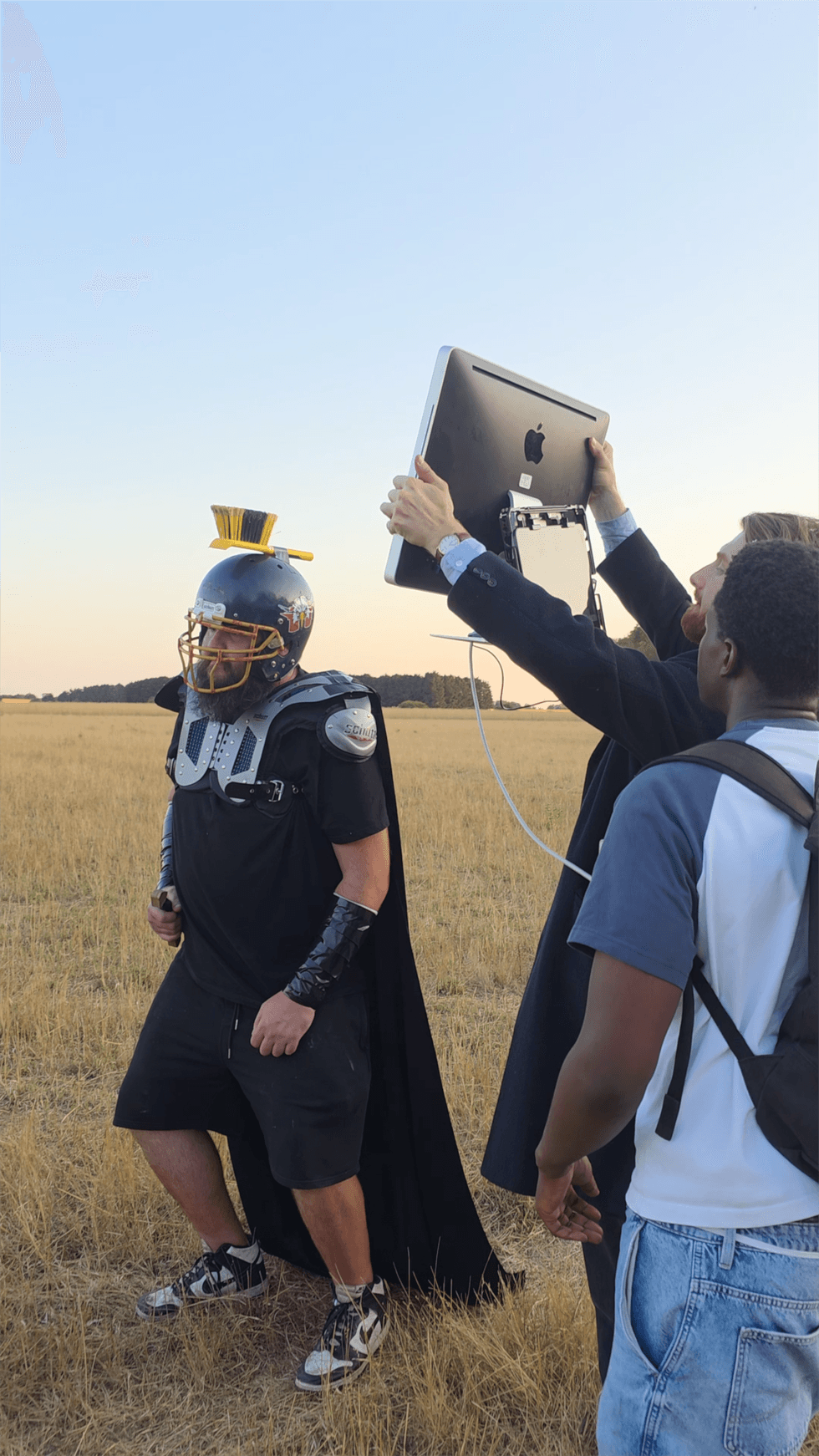
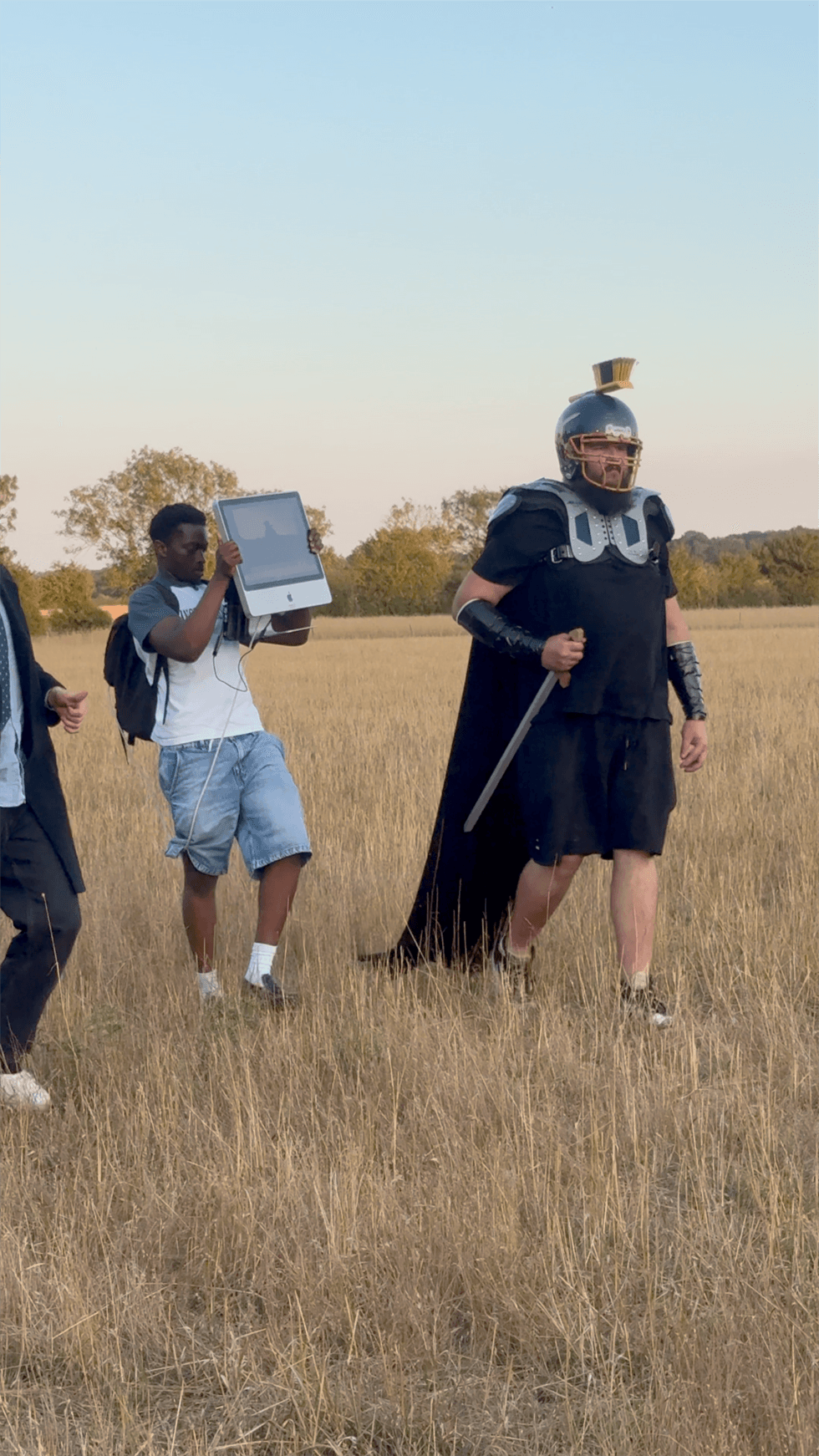
We mounted an iMac onto a 25-foot Technocrane to capture sweeping shots of Odysseus at sea. We used Lime bikes as camera dollies. For handheld sequences, our operators wore a backpack containing a camping power station, so that we could take the iMac out into the real world.
The iMac’s processing power could barely handle recording its own webcam. Whenever we pressed record, the image began to lag. To overcome this, our iMacs team rigged an iPad to the back of the computer and used its screen-recording function to capture the live PhotoBooth preview. The result was an entirely new camera system; however, this did present further challenges. The iPad captured everything visible on the screen, meaning several sensational performances were interrupted by rogue mouse cursors or software update notifications.
 'The Oddersy' BTS Credit: Will Norman
Photo Booth Is a Complete Visual Effects Department
We wanted the special effects in The Oddersy to be captured practically. When an effect is achieved in camera, everything feels more real.
Fortunately, we were shooting on a device that already contained a complete suite of visual effects, in PhotoBooth. I ask you, dear reader, does an Alexa LF or a Sony Venice immediately offer you Sepia, Thermal, or Fisheye? I think not. Keen-eyed viewers may also notice that a shot featuring Odysseus and Penelope on a tropical island was created with the ‘background-replacement’ feature that came pre-installed on iMacs more than 15 years ago.
 'The Oddersy' BTSCredit: Will Norman
One Camera, Infinite Lenses
Filmmakers are often told that lens choice is an essential part of visual storytelling. We were told that the iMac webcam had only one fixed lens, but I set the iMacs team the challenge of changing this, and they did not disappoint.
By attaching detachable iPhone lenses directly over the webcam, we created wide-angle, fisheye, and telephoto perspectives. The telephoto's compression proved essential: during a miniature shoot, we placed a toy horse before a television playing a ‘10 hour relaxing ocean waves’ backdrop, and the compressed image made the horse appear stranded on the shores of Ithaca. Seeing that frame for the first time on set, I still get goosebumps. It was awe, in its purest sense.
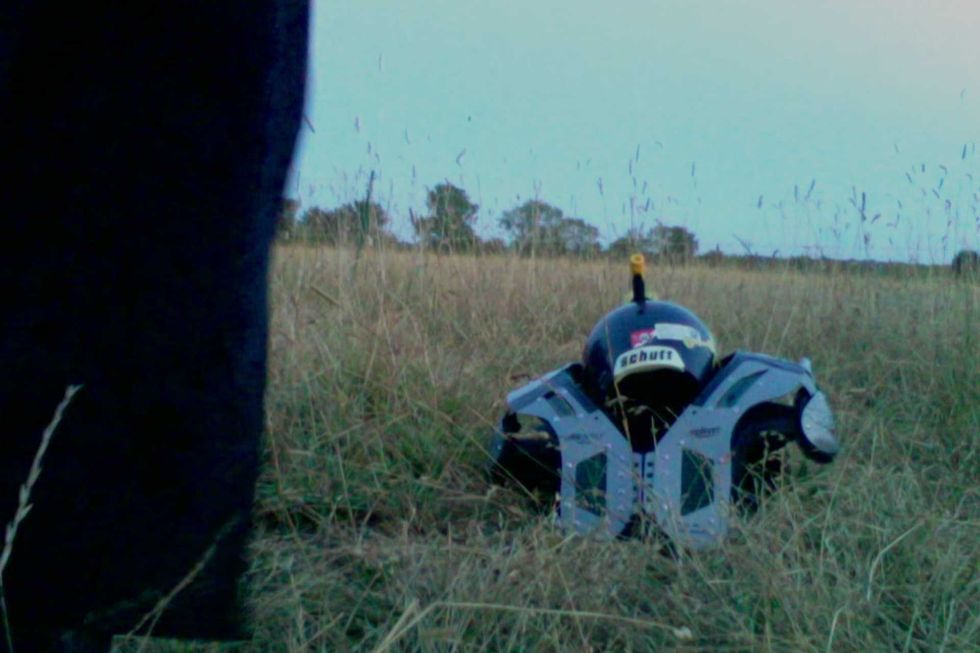 'The Oddersy'Credit: Will Norman
Resolution Is the Enemy of Imagination
Many have asked why we did not use a proper camera. This question misunderstands the entire project.
The industry may not be ready to accept it. Cinemas may lack the infrastructure. Crews may resist carrying desktop computers above lakes. Apple itself may contact me to stop promoting a desktop computer as a genuine cinema camera for safety concerns, but as filmmakers, WE MUST OVERCOME THESE CHALLENGES AND PUSH CINEMA FORWARD!