17 Best Medieval Movies, Ranked by Epicness
We scoured the cinematic archives for films that capture the medieval world’s dirt, drama, and human truths.
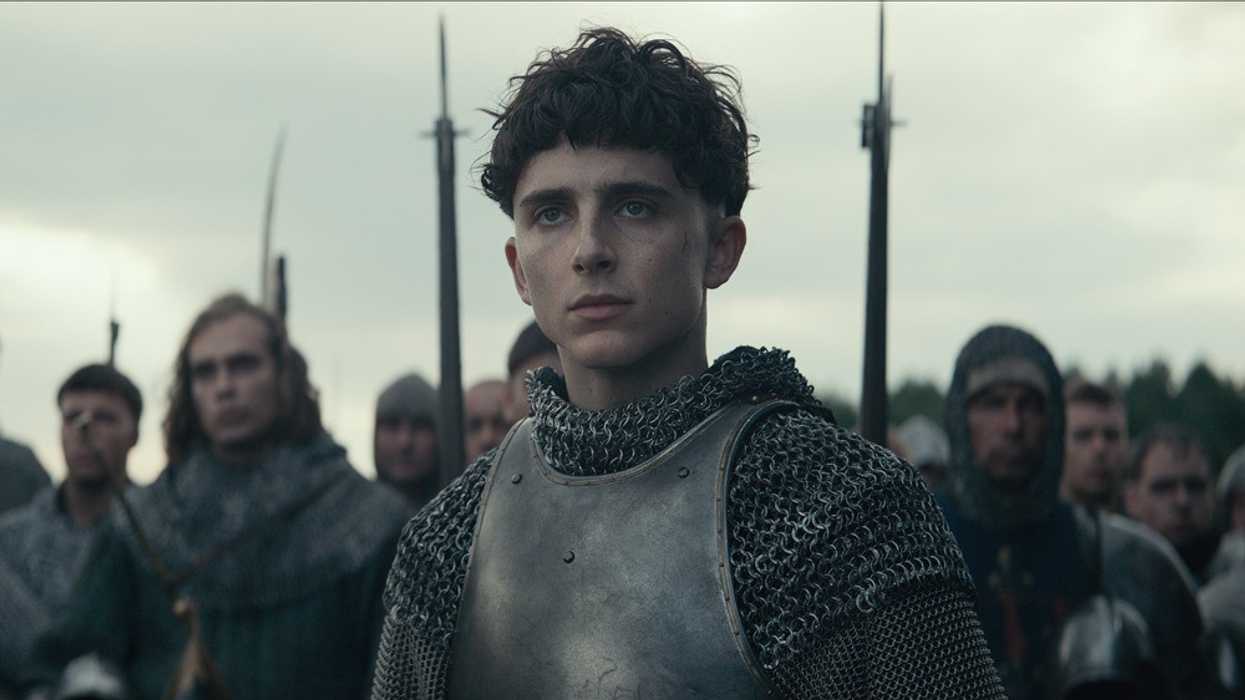
'The King (2019)'
The medieval world wasn’t a tourist brochure of castles and courtly dances. It was raw, violent, often absurd, and deeply human.
Picture muddy battlefields where armies clashed with swords that weighed as much as small children. Imagine smoky monasteries. The plague. It was far from a sanitized fantasy world.
That’s exactly why medieval films endure. They retell history by dramatizing timeless human struggles—ambition, loyalty, vengeance, love—set against the backdrop of a world teetering between chaos and order.
Whether it’s the heavy symbolism of Ingmar Bergman, the rebellion of Braveheart, or the silliness of Monty Python, medieval cinema taps into something primal.
Here’s a curated list of 17 films that define this genre’s strange, brutal beauty.
The 17 Films That Slay
The Arthouse Legends
1. Seven Samurai (1954) – Akira Kurosawa
A poor farming village, sick of being raided by bandits, hires seven masterless samurai to protect them. What starts as a job for pay turns into a profound bond between warriors and peasants, set against the harsh backdrop of feudal Japan.
Kurosawa, staging battle scenes, builds tension like a slow drumbeat, letting us feel the weight of duty, sacrifice, and class divides. Every character matters. Every death hits hard. And every shot feels deliberate.
For filmmakers, this is a learning opportunity on handling ensemble casts, long runtimes, and making every frame serve character and story. Nothing is wasted.
2. The Seventh Seal (1957) – Ingmar Bergman
A knight returns home from the Crusades, only to find Europe crawling with plague and despair. On a windswept beach, he literally plays chess with Death, trying to delay his fate while searching for meaning in a collapsing world.
Bergman dives deep into existential dread without feeling heavy-handed. He blends the spiritual and the human. Priests, jesters, and peasants wrestle with the same terror of the unknown. It’s grim, but there’s a strange beauty to its honesty.
If you are looking to direct a film, learn how minimalism—tight dialogue, sparse sets, sharp contrasts—can make abstract ideas hit with gut-punch clarity. It’s about precision, not excess.
3. Marketa Lazarová (1967) – František Vláčil
Set in medieval Bohemia, two clans clash in a world where religion and violence intertwine. In the middle stands Marketa, a young noblewoman caught between loyalty, faith, and raw survival.
Vláčil creates a dreamlike nightmare of snow-covered forests, pagan rituals, brutal kidnappings, all shot with haunting beauty. It doesn’t hold your hand. But once you're in, it’s hard to look away.
The takeaway for aspiring filmmakers is how sound design, atmosphere, and uncompromising world-building can create an immersive experience that feels more like a vision than a narrative.
4. The Virgin Spring (1960) – Ingmar Bergman
A father sends his innocent daughter to deliver candles to a church. She never returns. What follows is a brutal tale of revenge steeped in guilt, faith, and primal justice.
Bergman strips away any melodrama. The violence is sudden and shocking, but it’s the emotional wreckage that lingers. The clash between Christian mercy and old pagan instincts drives every decision these characters make.
We should note how Bergman’s restraint makes the horror hit harder. He proves you don’t need graphic excess to leave a lasting emotional bruise.
5. The Passion of Joan of Arc (1928) – Carl Theodor Dreyer
Joan of Arc, captured and on trial for heresy, faces her judges in a cold, merciless courtroom. There’s no sweeping action—just faces, emotions, and raw psychological warfare.
Carl Theodor Dreyer’s close-ups are legendary. Every flicker of doubt, courage, or pain on Joan’s face pulls you in. It’s silent, yet louder than most films with dialogue. Maria Falconetti’s performance remains a subject of study nearly a century later.
For directors, it can be a lesson in performance-driven storytelling and how visual choices alone can either enhance or detract from a scene.
Epic Battles and Kingdoms
6. Kingdom of Heaven (2005) – Ridley Scott
A blacksmith named Balian stumbles into the political mess of Jerusalem during the Crusades, where religious wars threaten to tear the city apart. He becomes a reluctant defender, trying to hold peace in a world addicted to war.
Ridley Scott gives us massive siege battles, but the real meat is the gray morality. There are no clean heroes here, just desperate people making impossible choices. The director isn’t shy about showing how religion can both inspire and destroy.
The movie’s balance is worth noticing—grand action set pieces don’t drown out the ethical and personal stakes that make the story matter.
7. Braveheart (1995) – Mel Gibson
William Wallace leads a Scottish rebellion against English rule, fueled by vengeance and a dream of freedom. The battles are vicious, and Wallace’s famous rallying speeches still echo through pop culture.
Mel Gibson avoids giving a history lesson and instead crafts a myth. The film plays loose with facts, but nails the emotional impact. Love, betrayal, sacrifice—it’s all cranked to eleven, and it works because it’s sincere.
Directors can take notes on how to build scale and intimacy side-by-side. The audience cares because the cause feels personal, even when the swords start flying.
8. The King (2019) – David Michôd
Young Prince Hal, disillusioned by his father’s rule, unexpectedly takes the throne as Henry V. He’s thrown into wars, betrayals, and the crushing weight of leadership.
David Michôd doesn’t give royal glamor. This version of Henry isn’t polished. He’s feeling his way through power, unsure of whom to trust. The politics is subtle, and the muddy battle scenes feel brutally authentic.
Filmmakers should take note of the value of tone control, and how quiet conversations can carry more tension than armies, as well as how less spectacle can feel more real.
9. El Cid (1961) – Anthony Mann
Rodrigo Díaz de Vivar rises from exile to become Spain’s great defender against the Moors, all while navigating deadly court intrigue and a complicated romance.
Anthony Mann leans hard into sweeping vistas and old-school epic scale. The battle scenes are vast, but the personal stakes—honor, love, loyalty—stay front and center. It’s unapologetically romanticized, but emotionally grounded.
The movie is a lesson in how to build monumental stories without losing track of the characters who anchor them.
10. Ran (1985) – Akira Kurosawa
An aging warlord divides his kingdom among his sons, setting off a chain reaction of betrayal, madness, and total collapse.
Based on Shakespeare’s King Lear, Kurosawa transforms the tale into a visual opera. The color schemes, the misty battlefields, and the slow unraveling of familial bonds make it haunting. No one stages chaos like Kurosawa—he lets it breathe and smother the characters.
The film’s takeaways are how to use scale and atmosphere to amplify tragedy. The downfall is loud and it’s suffocating.
Dark Fables
11. The Name of the Rose (1986) – Jean-Jacques Annaud
In a remote abbey, monks are dying under mysterious circumstances. Enter William of Baskerville, a Franciscan monk with Sherlock-level instincts.
Jean-Jacques Annaud blends mystery, heresy, and medieval paranoia perfectly. The abbey feels claustrophobic, the debates on theology are razor-sharp, and Sean Connery’s cool logic anchors the film.
Filmmakers can see how mixing genres, such as a noir detective in a medieval setting, creates something fresh. It respects its setting but plays with form.
12. Black Death (2010) – Christopher Smith
During the Black Death, a knight escorts a young monk to investigate a village rumored to be untouched by the plague, but where something far darker awaits.
Christopher Smith keeps it bleak and tense. The film drips with dread as it explores faith, fanaticism, and the lengths people will go to to survive. More than clear answers, it’s about unsettling possibilities.
For directors, it’s a case study on mood control. Consequently, the grim atmosphere lingers long after the reels stop rolling.
13. The Lion in Winter (1968) – Anthony Harvey
King Henry II and Queen Eleanor lock horns over which of their sons will inherit the throne. It’s Christmas, but the family dinner is pure psychological warfare.
James Goldman’s script fires off insults like arrows. The real battle is fought with words, not swords. Peter O’Toole and Katharine Hepburn deliver performances that are both venomous and vulnerable.
Screenwriters should pay attention to how dialogue can drive tension without needing to create physical conflict. Verbal duels can hit harder than sword fights.
Other Genre Entries
14. Excalibur (1981) – John Boorman
The rise and fall of King Arthur gets the full operatic treatment, from pulling the sword to the tragic end of Camelot.
John Boorman fully embraces the mythic elements—fog-shrouded forests, gleaming armor, and a sense of destiny that hangs over every scene. It feels both ancient and otherworldly.
Boorman shows how stylization and commitment to tone can elevate familiar stories into something entirely its own.
15. Monty Python and the Holy Grail (1975) – Terry Gilliam & Terry Jones
King Arthur gathers his knights to find the Holy Grail, but nothing goes as planned. Killer rabbits, taunting Frenchmen, and coconut “horses” turn the quest into brilliant nonsense.
Terry Gilliam and Terry Jones utilize the absurd to poke fun at medieval tropes while subtly incorporating sharp satire about authority and blind faith. It’s completely ridiculous, and that’s why it works.
Not just this movie, but the whole Monty Python series is an example of how parody, when built on love for the source material, can create comedy that’s as enduring as the serious stuff.
16. A Knight’s Tale (2001) – Brian Helgeland
A peasant fakes his way into knightly tournaments with the help of loyal friends and some very modern music.
Brian Helgeland refuses to play it straight. Rock soundtracks and cheeky humor collide with medieval jousts, but beneath the fun lies a classic underdog story about ambition and loyalty.
You should learn how fearless stylistic choices, when done with confidence, can give familiar settings fresh energy without feeling gimmicky.
17. The Princess Bride (1987) – Rob Reiner
Westley, a farmboy-turned-pirate, sets out to rescue his true love, facing duels, giants, and rodents of unusual size along the way.
Rob Reiner hits a perfect balance between fairy-tale romance, sharp wit, and heartfelt sincerity. Every character is memorable, and every line feels quotable.
Every aspiring filmmaker needs to understand how tonal balance enables a story to appeal to audiences across generations. That’s what this movie shows. It’s funny, sweet, and smart all at once, without ever breaking its own rules.
Why Medieval Films Matter
Strip away the swords, and you’ll find the same power plays we live through today. Whether it’s backroom politics, religious extremism, or class divides, medieval films hold up a mirror to modern anxieties.
That’s why a film like The King feels eerily current. Or why The Seventh Seal still unnerves us. We’re still bargaining with death in one form or another.
If you want to dig deeper, Flesh + Blood (1985, Paul Verhoeven) offers a brutal look at mercenary life; Ironclad (2011, Jonathan English) drops you into the mud and blood of a siege; and The Advocate (1993, Leslie Megahey) gives you a bizarre medieval courtroom drama wrapped in mystery.- What You Need to Know Before Putting Weapons in Your Film ›
- 75 Science Fiction Writing Prompts To Rile Up The Future ›
- The Fantasy Genre in Film and TV ›
- Face Your Filmmaking Challenges with this Approach from 'Medieval' Director Petr Jakl ›
- How to Make Period Pieces on a Micro-Budget ›
- The Nightmares and Miracles of My Super 8mm Short Film ›
- Why You Should Watch 'The Lord of the Rings' This Holiday Season ›
- How 'Quasi' Costume Designer Created a Medieval Fantasy World ›
- The 10 Best King Arthur Movies ›