13 Brilliant Movie Character Arcs Ranked
From heroes breaking bad to villains finding grace—these arcs are the gold standard of cinematic storytelling.
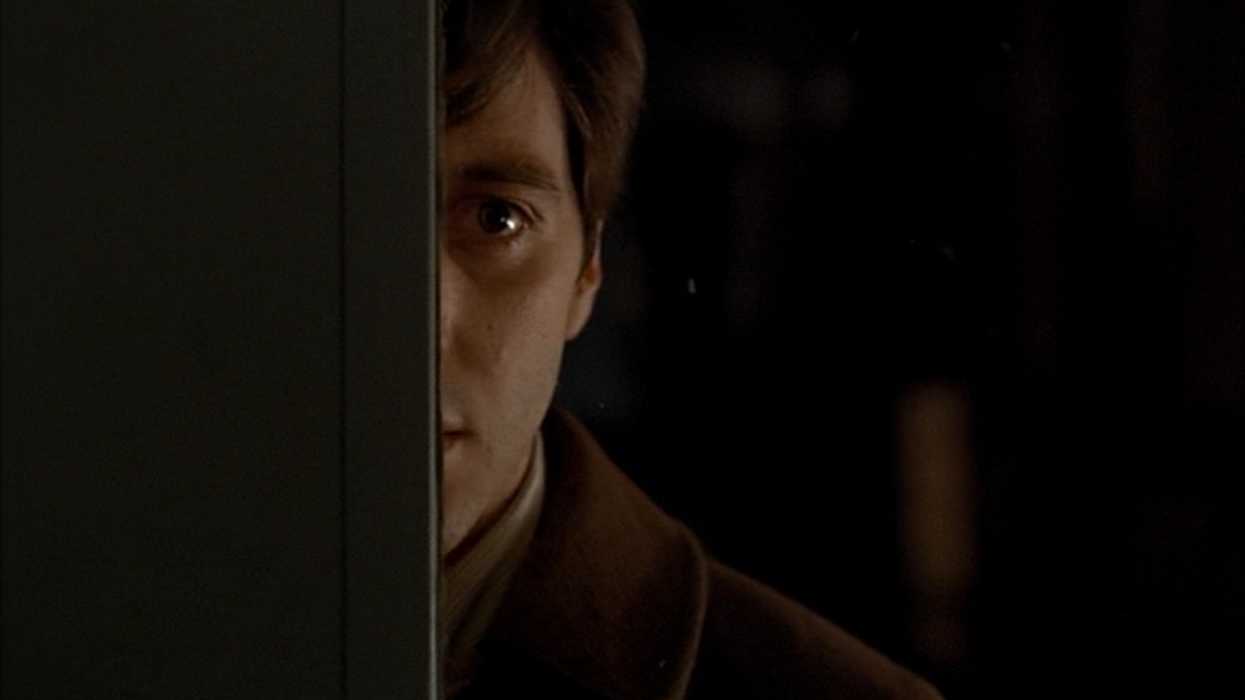
The Godfather (1972)
Character arcs are the heartbeat of great storytelling. They’re what make us root for flawed people, flinch at their mistakes, and sometimes sob uncontrollably when they finally get it right—or horribly wrong.
When done right, they transform films into emotional gut-punches and characters into cultural icons. You don’t remember The Godfather just because of the crime saga—you remember it because you watched Michael Corleone go from war hero to cold-blooded don, and somehow, it made sense.
Fair warning: This article isn’t a list of fan favorites or the usual suspects shuffled around. It’s a focused ranking of 13 character arcs that showcase a wide spectrum of transformation—some redemptive, some tragic, and some that walk a morally grey tightrope. We’re looking at arcs that feel earned, emotionally resonant, and narratively bold.
These are the arcs that stay with us long after the movie ends.
What Makes a Great Character Arc?
A character arc is an internal journey—an emotional, psychological, moral evolution that reflects the story’s core themes. In short, it’s how a character changes and why that change matters.
There are a few key traits that separate the unforgettable arcs from the forgettable ones. First, transformation. A great arc hinges on visible change—be it a crumbling descent or a hard-earned climb. Second, believability. The shift must feel natural, grounded in the character’s circumstances, not forced for shock value. And finally, impact. The arc should elevate the entire film’s purpose—its themes, tone, and emotional stakes.
Think of Joseph Campbell’s Hero’s Journey or the Greek tragedies that gave us flawed protagonists, undone by their own hubris. Whether it’s rising to the occasion or spiraling into self-destruction, great arcs reflect what it means to be human, messy and all.
So, let’s take a look at 13 impressive character arcs in movie history.
13. T. E. Lawrence – Lawrence of Arabia (1962)
Written by: Robert Bolt, Michael Wilson | Directed by: David Lean
T. E. Lawrence (Peter O’Toole) begins as a romanticized figure—intelligent, idealistic, and craving adventure. He’s a British officer with a taste for rebellion and a vague sense of purpose, sent to the desert with more swagger than strategy. What unfolds is a slow-burning transformation into someone who’s both revered and haunted by the myth he’s helped create.
Lawrence’s arc is one of the most psychologically rich in cinema. The film charts his descent into moral ambiguity as he navigates fame, power, violence, and a complete identity crisis. The massacre at Tafas marks a turning point—not just in the war effort, but in Lawrence himself. He becomes addicted to his own legend and emotionally unravels as the lines between performance and person blur.
Writers and directors can take notes here on the value of complexity. Lawrence’s arc isn’t tidy or cathartic—it’s layered, messy, and laced with contradiction. That’s why it lingers.
12. Lester Burnham – American Beauty (1999)
Written by: Alan Ball | Directed by: Sam Mendes
Lester Burnham (Kevin Spacey) is a burnt-out suburban husband who seems like he gave up years ago—on his marriage, his job, and even his own identity. But when a teenage crush jolts him out of his midlife inertia, something strange happens. He starts caring again, but not in the way you’d expect.
His arc is a deconstruction of the redemption story. Lester goes from passive to assertive, but the newfound freedom exposes his selfishness, delusions, and desire to reclaim his youth. The brilliance lies in how the film sets you up to cheer for his “awakening,” only to gut-punch you with the truth: he hasn’t changed for the better. He’s just more aware. The plastic bag monologue may be pretentious to some, but it also captures his bittersweet final moment of clarity.
This arc reminds storytellers that transformation doesn’t always mean salvation. Sometimes, it's just waking up for a second before everything goes dark.
11. Ellen Ripley – Aliens (1986)
Written by: James Cameron | Directed by: James Cameron
Ellen Ripley (Sigourney Weaver) isn’t a new face in Aliens, but it’s in this sequel that she fully becomes the icon. We meet her still traumatized, grieving, and fundamentally alone after the events of Alien (1979). She’s no longer just a survivor—she’s someone struggling to reclaim her agency in a world that sees her as obsolete.
Her arc is rooted in fear and loss, but the genius of Aliens lies in making that emotional baggage her strength. Ripley evolves into a maternal warrior—protective of Newt, ruthless against the Xenomorphs, and completely unafraid of stepping into hell to do what's right. She fights monsters and also confronts her trauma head-on. And that flamethrower? That’s her therapy.
The takeaway here is simple: give your characters scars, then let them fight with them. That’s how you build resilience into an arc.
10. Phil Connors – Groundhog Day (1993)
Written by: Danny Rubin, Harold Ramis | Directed by: Harold Ramis
Phil Connors (Bill Murray) starts off as a cynical weatherman who’s too smug for his own good. He’s stuck in a time loop in Punxsutawney, and the universe gives him unlimited do-overs until he figures out how not to be a walking red flag.
His arc is quietly radical. Unlike traditional heroes, Phil isn’t battling an external villain—he’s battling apathy, selfishness, and the slow, painful realization that he’s kind of a jerk. The change comes not through a sudden revelation but through mundane repetition. His transformation—from arrogant narcissist to compassionate human being—feels utterly earned because we see every inch of it.
This arc is a reminder that personal growth doesn’t need monologues. Sometimes, it just takes a few thousand days of being a better person.
09. Chiron – Moonlight (2016)
Written by: Barry Jenkins, Tarell Alvin McCraney | Directed by: Barry Jenkins
Chiron (Alex R. Hibbert, Ashton Sanders, Trevante Rhodes) grows up in a world that doesn’t make space for softness, especially not for young Black boys in Miami. Split into three acts—childhood, adolescence, and adulthood—his arc is a study in how we armor up to survive.
His journey is more about survival, repression, and the quiet ache of self-denial, rather than just clean resolution. As a child, Chiron seeks safety. As a teen, he learns to lash out. As an adult, he becomes a sculpted facade named "Black"—a man so hardened by the world that he barely recognizes himself. But in the film’s final moments, a simple act of intimacy unravels that armor.
For storytellers, Chiron's arc proves that strength can live in silence. You can skip all the grand speeches and just tell the truth.
08. Travis Bickle – Taxi Driver (1976)
Written by: Paul Schrader | Directed by: Martin Scorsese
Travis Bickle (Robert De Niro) is lonely, angry, and slowly losing his grip. A Vietnam vet and night-shift cabbie, he drifts through New York City like a ghost, disgusted by its filth and craving purpose. By the time he finds one, it’s soaked in blood.
His arc is less of a climb and more of a spiral—into vigilantism, delusion, and violence. But the brilliance lies in how disturbingly relatable it feels. Travis wants to matter. He wants to save someone. The breakdown is slow, unnerving, and rooted in alienation. When he finally explodes, it’s both horrifying and weirdly cathartic. The Mohawk, the mirror monologue, the climax—they’re symptoms of a man unraveling in plain sight.
What this arc teaches is that not all protagonists are heroes. And not all transformations make things better. Sometimes they just make them louder.
07. Andy Dufresne – The Shawshank Redemption (1994)
Written by: Frank Darabont | Directed by: Frank Darabont
Andy Dufresne (Tim Robbins) is a quiet, buttoned-up banker wrongfully convicted of murder. At first glance, he doesn’t seem built for prison life. But that’s where he changes—and not just to survive, but to outthink the very system that buried him.
Andy’s arc is a slow-burning brilliance. Over the years, he tunnels through despair, injustice, and isolation—not by losing himself, but by holding on to hope. His evolution is both psychological and practical: from naive inmate to the architect of the greatest escape in movie history. By the time he stands on the beach in Zihuatanejo, he’s more than free. He is reborn.
Writers should take note: optimism, when earned, hits harder than cynicism. Andy’s arc is proof.
06. Sarah Connor – Terminator 2: Judgment Day (1991)
Written by: James Cameron, William Wisher | Directed by: James Cameron
Sarah Connor (Linda Hamilton) started out as a waitress. In Terminator 2, she’s built like a Navy SEAL, trained like a guerrilla fighter, and haunted like a prophet. And still, she’s terrified—of machines, of fate, of what the future has turned her into.
Her arc is a radical transformation rooted in maternal fear and raw survival instinct. She’s gone from being protected to being the protector, but the emotional toll is massive. Her humanity flickers throughout the film—especially when she nearly kills a man to stop what hasn’t happened yet. The fact that she steps back, that she chooses mercy—that’s her arc in a single gesture.
This character shows that badassery means nothing without emotional stakes. Her strength hits hardest when it’s cracking.
05. Anakin Skywalker / Darth Vader – Star Wars: Episode III – Revenge of the Sith (2005)
Written by: George Lucas | Directed by: George Lucas
Anakin Skywalker (Hayden Christensen) is the galaxy’s chosen one—gifted, admired, and destined for greatness. Which makes it all the more devastating to watch him fall. His arc into Darth Vader is a tragic—almost operatic—collapse.
The brilliance here lies in the inevitability. We know he turns, yet the film charts every emotional fracture—his fear of loss, his need for control, his twisted logic that power can save love. Every bad choice feels like the next step in an irreversible process. When he screams “I hate you” to Obi-Wan, you’re not watching a villain, but a broken child setting fire to his future.
For storytellers: when your audience knows the ending and still feels the punch, you’ve done it right.
04. Daniel Plainview – There Will Be Blood (2007)
Based on the novel “Oil!” by: Upton Sinclair. | Written and directed by: Paul Thomas Anderson.
Daniel Plainview doesn’t fall from, he grills through, grace. At the start of There Will Be Blood, he’s a self-made man with rough hands, a broken leg, and a glimmer of ambition burning under his grimy surface. That ambition curdles into obsession as the years go by. He amasses oil, land, and power—but sheds his humanity like dirty overalls. Every interaction becomes transactional, and every relationship corrodes into leverage. Fatherhood? A branding tool. Brotherhood? A punchline. Faith? A circus act.
By the end, Daniel is the embodiment of spiritual bankruptcy. He’s rich, sure—insanely so—but also alone, paranoid, and drunk in a private bowling alley, clubbing ghosts of the past with a pin. It’s Shakespearean in its descent: from hungry entrepreneur to deranged despot. Anderson builds the arc with such slow-burning precision that you almost forget where it started—until you compare the cave-crawling miner from the prologue to the broken billionaire in the finale. Daniel’s transformation is operatic, horrifying, and unforgettable.
Filmmakers, take note: this is how you write a villain arc without turning him into a cartoon. The genius is in the plausibility. Daniel’s choices make sense, even as they spiral. And Day-Lewis's performance? It totally sells the arc—almost tattoos it on the soul. “I drink your milkshake” was the final, frothing gasp of a man who lost everything chasing the sound of gushing oil.
03. Randle McMurphy – One Flew Over the Cuckoo’s Nest (1975)
Based on the novel by: Ken Kesey. | Written by: Lawrence Hauben and Bo Goldman | Directed by: Miloš Forman.
Randle McMurphy barges into the ward like a hurricane with a hangover. A swaggering, foul-mouthed gambler who fakes insanity to dodge prison time, he treats the mental hospital like a game—one he’s convinced he can beat. But the game has rules. And Nurse Ratched? She’s the dealer, the pit boss, and the house. What begins as rebellion turns into a slow-burning self-discovery. Underneath the grin is a man who starts to care—genuinely care—for the broken souls around him.
McMurphy's arc isn't a clean rise or fall. It’s more tragic than that. His transformation is internal, subtle, and utterly devastating. He goes from self-interest to self-sacrifice, from rogue to reluctant leader. His final act—silent, lobotomized, dehumanized—becomes a symbol. A martyr not for sanity, but for the right to be human. The irony? His rebellion fails, but his spirit spreads like wildfire. Chief’s escape is McMurphy’s final win.
Filmmakers can learn a lot from this: not all arcs need clean victories. Some of the greatest character changes end in silence and stillness. Jack Nicholson’s performance is feral and tender in equal measure—a tightrope walk between chaos and compassion. McMurphy starts as a con artist and leaves as a legend.
02. Oskar Schindler – Schindler’s List (1993)
Based on the book by: Thomas Keneally | Written by: Steven Zaillian | Directed by: Steven Spielberg
When we first meet Oskar Schindler, he’s a war profiteer with a killer wardrobe, a charming smile, and an opportunist’s radar for chaos. He wines, dines, and bribes his way into favor with Nazi officers, not to oppose them, but to profit off them. But as the horrors of the Holocaust unfold, something shifts. His priorities realign. The women he once flirted with, the workers he once exploited—they stop being tools. They become people. And Schindler becomes something rarer than a hero: he becomes responsible.
By the film’s end, Schindler is sobbing over a gold pin, devastated that he didn’t save more lives. That moment is emotionally devastating and also completes his arc. From shallow capitalist to selfless savior. And what makes it remarkable is that it never feels forced. Spielberg and Zaillian chart his change with patience—letting it bloom in stolen glances, in growing silences, in quiet moral reckonings. No sermons. Just slow, human change.
For writers, this is how you transform a man without preaching. Let the circumstances crush him. Let empathy sneak in through the cracks. Liam Neeson’s restrained performance ensures Schindler doesn’t become saintly. He’s flawed, complicated, and ultimately, transformed by his own conscience. It’s not redemption. It’s responsibility.
01. Michael Corleone – The Godfather Trilogy (1972–1990)
Based on the novel by: Mario Puzo | Written by: Mario Puzo and Francis Ford Coppola | Directed by: Francis Ford Coppola
Michael Corleone's arc is the gold standard—the tragic crown jewel of cinematic character arcs. He starts off as the outsider, the war hero, the college-educated clean break from his family’s criminal legacy. “That’s my family, Kay, not me,” he says, like a man who truly believes he can outrun his bloodline. But power doesn’t knock politely—it kicks down the door. And Michael lets it in.
Over the course of the trilogy, Michael’s transformation is both terrifying and inevitable. He slides into the role of Don with chilling precision, sacrificing not just his enemies but his soul, his brother, his wife, and eventually, any shred of humanity he once had. By The Godfather Part III, he’s a shell. Wealthy, yes. Powerful, yes. But alone. Haunted. Watching his daughter die on the opera steps—the final cost of a lifetime of cold, calculated decisions.
This is tragedy done right. Not because Michael becomes evil, but because he becomes what he once swore he wouldn’t. The brilliance lies in how seamless the descent is—each decision feels justified in the moment. And that’s the horror.
For filmmakers, Michael’s arc is a clinic in long-form storytelling, in moral erosion by a thousand cuts. Pacino’s performance is subtle, cold, and surgical. You don’t see the transformation as much as feel it tightening around your throat. Like a garrote.
What These Arcs Teach Us
Here’s the thing: the best character arcs obviously show the change, but in a way that it feels earned. Justified. They reveal the slow bruising of choices, the micro-decisions that calcify into who someone becomes. From Michael Corleone’s silent descent into the family business to Schindler’s shattered conscience erupting into humanity, what connects these arcs is emotional consequence.
How does great writing hand out changes?—by setting it on fire and letting us watch it burn. That’s what these stories did. Whether the transformation was noble or horrifying, each of these characters reflected something deeply human: our ability to become something different, often in ways we never expect and sometimes can’t reverse.
For filmmakers, these arcs are lessons in patience, structure, and restraint. For everyone else, they’re proof that change is rarely clean—and that’s what makes it unforgettable.