Brian De Palma was obsessed with Alfred Hitchcock and was never shy about it. We've covered his pastiche and homage, but we've never really talked about how to appreciate these two auteurs at the same time.
Early in his career, critics said that De Palma was just ripping off the greats, and maybe they had a point. If you look at Sisters, his 1973 breakout, the evidence is pretty damning. You've got a journalist who witnesses a crime from her window, a score from Bernard Herrmann, and all the complex themes of voyeurism, identity, and murder.
But there’s a massive difference between imitation and conversation.
De Palma wasn't just tracing Hitchcock's lines; he was grabbing the master's playbook and scribbling in the margins.
To understand this, I wanted to show you this great TCM clip with Ben Mankiewicz and Mario Cantone looking at Hitchcock's Rear Window and De Palma's Sisters back-to-back.
Let's dive in.
TCM Breaks Down Hitchcock and De Palma
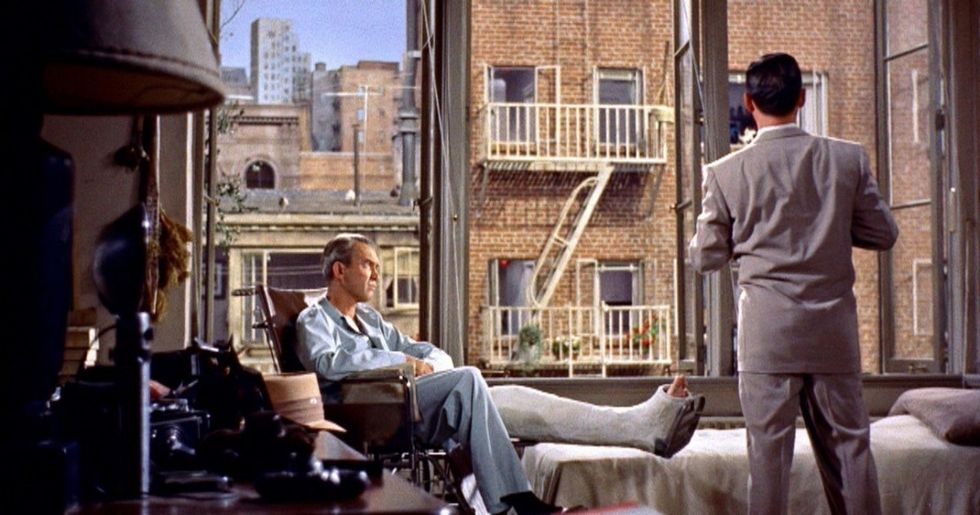
Okay, so when Rear Window came out, it was a massive hit and entered the cultural lexicon. It made Alfred Hitchcock one of the most popular directors in Hollywood and solidified his legend.
Hitchcock actually built a neighborhood on Paramount to shoot, and cast the biggest actors of the day in starring roles.
He has complete control of the time, weather, and got all the shots he wanted.
The movie's resounding success echoes through history.
So, almost 20 years later, is it any surprise that a young Brian De Palma would be inspired to put his own spin on the movie with Sisters?
But De Palma was not a studio guy. He was an indie filmmaker with a dream and big aspirations, but he also had no money and no studio.
De Palma saw Hitchcock's controlled, single-point-of-view voyeurism and decided to update it for the world he was living in. He added in-camera ideas like the split screens, which let us be peeping toms in two places at once, while utilizing the locations he had on hand that he could cut together.
In addition to that, De Palma also had a lot of slick colors and camera movements that fit the time he had to shoot and were shorthand for the mood he wanted to create.
He knew he didn't have the time and money of Hitchcock to make this movie, so it's really where he deviates that he found his own voice. He couldn't get the long takes he wanted, so De Palma compromised and did this heavily edited and stylistic chase with the cops as we see someone murdered.
And it doesn't stop there. De Palma also took Hitchcock’s themes and filtered them through his own "tongue-in-cheek" style.
He was stealing from the best but not copying; he had his own things to say about the world, and he was developing his own sense of film language for the modern era.
Lessons for Filmmakers
 Rear WindowParamount Pictures
I really think the breakdown of Hitchcock's meticulousness and De Palma's audacious evolution of similar themes has a lot of lessons for modern filmmakers.
I mean, there's a reason Quentin Tarantino loves Brian De Palma, and has done a bunch of his own pastiche as well.
Sometimes it's easier to see what people have done and build on it yourself.
What else can we take away?
Don't Apologize for Your Premise
Rear Window works because Hitchcock leans all the way into the voyeurism. He doesn't shy away from it or judge it; he makes the audience complicit. And Sisters works for the same reason! If your film is about obsession, paranoia, or any uncomfortable theme, have the confidence to go all the way, but to also find what you have to say about the subject at hand. De Palma didn't just copy Rear Window.
He saw Hitchcock's idea (watching from a window) and replied with his own signature technique (the split-screen). He took the theme of voyeurism and escalated it. Don't just imitate your heroes; find a way to add your own voice, style, or thematic twist to the ideas that inspire you.
Embrace Your Limitations (and Failures)
De Palma's infamous 6-minute tracking shot failed. He couldn't get the shot in the movie and had to rework the whole thing. Instead of scrapping the scene, he was forced to find another solution, and that (likely more frantic and brutal) edit is what made the final film and actually added to the 70s paranoia at the center of Sisters.
Your best ideas will often come from solving the problems you didn't see coming, not from perfectly executing your plan. You may not have as much money as your heroes, but all you need ot do is have the same amount of gumption and creativity to figure it out.
Tone is a Tool
Both films are thrillers, but De Palma's Sisters is also "tongue-in-cheek" and humorous. He's clearly having fun with the genre. And Rear Window is a more straightforward thriller with bits of dark comedy. This tonal blend in both movies is what makes them feel distinct from one another. Your tone is one of the most powerful ways to make a familiar story your own.
Summing It All Up
Two of my favorite directors of all time are Alfred Hitchcock and Brian De Palma. These are guys from different generations who were experts in tension and film form.
They both had such unique voices and told such bold stories, it's fun to see them analyzed on TCM and to hear the hosts nerd out about them.
Let me know what you think in the comments.