Film Quote of the Day: 'The Good, the Bad and the Ugly' Line That Explains Why Actions Matter More Than Words
This classic line from Eli Wallach's character contains a lot of depth.
'The Good, the Bad, and the Ugly'
Every film fan remembers the first time they watched the bath scene in Sergio Leone’s 1966 epic, The Good, the Bad, and the Ugly. It's a three-hour movie, but you spend the whole time on the edge of your seat during some of the most jaw-dropping scenes.
One of my favorites is not one of those giant sweeping vistas, or a gun fight, or a train escape. It's a bubble bath.
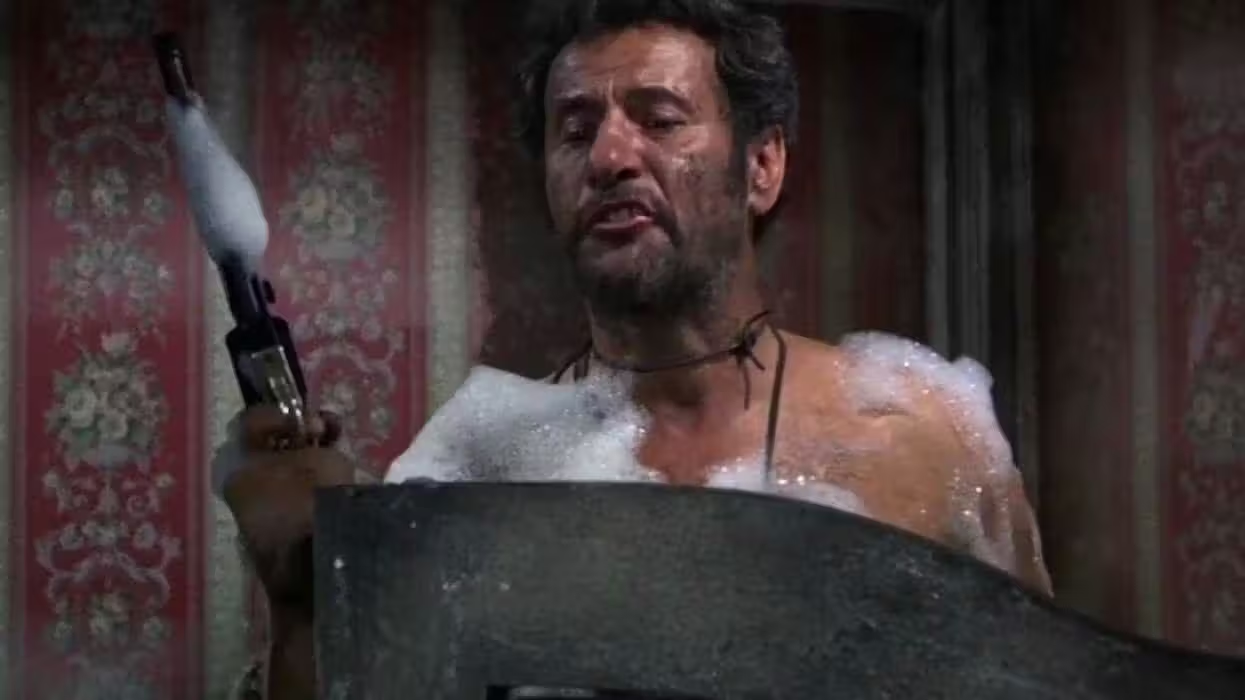
It's when Tuco, played by Eli Wallach, is soaking in a tub when a one-armed bounty hunter bursts in to settle a score. Instead of pulling the trigger, the bounty hunter stands there and delivers a monologue about revenge.
That's when Tuco shoots him through the bathwater with a hidden pistol, stands up, shakes off the suds, and delivers: "If you're gonna shoot, shoot. Don't talk."
It is a legendary movie moment, but for creatives staring down a blank page or sitting in an editing bay, it is also a fundamental law of visual storytelling.
So, let's dive in.
- YouTubewww.youtube.com
The Death of the Exposition Dump
We've all seen the movie where the villain monologues while the hero is in a vulnerable position, and this is a play on that.
Well, in 1968, Sergio Leone was tired of them. So he, along with screenwriters Luciano Vincenzoni and Age & Scarpelli, decided to dismantle those scenes with this one.
They understood that cinema is a visual medium where action should outpace explanation and get the story going, without stopping to hear someone yammer.
Even back then, they knew that when a character explains their evil plan, their backstory, or their emotional state for three paragraphs, the narrative momentum flatlines and the audience tunes out.
To me, this scene is the perfect screenwriting lesson...
If a line of dialogue can be replaced by a look, a gesture, or a physical choice, cut the line. Let your characters act on their impulses rather than narrating them.
Show vs. Tell in the Modern Indie Landscape
You've read it here many times before, but film is a visual medium, and that means it's better to show than to tell.
Tuco is doing all the showing things in this scene; we know immediately so much more about him. This is a guy who is always prepared and knows when to play his angles. He's also a guy who knows the lesson he espouses.
As filmmakers, we can learn so much from this advice.
You always want to streamline things to keep the pace going and to keep the audience involved. By focusing on visuals, you can use the camera to give the audience information.
When breaking down your script's three-act structure, look closely at your turning points and at any lengthy monologues. Are your characters talking their way into the next sequence, or are their concrete choices forcing the narrative forward?
And are we getting into those sequences in a timely manner or using visuals to keep the audience's attention?
Kill Your Darlings, Trim the Fat
If Tuco had a gun, you know he'd use it to kill your darlings. And you need to work on that, too.
The next time you read through a draft, look for your characters' "bath scene" moments. If a scene feels sluggish or too talky, get to the point. If you are going to shoot, shoot. Don't talk.
Let me know what you think in the comments.
- How the Opening of 'Inglourious Basterds' Reimagines 'The Good, The Bad, and The Ugly' ›
- "Two Kinds of People": The Line That Defines ‘The Good, the Bad, and the Ugly’ ›
- Film Quote of the Day: The 'Good, the Bad and the Ugly' Line That Became Timeless Wisdom ›
- Why This One Iconic ‘Tommy Boy’ Quote Lives On Long After the Tragic Loss of Chris Farley ›