The Living End (1992) was my first taste of a Gregg Araki film, and the “couple on the run” story of two HIV-positive men who lash out at conservative society has stuck with me ever since. It would lead me into the director’s next batch of films that continued his trademarks of queer rage, fluid sexuality, colorful surrealism, and absurd violence.
I’m talking about the “Teen Apocalypse Trilogy,” which didn’t carry over plots from one sequel into another, but rather they were connected by themes, a recurring actor, and the Los Angeles setting.
Totally F***ed Up (1993), The Doom Generation (1995), and Nowhere (1997) tell different stories of alienated, horny teens, who fall in love, fall out of love, and get into trouble that they may not survive.
Read on to find out why, in the decades since they were released, the Teen Apocalypse Trilogy hasn’t lost its sensual, devastating impact.
Revisiting 1993’s Totally F***ed Up
New Queer Cinema was given its name by academic B. Ruby Rich to describe independent films of the early 1990s that made subversive LGBT stories that challenged the status quo. Gregg Araki would be a major filmmaker tied to the movement, with what he did in The Living End and subsequent works. Such as Totally F***ed Up, the first chapter of the Teen Apocalypse Trilogy.
 ‘Totally F***ed Up’ (1993)Credit: Strand Releasing
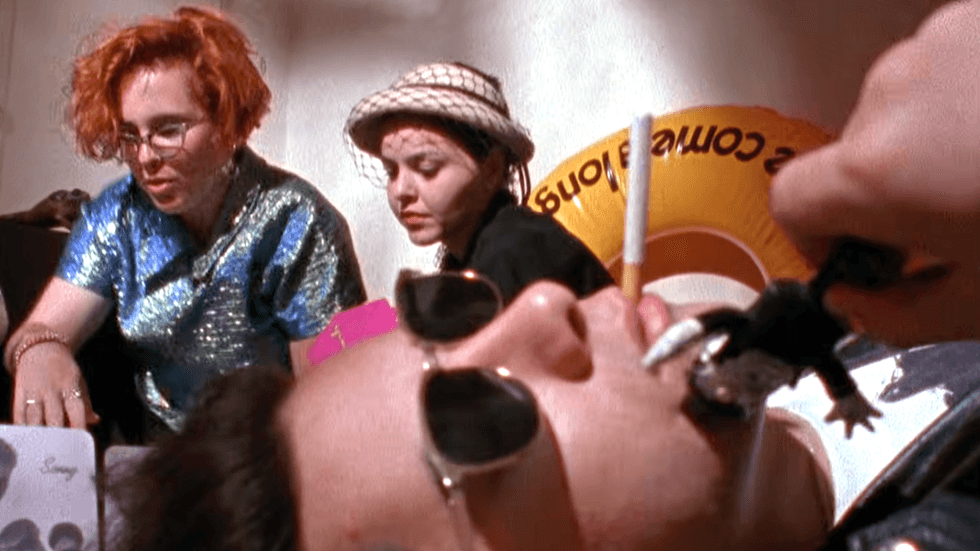
Influenced by Jean-Luc Godard’s Masculin Féminin (1966), the avant-garde Totally F***ed Up follows a group of gay and lesbian friends through in-movie interviews and narrative scenes of them hanging out, sharing their disdain for mainstream culture. “It really was a reaction to the sociopolitical climate of the times,” Araki said when talking about the film in a 2005 interview with IndieWire. He wanted to give a voice to “young gays and lesbians who didn’t fit into the cultural stereotype of the ‘gay community.’”
Cast with non-professional actors and with a micro-budget, Araki captured the vibrant cinematography himself, and explained in the same IndieWire interview that he was accompanied only by “a sound person, the producer/PA, and whatever actors had scenes to do.” This DIY approach made for a defiant, radical contrast to Hollywood productions.
Steven Spielberg’s Jurassic Park and Schindler’s List were released in 1993 to great success; also released was the weepy Tom Hanks-led drama Philadelphia (the first Hollywood film that focused on the AIDS crisis). But there were no spectacles, no big-name actors, and no hand-holding for straight audiences in Totally F***ed Up.
Araki’s Trilogy Began With Joy and Anger
 ‘Totally F***ed Up’ (1993)Credit: Strand Releasing
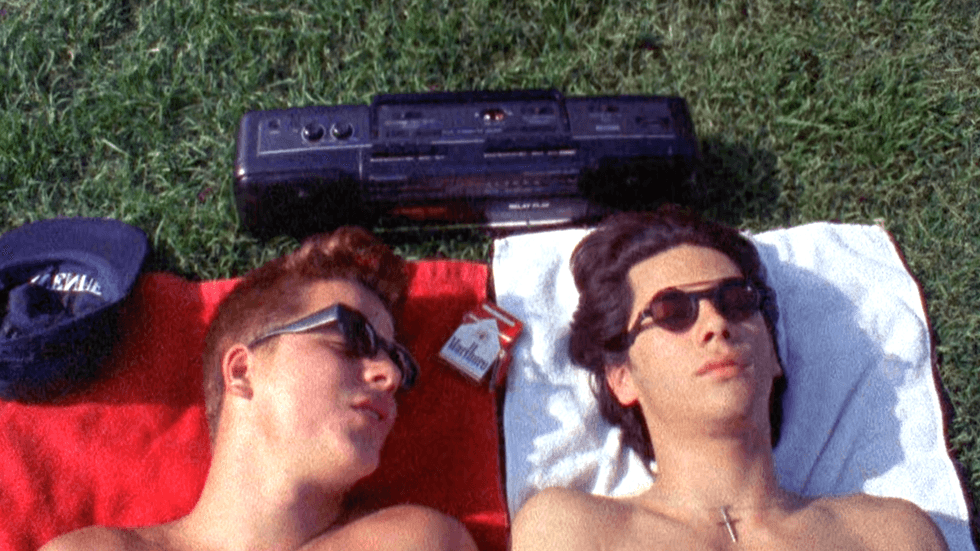
Opening with a newspaper article, “Suicide Rate High Among Gay Teens,” and a text card stating what you are watching is “another homo movie by gregg araki,” the queer characters rule this story, without their friendship or hardships getting sanitized.
Michele (Susan Behshid) rants about the AIDS epidemic, which was going into its second decade, and would become “the leading cause of death for all Americans ages 25 to 44,” by 1994. “A deadly virus that spread only through premarital sex and needle drugs,” Michele says, “It’s like a born-again Nazi Republican wet dream come true.” There are other lingering dangers, in self-harm and gay bashings, that earn this trilogy its foreboding name, but there is a sense of freedom too in how the friends are not ashamed of their sexuality.
Araki shared in the 2005 IndieWire interview that he was inspired by the cast, especially James Duval’s vulnerable performance as Andy, to create the next chapters. That is how we got The Doom Generation (1995), with an ironic opening text card that declares it, “A Heterosexual Movie,” before completely shredding heterosexual norms.
Three Is Not a Crowd in The Doom Generation
 ‘The Doom Generation’ (1995)Credit: Trimark Pictures
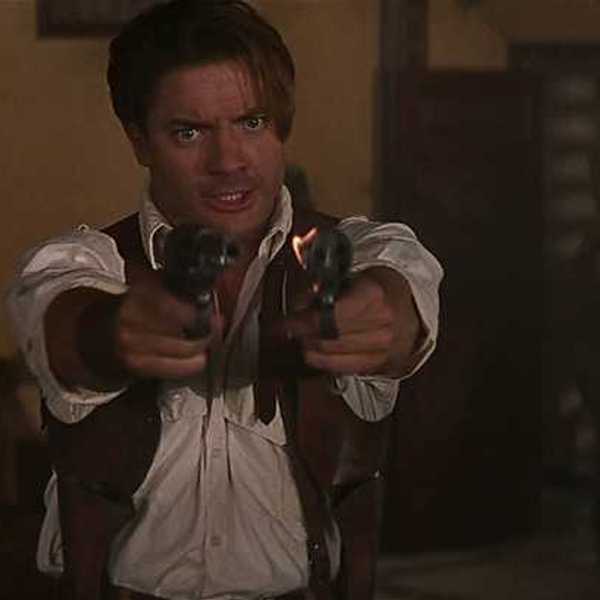
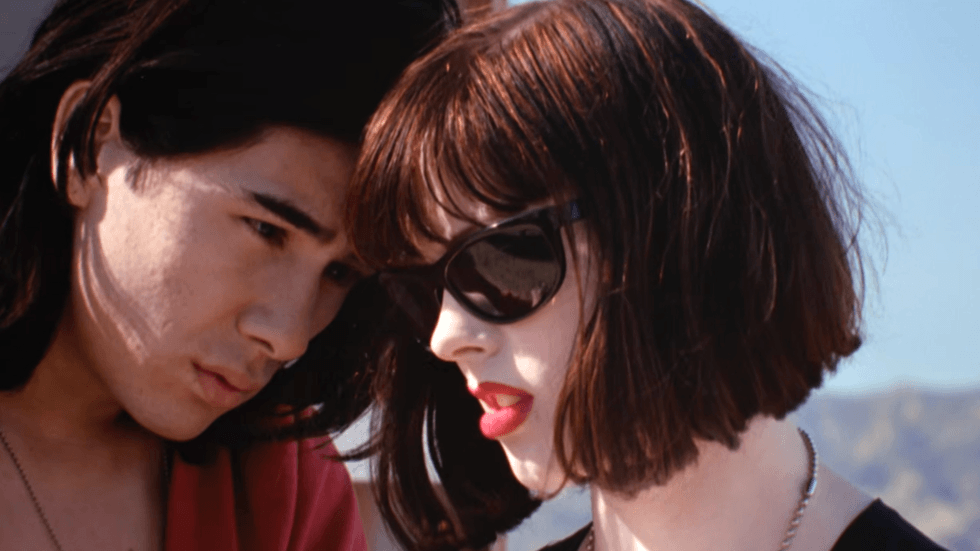
Chaos engulfs a young couple, the foul-mouthed Amy Blue (Rose McGowan in an early starring role) and the easy-going Jordan White (Duval), after they pick up the lustful drifter, Xavier Red (Johnathon Schaech). The trio go on the run and fall into a love triangle after the accidental decapitation of a store clerk — whose bodiless head keeps speaking.
Everything really clicks for me in the direct aftermath of that death. The trio rushes out to the car, with a needle drop blasting, and overwhelming colors of red, blue, and green illuminating them. The frantic energy makes it one of my favorite scenes in Araki’s filmography. If you want a feel-good, queer road movie from 1995, a better option would be the drag queen comedy, To Wong Foo, Thanks for Everything! Julie Newmar.
The world is apocalyptic in The Doom Generation, with eerie, reclusive locations of L.A. that are populated with volatile characters who inexplicably mistake Amy for a past lover. That sets it apart from Totally F***ed Up, along with sexuality being more fluid.
A More Surreal Installment
The Doom Generation would mark an evolution in Araki’s career, where he got to work with DP Jim Fealy and production designer Thérèse DePrez, both of whom crafted a stylized world out of Araki’s imagination. Just as important in building these harsh or dream-like worlds are the soundtracks (in The Doom Generation, you hear Nine Inch Nails, Slowdive, and Cocteau Twins).
 ‘The Doom Generation’ (1995)Credit: Trimark Pictures
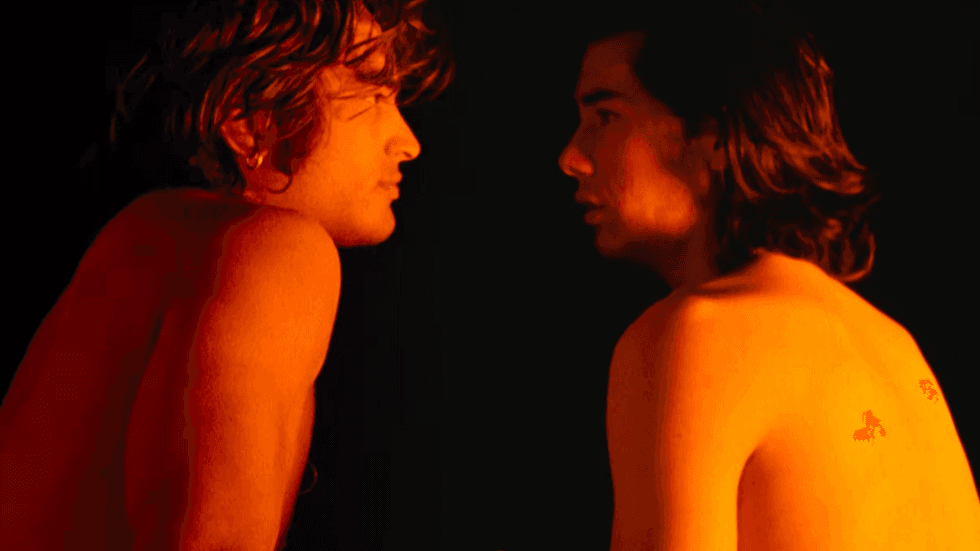
With the added surrealism, it didn’t surprise me to learn in a Deadline interview that a significant influence on Araki as a filmmaker was David Lynch’s Twin Peaks: Fire Walk with Me (1992). I feel this is most evident in the finale of The Doom Generation.
Amy, Jordan, and Xavier have a threesome in an empty warehouse, until they get interrupted by neo-Nazis who attack them. An unexplained white light flashes during the terrifying scene, calling to mind a similar lighting effect during the assault and murder of Laura Palmer (Sheryl Lee) in Fire Walk with Me.
How to close the Teen Apocalypse Trilogy? If you are Araki, you take the visual storytelling to the extreme in Nowhere (1997), marketed on the VHS cover as “Beverly Hills 90210 on acid.”
Nowhere Is Bursting With a Big Cast
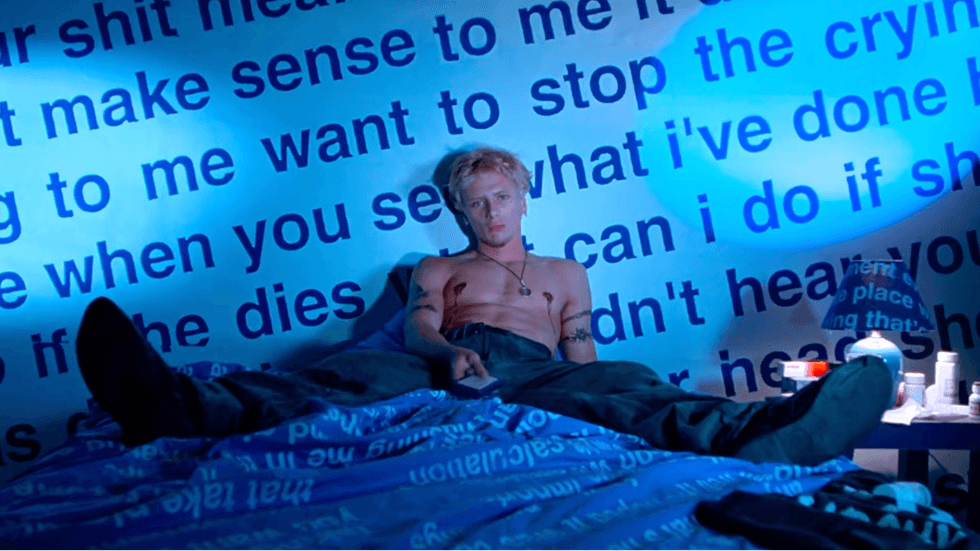 ‘Nowhere’ (1997)Credit: Fine Line Features
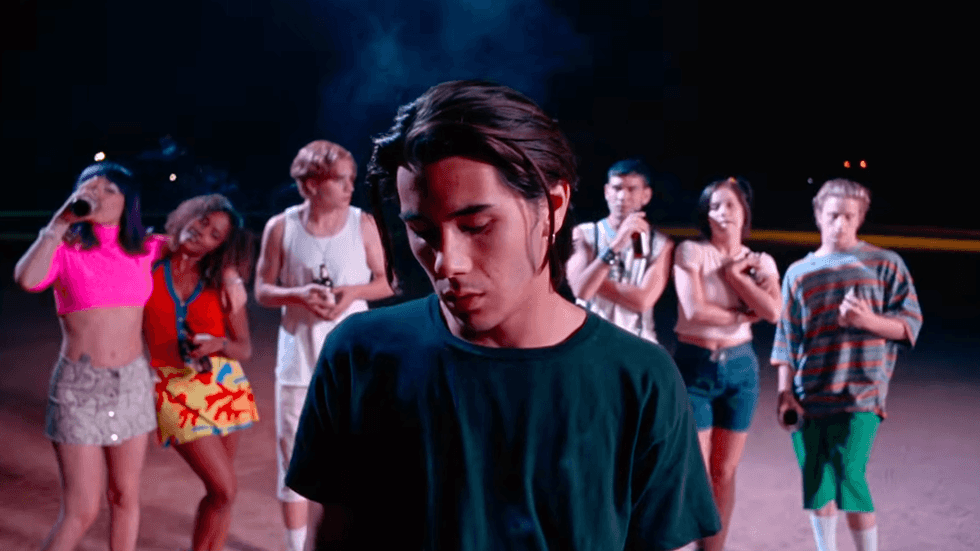
A masturbation fantasy opens Nowhere before following college students who are frustrated, harmed, or unrestrained in their sexual escapades on the alleged last day before the Apocalypse. There are surprise cameos, like John Ritter and Beverly D'Angelo, within an ensemble that stars Christina Applegate, Ryan Philippe, Rachel True, Scott Caan, and Heather Graham.
Duval returns too, this time as Dark, who is jealous in his open relationship with his girlfriend and begins to fall for a mysterious guy in his class. Making Dark feel more isolated is when he becomes the only witness to a reptilian alien vaporizing people around Los Angeles.
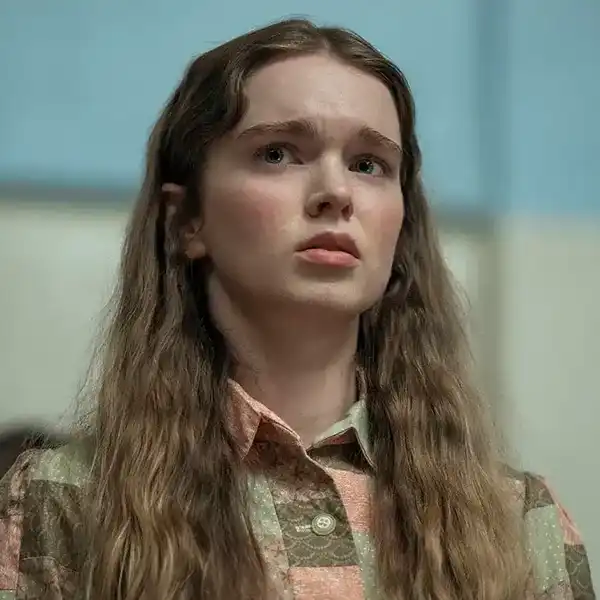
Nowhere is, by far, the wackier installment of the trilogy, with sets designed like pop-art exhibits and its B-movie alien invasion subplot continuing the end-of-the-world theme, but it’s not done for pure wackiness's sake. It symbolizes the characters at their most passionate or at their most wounded. Like with Egg (Sarah Lassez), a young woman who survives a sexual assault. When she retreats to her bedroom, it represents her state of mind. Floral wallpaper is intensified by flowers growing out of the floor, and the artificial image of a tornado lurks outside her window.
This trilogy isn’t for everyone, but if you enjoy it, then you’ll be happy to know that Araki’s provocative style is still thriving today.
A Long-Awaited Return
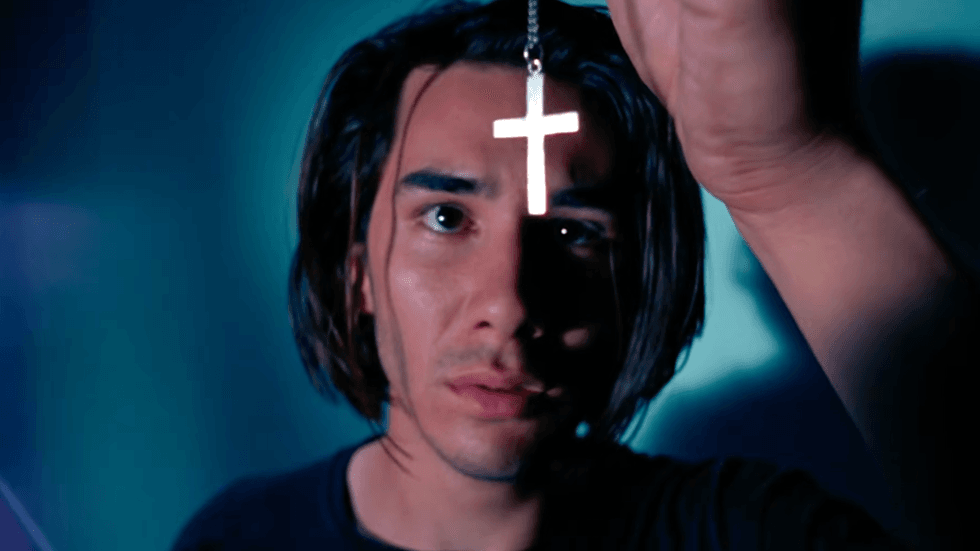 ‘Nowhere’ (1997)Credit: Fine Line Features
After a twelve-year-long departure to work in TV, Araki’s comeback to feature film directing is I Want Your Sex (2026), about an artist, her young lover, and the BDSM misadventures they get up to. As a dark comedy that is light-hearted compared to his punk and sexy films of the ‘90s, it can be an entry point into the director’s filmography.
But the angst and boldness forever captured in Totally F***ed Up, The Doom Generation, and Nowhere demand your attention. Each one has been recently remastered by The Criterion Collection to ensure that it’s preserved for new viewers and old fans alike.
If you haven’t experienced the Teen Apocalypse Trilogy, I hope you will give it a try.