How This Comedy Was Edited Before Production Wrapped
“It is just my job to put the first version of the moment together as fast as I can and also be tickled by it.”
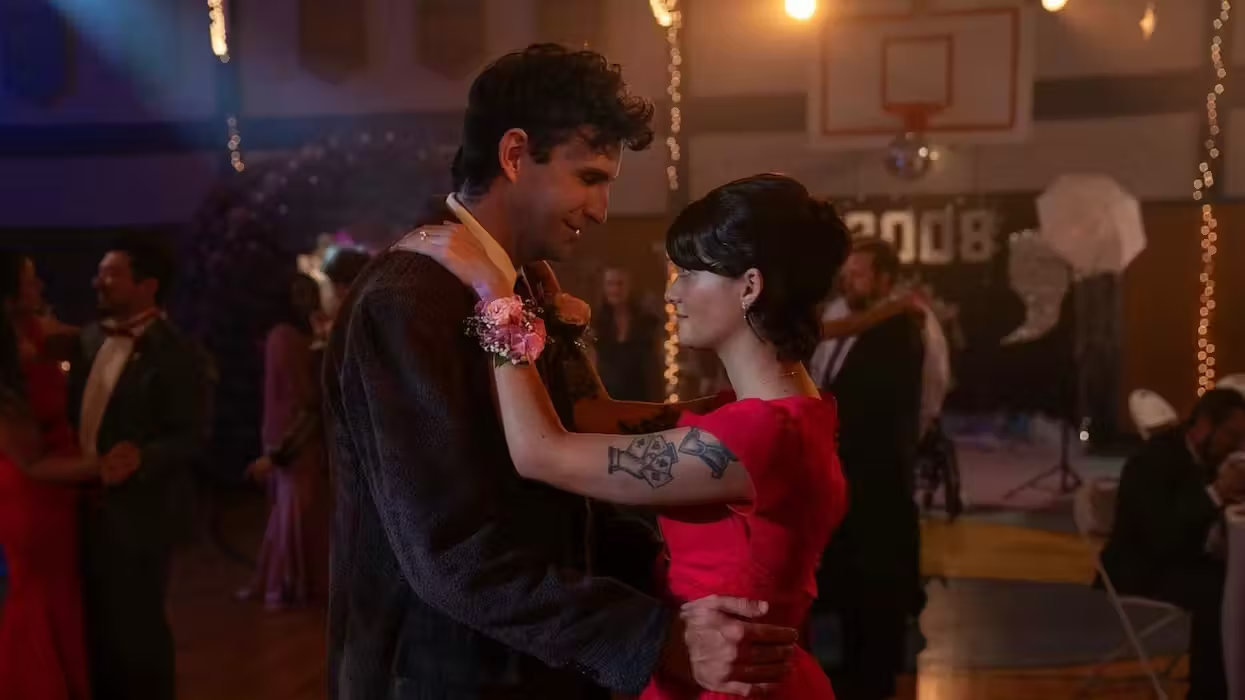
'Never Change!'
In this episode of the No Film School Podcast, editor, director, and producer Whit Conway explains how the Hulu comedy Never Change! was assembled on an unusually compressed post-production schedule. He discusses cutting scenes while production was still underway, building an organized Adobe Premiere Pro workflow, using searchable transcripts to locate alternate performances, and collaborating with director and co-editor Marty Schousboe.
Conway also shares how constant iteration shapes comedy, why editors cannot become precious about an early cut, and how aspiring comedy filmmakers can create the work they want to be hired to make.
In this episode, we discuss:
- How Whit’s previous collaborations with director Marty Schousboe led to Never Change!
- Why the film’s budget and delivery schedule required editing to begin during production
- Completing an initial assembly within a week of production wrapping
- Applying lessons from the fast-paced editorial workflows of Saturday Night Live and Joe Pera Talks With You
- Organizing footage into scene sequences and line-by-line collections of every performance
- How front-loading editorial organization saves time when producers request alternate takes
- Treating the first cut as a strong starting point rather than a version that must be protected
- Adjusting individual jokes by only a few frames and testing different reaction shots
- Preserving previous versions of scenes without formally tracking every editorial change
- Recognizing when a joke needs more work versus when the filmmakers have simply watched it too many times
- Using Premiere Pro’s searchable speech-to-text transcripts to find improvised lines and specific takes
- Collaborating with directors who edit and directors who communicate their ideas conceptually
- Why strong directors know what they want while remaining open to better ideas from collaborators
- Managing creative disagreements, competing producer notes, and compressed deadlines
- How walks and time away from the edit room can help collaborators reset
- Why budget limitations ultimately determine when the filmmakers must put their pencils down
- Building a comedy-editing career by making long-form work, studying classic comedies, and creating projects with friends
- Treating unpaid personal projects as “extra credit” that can lead to new professional opportunities
Guests:
Subscribe to the No Film School Podcast on:
Get your question answered on the podcast by emailing podcast@nofilmschool.com
Listen to more episodes of the No Film School podcast right here: