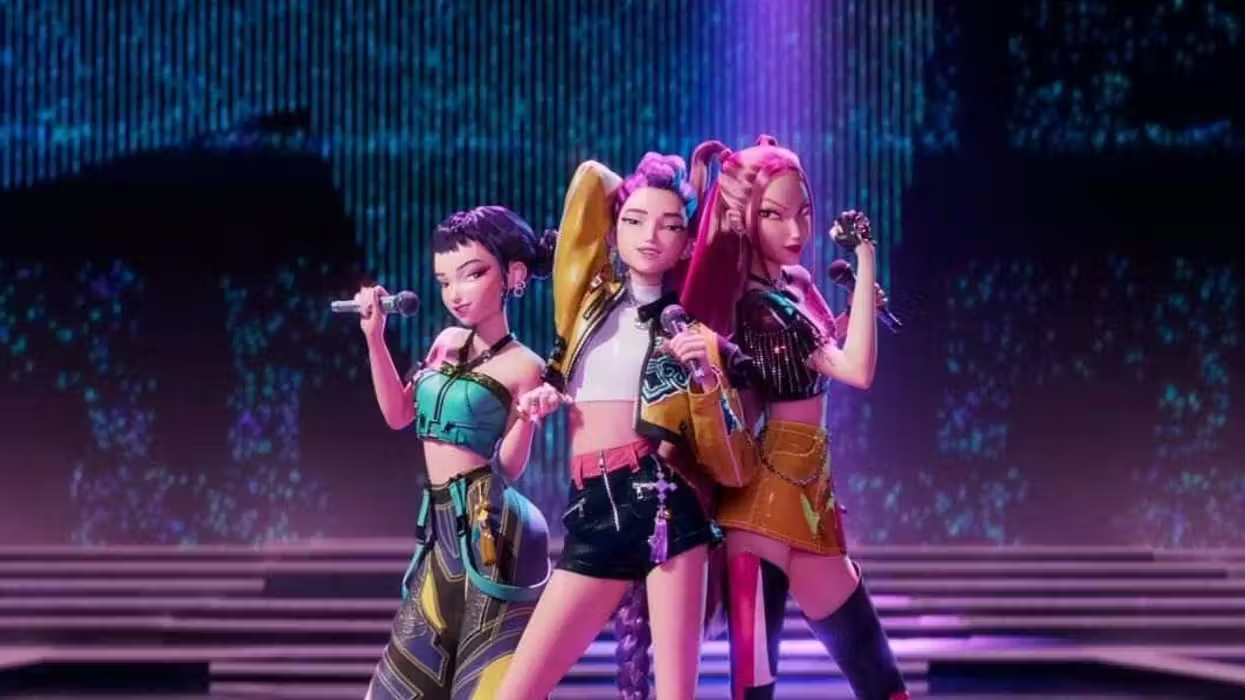
In 2025, the Netflix animated global phenomenon KPop Demon Hunters, produced in partnership with Sony Pictures Animation, took the world by storm, captivating audiences with its vibrant blend of K-pop and fantasy while earning Best Animated Feature nods at both the Academy Awards and the Golden Globe Awards.
But awards and applause weren’t always a guarantee. We spoke with Sony Pictures Imageworks Texture Lead Jody Tidsbury and Motion Graphics Artist Nori Kaneko about how they leveraged Adobe Substance 3D and After Effects to support the creative and technical work behind the film, from crafting its richly detailed characters, costumes, and environments to designing its electrifying concert sequences.
How Tidsbury and Kaneko Defined a New Visual Style
The look of KPop Demon Hunters was rooted in the visual language of Korean pop culture, blending glamour with the emotional warmth and cinematic style of Korean dramas. Every creative element — from fashion and makeup to environments and lighting — was chosen to craft a world that felt both aspirational and authentic.
Nori Kaneko: The directors wanted the movie to look and feel like a K-drama. We used soft colors and a whimsical, sometimes punchy style to reflect that direction throughout, and our motion graphics work followed the same spirit.
 'KPop Demon Hunters'Credit: Netflix
Jody Tidsbury: We heard the words “high fashion” and “K-drama” a lot when describing the visual style the directors wanted to see. Korean culture and aesthetics were woven throughout the film and were really important to our look. The girls were both K-pop stars, warriors, and vulnerable and real, all at the same time. Each makeup look was meticulously designed to correspond to certain outfits, and they all had different nail designs for each look. It was important that these girls were also seen with no makeup, at home, in their comfy clothes.
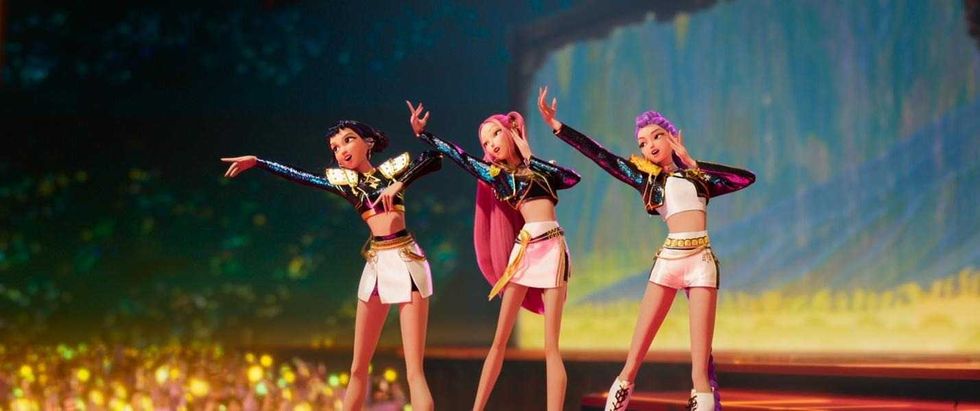
The material quality of their clothing and skin played a huge role in establishing these looks. We helped develop a look that was stylized, yet still grounded in realism. Our directors wanted the girls to showcase their high-fashion looks — we wanted to see those sequins shine and feel the material of their many costumes.
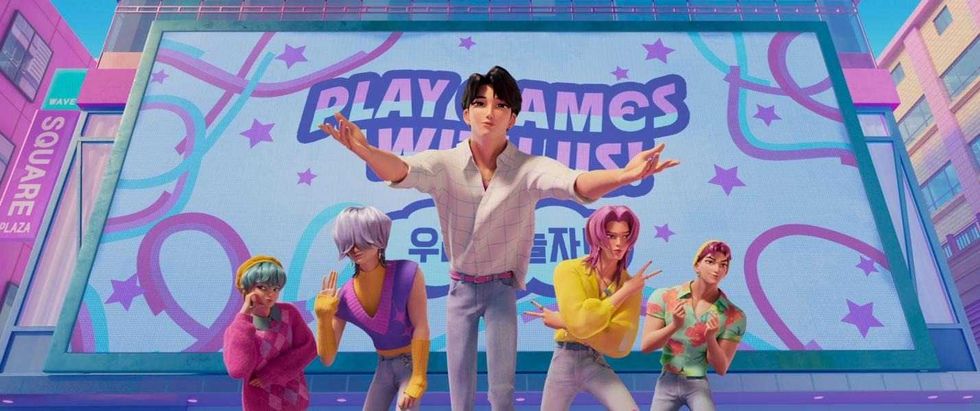
Our environments leaned a bit more into the stylized, painterly feel that shines through in the film. Small, thoughtful details were put into each environment, drawing on real-world reference. It was important for the details to feel authentic. You can see this in the brickwork patterns created for Bukchon Village, how we treated the buildings and streets of Seoul, and the also the bathhouse tile details. And let’s not forget the food! It was often a main character in its own right.
How the Film was Brought to Life with Substance 3D
 'KPop Demon Hunters'Credit: Netflix
To bring this vision to life, the team had to create a texturing pipeline that could balance artistic detail with production scale. Using Substance 3D Painter, Designer and Sampler the team created everything from intricate costumes to richly detailed environments while maintaining the flexibility to iterate throughout production.
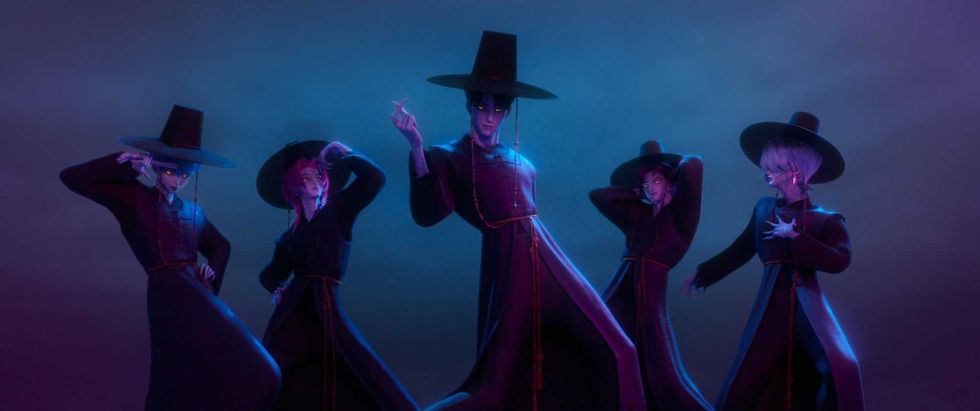
Tidsbury: Painter was used almost exclusively to texture all the clothing for our crowd characters, as well as many of the props and buildings of Seoul. Our artists often created tileable patterns in Designer for much of the brickwork seen across our environments. These were very specific, designed patterns, and Designer allowed our artists to efficiently create and iterate on versions. Many of the costumes in the film feature intricate Korean embroidery, which we applied to the hanbok costumes and stage costumes using Sampler.
 'KPop Demon Hunters'Credit: Netflix
These tools allowed us to work efficiently from a specific design and generate all the texture channels necessary to bring our materials to life. The look and shading of the assets — while still somewhat stylized — were rooted in reality. Because many of our artists incorporated a non-destructive, procedural workflow into their asset creation, Substance tools allowed them to make changes efficiently throughout production.
 'KPop Demon Hunters'Credit: Netflix
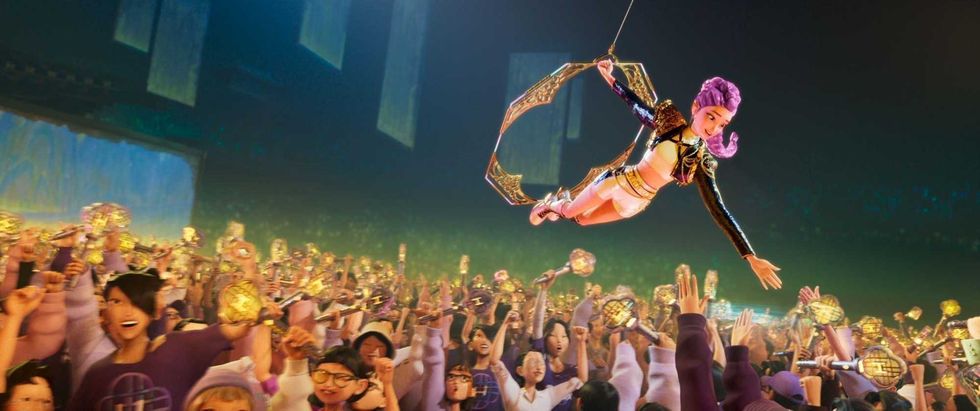
Using Painter for our crowds' clothing was simply a necessity for efficiency, given the sheer scale of variation needed. In total, over a thousand unique variations of characters were made for our crowds system. Across seven different character shapes and sizes, each contained approximately 30 different clothing pieces and accessories, and each of those pieces contained many texture varieties. Our most popular crowd T-shirt alone came in 35 different colors and textures — whether you were cheering for the Saja Boys or HUNTR/X, we had a T-shirt for you.
Using Substance 3D Sampler and Designer to Dial in Embroidery and Detail Work
 'KPop Demon Hunters'Credit: Netflix
Many of the film's most memorable costumes are defined by intricate, handcrafted details inspired by traditional Korean textiles and contemporary fashion. Substance 3D Sampler and Designer gave the team precise control over complex materials, allowing embroidery, sequins, and fabric textures to feel both stylized and convincingly real.
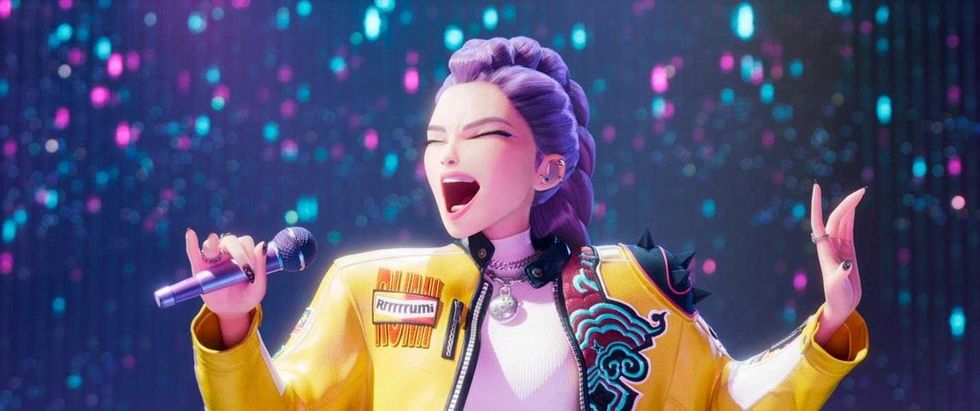
Tidsbury: We used the embroidery filter in Substance 3D Sampler for many of our clothing designs, from the detailed embroidery on our hanboks to details on our HUNTR/X performance clothing.
Our workflow was to create a clean base pattern for each colored embroidery, then feed this into the generator to create intricate, detailed threadwork. I had the pleasure of texturing Rumi in this film, and her yellow leather jacket is a perfect example of this in action: all of her patches were created with the tool, and the complicated pattern at the base of her arm was built up from several layers of generated patterns to form the final design. The output of anisotropic specular direction maps, alongside normal, height, roughness and color maps, was integral to getting the shading detail we needed for the embroidery to really pop.
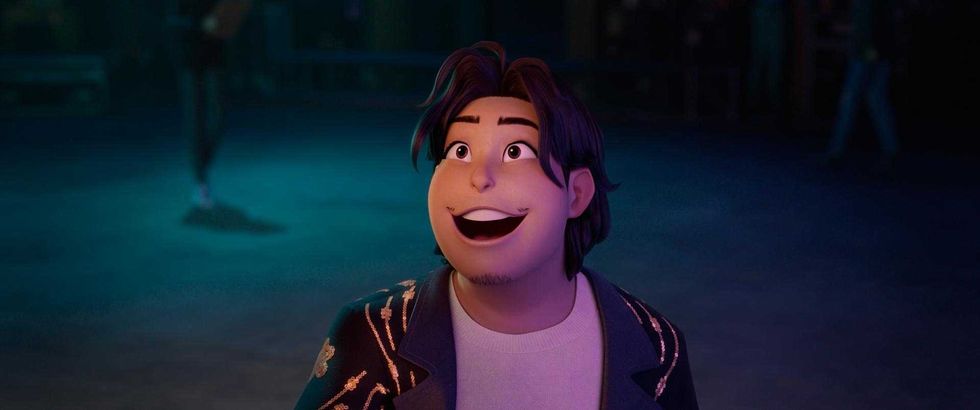
Designer, meanwhile, was put to equally precise use on Bobby's black satin and gold sequined jacket. All of the detail in his jacket is texture-based. Using paths extracted from our design work, we created detailed channel maps to form the gold sequins. The normal maps and metallic maps really bring this material to life.
 'KPop Demon Hunters'Credit: Netflix
Building Stunning Concert Performances in After Effects
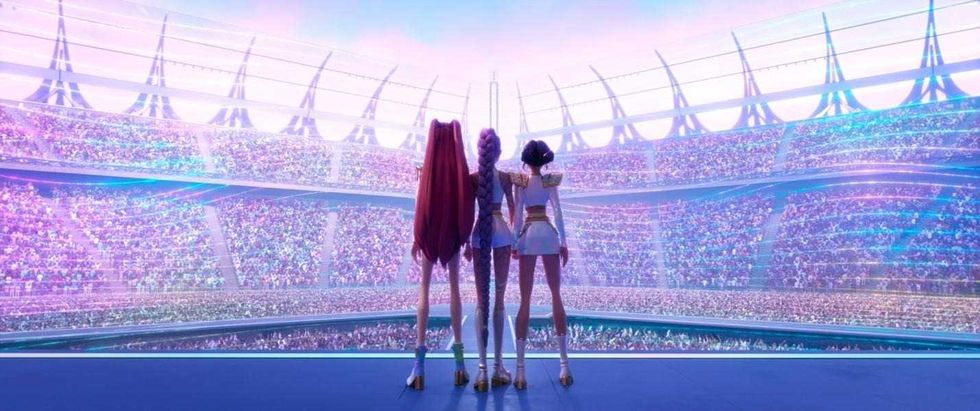
The film's concert performances demanded motion graphics that could match the energy and spectacle of a real K-pop show. After Effects became an essential tool for rapidly prototyping, refining, and synchronizing graphics across constantly evolving performance sequences.
Kaneko: The most artistic aspects of the motion graphics work were the concert sequences where the characters perform songs like "Soda Pop," "Takedown," and "Your Idol." The stage sequences were a huge collaboration across all departments. We watched real K-pop artists' performances and aimed to retain the same feeling.
Unlike simple phone or computer screens, concert graphics have their own timeline that syncs with the performance, which required us to work through many iterations. After Effects helped our motion graphics team stay relatively small while keeping up with all the changes and updates. Being able to quickly prototype and iterate these types of sequences is one of the big advantages After Effects brings to the rest of our Sony Pictures Imageworks pipeline.
 'KPop Demon Hunters'Credit: Netflix
An Unexpected Phenomenon
While the filmmakers and artists always believed in this story, few could have predicted the cultural phenomenon KPop Demon Hunters would become. For Nori Kaneko and Jody Tidsbury, its global success has been as rewarding as it has been surprising.
Kaneko: I wasn’t sure early in the production, but as the story became clear, I thought it would do well, though not to the level it actually did. Honestly, none of us did, and it’s been a pleasant surprise.
Tidsbury: The success of the film was an amazing feeling for all of the artists who poured their hearts and souls into each little detail. I don’t think this phenomenon was expected, but we all loved each win. Watching the love for this show spread across social media was really unique. It just kept going and going!
KPop Demon Hunters is streaming now, only on Netflix.
Jody Tidsbury is a surfacing artist with 23 years of experience in the animation industry. On KPop Demon Hunters, she served as Texture Lead, overseeing a team of eleven artists.
Nori Kaneko is a Motion Graphics artist at Sony Pictures Imageworks, where he has previously worked in Texture Paint and Matte Painting. On KPop Demon Hunters, he covered Matte Painting and Motion Graphics.