Movie Myth Monday: Did 'The Good, the Bad and the Ugly' Blow Up the Bridge Twice?
Was there really a moment they has to explode the Langstone Bridge again and then again?
There are so many crazy stories in Hollywood. We have legends about all sorts of production hurdles and behavior.
One of my favorites is the idea that deep into the dusty landscapes of Burgos, Spain, set to look like the American West, there was a bridge that needed exploding twice to get the right shots in camera.
That's right, today we travel to the set of Sergio Leone’s Spaghetti Western masterpiece The Good, the Bad and the Ugly and ask the question: did the production actually have to build and blow up the iconic Langstone Bridge twice?
Let’s dig in.
- YouTube www.youtube.com
The Myth
Alright, let's start with the legend you might have heard. I think I did back in film school when my professor was loading the DVD to show us this film.
The story is that during the filming of the epic Civil War battle sequence, they hit a few snags.
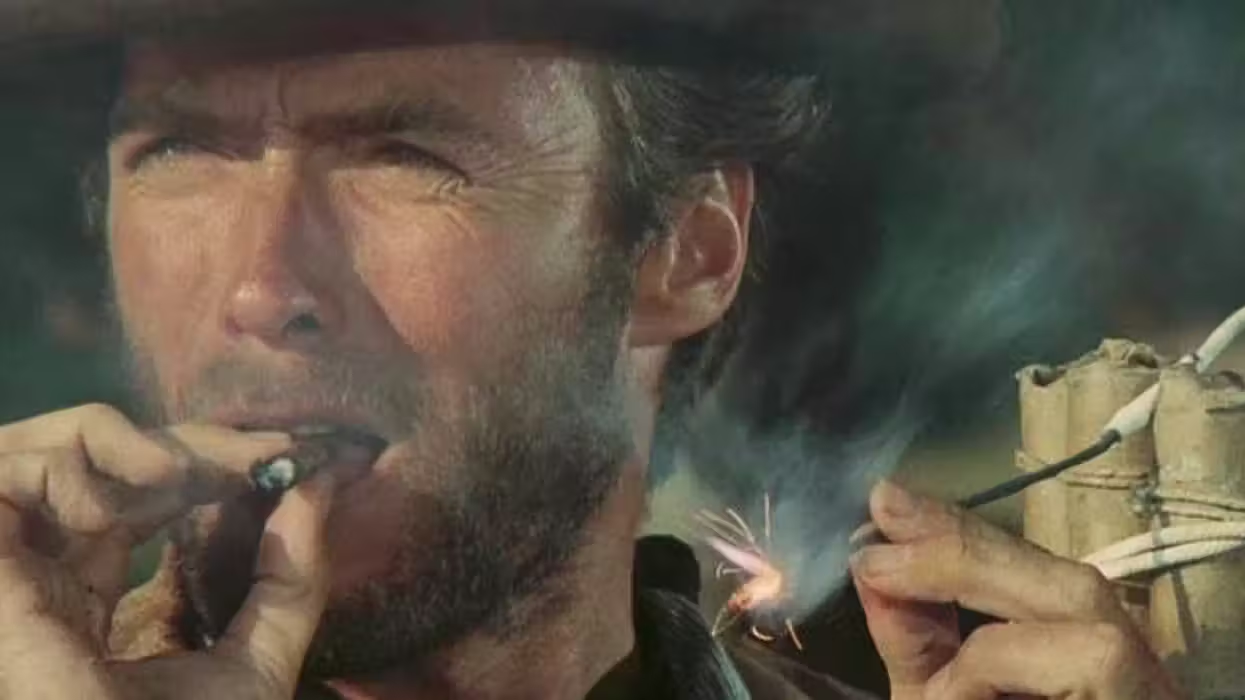
In the movie, the plot set piece follows Clint Eastwood's Blondie and Eli Wallach's Tuco as they decide to blow up the heavily contested Langstone Bridge so the Union and Confederate forces will lose interest and clear out of their way, allowing them to pursue the gold on the other side.
It's one of the best scenes in the movie, building tension around the bridge explosion and the bridge's massive destruction.
This was in the days before CGI, so you were really blowing up a bridge.
So why do people think they did it twice?
Well, what I heard was that the crew rigged a real, full-scale 100-meter wooden bridge with hundreds of pounds of explosives. But right when the fuse was lit, zero cameras were rolling. There was a miscommunication or something. So when the bridge went boom, the only people who saw it were on set, and no one caught it.
But that seems dumb and hard to believe, so did it really happen?
The Verdict: TRUE
Yeah, sometimes the dumber the myth is, the more likely it is to happen. But this one has some nuance to it as well.
Remember, these spaghetti westerns brought people from America over to Italy to shoot. But they also shot a ton of scenes in Spain. So at any given moment, there were at least three different languages being spoken on set.
That made communication pretty hard.
So when they got to the Civil War scene and needed thousands of extras, Leone partnered with the Spanish military. General Francisco Franco provided thousands of soldiers as extras, and they even built the heavy-duty wooden bridge over the Arlanza River.
Amazing way to save some money on set.
But because the bridge was built by an actual military force, they did it for real. And it was so strong that it needed a ton of explosives to blow it up.
It took the army a long time to rig it up.
Leone wanted to wait for the passing clouds to line up just right for ideal lighting before triggering the shot, so he didn't mind.
Time passed, and the charges were ready, but the sky was not quite there yet.
Leone instructed a Spanish army captain in charge of the detonation to ignite the charges only upon hearing the word "Vaya" (Spanish for "Go").
An Italian camera operator or crew member gave a verbal check and apparently said a word that sounded dangerously close to "Vaya" or yelled a signal to get the cameramen into position that sounded like it.
So the Spanish crew thought they heard "Go" and blew up the bridge.
They lit the fuse and ran.
Kaboom.
Leone watched this happen in real time while positioning the cameras. Imagine just knowing that this experience shot wasn't happening, while you also have your hands on the camera that could capture it perfectly.
- YouTube www.youtube.com
The Aftermath
Here's where the story gets so badass. Leone was up on a hill, saw this happen, and looked at his crew. And just said, Let's go eat."
The Spanish people on set were so upset over the mistake that the army captain agreed to rebuild the entire bridge from scratch for free in less than a week if Leone kept the crew employed.
They agreed, and this time, everyone was way more careful.
Summing It All Up
Now that we're at the bottom of all the movie magic, you have a fun fact you can tell people when you're at the next party.
Or just one to whip out on special occasions.
Have a filmmaking myth, rumor, or set story you want us to investigate next week?
Drop it in the comments below!