From the moment when I began thinking about making the short film Iakwe: Hello, Goodbye in late 2024, I knew that it would need to be shot in Northwest Arkansas. However, what I did not know was how on earth I could actually make that happen for a no/low budget indie scripted film.
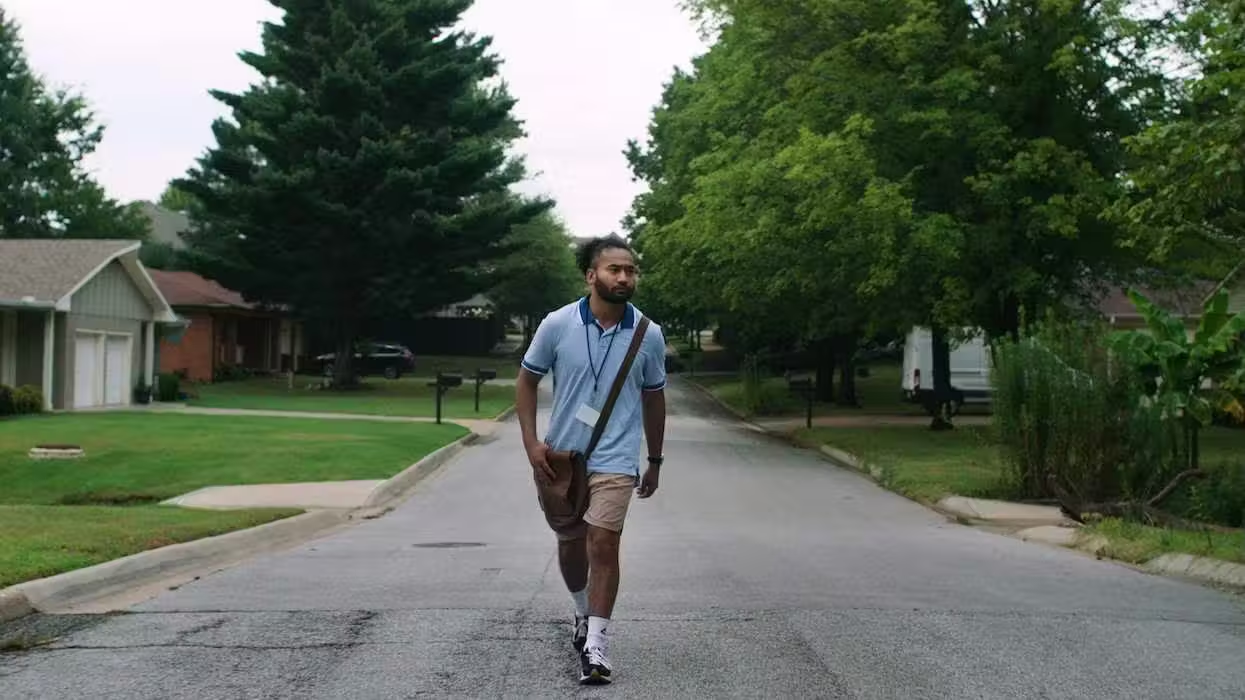
The short, which is based upon real events in which a young man adopted at birth from the Marshall Islands meets his blood relatives by chance while knocking on doors, would need to be set in Arkansas in order to be able to cast appropriately from the large Pacific Island community that resides in the area for critical roles.
After more than a decade working in documentary film, making Iakwe would also represent my first time directing a narrative short, so there were a plethora of new challenges to consider.
Below are nine lessons I learned from the making of Iakwe: Hello, Goodbye, which had its world premiere at the Bentonville Film Festival in June 2026.
Collective Strength
For years I’ve been part of a group called the Brooklyn Filmmakers Collective. We meet on a weekly basis to workshop passion projects. For my film, Iakwe: Hello, Goodbye, this was an invaluable support system.
I workshopped the film four times: Deck and verbal pitch, script reading, rough cut, and fine cut. The feedback (at least most of it) was super helpful, and through the process of sharing the project, I found collaborators to help make the film happen (Writer Russell Leigh Sharman, Editor Danya Abt, AE/DIT Xaiver Cousens).
There are other workshopping groups and communities such as Filmshop, the Video Consortium, and many others around the US, and globally. Join one, or start your own community; it will help you make your films!
Diversify Your Fundraising Strategy
While it’s always good to apply for larger funding/grants (Sundance, etc), in my experience it’s also always smart to look for smaller, more specific/less competitive funding options. In the case of Iakwe: Hello, Goodbye, the first funding for the project came from a small grant at the University I work at.
While it was not very much money, it did cover a test shoot and a portion of a location scouting trip to Northwest Arkansas, which was extremely important for the film. When you know your total budget is X many thousands of dollars, it might seem silly to apply for a small grant, but don’t be too proud to find funding wherever you can.
Depending on your location, consider local arts organizations, foundations, and even individuals with an invested interest in the subject of the film you are making.
 'Iakwe: Hello, Goodbye'Courtesy of Iakwe: Hello, Goodbye
Do a Camera Test With Your Actors (If Possible)
Since the lead actors of our short film did not have formal acting training, a major question mark in my mind was how they would perform in front of the camera in a high-pressure situation. Before we even wrote the script for Iakwe, I did a camera test with the lead actor I wanted for the film, Jake Aija Anin Hawkes.
We did five takes of an improv scene, and Jake brought great energy and emotion to every take. Here’s the test shoot scene. While we shot on a professional camera, you can also do this kind of test on any camera, even your iPhone. Not only did doing this test give me confidence in the project and Jake’s ability to carry the lead role, but it gave me a sample scene that I could use to help fundraise and include in my fundraising deck (in addition to reference images).
Don’t Promise Money You Don’t Have
During our location scouting trip, we visited a number of hotels and motels around Springdale and Fayetteville, Arkansas, to shoot an important set of scenes. After striking out a number of times, and being asked if we were planning to film porn by a scruffy hotel clerk, it was looking bleak. But then we found a great location and made our pitch to the owner. He agreed to let us film, although it was unclear if he understood what he was signing up for by having our ragtag cast and crew take over his swimming pool and hotel common space for a day.
Since we did not have the budget to offer a location fee, we did not mention it, and the business owner did not ask for money. Ultimately, we shot interiors in a hotel room at the same location for a different scene, so we paid the business less directly but still gave them some form of compensation for letting us film. Don’t promise location fees you can’t afford, but if you do the leg work, you can often find a sympathetic person who will recognize your passion and help you try to realize your vision.
Find a DP Who Can Work With Natural Light
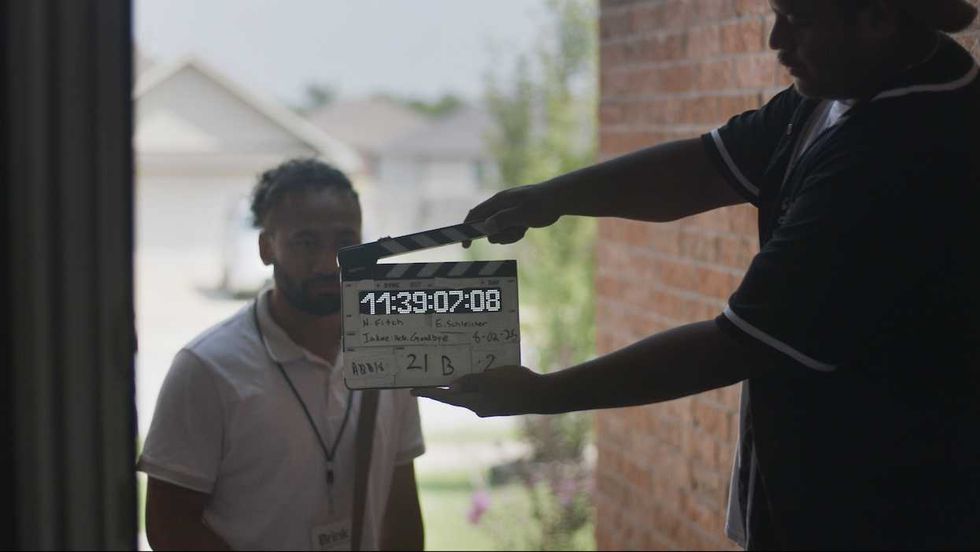
Given our low budget, we were not able to rent lights (which would have been accessible if we had shot more locally). Our DP, Eric Schleicher, has a lot of experience working on indie narrative and documentaries, which allowed him to work quickly with natural light and practical sources for our film.
When finding your cinematographer, consider if the context of your production is well matched for their skill set, and if the story is something that they really resonate with.
 'Iakwe: Hello, Goodbye'Courtesy of Iakwe: Hello, Goodbye
Regional Connections Were Critical
Being based in Brooklyn, New York, over 1,000 miles from Northwest Arkansas, the challenges of how to shoot there were obvious from the start.
Transportation, lodging, location scouting, casting, gear rentals. All the normal ways you can cut corners if you are shooting an indie project in your hometown (friends working for free, rental houses you have a relationship with hooking you up with gear, using your apartment as a set, etc) become much harder when you are shooting in a different state.
However, if you do plan to shoot in a different location from where you reside, you can research local organizations and reach out via email to make connections that can help your production.
Start building your network well before you shoot so that you have a lifeline when something unexpectedly goes wrong, and your camera goes down, or you lose a critical location at the last minute!
Prep, Prep, Prep!
Because you are going to be shooting in unfamiliar locations, it’s all the more important that you do all your homework ahead of time. Everyone’s process for filmmaking is different, but make sure to give yourself enough time to really understand your script and work with all your collaborators so that you are prepared when you touch down, and it’s game time!
Shot list, script breakdown, rehearsals, do it all! While you may not have any money in your project bank account, carve out the time to do this invaluable work.
Throw Your Prep Out the Window
While I know it’s a contradiction of the last point (prep, prep, prep!), in this production it was also really important to let go of expectations and embrace chance and spontaneity. For instance, we had an important actor drop out at the last minute on the last day of our shoot because of a family emergency. Without the scene she was in, we would not have a movie! By luck, we were able to cast another actor for the role, who literally had 10 minutes to review the scene and prepare. And, she gave us a great performance.
Don’t let your pre-vis expectations blind you to opportunities that might come up during your production, even when you think all is lost (as we did!)
 'Iakwe: Hello, Goodbye'Courtesy of Iakwe: Hello, Goodbye
Pick Good Collaborators
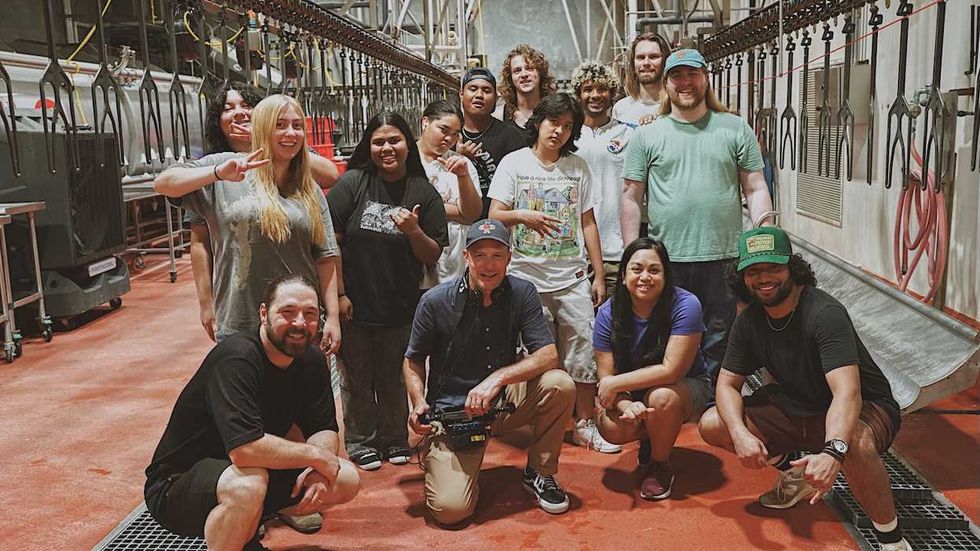
Midway through our production, calamity struck when one of our vehicles was totaled by a fugitive fleeing local police at high speed. Half our crew was in the traumatic crash, and someone could have been seriously injured.
Following the accident, I was amazed by the resilience of all the crew members, who, after taking a little time to recalibrate, were still very much on board to finish our film.
When you are assembling your team, don’t only consider technical prowess, but temperament and collaborative dynamics. Filmmaking is hard work without any guaranteed payoff. It’s best to do it with people you like and respect, and vice versa.
---
When I was first starting out in filmmaking, someone gave me the advice to find and shoot local projects instead of traveling the globe lugging around a camera. While it may be good advice, I’ve mostly ignored it. The logistics of shooting films, either narrative, documentary, or hybrid, are more complex when you have to travel for a project.
I’m proof that it is possible.
Ultimately, if the film you want to make cannot be shot in your backyard, there are ways you can make your project happen if you are willing to put in the effort.