How to Make Your Low-Budget Film Look Expensive
Cheap doesn't have to come across on camera.
'Obsession'
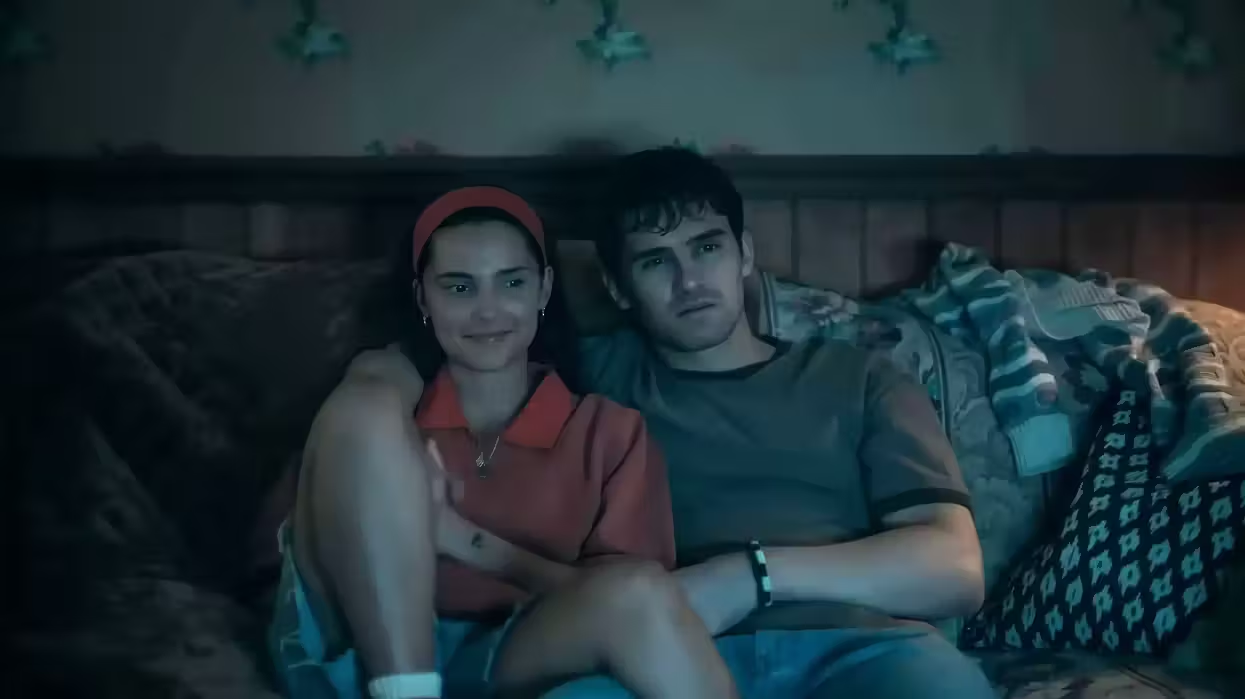
High production value is one of those things we're all probably striving for, but it can be elusive. When we say that, you probably think that the story feels real and everything looks and sounds good, because you're working with a team of professionals. If one thing is off, the production value is lowered.
For one thing, your budget might not be enough to cover your vision, so you end up compromising and getting something that feels worse. How can you achieve high production value on a lower budget?
StudioBinder's recent video essay on the subject defines it. Production value is the perceived technical quality of a film, the level of professionalism in its visuals and sound. The key word is "perceived." Budget and production value aren't the same thing.
Let's dive in.
- YouTube www.youtube.com
Your Camera Matters Less Than You Think
We get it if you're a gearhead. Gear is fun. But accessible cameras have closed a lot of the distance between low-budget and high-budget cinematography. The camera doesn't matter as much anymore.
Prosumer options like the Sony FX3 or the Blackmagic Pocket Cinema Camera can produce images that would have required significantly more money a decade ago. And as the video notes, you don't even need to own one—rent one instead, or find a friend willing to lend equipment.
John Waters famously paid a TV news cameraman to sneak a broadcast camera out over a weekend for Pink Flamingos. The point is access, not ownership.
That said, the camera is downstream of everything else. As NFS has covered in guides to low-budget cinematography, knowing your gear and how to use it matters more than which gear you have.
Lighting Is Where You Win or Lose
Bad lighting signals an inexperienced production faster than almost anything else. The good news is that the most powerful light available is free—the sun. Scout your locations at the time of day you plan to shoot (use something like the Sun Seeker app), figure out when the light is most useful, and build your schedule around it.
When you're working indoors, ambient light sources already on location (neon signs, streetlights visible through windows, practical lamps) can produce stunning results if you're deliberate about them. As we noted in our breakdown of budget cinematography, shaping light is the real skill.
Over-lighting is a classic tell of low production value, and contrasty, stylish lighting typically requires fewer fixtures, not more.
The Creator production is a useful case study. DPs Greig Fraser and Oren Soffer shot largely on Sony FX3s specifically because their low-light performance let the team lean into natural and available light without hauling large fixtures to every location.
Shoot on Location... Not in Your Apartment
We know, we know. Locations, the bane of all low-budget productions.
Just inviting some friends over might seem like the best option. But shooting on location is often free, or close to it. The challenge is thinking creatively about which locations you actually have access to, either through your day job, through friends and family, or through connections others don't have.
And picking one interesting location doesn't mean you're limited to one look. Filmmakers working with single locations have found ways to transform one space into multiple distinct settings through smart production design and shooting angles, stretching a limited budget without sacrificing scope.
We've all watched short films that were obviously shot in the filmmaker's apartment. Push past the comfortable default. A great location does a ton of work for you.
Props and Costumes Should Look Lived In
Don't just bulk-order from Amazon. Look at thrift shops, vintage stores, and estate sales, where you find pieces that carry actual character, things that look like they've existed in the world rather than arrived yesterday in a box.
The Prospect production design team wrote about this approach for us. Their production designer tested every hero prop against what they called the "Jurassic Park Barbasol canister test." Does it tell a story on its own? Props should do work beyond their function in the scene. They should suggest a world that exists outside the frame.
Costumes are doing character work whether you intend them to or not. Think about Jennifer Lawrence's wardrobe in Winter's Bone. She doesn't look like an actress from Louisville playing a rural Ozarks teenager. She looks like she lives there.
On a low-budget production, going with real, thrifted clothing can be cheaper in dollar amount but more valuable to your production value and authenticity.
Sound Is One Thing You Can't Fake
Audiences will forgive many visual imperfections. They are far less forgiving of bad audio, and it's one thing that's obvious to any viewer, regardless of whether they've worked in film or not. Can you hear the dialogue? Are the sound effects fake and distracting?
Don't put an untrained friend on the boom. Sound capture is a skill, and if you spend money on anything in a production, spend it on a production sound mixer. And don't forget room tone.
We have detailed guides to production sound that go deep on gear and technique. Treat your audio department as seriously as your camera department.
Post-Production Is Your "Last Line of Defense"
If a shot looks cheap, cut it. Editing is free, and being your own harshest critic in the edit is one of the most practical things you can do. Stock footage sites can provide establishing shots that sell locations you couldn't afford to film. VFX can raise perceived quality, but only if you can actually pull off those shots. (Bad VFX tanks production value faster than anything else.) Plan early and be honest about your capabilities.
Color is also where many productions quietly collapse. If you can't afford a colorist, the video suggests going black-and-white. It's at least a little forgiving and reads as deliberate rather than unfinished.
You can have a great story and a fresh perspective. But if any one of these elements is off, the audience will feel it, even if they can't name it.
- Don't Have Money for Your Movie? Focus on the '4 L's of No-Budget Filmmaking' ›
- 6 Lessons on How to Make a No-Budget Feature Film ›
- The Best Low-Budget Movies That Became Big Blockbusters ›
- 9 Low-Budget Movies That Looked Way More Expensive Than They Were ›
- 9 Lessons I Learned Making My First Narrative Short 1,000 Miles From Home | No Film School ›