22 Years Ago: This $500,000 Shark Thriller Turned a True Story into Pure Terror
How Open Water turned $500K into pure open-sea terror.
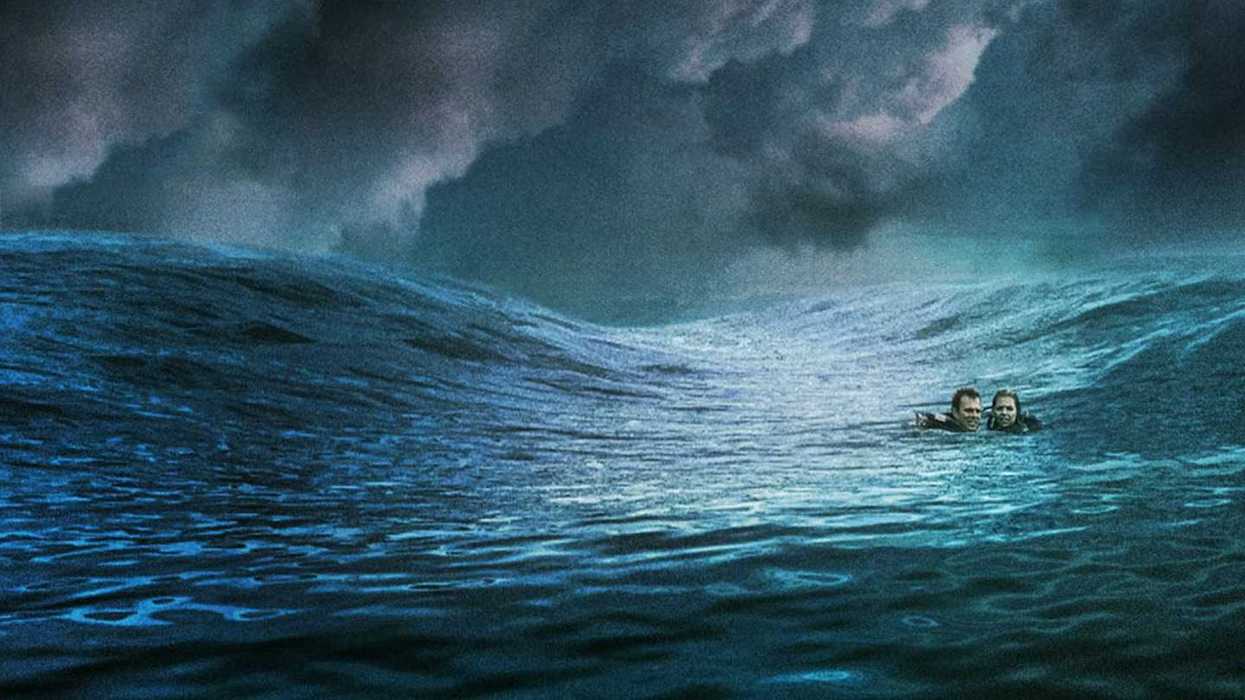
'Open Water'
You come up from a scuba dive, wipe your mask, and look around for the boat that brought you out. But it isn't there. No one is.
You realize it's just you, your partner, open ocean in every direction, and the slow, sickening realization that creatures below have started to take an interest.
That's the premise of Open Water, the tiny independent film that reached theaters 22 years ago this summer and frightened audiences right out of the water.
Filmmakers Chris Kentis and Laura Lau made it for around $500,000, with no crew and real sharks, and it grossed more than 100 times that. There's plenty we can learn from this sleeper hit.
- YouTube www.youtube.com
What Is Open Water About?
Open Water follows Susan and Daniel (Blanchard Ryan and Daniel Travis), an overworked American couple who book a tropical vacation in an attempt to reconnect. During a chartered scuba excursion, they slip beneath the surface for a routine dive while the boat crew, distracted and working from a bad head count, tallies everyone as accounted for.
So of course when Susan and Daniel resurface, the boat is gone. They're alone, miles from shore, floating in open ocean with only their wetsuits, tanks, and life vests.
What starts as a misunderstanding soon becomes a nightmare. As the hours drag on, the couple deals with sunburn, dehydration, cold, jellyfish, and a bunch of reef sharks that begin circling closer. Old resentments come up alongside the panic, and their attempts to stay calm and rational break down with each passing hour.
The threat of the sharks never lets up. Daniel is bitten and, weakened by blood loss, doesn't survive the night.
Left alone and out of hope, Susan finally slips out of her gear and lets herself sink beneath the water. A closing scene, in which a fishing crew guts a caught shark and finds a diver's camera inside, confirms the couple doesn't make it.
The True Story Underneath
Open Water is loosely drawn from a real disappearance. In January 1998, Americans Tom and Eileen Lonergan went out with a recreational dive group on Australia's Great Barrier Reef. The boat's crew miscounted the divers and left without them, then only realized the mistake about two days later, when the couple's belongings were found onboard.
A search by police and the Australian Navy found nothing. The Lonergans were unfortunately never recovered.
Kentis and Lau, a married couple and lifelong scuba divers, heard this story and couldn't shake it. They'd once been briefly left behind by their own dive boat, so they knew the specific, stomach-dropping fear of watching a hull shrink toward the horizon.
They kept the basic premise of the incident and invented the people, putting them in a similar situation and imagining their fate.
- YouTube www.youtube.com
Real Sharks, No CGI
The central production choice was simple and slightly bonkers. They didn't have animatronics like Spielberg, and no budget for computer effects.
Kentis and Lau put their two leads, Ryan and Travis, into open water with live reef sharks and filmed it on handheld digital cameras. To move the animals into frame, the team chummed the water with bloody tuna and the actors wore chain mail sleeves under their wetsuits and logged more than 120 hours in the water.
By the actors' count, 45 to 50 sharks circled on some days, herded by a professional handler.
For Kentis, the realism was worth the risk.
"It was important to work with real sharks, to get the way their tails flap around like big rats in the water as opposed to the usual Hollywood fin gliding smoothly on the surface," Kentis told National Geographic.
Lau put it in terms of style.
"We wanted to use the medium to our advantage, and part of that aesthetic is a documentary sense of realism, so using real sharks and casting unknowns was key to us. It was about making it as real as possible," Lau told IndieWire.
They were chasing the texture of a 1970s film, back when stunts were done for real and the audience could feel it.
A $500,000 Gamble Paid Off
None of this was expensive, which helped with that feeling. With a budget around $500,000 and a two-person crew, the production pulled away almost every layer that normally sits between a director and a performance.
Ryan, who was frightened of the sharks, reflected on the process.
"I knew we were safe, that it wasn't a snuff movie, that I wasn't going to die, which is, I guess, where I draw the line," she told The New York Times. "Looking back, it was the most magical working environment—two actors, two filmmakers, no hair and makeup, no wardrobe and lighting, no crew wanting meal breaks. Just get in the water and do the work."
Open Water premiered at the Hamptons International Film Festival in 2003, sold to Lionsgate out of Sundance the following year, and grabbed Hollywood's attention with a theatrical run that grossed more than $50 million worldwide.
Horror and survival films often reward this. If you have a strong concept and a real threat, they often frighten people more, and can pay off later.
Why It Still Works
It's a simple concept, and the sharks as a threat are the film's final movement rather than its subject. For long stretches, the horror lives in other parts of the natural world, and the drama comes from the interpersonal tension between two people who are running out of time and options.
The dread of what you can't see is the focus of most of the runtime. When the sharks finally close in, the wait pays off. The digital photography, once a budget compromise, ends up reading as documentary truth.
There's a takeaway for anyone eyeing a shark movie or any genre picture with more ambition than money. Kentis and Lau couldn't afford a mechanical monster, so they built the film around their own fear of it (and then happened to wrangle the real thing). If you're working at a budget that won't stretch to your vision, the smarter move is often to lean into what you already have and work with your limitations. Maybe you'll make one of the most unnerving thrillers of your decade.