The Plot Twist Audiences Hate the Most
So, if you're a screenwriter, avoid it.
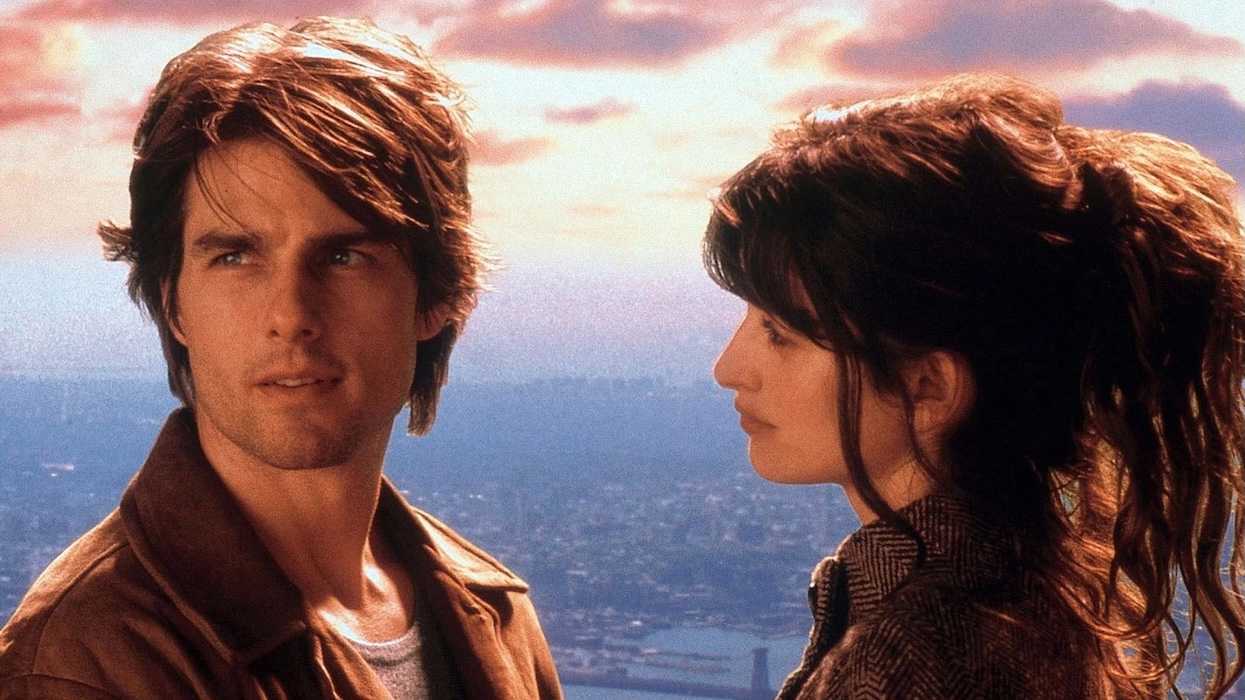
'Vanilla Sky'
Imagine you're watching Repo Men. Jude Law's character Remy has spent the film fighting against the evil corporation that repossesses people's organs when they can't make payments. He's fallen in love with a woman, they've infiltrated the company's headquarters, and they're heroically destroying the corporate database to free everyone from debt. They go to the beach, happy and safe—but then the screen glitches.
Remy is suddenly lying unconscious, hooked up to a neural net. The entire romantic subplot, the corporate infiltration, the heroic finale didn't happen.
Congratulations, you've just experienced what many audiences rank as the most hated plot twist in cinema. It was all a dream.
- YouTube www.youtube.com
Despite being universally despised by moviegoers, this lazy screenwriting device still somehow persists in Hollywood.
What Is the "It Was All a Dream" Trope?
The "it was all a dream" trope reveals that previous events in the story were just part of a character's dream, hallucination, coma, or some other escape from reality. What makes this particularly infuriating is how it retroactively erases everything the audience has just experienced.
Sometimes the twist is included because the writer feels stuck and needs to fix something about the plot. If you don't have an ending, just tack this on!
Other times, it's just included for shock value. As Maxim notes in their analysis of movie twist endings, Hollywood has "no faith in their restless audiences, whom they assume demand bigger and stupider twist endings with every passing summer."
But it rarely works. Professional editors agree. Alyssa Matesic, a book and novel editor, explains that this twist is "often seen by readers as a cheap trick" because "they are going to potentially feel manipulated when it is revealed that none of what they read actually happened."
The hatred runs deep across film forums and discussion boards.
It's often a topic of conversation on Reddit, where many users can think of good examples (A Christmas Carol, for instance), but still caution against using it.
"I think it is rare to see it done well because it has a lot stacked against it," user 357Magnum wrote recently. "'It was all a dream' inherently means 'none of what happened mattered.' It only happened in the character's head, so it can only matter to that character. So the fact that it was a dream has to really matter."
On ResetEra, frustrated viewers vented about this cheap trick. One commenter recalled a movie we already discussed: "The one that really soured the entire movie for me is Repo Men. So much so that I never wanted to see it again, then decided to give it another chance a decade later, and nope, still hate the twist." Another user was even more blunt: "It's just such a boring choice to resolve a story."
On Writing Stack Exchange, one reader expressed their complete rejection of the trope. "Anytime I read this sort of crap, I stop reading the author completely. I no longer trust them."
The frustration is so widespread that writers actively seek advice about avoiding it. The Lemma Soft Forums community discussed it with one potential author, where a user wrote, "The 'it was all a dream' trope is VERY disliked, and for good reason. It invalidates the stakes of your storytelling, and without stakes, there is no tension, no character growth, no real redemption."
BuzzFeed's compilation of disappointing plot twists features reader comments calling the dream trope infuriating. Looper's "50 Worst Movie Endings Of All Time" calls out The Wizard of Oz for using "what might be the most famous instance of cinema's most loathsome narrative device—the 'it was all just a dream' trope."
I will say the fantasy genre is more forgiving of this trope. The Wizard of Oz at least gives us a lesson at the end ("There's no place like home"). A series like the dark fantasy Over the Garden Wall plays humorously with many tropes, and the ending twist that we're really in a modern-day story reframes all the episodes that come before.
Book Riot traces the trope's literary origins back to Lewis Carroll's Alice's Adventures in Wonderland, but notes that "in modern audiences, this trope is met with quite a bit of vitriol, with many readers and audience members declaring it the 'worst trope/cliche.'"
Examples of the "It Was All a Dream" Trope
What are some of the most well-known examples? (Spoilers for the below, obviously.)
Dallas
- YouTube www.youtube.com
This is probably the most notorious example in TV history. After killing off beloved character Bobby Ewing, Dallas spent an entire 31-episode season dealing with the aftermath. Until the season finale revealed it was all his widow Pam's dream, and Bobby stepped out of the shower very much alive.
As Yahoo Entertainment noted, "Pamela Barnes Ewing awoke from a dream and negated an entire season of TV."
Vanilla Sky
Ending of Vanilla Sky www.youtube.com
Tom Cruise's character discovers that his entire life after a disfiguring accident has been a cryogenically induced dream. While some praised its ambition, others found this twist pretentious and confusing.
Click
- YouTube www.youtube.com
Adam Sandler's remote-control comedy reveals that its entire premise was just a dream in a Bed Bath & Beyond. Listed on an IMDb compilation of "It Was All a Dream" movies, it's criticized for using the twist to avoid dealing with the consequences of a dark second act.
St. Elsewhere
- YouTube www.youtube.com
The medical drama's series finale revealed that the entire six-season run existed only in the imagination of an autistic boy staring at a snow globe of the hospital. You read that right.
Wisdom
- YouTube www.youtube.com
Emilio Estevez's directorial debut about bank robbers was all a daydream, not reality. After being gunned down by law enforcement, the character wakes up in his parents' bathroom, alive and well. Slumber Yard notes it as an early example of using the dream twist to avoid consequences.
The few exceptions that work—such as Terry Gilliam's Brazil or the tongue-in-cheek Newhart—succeed because they utilize the dream reveal to explore deeper themes.
If you want to explore this trope, use caution. Make sure it matters that the story events happen in a dream, and that the plot still manages to have some weight.
As The Wordling's guide to plot twists reminds us, "Unless you're writing about magicians and shifting realities (Inception, anyone?), this one almost never lands. Readers want to feel the payoff, not wake up with the main character and realize nothing mattered the entire time."
- What is a Plot Twist (Definition and Examples) | No Film School ›
- How to Write Plot Twists That Really Mess with People's Heads | No ... ›
- What Are The 7 Best Plot Twist Movies Of All Time | No Film School ›
- How Did 'Knives Out' Pull Off That Plot Twist? | No Film School ›
- The Most Poetic Line of ‘Vanilla Sky’ Explained ›