The Most Poetic Line of ‘Vanilla Sky’ Explained
The quiet line “I’ll see you in another life when we are both cats” from Vanilla Sky (2001) reveals how the film sees love as timeless and unfinished.
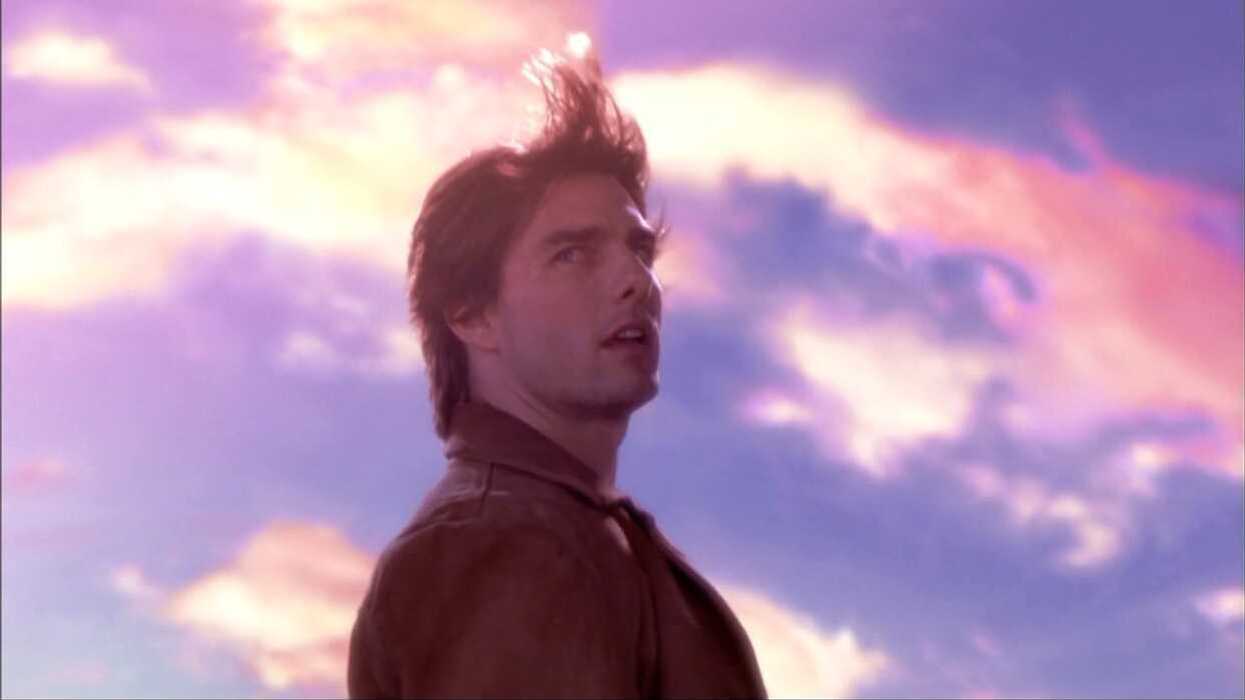
Vanilla Sky (2001)
The audience may think Vanilla Sky (2001) has a confoundingly complex narrative, and yet, they won’t be able to deny the mysticism of a line that stands out of this confusion.
“I’ll see you in another life, when we are both cats.”
Yes, it’s a statement where the protagonist is promising to join his love in another life, and as a cat. But, regardless of this whimsical implication, it captures the essence of love.
In the story, this promise is made in the protagonist’s fever-dream-like state, called a “Lucid Dream.” Once he goes back to reality (which he chooses to), the promise will fade.
But it refuses to fade from the audience’s mind.
And just like that, this weird line becomes the emotional heartbeat of this wonderfully complicated movie.
The Scene
Narrative Context
To have a better understanding of the scene, let’s first know a couple of concepts.
Within the movie’s world, cryogenic sleep is a process offered to a person who is legally declared dead. Through this process, the person’s body (especially the brain) is frozen, in the hope that future technology (medical science) may find a way to revive them. A lucid dream is the conscious mental experience that continues while the body is frozen. In this state, the mind creates a detailed, ongoing reality using memories, emotions, and imagined scenarios. Unlike regular dreams, lucid dreams allow awareness and choice. The dream feels stable and real, even though it exists entirely inside the person’s mind.
The Line
In this scene, David Aames Jr. (Tom Cruise) is legally dead and is put into cryogenic sleep. The scene entirely takes place within his lucid dream. At this point, Sofia (Penelope Cruz) is dead in real life, but exists here only as a memory shaped by David’s guilt and longing. He can speak to her because the lucid dream allows it. However, as you can guess, this love cannot reach a fruitful completion in the real world because, well, she is dead, and this is an imagined scenario.
David has two choices: either remain in this dream or return to real life. This requires a literal leap of faith—as in, he has to jump off an impossibly tall building. David chooses to return to real life.
Before he jumps off the building, David says to Sofia, “I’ll see you in another life, when we are both cats.”
The Line is a Callback
Much earlier in the film, at a party scene, David, captivated by Sofia, thinking she is the key to understanding things, asks her to share deep secrets. She is overwhelmed and deflects his probing by dismissing it by saying, “I’ll tell you in another life when we are both cats.”
So, when David says the line in the final scene, he is actually using Sofia’s words to anchor himself to a memory that feels authentic in the constructed (programmed) world that he is in.
The random and ludicrous choice of “cats,” in both scenes, highlights the fact that they are evading something; Sofia is sidestepping a direct emotional reckoning and vulnerability, while David is stripping away the ego and trauma of his disfigured human life.
Deciphering the Logic of “Another Life”
Why “Cats”?
As we know, cats are independent and believed to possess nine lives. This fact alone makes cats the perfect mascot for David’s multiple versions of reality (lives).
But even more so, there is a deeper connection. For the majority of the film, David’s sense of self is tied to his wealth, his status as a publishing mogul, and his physical beauty. A car crash, which disfigures him, turns everything upside down. It also alters his sense of self. When he refers to returning as a cat, he is wishing for an existence where money, status, and beauty don’t matter. A cat doesn’t care about a scarred face, torn ear, or lost inheritance. It just exists. In short, a cat is a reference to a life where he is loved for his essence, not for the mask he is wearing.
Love as a Nonlinear Concept
Within the film, “another life” is not only a poetic concept; it’s a literal “life extension” service that David bought. As per the service, David is cryogenically frozen, and his mind lives in a computer program. The purpose of this technology is to give the recipient a do-over; in David’s case, because his life ended in a tragedy.
With the quote in context, David is acknowledging that their first attempt at a loving relationship may have failed. Still, the technology will literally allow him a second chance (another version of his existence) where they might succeed.
Conclusion
The “cat” line makes an impact because it acknowledges the tragedy of David’s choices, but also offers a tiny spark of hope for the future. This is the movie’s way of telling us that even when life becomes a nightmare, we still look for a way to get back to our people.
It’s also a reminder that every passing minute is an opportunity to turn things around. It can go either way: either you wake up to a cold reality or another life full of hope.
- Pedro Almodóvar’s Top 13 Films, Ranked ›
- Tom Cruise Made Sure 'Top Gun 2' Debuted on the Big Screen ›
- Viral AI Fight Between Tom Cruise and Brad Pitt Sparks Alarm and ... ›
- Be Moved By Tom Cruise's Touching Tribute to Val Kilmer ›
- All 8 'Mission: Impossible' Movies, Ranked ›
- When Hollywood Lost the Plot: 10 Pointless Movie Subplots That Wasted Everyone’s Time ›
- The Plot Twist Audiences Hate the Most | No Film School ›
- What Does Clint Eastwood Think About Tom Cruise? | No Film School ›