Ridley Scott Says Stop Blaming Your Gear for Bad Cinematography
From shooting multi-cam blockbusters to making his first film for £65, the legendary director explains why prep, speed, and visual taste beat expensive cameras every time.
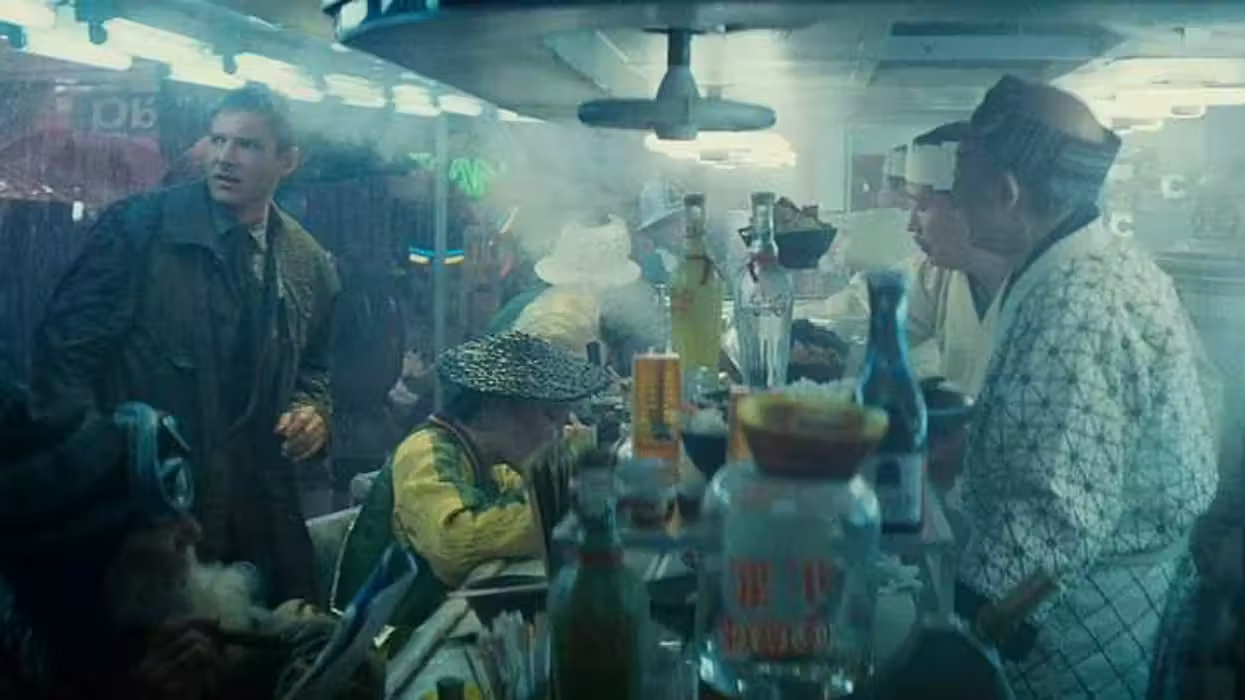
'Blade Runner'
Sir Rildey Scott is nearing 90 years old and still directing movies in his own way. The director, who is never short of opinions,
In an interview published by filmmaker Patrick Tomasso, Scott sat down to unpack his visual philosophy, technical workflows, and why modern filmmakers might be focusing on the wrong tools.
Here are the biggest takeaways every filmmaker, cinematographer, and director needs to hear.
Let's dive in.
- YouTube www.youtube.com
Gear Doesn't Make the Look: "It’s All in the Eye"
Filmmakers today are obsessed with gear. I know we are guilty of talking about gear too much on this site. Everyone wants a vintage Zeiss Super Speed or an IMAX camera or whatever.
But at the end of the day, it all comes down to the way you light it and the composition.
Scott’s response to the obsession is that it isn't the camera; it's the eye.
"No, it's all here, dude. It's all you. It's here and here. I'm blessed with a good eye. If you've got a good eye, you've got a good eye."
Scott points out that masters like the great Stanley Kubrick used simple tools like Polaroids as light meters to assess set lighting. They were not using this 21st-century tech. They were just moving the camera and looking at how things cast shadows.
So a lot of this requires storyboarding, planning, or just using your eyes to see what looks best on screen. Find your voice in the images. Scott still storyboards all his films, even in his advanced age, and sees them with his mind's eye.
Multi-Camera Workflows Save Time and Preserve Energy
I think many directors are moving toward shooting a few cameras at once, when budget allows. This kind of came about in commercials, and we've seen it take over Hollywood as digital has gotten cheaper.
It's an excellent way to save time on set and with VFX shots.
Look, we can't all be Nolan shooting on an IMAX camera at a time, so open yourself up to knowing how multicamera shoots work.
Scott's love of using many cameras comes from just not wanting to waste time on set. You can capture a lot of different moments actors bring when they don't have to do things over and over, and there's a spontaneity to it that breathes some life into stories.
"Film on Paper": Storyboard Your Own Movies
This was one of the parts I loved the most in this interview. Scott is still storyboarding. Hw has a new Peter Pan movie coming, and he still sits and rewrites the images he wants on the screen.
Scott visually maps out his films months in advance to save time and energy - he's relying on his imagination. He draws detailed comic-strip-style storyboards for every sequence.
Storyboarding allows Scott to edit before shooting begins, instantly spotting missing narrative beats or unnecessary dialogue.
Summing It All Up
This was a wealth of knowledge in only a few minutes with the director. I have yet ot see his newest film, but I am excited to continue to support the work of the guy for whom I interned almost 15 years ago.
Scott is a visionary, and I have no idea how long we have left with him, but his lessons and style will live on forever.
Let me know what you think in the comments.