Ridley Scott’s 9 Best Films Across Five Decades
From aliens to ancient empires, here’s a list of Scott’s best work.
Gladiator (2000)
Whether you’re a cinephile or not, Ridley Scott needs no introduction. Throughout his 50-year filmmaking career, the extremely versatile Scott has directed nearly 30 films, reinventing genres by seamlessly blending them together. At the same time, his films challenge gender roles, often featuring strong and complex women, such as Ripley in Alien and the titular characters in Thelma & Louise, who do not feed into the biased societal expectations.
In this article, we’re looking back at Ridley Scott’s best films.
9 Best Ridley Scott Movies
1. Alien (1979)
Considered to be one of the most influential films of the sci-fi horror genre, Alien follows the crew of the commercial spacecraft Nostromo, who are entangled in a battle for survival against a deadly alien entity, after they investigate a distress signal on a distant planet.
While its surface narrative explores horror with innovation, Alien is a sharp commentary on corporate greed, with the plot later revealing that the employer company of the Nostromo crew, Weyland-Yutani Corporation, is more than happy to expend the crew to secure the alien for research, as the employers order the android Ash to prioritize the research mission over the lives of the crew. Sigourney Weaver, as Ripley, stands out as a female protagonist, navigating crises in outer space, with her intelligence and resilience, in a male-dominated crew.
Scott’s outer space is both fascinating and frightening. Although the film goes heavy on special effects, Scott doesn’t let it take over the narrative, prioritizing storytelling and character development over spectacle.
2. The Martian (2015)
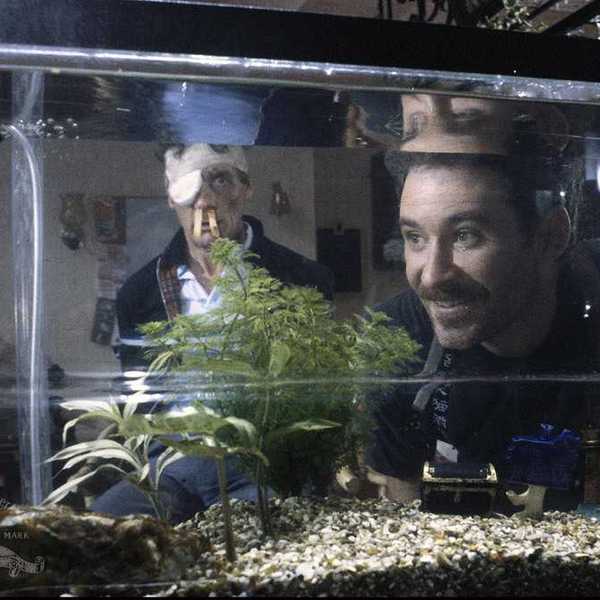
Another magnificent space-survival story, The Martian centers on an astronaut, Mark Watney (Matt Damon), who is stranded on Mars after his team, believing he’s dead, leaves him there and forces him to learn to survive on his own.
While the central themes of the narrative are survival and man versus nature, The Martian also explores complex themes, including solitude and isolation, reflecting on how humans are social animals at their very core.
Through his collaboration with NASA, Scott ensures that The Martian emphasizes scientific realism, featuring realistic set designs, including the Hab module and the Mars rovers. The special effects are not only scientifically accurate but also extremely detailed, further emphasizing scientific realism. If you’re a science nerd, this movie was made for you!
3. Blade Runner (1982)
Scott’s Blade Runner is a dystopian sci-fi neo-noir film that explores complex themes such as life, mortality, and identity. As Rick Deckard (Harrison Ford), a blade runner, sets out to hunt down the four biologically engineered androids, the replicants, Blade Runner poses several philosophical questions, the most important of which is “What does it mean to be human?”
Scott blends cyberpunk aesthetics with film noir. Notable for its use of harsh contrasts between light and darkness, Blade Runner also features Scott’s brilliant use of character framing and composition to establish the power dynamics, and is a masterclass in cinematic blocking.
4. Thelma & Louise (1991)
Thelma & Louise is a story about two women who abscond from their homes and responsibilities of daily life for a weekend road trip. It’s an unhinged exploration of female friendship, empowerment, and resistance to systematic misogyny and gender-based violence.
Once again, Scott masterfully uses framing and camera movement, highlighting the power dynamics and the evolving relationship between the various characters.
5. American Gangster (2007)
American Gangster explores the rusting of the American dream by systematic corruption, inequality, and crime through Frank Lucas’ (Denzel Washington) journey from being the right-hand man of a Harlem mob boss to becoming a powerful drug kingpin.
The film is notable for its period-accurate production design by Arthur Max. Combined with film-noir-inspired cinematography by Harris Savides, the film beautifully recreates the gritty 1970s urban New York City backdrop. Special mention to Denzel Washington and Russel Crowe for their gut-wrenching portrayals of Lucas and Richie Roberts, the Newark detective in the hot pursuit of Lucas.
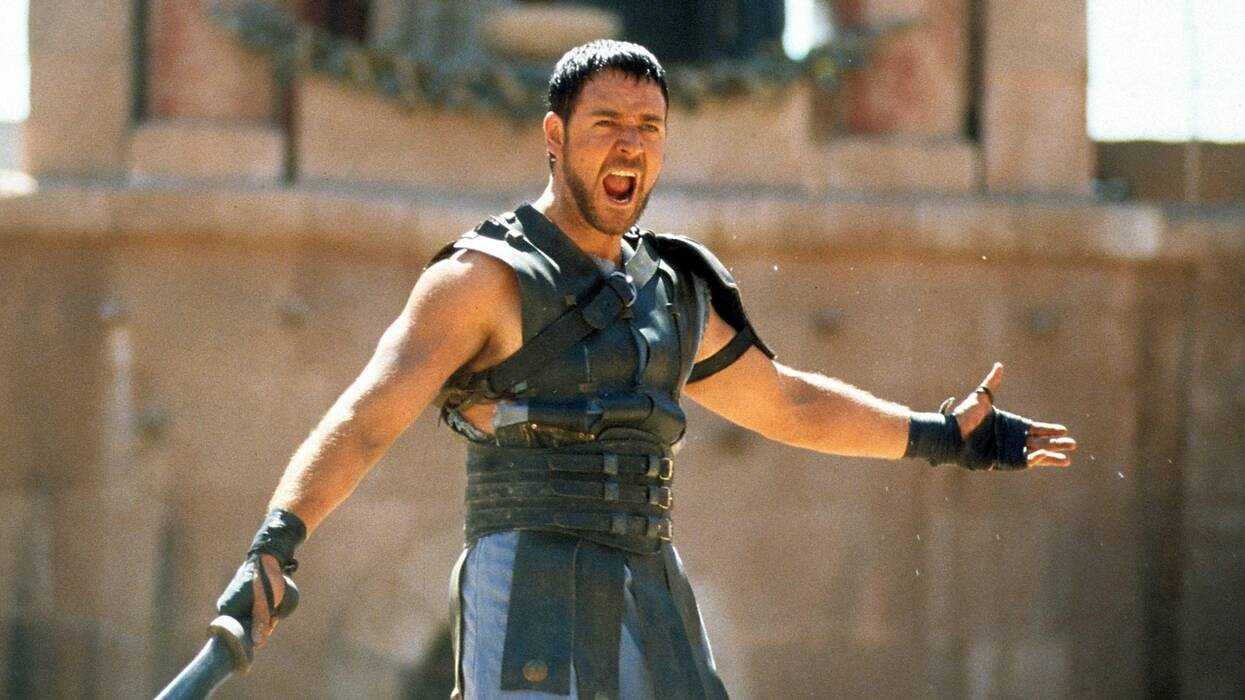
6. Gladiator (2000)
Probably the most iconic role of Russel Crowe, Gladiator centers on a Roman general, Maximus Decimus Meridius, who falls prey to political ambitions in ancient Rome and sets out to bring down the corrupt emperor who’s behind the conspiracy.
While it is a story of bravery, greed, and ambition, the narrative deeply explores complex themes, including physical freedom vs. materialistic enslavement. Scott’s use of visual motifs, such as wheatfields to symbolize Maximus’s longing for his country’s prosperity and safety, is a masterclass in symbolism. While the gladiator combat sequences are the biggest highlights of the film, Scott’s recreation of ancient Rome and Maximus’ journey will take you back in time.
7. Black Hawk Down (2001)
Black Hawk Down is a war movie done right. Revolving around the battle of Mogadishu in 1993, the film follows a troupe of 160 elite U.S. soldiers whose mission to capture two top lieutenants of a warlord unravels in chaos as they are met with a large force of heavily armed Somalis.
A narrative about brotherhood and survival, Black Hawk Down also highlights the unpredictability and brutality of modern urban warfare. Scott relies on kinetic editing, handheld cameras, and extreme close-ups to amplify the tension, dread, and realism of the battlefield.
8. The Duelist (1977)
Set in 1800s France, The Duelists centers on Lieutenant d’Hubert (Keith Carradine) and Lieutenant Feraud (Harvey Keitel), who get into a years-long feud over a minor disagreement. The narrative masterfully explores the futility of such an obsession with personal honor over petty issues. The film also mirrors the class differentiation and mobility that existed back in Napoleon’s France.
Scott’s debut film is celebrated for its period-accurate visuals, meticulous framing, and its use of light, mist, and weather as expressive devices.
9. The Last Duel (2021)
Starring Matt Damon and Adam Driver, The Last Duel is set in late 14th-century France and follows Jean de Carrouges, who seeks justice and honor for his wife, Marguerite, who has accused his former friend of sexual assault, by challenging him to a duel to the death.
Structured in a Rashomon-style triptych, Scott presents the story from three different perspectives, highlighting the difference between male and female perception. Not only historically accurate, from production design to costume, the climactic duel is also choreographed, keeping in mind the authentic medieval techniques.
Which of these Ridley Scott movies have you watched? Let us know in the comments below.
- Ridley Scott's Slate is Kind of Bonkers ›
- Ridley Scott Reflects on Beginnings, Breaking Into the Industry, and Using Too Much Smoke ›
- The Art of Storyboarding with Ridley Scott, Sam Mendes, and Conrad L. Hall ›
- The 4 Movies Ridley Scott Picked on Letterboxd ›
- Ridley Scott Says Stop Blaming Your Gear for Bad Cinematography | No Film School ›