The 45 Minutes That Changed Everything: Ridley Scott’s Biggest ‘Kingdom of Heaven’ Regret
The heartbreaking mother-son discovery was deemed too dark for theatrical release, but it actually stripped the film of its most poignant emotional stakes, much to the director’s later dismay.
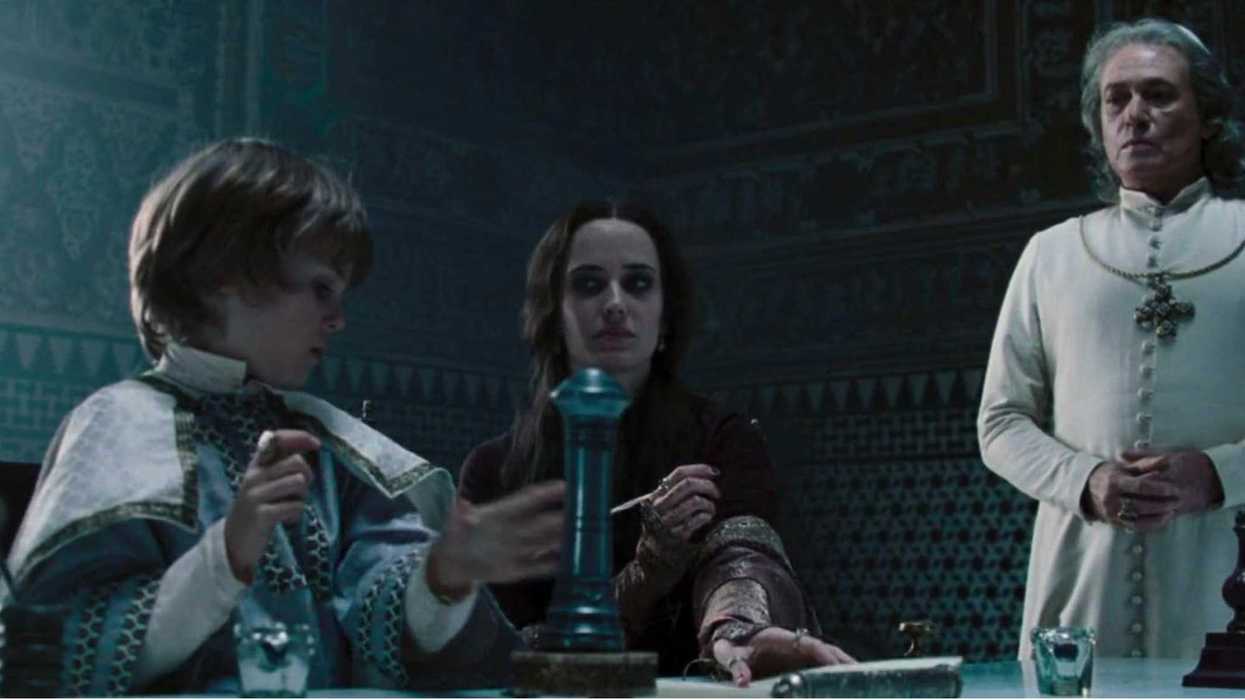
‘Kingdom of Heaven’ (2005)
Being a filmmaker, especially since the industry floats on market viability and profits, comes hand-in-hand with an uncertain fate for your directorial vision. Sometimes you win, sometimes you lose. Either way, you say, “It’s business,” and move on.
But sometimes that “moving on” part stings because the project was personal, and what you lost came at the cost of a better, more layered narrative. Some years pass, and then you try to fill that “empty spot” with a “Director’s Cut” version, but it’s not the same. The sting lingers forever.
Ridley Scott has experienced this nervous tingling ever since the release of his historical drama, Kingdom of Heaven (2005). What he had in his hands was a sweeping epic about the Kingdom of Jerusalem and the Crusades, but to him it still felt like a hollowed-out shell of its potential.
At the root of this artistic disquiet is a 17-minute subplot, so heavy it would make Greek tragedy look like a sitcom. It centers on Sibylla’s (Eva Green) discovery that changes the entire weight of the Crusades. And without this subplot, she feels flighty and inconsistent.
No wonder she’s been haunting Scott ever since.
The Premise and the Deleted Scene
Balian of Ibelin (Orlando Bloom), a 12th-century blacksmith, after enduring hardships and personal tragedies, and now seeking redemption, decides to join the Crusaders on a journey to the Kingdom of Jerusalem. Unwittingly, he gets pulled into a brutal political and religious war. Despite being relatively unknown, he achieves knighthood and defends the city against the Kurdish leader and the founder of the Ayyubid dynasty, Salah ad-Din, striving for a “kingdom of conscience.”
While in Jerusalem, he starts a romantic relationship with the leper king, Baldwin IV’s (Edward Norton) sister, Sibylla (Eva Green). Since Baldwin IV is suffering from a severe and progressive multibacillary leprosy, he has no children of his own. Sibylla’s 8-year-old son from her previous marriage, Baldwin V (Alexander Potts), is the heir presumptive.
While the movie is mainly centered on Balian, his struggles to protect the city of Jerusalem, and his search for redemption, there was a subplot that focused on Sibylla and Baldwin V.
After the leper king dies, Baldwin V inherits the throne, and Sibylla serves as his regent. It’s during this time that she discovers that Baldwin V is showing early signs of leprosy. Since she has already seen her brother suffer from this deadly disease and live a severely compromised life, this revelation devastates her. Justifiably not wanting him to suffer the same fate, she administers poison to him and mercy-kills him.
Why the Studio Feared the Dark
Too Heavy for the Multiplex?
First things first. Baldwin V indeed died at age eight; however, there is no historical record of him ever contracting leprosy. Plus, the contemporary account that claims he was poisoned by his regent (interestingly, not his mother) cannot be verified. So, let’s consider this narrative liberty.
The studio had two reasons for cutting out this subplot entirely. Firstly, they thought this story arc was a detour from the main plot. They wanted to reduce the film’s runtime...by 45 minutes. The longer runtime means fewer theatrical plays, and fewer theatrical plays means slower financial recovery. Secondly, they thought this child-killing subplot was too dark, especially in a movie that was already pretty dark. Like any business-centric corporation, they wanted a streamlined summer blockbuster, not a meditation on terminal illness and infanticide, both difficult to watch.
Removing the leper king wasn’t an option because A) it’s historically accurate, and B) Baldwin IV is essential to the plot. So, the next and obvious choice was removing the “poisonous” subplot that was making the film heavier.
Why the Studio Was Wrong
Yes, the subplot doesn’t make viewing the film any easier, but it added significant narrative weight to it. Sibylla makes a tough decision and remains distraught the rest of her life. This subplot gives her miserable status legitimacy. It’s dark, but it’s memorable. It would definitely have added gravitas to the film. In a tale of medieval political upheavals and religious wars (which, I think, is a bit convoluted to follow), this little prince’s subplot was something everyone could come around to and feel its emotional weight. But they removed it, and lost a bit of its edge, a bit of its soul.
The “Director’s Cut” Redemption
Over seven months after its theatrical release, Scott sent out the “Director’s Cut” version. Interestingly, this time, the critical evaluation was overwhelmingly more positive than the original one. Even those critics who had panned the theatrical version came out praising this one. Empire magazine put it aptly in their review: “The added 45 minutes in the Director’s Cut are like the pieces missing from a beautiful but incomplete work.”
Scott reiterated his displeasure at the studio-driven cut, saying that they had paid too much attention to the select preview audience. Scott often cites Kingdom of Heaven as the prime example of why he now insists on more creative control.
Conclusion
Yes, sometimes directors get too self-involved, and then it becomes hard to tell creative insight from creative hoarding. But this is not that. Ridley Scott’s stance and his irritation are absolutely justified. The Director’s Cut and its standing with the critics prove it. Breaking away from the Sibylla-Baldwin V story arc didn’t do any good to the film, but instead hollowed out the film’s emotional spine and blurred its character arcs.
If the artistic vision had won, then, in a story about faith, power, and survival, the most devastating battlefield would have been inside a mother’s private chamber. Far more memorable.
- 11 Most Iconic Lines from Ridley Scott Movies | No Film School ›
- What Does Ridley Scott Think Are the Best Shots From His Long Movie Career? | No Film School ›
- Ridley Scott Says Modern Movies Are “Shit” | No Film School ›
- How Ridley Scott Shaped Modern Sci-Fi in Two Films | No Film School ›
- Ridley Scott Doesn't Think VFX Will Save Your Movie | No Film School ›
- Ridley Scott's Slate is Kind of Bonkers | No Film School ›
- Ridley Scott’s 9 Best Films Across Five Decades | No Film School ›
- 10 Movies That Teach Filmmaking Better Than Film School ›
- Ridley Scott Says Stop Blaming Your Gear for Bad Cinematography | No Film School ›