
Well, this is quite interesting. As AI continues to be by far the most dominant story of this year, the past few years, and likely all the years moving forward, the issues around identifying what is AI-created and what is real will become exponentially more important.
There are tools out there that aim to help with this, and another new one is on the way, coming from a computer science team led by researchers at UC Riverside. Let’s look at this new framework that can identify visual patterns in fake video frames, which can be used to trace the generations back to the AI video generators that created them.
A New AI Identification Tool
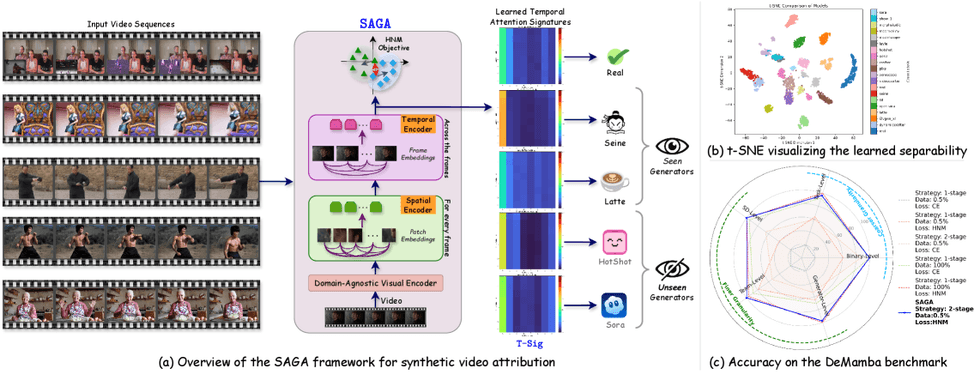
Credit: ARXIV
So, as mentioned above, the most intriguing aspect of this new tool being developed by the CS team at UC Riverside is its goal not only to determine whether a video is fake, but also to help identify which AI system created it.
This tool uses its new framework technology to identify visual patterns in fake video frames unintentionally introduced by AI video generators, leaving a forensic trail to help identify the systems that created the videos.
“The patterns are like fingerprints that the generative model leaves behind, and our goal here was to find out if the signatures are distinct amongst different generators. It turns out that, yes, there are distinct fingerprints there.” — UCR doctoral student Rohit Kundu, who led the research under the guidance of Professor Amit Roy-Chowdhury in collaboration with researchers at YouTube and Google DeepMind.
The new framework is called SAGA (aka Source Attribution of Generative AI Videos), and it represents one of the first large-scale efforts to trace AI-generated videos back to their origin models.
What Comes Next?
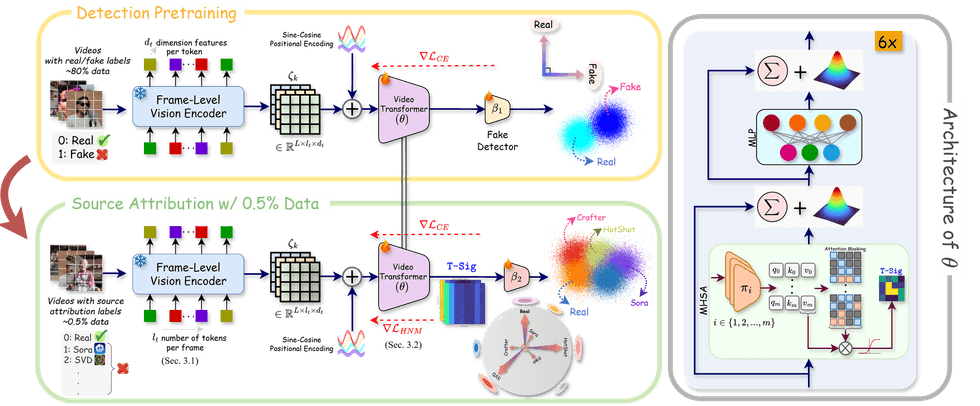
Credit: ARXIV
While it might be hard to explain how this tool works, it’s not hard to explain why it’s important. As “deepfake”-type content continues to rise, and AI-induced misinformation becomes more troublesome, being able not only to recognize AI but also to trace it will be hugely important.
The technology is intriguing as well, as it is able to track how visual elements change from one frame to the next over time, something which AI video generators do differently, and is the key to tracing subtle patterns in those changes and their distinctive artifacts.
Still, what’s perhaps most fascinating about this technology is that it’s designed to help future digital forensic investigators track misinformation campaigns, hopefully all the way back to their sources.
We’ll keep you up to date on this and other new AI tracking technologies in the future.
- How AI Logging Transformed My Post-Production Workflow for Clients ›
- This New Coverage Service Will Give You Speedy Script Feedback ... But It's via AI ›
- Drop Your Motion Capture Suit With This Invisible AI-Powered Video Solution ›
- AI Face Tracking Data for 3D Animation Takes Major Step Forward ›
- Scared of Working in 3D? This AI Camera Tracking Tool Might Change Your Mind ›