When Music Takes the Lead: 7 Films Where Sound Becomes Story
Explore how filmmakers use music not as decoration, but as the narrative’s core engine.
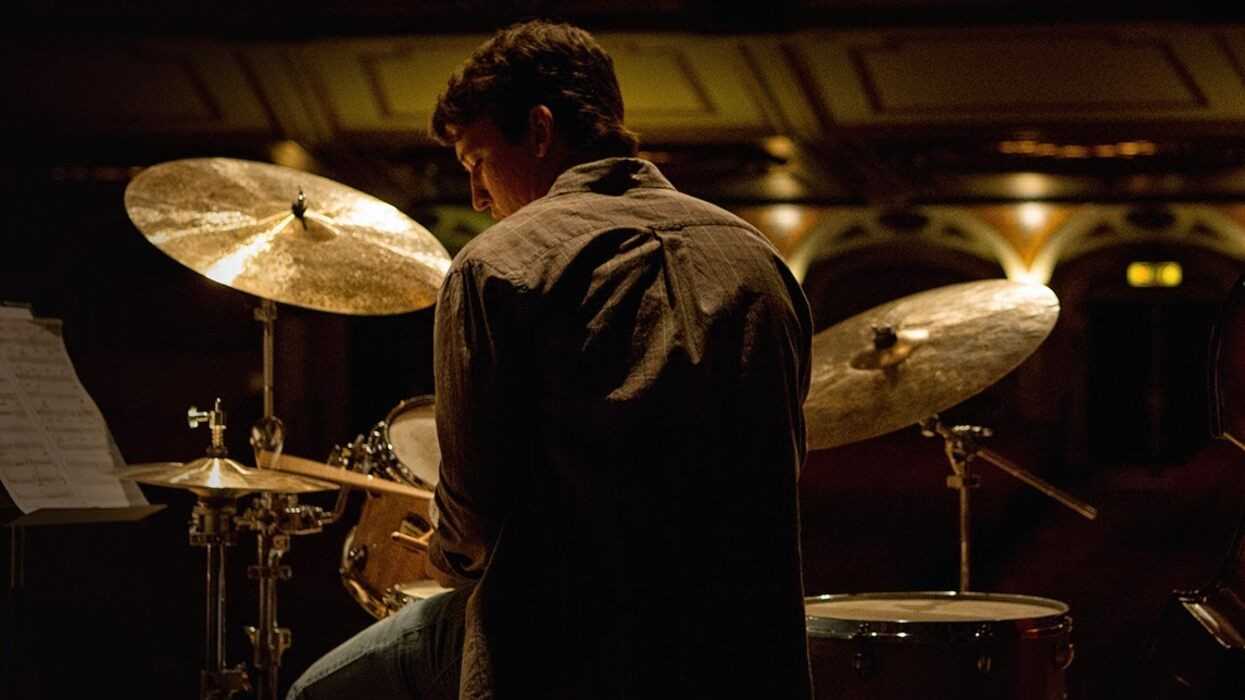
Whiplash (2014)
Every film has music, and it does what it is meant to do—highlight emotion and nudge the audience toward a mood. At best, it remains a background decoration—the wallpaper of a scene.
But in some films, music refuses to sit quietly in the corner. It becomes a character in its own right, shaping mood, steering the story, and sometimes dictating the fate of the people on screen. These aren’t just movies with good soundtracks; these are movies where music is the narrative engine.
These are the films where silence feels like a missing heartbeat, and the soundtrack functions less like decoration and more like destiny. Think of music here as the unseen character—one you don’t see on screen but whose presence you feel in every beat, note, and silence. In these films, a melody can cut deeper than an on-the-nose dialogue, and a rhythm can reveal more about a character than any monologue ever could.
Think of it this way: if you were to strip the music from these films, the story would collapse. The characters wouldn’t know how to communicate, the conflicts wouldn’t unfold, and the audience wouldn’t understand what’s truly at stake.
Here, music doesn’t support the drama—it is the drama.
So, let’s take a journey through seven films where music writes the story. Each of these examples shows us how melody and narrative can fuse so tightly that separating them would leave nothing but silence. From the jealous torments of a composer’s rival to the raw rise-and-fall of a tragic love story, these movies prove that music can be more than a soundtrack—it can be a storyteller.
Seven Films Where Music Drives the Story
1. Amadeus (1984): The Torment of Divine Genius
Written by: Peter Shaffer | Directed by: Miloš Forman
At its core, Amadeus is the tale of two composers: the divinely gifted Wolfgang Amadeus Mozart (Tom Hulce) and the envious Antonio Salieri (F. Murray Abraham). Through Salieri’s eyes, the story unfolds as a confession—one man tormented by God’s choice to grant genius, not to him, but to someone else. This period drama is a collision of human weakness and divine music.
What makes the film extraordinary is how Mozart’s compositions, arranged by conductor Neville Marriner, dominate the storytelling. In one unforgettable scene, Salieri reads Mozart’s manuscripts and hears the music in his head—the audience hears it too. Here, the score, instead of just playing, explains the two forces clashing with each other—the purity of Mozart’s genius and the envious agony of Salieri’s recognition that he’ll never reach those heights. The music becomes the weapon, the battleground, and the haunting ghost that Salieri can’t escape.
Amadeus is a reminder that music can express conflict as sharply as dialogue. It teaches that if you let the audience hear through a character’s ears, you can reveal inner turmoil with staggering clarity.
2. Once (2007): The Unsung Symphony of Connection
Written and Directed by: John Carney
Once tells a quiet story of a street musician known only as “Guy” (Glen Hansard) and a Czech immigrant, “Girl” (Markéta Irglová). They meet by chance, connect over a shared love for music, and spend a few days together creating songs that neither of them could have made alone. Their bond is fragile, fleeting, but unforgettable.
The film’s heartbeat is truly in its music, composed by Hansard and Irglová themselves. The key moment arrives in a music shop where the two craft “Falling Slowly.” The scene unfolds in real time, with the song growing as they play, layer by layer. Words are sparse, but the melody says everything: trust, admiration, longing. The music becomes the dialogue they can’t quite speak, and by the end of the film, we know these songs will outlive their brief connection.
Once is proof that intimacy on screen doesn’t have to rely on grand speeches or bold spectacles. Sometimes, two voices blending into harmony can capture the complexity of human connection better than any script could.
3. Inside Llewyn Davis (2013): The Melancholy of Artistic Integrity
Written and Directed by: Joel and Ethan Coen
Inside Llewyn Davis follows Llewyn Davis (Oscar Isaac), a struggling folk musician navigating New York’s Greenwich Village in the early 1960s. Broke, aimless, and out of sync with the world around him, Llewyn wanders from couch to couch, guitar in hand, clinging to his art even as it drags him into obscurity.
The Coen Brothers structure the film like a folk ballad: circular, haunting, and unresolved. T Bone Burnett’s supervision of the soundtrack ensures that every performance feels raw and immediate, often recorded live. The highlight comes when Llewyn performs “The Death of Queen Jane” in front of a record producer. The song, mournful and ancient, captures Llewyn’s essence: talented, aching, yet doomed by his inability to adapt. The silence that follows the performance is deafening—his art is flawless, but it won’t sell.
This film shows filmmakers that music can embody more than just setting; it can become the structure. Like a folk song, the film repeats its verses, reminding us that some stories end not with resolution but with repetition.
4. Whiplash (2014): The Brutal Tempo of Ambition
Written and Directed by: Damien Chazelle
Whiplash is less about music as entertainment and more about music as obsession. It follows Andrew Neiman (Miles Teller), a jazz drummer, and his tyrannical instructor, Terence Fletcher (J.K. Simmons). Their relationship is a war zone—every rehearsal a battle of willpower and endurance.
The soundtrack, featuring compositions by Justin Hurwitz and classic jazz standards, accompanies the story in a way that it becomes the story’s tempo. The final “Caravan” performance is a masterstroke of editing, rhythm, and emotion. Every beat of Andrew’s drumming is a declaration of defiance and desperation, with Fletcher both conducting and confronting him in real time. The scene blurs the line between triumph and self-destruction.
Whiplash demonstrates how pacing and rhythm can be more than technical tools—they can mirror character psychology. Music here, of course, underscores ambition, but it also embodies its brutality.
5. La La Land (2016): The Jazz-Fueled Dream
Written and Directed by: Damien Chazelle
La La Land spins the story of Sebastian (Ryan Gosling), a jazz pianist, and Mia (Emma Stone), an aspiring actress. Their romance unfolds against the backdrop of Los Angeles, where dreams are as fragile as they are dazzling.
Justin Hurwitz’s Oscar-winning score drives the film as much as the screenplay does. The songs—lyrical, bittersweet, and bursting with longing—are extensions of the characters’ emotional lives. The planetarium waltz, set to “Planetarium,” is perhaps the purest example: music lifts them into the stars, literally detaching them from reality. Here, music is the mood, and it is the dream itself. By the film’s bittersweet epilogue, the score carries us through an entire alternate life—no dialogue required.
The film underlines a vital truth for storytellers: music can elevate the mundane into the magical. It shows how melodies can frame both possibility and loss, allowing audiences to feel entire lifetimes in a single refrain.
6. Baby Driver (2017): The Heist Choreographed to the Beat
Written and Directed by: Edgar Wright
In Baby Driver, Baby (Ansel Elgort) is a getaway driver who times his life to the music in his earbuds. For him, the playlist is not entertainment; it’s his coping mechanism, his focus tool—a shield from trauma.
Edgar Wright’s approach is radical: every movement, gunshot, and tire screech is synced to the soundtrack. From the opening heist, scored to Jon Spencer Blues Explosion’s “Bellbottoms,” the film announces its rules: the music is always present and stays in charge. Steven Price’s sound design ensures that even background noise blends into rhythm, turning the entire world into Baby’s mixtape. The editing, choreographed to the songs, creates a film where music dictates the mood as well as the physical structure of the scenes.
Baby Driver is a valuable lesson in integrating music into editing. It shows how you can let a soundtrack become the metronome for both character and action, turning chaos into choreography.
7. A Star Is Born (2018): The Duet of Ascent and Descent
Written by: Eric Roth, Bradley Cooper, and Will Fetters | Directed by: Bradley Cooper
A Star Is Born follows seasoned musician Jackson Maine (Bradley Cooper) and rising star Ally (Lady Gaga). Their romance unfolds alongside their diverging careers—his unraveling, hers skyrocketing.
The songs, written and performed by Gaga and Cooper, are pretty much the backbone of the film. The live performance of “Shallow” is a narrative pivot: Ally steps into the spotlight, her talent undeniable, while Jackson’s role as mentor begins to fade. The lyrics, the crescendos, the crowd’s eruption—every note marks the characters’ shifting trajectories. By the time “I’ll Never Love Again” closes the film, the music has charted an entire relationship from first spark to final heartbreak.
What filmmakers can learn here is that original music can serve as a diary, chronicling character arcs in real time. The songs are the story, and the story is the song—written in melody and sung in pain and joy alike.
The Lasting Chord
Across these seven films, music is the script’s bloodstream. Each note carries weight, shaping characters, driving the plot, and carving out emotions too complex for words. In Amadeus, it’s divine genius; in Once, it’s fragile intimacy; in Whiplash, it’s raw ambition; in Baby Driver, it’s the ticking clock of survival.
The brilliance of these films lies in their refusal to treat music as an accessory. Instead, they trust it to be the storyteller, the conflict, and sometimes the resolution itself. Watching them makes us realise that the visual medium that is cinema can also be symphonic.
So the next time you sit down for a film, don’t just watch the story. Listen. Somewhere between the notes, a hidden character might be telling you everything you need to know.