How PTA’s 'One Battle After Another' and Pixar’s 'Finding Nemo' Share a Narrative Structure
These desperate dads just want their kids back. But their kids are more ready for the world than they appear.
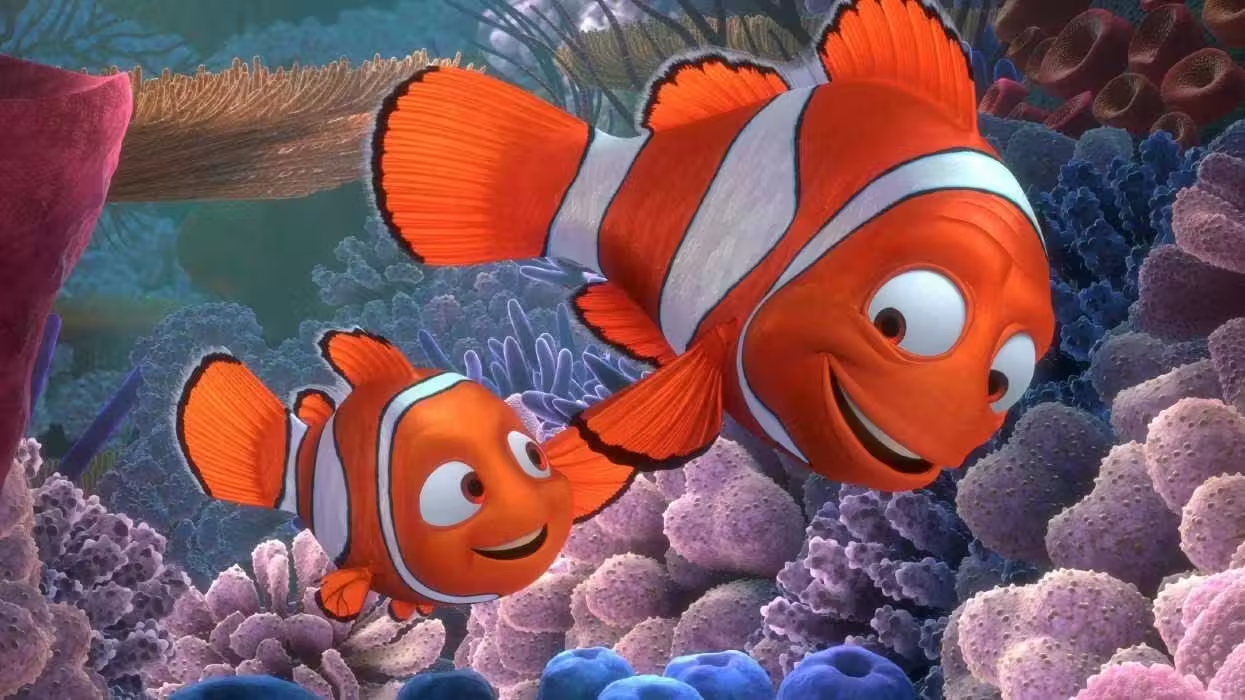
'Finding Nemo'
Guys, I love Reddit so much. I was on there looking up some stuff on PTA, and I stumbled across this incredible post that talks about the screenplay structure of Finding Nemo and how One Battle After Another follows the same one.
The discussion was on the r/paulthomasanderson subreddit, which highlighted the uncanny structural parallels and was one of my favorite recent reads.
I knew I had to bring the topic here to unpack how, despite the radical differences in tone, style, and target audience, both films rely on a strict episodic survival structure anchored by a deeply flawed father trying to navigate a dangerous, systemic landscape to rescue his child.
Let's dive in.
The Similarities Between Finding Nemo and One Battle
As noted in the original Reddit inspiration, both films feature massive, high-energy set pieces that function as structural twins, likethe frantic highway road chases in One Battle to the high-velocity East Australian Current scenes in Nemo.
The climactic car chase in PTA's film maps beautifully to the feeling of characters surfing wildly from wave to wave in an unpredictable ocean.
But let's go a little further.
When each movie gets into their second acts, they have even more in common.
Finding Nemo's Journey
Look at how Finding Nemo shifts the canvas of conflict that Marlin and Dory encounter:
| Section | The Obstacle | The Narrative Purpose |
| The Sharks | Psychological Terror / Internal Threat | Forces Marlin to confront his profound anxiety and trust issues. |
| The Jellyfish | Physical Hazard / Environmental | Tests physical endurance and introduces immediate, high-stakes panic. |
| The Whale | Existential Trap / Dead End | Forces a literal leap of faith, requiring an absolute surrender of control. |
One Battle's Journey
Everything you just read about Nemo is also true for PTA. He uses the exact same structural playbook in One Battle After Another.
| Section | The Obstacle | The Narrative Purpose |
| The Systemic Threat | Evading Col. Lockjaw's (Sean Penn) military-grade sweeps | Introduces a cold, calculated bureaucratic danger. |
| The Ideological Hazard | Cult-like environments of revolutionary nuns or radicalized local factions | Challenges Pat's psychological grip and past worldview. |
| The Internal/Chaos Threat | Pat’s own substance abuse and escalating paranoia | Acts as a self-sabotaging environmental hurdle putting his daughter at risk. |
Character Growth via Structural Progression
These are both movies made with an episodic structure. It allows the characters to drift (pun intended) while also having purpose.
They are bouncing around, meeting new people, like a chill Sensei trying to help immigrants get into the US, or a chill turtle trying to help immigrant turtles follow the warm water, and then gets sage advice that allows them to arc.
In Finding Nemo, Marlin starts the film paralyzed by trauma, micro-managing every variable to keep his son safe. Each episode chips away at this defense mechanism. By the time he encounters the sea turtles, he learns to let go; by the time he enters the whale, he learns to trust blindly.
On the other fin, Pat Calhoun begins One Battle After Another as a washed-up, paranoid stoner hiding from his past, trying to freeze time in the sanctuary of Baktan Cross. The cascading chaos of the plot strips away his isolationist defense mechanisms layer by layer.
The most important layer is that of being a parent and feeling like you failed your child.
In both films, the parents briefly endure the terrifying belief that their child is dead.
But once they're all reunited, both fathers find the strength to give up their stifling, overprotective control, because they know their kids can handle the world and are shaping it to be a better place.
That's an expert way to connect character arcs to plot structure.
Summing It All Up
Look, I know these similarities are kind of hilarious, but I think they really are more of a product of two movies that fall into a similar genre. Or maybe PTA loves Pixar's storytelling rules and let them lead him this way.
Regardless, I loved that Reddit post, and I feel like I learned a ton about road movies from it.
Let us know in the comments below.