As an absolute loner, I use Instagram only to access the infinite number of filmmaking accounts that I follow. One sequence that often pops up on my Instagram timeline is the mirror scene from Robert Zemeckis’ Contact, with captions such as, “How is this happening?” “What magic is this?” "Technical marvel in cinema,” “filmmaking genius,” and more. Every time it came up on my feed, I would read through the comments (because I can be lazy sometimes) in the hopes of stumbling upon the answer, until I didn’t, and decided to decode it myself.
So, in this article, we’ve decoded how cinematographer Don Burgess brought Zemeckis’ innovative vision to life with pure technical acumen.
The Scene
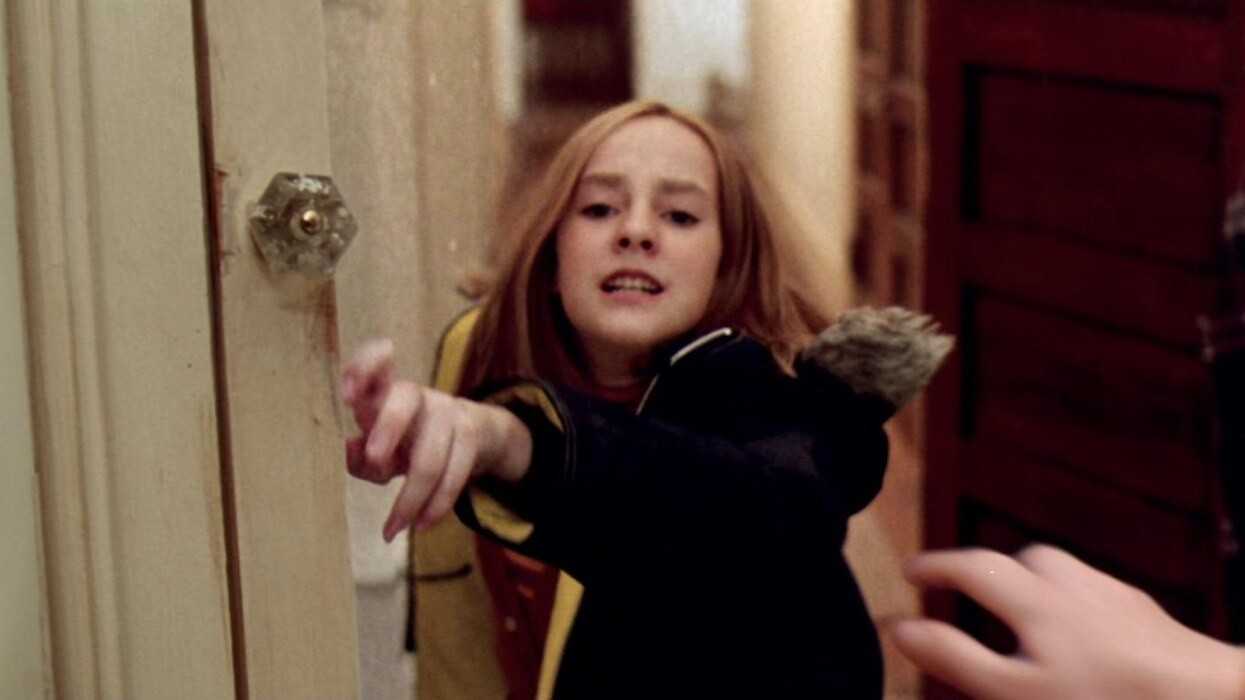
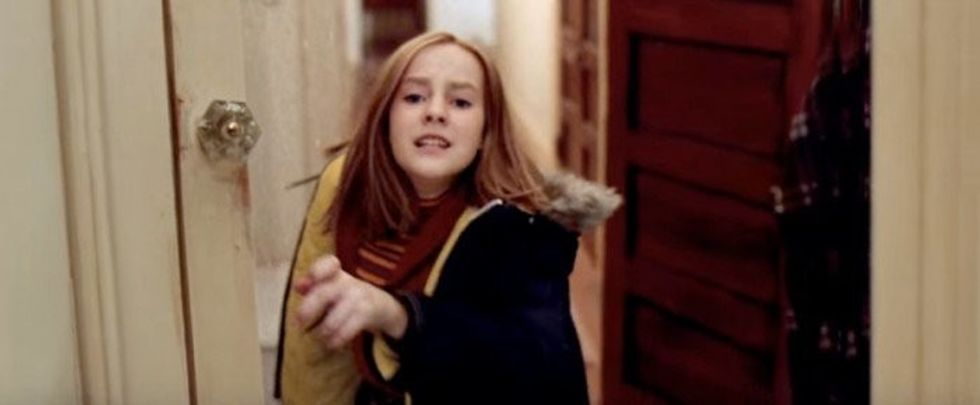
The scene starts with a tub of popcorn scattered on the floor. Young Ellie (Jena Malone) rushes up the stairs towards the bathroom with the camera following her. She goes straight for the medicine cabinet, grabs a bottle of pills, and rushes downstairs. The camera stays on the cabinet mirror.
Uncovering the Secret Behind Contact’s Mirror Scene
Let’s break the scene into parts to understand better.
1. The Frontal Follow
 Contact (1997)Source: Warner Bros.
The frontal follow is a fairly simple shot, in theory. A steady cam operator follows young Ellie running frantically up the stairs and then across the corridor, towards the bathroom.
Now, practically, there were a couple of challenges in filming, especially the steady-cam follow up the stairs, owing to the weight of the apparatus and space crunch. So, Burgess opted for a 65mm Beaumont Vista Vision camera to ensure that it was light enough to mount on the steady-cam setup, and the footage didn’t lose its quality after special effects.
In an interview, Burgess shared how, back in those days, in the duplication process for special effects, it was natural to lose image quality and gain grain on the footage. Therefore, as a precaution, Burgess opted for a large negative, i.e., 65mm, ensuring that the sequence looked seamless.
2. The Slow-Motion Effect
 Contact (1997)Source: Warner Bros.
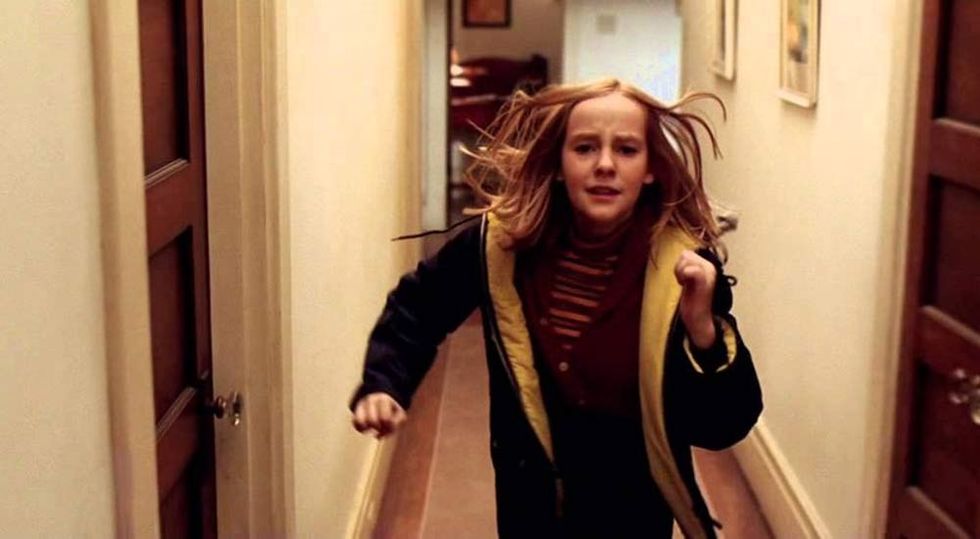
Zemeckis wanted to slow down the shot, as young Ellie reached the corridor area to induce a feeling of delay, signifying and foreshadowing that, despite her best attempts, she would fail to save her father by just a few measly seconds. Again, there was a technical limitation here, as cameras back in those days were not possible to do in post-production. The frame rate on the camera had to be changed while filming to create slow motion.
So to achieve that, Burgess composed the shot in such a way that as soon as young Ellie steps into the corridor, the steady-cam operator would move away from her and slit in to slow it down, i.e., from 24fps to 48fps during the ongoing take. Vista Vision’s use also ensured that the exposure in the shot was maintained despite the change in the frame rate, due to its ability to balance the exposure as per the frame rate, which means the f-stop opens up as the frame rate goes up, during an ongoing take.
3. Digital Compositing
 Contact (1997)Source: Warner Bros.
The second shot is a POV into the mirror through which we see young Ellie to establish that the camera’s direction has shifted, somewhere midway between the shots. This is where Ken Ralston’s visual effects kick in. The cabinet mirror was covered with a blue chroma sheet to allow chroma keying on it. The idea was to overlay the 2nd video seamlessly onto the cabinet’s mirror, seamlessly transitioning from one shot to another. As the camera charges into the mirror with the cabinet door slowly closing due to inertia, a framed photo of Ellie with her father is revealed. That photo was not originally there in the shot and was digitally added in post-production later on.
Now that we have broken it down, wasn’t that filmmaking 101? On that note, as a filmmaker, I’m a firm believer that filmmaking is very similar to magic. Because we’re in the profession of creating illusions, it’s best to keep the secrets hidden, or soon they will lose their charm. So, I’d suggest not sharing this with your non-filmmaker friends! Let the awe and disbelief live on!
And for my fellow filmmakers, let us know if this was helpful!