“What’s your favorite scary movie?”
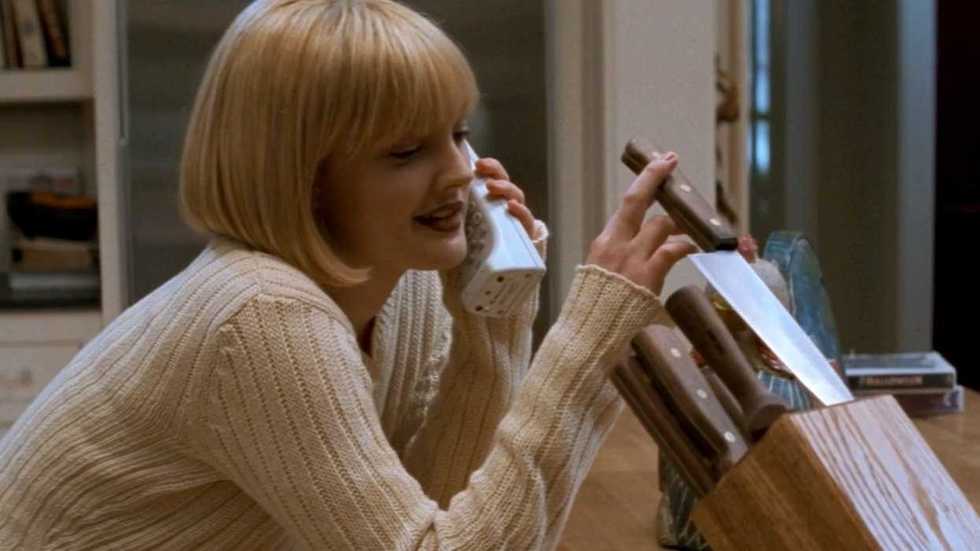
This line spoken at the beginning of 1996’s Scream isn’t just a way for the Ghostface killer to taunt Casey Becker (Drew Barrymore) over the phone during the slasher classic’s bravura opening sequence. It’s a mission statement that explains exactly what the movie is doing and how it went on to completely reinvent modern horror.
What Scream Is up To
Scream, which was helmed by A Nightmare on Elm Street director Wes Craven from a screenplay by Kevin Williamson, is a satire of the then-dormant slasher genre.
Movies about killers wielding sharp weapons and killing large casts of characters one by one had their heyday in the 1980s (inspired by a melting pot of subgenres including the German krimi movies, the Italian gialli, and North American proto-slashers like Psycho, Black Christmas, and The Texas Chain Saw Massacre). More than 500 slasher movies debuted between the beginning of 1980 and the end of 1989, borne along by major franchises including Elm Street, Halloween, and Friday the 13th.
However, by the mid-1990s, diminishing financial returns had more or less killed off the subgenre. Even some of the biggest slasher villains of the era had said their goodbyes (which proved to be temporary, but still), in titles including 1991’s Freddy's Dead: The Final Nightmare and 1993’s Jason Goes to Hell: The Final Friday.
Williamson, who was interested in resurrecting the subgenre, developed a screenplay that followed teenagers who were just as obsessed with 1980s slashers as he was, to the point of donning masks and attempting to create their own real-life slasher movie. This involved killing their classmates with a hunting knife, generally after tormenting them over the phone by either asking them horror trivia questions or taunting them about horror tropes.
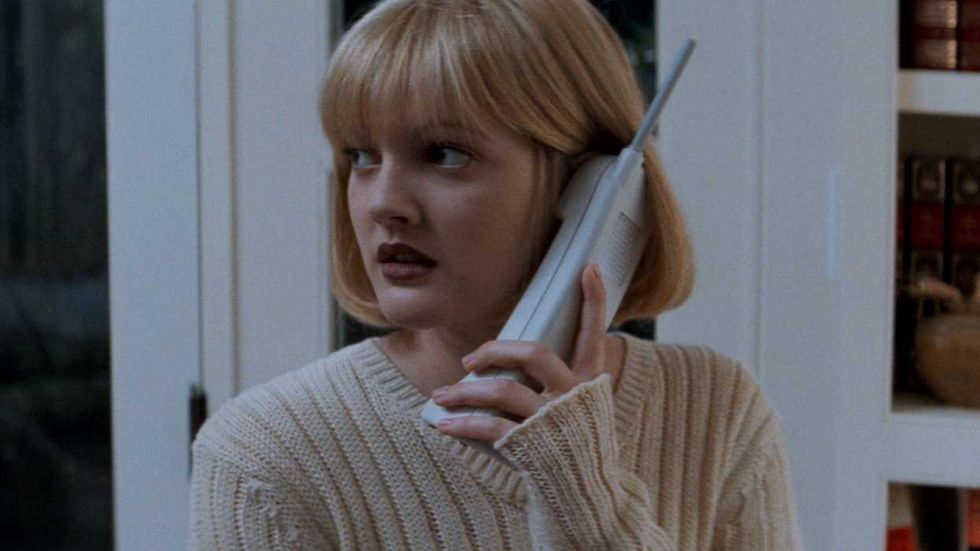 ‘Scream’ (1996)Credit: Dimension Films
While similar jokes had cropped up in the subgenre before, notably in the 1986 slasher-comedies Friday the 13th Part VI: Jason Lives and Evil Laugh (both featured a character joking about horror tropes), Scream was the first proper slasher movie where the entire cast, from the killers to the victims, had some level of knowledge about the slasher genre.
This is unusual in any horror subgenre. For instance, it is the rare zombie movie character that even utters the word “zombie,” let alone looks at their situation and goes, “I’ve seen a movie like this before, we need to shoot these creeps in the head.”
This allowed Scream to not only comment on slasher tropes but also actively exploit them and subvert them. This is why it’s so important when Ghostface asks, “Do you like scary movies?” when tormenting Casey Becker in the movie’s opening scene. It breaks down the fourth wall, allowing the slasher movies that exist outside of Scream to become visible to the characters and even become major factors in the narrative.
Post-Scream Slashers
The freshness and sharpness of Scream, which is crystallized in that iconic Ghostface line, connected with audiences across the world, making the movie a smash hit. It only cost roughly $15 million, and it earned back more than 11 times that number with its $173 million box office haul. The slasher genre had been taken off life support all of a sudden, and it hit the ground running.
There was a glut of post-Scream slashers of the late 1990s, but they weren’t simply retreads of the 1970s and 1980s slashers that Scream referenced so thoroughly. They were all postmodern, meta projects that engaged with various aspects of the horror genre, including urban legends (1998’s Urban Legend) and the “sex = death” trope (1999’s Cherry Falls).
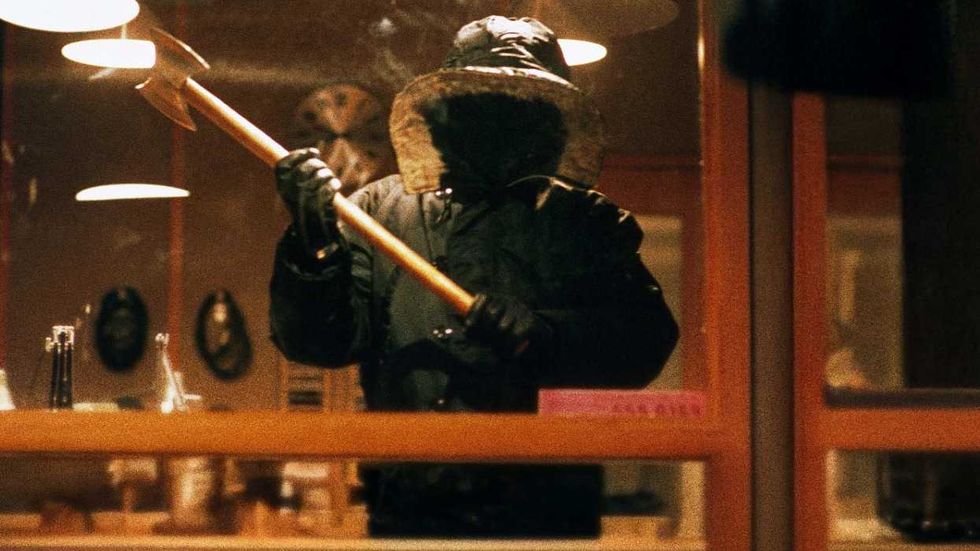 ‘Urban Legend’ (1998)Credit: TriStar Pictures
Scream also began churning out sequels that hit theaters alongside its imitator, beginning with 1997’s Scream 2, a meta treatise on horror sequels that debuted less than 365 days after the original movie. So far, the Scream franchise has turned its satirical eye toward horror trilogies (2000’s Scream 3), remakes (2011’s Scream 4), legacy sequels (2022’s Scream), franchises (2023’s Scream VI), and true crime (2026’s Scream 7).
Scream was so popular that its meta approach even began to infect other major slasher franchises. Although the pre-Scream franchise movies Child’s Play 3 (1991) and Halloween: The Curse of Michael Myers (1995) were more straightforward slashers, that changed with the sequels that immediately followed them. 1998’s Bride of Chucky was chock full of references to everything from Bride of Frankenstein to Hellraiser, while the same year’s Halloween H20: Twenty Years Later (which was based on a story by Kevin Williamson, who also performed rewrites) featured a group of slick, savvy teens facing off against the franchise’s iconic masked killer, Michael Myers.
The legacy of Scream lives on in meta slashers like the 2006 mockumentary Behind the Mask: The Rise of Leslie Vernon, the 2010 backwoods slasher sendup Tucker & Dale vs. Evil, the 2015 “trapped in a slasher movie” comedy The Final Girls, and recent genre mashups (slash-ups?) like 2017’s slasher + time loop hit Happy Death Day, 2020’s slasher + body swap comedy Freaky, and 2025’s slasher + rom-com outing Heart Eyes. (all three of which featured the involvement of filmmaker Christopher Landon in various capacities, and the latter two of which were co-written by Michael Kennedy).
The Horror Genre After Scream
Not content with simply reinventing the slasher genre, Scream went ahead and changed the entire horror genre while it was at it. Meta horror movies from every type of subgenre began cropping up in the wake of Scream, including the 2011 Evil Dead riff The Cabin in the Woods, the 2009 zombie comedy Dead Snow, the 2016 parody Found Footage 3D, and even the 2025 Jack Black and Paul Rudd creature feature Anaconda.
While its meta approach to the slasher movie was the primary aspect of the movie that was replicated by imitators, many also mimicked it by bringing slick, stylish, witty characters into other genres, including supernatural horror (Phantoms), paranoid thrillers (Disturbing Behavior), and sci-fi (The Faculty, which was also written by Kevin Williamson).
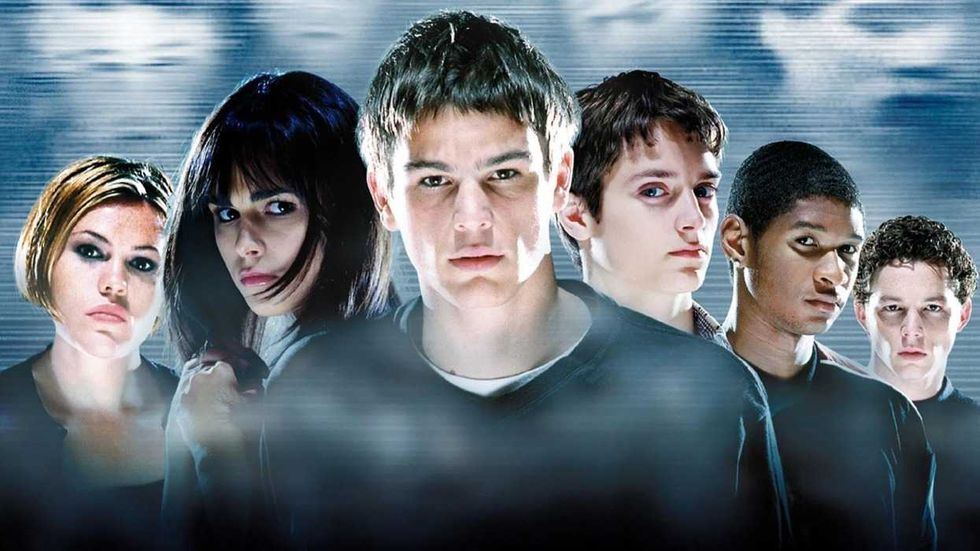 ‘The Faculty’ (1998)Credit: Miramax Films
While the trends that Scream kicked off did eventually die down, the movie’s echoes continue to be felt in the modern horror genre, as filmmakers have fought to find new ways to present earnest, straightforward horror movies that defy the tropes that the 1996 movie satirized so thoroughly that they could no longer be replicated properly.
From the found footage element that adds realism to movies like The Blair Witch Project, Cloverfield, and Paranormal Activity to the high concepts that bring new textures to many of A24’s horror movies, the horror genre in general has gained a dimension that it wouldn’t have if it hadn’t been skewered so lovingly by Scream.
Because Scream is such a classic, the No Film School archive contains plenty more articles breaking it down from even more angles, including how Casey Becker is a false protagonist, what Scream can teach you about horror, and the horror logic used in the movie.