Every 'Jaws' Movie, Ranked
Which Jaws movie is worst? We ranked all four.
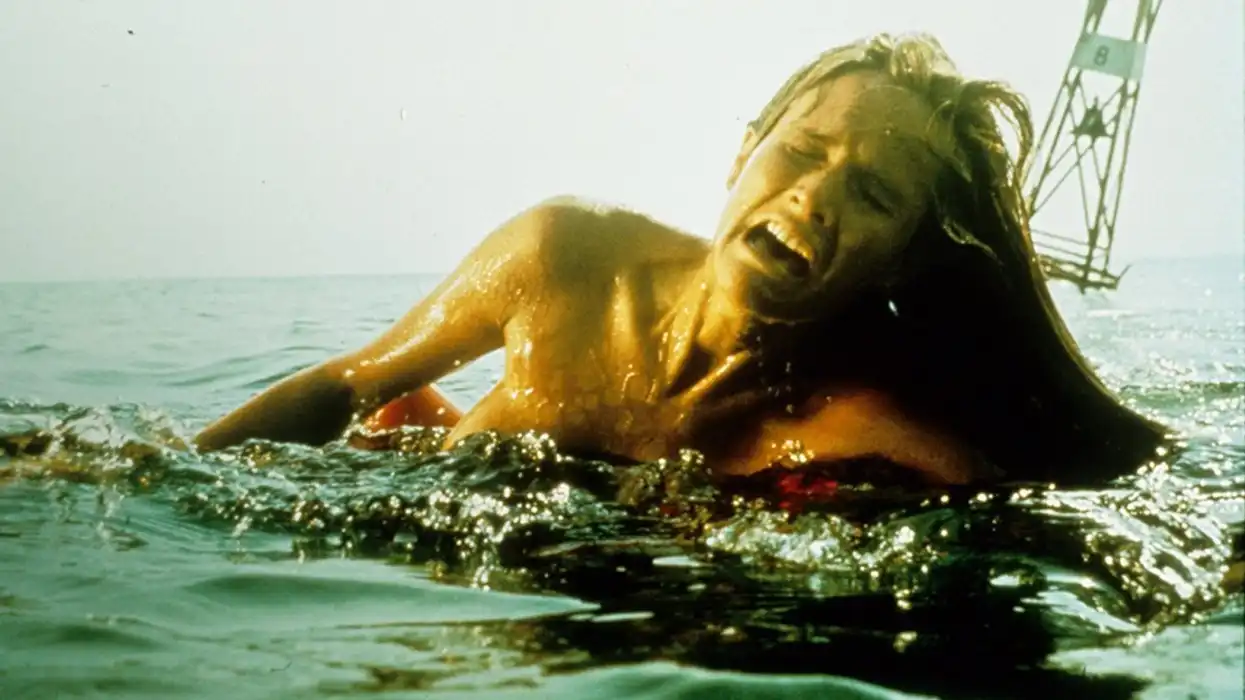
It's summertime, so a lot of us have probably been beach-bound. For me, I can never sit on the sand without thinking of a bunch of dudes on a small boat, chasing a killer shark.
I'm speaking, of course, of Jaws, which is arguably a perfect film. It spawned a franchise, but that franchise quickly sank, sequel by sequel, like a floating barrel dragged down by an ancient beast.
Jaws is the reason we have summer blockbusters at all, and everything that comes after it is a study in diminishing returns. But thankfully, you can learn as much from what went wrong as from what went right. So we ranked all four, worst to best, and pulled a making-of story out of each. Dive in.
- YouTubewww.youtube.com
Jaws: The Revenge
Turns out the shark holds a grudge. Ellen Brody (Lorraine Gary, back for her final screen role) becomes convinced a great white is hunting her family on purpose, chasing them from Amity all the way to the Bahamas. The tagline was, "This time it's personal."
Universal rushed the thing into theaters in roughly nine months, working from a script reportedly written in about five weeks.
Michael Caine took the pilot role and never looked back (or forward) or… well, even at the finished cut. He won his first Oscar for Hannah and Her Sisters during the shoot but couldn't leave the set to accept it in person.
"I have never seen it, but by all accounts it is terrible. However, I have seen the house that it built, and it is terrific," Caine said, per Interview Magazine.
Alas, no amount of returning talent or studio money survives a concept nobody bothered to pressure-test and a rushed schedule that treats the writing as a formality.
- YouTubewww.youtube.com
Jaws 3-D
A step up, which tells you plenty about the film below it. Jaws 3-D moves the carnage to a SeaWorld park full of underwater tunnels, hands the grown Brody sons to Dennis Quaid and company, and asks a 35-foot shark to lunge at the camera in janky effects shots for the decade's 3D revival.
Joe Alves directed this one. He'd been the production designer on the original and knew that shark better than almost anyone else, and the 3D was his idea. It was also his undoing. He earned a Razzie nomination for it and never directed another feature. The gimmick fought him the whole way.
"I came up with the idea of making it 3D. And so then I got the directing job, but then I realized they didn't have any new cameras. They were all old," Alves said in an interview with SYFY WIRE.
The crew had to build cameras from scratch and fight to keep the convergence right, and all that effort ended up on the screen instead of in the story.
It's a cautionary tale we hope every director never meets. A format or a piece of tech might just be holding you back. Would you rather have a cool trick in a murky movie, or a simpler film that works on a narrative level?
- YouTubewww.youtube.com
Jaws 2
From 1978, this is the best of the sequels, although (sorry) it isn't a close race. Jaws 2 brings Roy Scheider's Chief Brody back to Amity for another great white and another reluctant hunt, this time with a boatload of teenagers as bait.
The production was nearly as cursed as the original's. First director John D. Hancock was let go early on, and Jeannot Szwarc (a TV vet given weeks to prep) climbed aboard a moving boat. Scheider didn't really want to be there and clashed with his new director for much of the shoot.
Szwarc's fix required discipline. He said in a 1978 interview:
“Since the script was already written and the cast already selected, all we could do was tighten things up by eliminating three of the characters and changing the emphasis of the last half of the picture. What I did, because the movie was so complicated, was to try to keep it simple. I knew from the beginning that complexity would kill us, so I tried to translate everything into a very classical, basic Hitchcockian kind of suspense. I also did a lot of subjectivity from the shark's point of view, by putting a camera on the shark and using a lot of dolly shots, so the audience could feel what it was like to be the shark. We even built a special machine to shoot underwater.”
Stripping the sequel down, leaning on what frightened people the first time, and resisting the urge to pile on more is why the film holds up slightly better than its reputation. Working in a giant's shadow with no time and a hostile star, he made several smart, small choices.
The tagline said it best… "Just when you thought it was safe to go back in the water."
- YouTube www.youtube.com
Jaws
You knew this one would top the ranking. This one first introduced us to Amity Island and the killer shark.
Spielberg was 27, shooting on the open ocean, over budget and over schedule, wrestling three mechanical sharks nicknamed Bruce that broke down constantly the moment they hit the water.
And that issue, famously, bred the film's biggest strength. Unable to reveal his monster, Spielberg suggested it instead via a fin, a floating barrel, the fear in actors' eyes, John Williams' two-note theme, and let our imaginations create something far worse. He's borrowing straight from Hitchcock there, but Spielberg has never pretended it was the plan.
"I had to be resourceful in figuring out how to create suspense and terror without seeing the shark itself. Hitchcock did that, and I think Hitchcock was a tremendous guide for me in the way he was able to scare you without really seeing anything. It was just good fortune that the shark kept breaking. It was my good luck, and I think it's the audience's good luck, too, because it's a scarier movie without seeing so much of the shark," Spielberg said on the BBC's Desert Island Discs (via The Hollywood Reporter).
Keeping the shark off-screen for nearly half the runtime works better than you'd think it would. So if you ever lose a location, have your budget slashed, or struggle with a stubborn piece of gear, try studying what Spielberg did when his big monster simply refused to turn on. You don't have to show everything all the time.
- Remember When: ‘Jaws’ Defined the Summer Tentpole ›
- Bet You Didn’t Notice 'Jaws' Has Almost No Shark in the First Half — And That’s Genius Writing ›
- How 'Jaws' Gave Birth to the July 4th Blockbuster ›
- The Iconic 'Jaws' Theme Almost Didn’t Make It Into the Movie — Here’s Why ›
- The Most Underrated Shark Movies Every Fan Should Watch ›
- The 'Jaws' Sequel Tagline So Bad It Became Iconic for the Wrong Reasons | No Film School ›