Bet You Didn’t Notice 'Jaws' Has Almost No Shark in the First Half — And That’s Genius Writing
It’s not about what you see—it’s about what you expect to see. That’s the brilliance of Jaws.
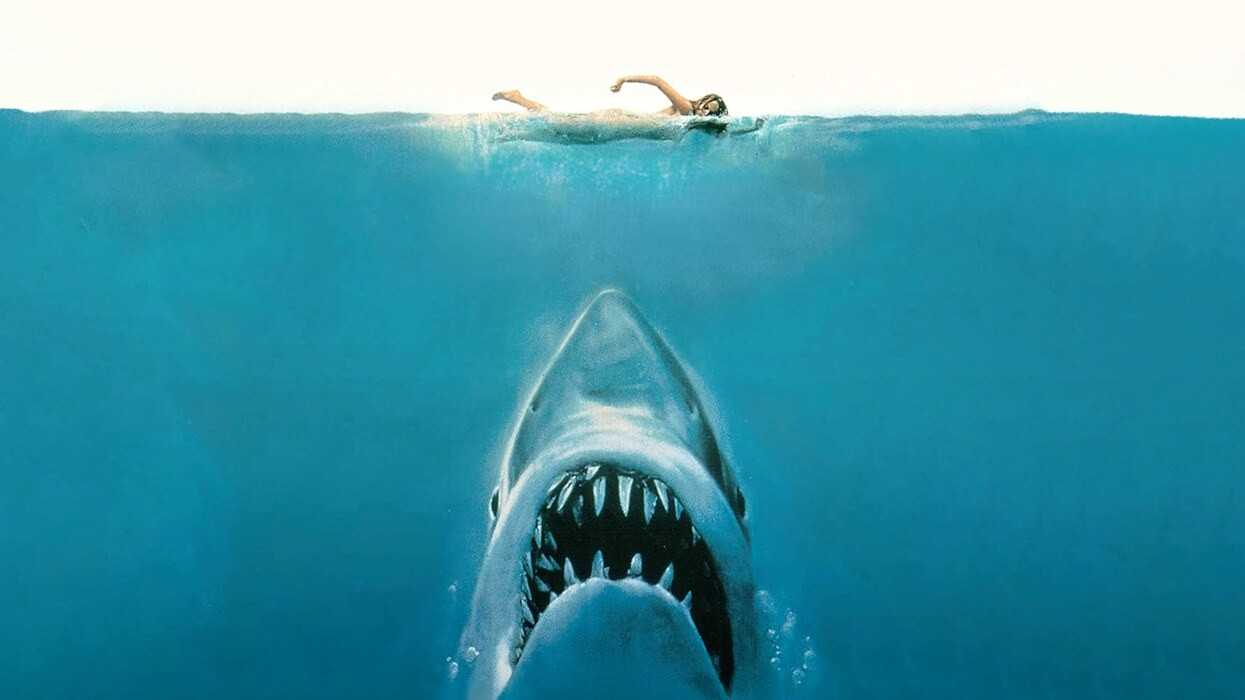
Jaws (1975)
What if the scariest monster in a horror movie was the one you never saw?
That’s the paradox Jaws (1975) pulls off without flinching. For nearly half its runtime, there’s barely a glimpse of the shark. No close-ups. No massive jaws chomping into swimmers. And yet, your heart pounds every time someone dips a toe into the water.
The fear is alive, and it’s everywhere. But where’s the shark?
Here’s the trick: Spielberg and screenwriter Carl Gottlieb didn’t really write a movie about a monster; they wrote around it. They built suspense by handing the reins over to your imagination. And nothing the audience’s eyes saw could be scarier than what your brain conjured.
In a time when horror often means bigger monsters, louder screams, and bloodier close-ups, Jaws whispers its terror—and somehow, it hits harder.
It’s a textbook case of how less can be much, much more. And if you’re writing horror, thriller, or anything that relies on tension, this is one writing decision worth dissecting.
The Art of the Unseen: Why Less is More
The Shark’s Absence as a Narrative Weapon
Let’s start with the wildest stat: the shark only has about four minutes of total screen time in the whole film. That’s it. Yet somehow, it haunts every frame.
From the very first attack—when Chrissie is pulled under during a nighttime swim—we don’t see the creature. We hear splashing, gasping, and screaming. The camera yanks us underwater for half a second, but we never lay eyes on what’s doing the damage. The scene does more with shadows, sound, and clever editing than any animatronic prop ever could.
This wasn’t all part of some grand initial plan. Bruce, the mechanical shark, kept breaking down. Spielberg later called it “the great white turd.” But instead of folding, he adapted—filming around the problem. And weirdly, that malfunction became a blessing in disguise. By not showing the shark, he made it legendary.
Hitchcock’s Influence & The Power of Suggestion
Spielberg had done his homework. Alfred Hitchcock was the king of suspense without spectacle. The shower scene in Psycho? You never actually see the knife pierce skin. It’s the editing and sound design that convince your brain otherwise.
Jaws borrowed that philosophy and went even leaner. There’s no comfort zone in the water because Spielberg turns the entire ocean into a threat. The shark could be anywhere—right under the surface, right beneath that kid on a raft, or just out of frame. You don’t need a monster to make people afraid. You just need the right suggestion at the right time.
Writing Fear: How the Script Builds Tension
The “False Alarm” Technique
The first half of Jaws is full of deliberate fake-outs. You think a shark is coming... but it’s just kids with a cardboard fin. Or a shadow. Or nothing at all.
These moments aren’t there to frustrate the audience—they’re doing precision work. They crank up the anxiety little by little. Every red herring primes us to expect the worst the next time someone goes near the water. So, when the real attack finally happens, it hits like a truck. Because we’ve been conditioned to brace ourselves.
The Slow Burn of the First Act
The screenplay doesn’t rush the horror. Instead, it dials into small-town politics and human denial. Mayor Vaughn wants the beaches open—no matter the risk. It’s subtle, but it’s a jab at the way institutions often ignore warning signs if there’s money on the line.
Meanwhile, Police Chief Brody (Roy Scheider) grows increasingly uneasy. Every splash starts to feel like a threat, even if nothing surfaces. And then there’s the autopsy scene.
It’s all in the description: a chewed-up arm, damage too violent to be from a boat propeller. No need to show gore. Just paint the picture with words—and let the audience squirm.
Sound as a Screenwriting Tool
John Williams’ two-note theme is famous, but what’s easy to miss is how perfectly the script makes space for it. Spielberg and his team knew when to drop the music, when to keep a scene eerily quiet, and when to let the score sneak in like a predator.
There are long stretches of silence or ambient noise that lull you into a false sense of calm. Then comes that unmistakable duunnn dunnn… duuuunnnn duun... It’s not merely background music; it’s part of the story’s heartbeat. The script allows the sound to cue the terror, sometimes more effectively than any line of dialogue.
The Legacy: How Jaws Rewrote Horror
From Monster Movie to Psychological Thriller
Before Jaws, creature features usually gave the audience what they came for—giant beasts wrecking cities, stomping on tanks, or climbing skyscrapers. Think Godzilla or King Kong. The monster was front and center, and the fear came from its size.
But Jaws changed the game. It stripped away the visual and replaced it with psychological dread. You didn’t fear a giant monster—you feared the ocean. You feared the unknown. That shift opened the door for a whole new kind of horror.
Modern Horror’s Debt to Jaws
Look at horror hits like A Quiet Place (2018), It Follows (2014), or The Babadook (2014). They don’t rely on overexposed CGI monsters. They rely on restraint. On eerie silences, slow pacing, and your own mind filling in the blanks.
And that’s where many modern, effects-heavy horror films miss the mark. The more you show the creature, the more the audience gets used to it—the fear wears off. But if you keep the audience guessing? If you suggest, instead of display? Then that tension lingers. And that blueprint leads straight back to Jaws.
The Screenwriter’s Lesson
Here’s the real takeaway: fear doesn’t come from what’s on the screen—it comes from what you think is there. Jaws understood that. It understood that a fin, a shadow, or a sudden silence could be more terrifying than a full-blown reveal.
Spielberg and Benchley built suspense around the absence of the monster. The shark barely shows up, and that’s exactly why we never stop looking for it.
So, the next time you’re watching—or writing—a horror film, don’t just ask what the monster looks like. Ask what not showing it might do. Because Jaws didn’t need a shark to terrify us. It just needed us to believe one was there.
And somehow, that made it even scarier.
- Three Ways to Make a Killer Shark Movie ›
- The 11 Best Shark Movies ›
- How 'Jaws' Gave Birth to the July 4th Blockbuster ›
- What Moment From 'Jaws' Did Spielberg Borrow From Hitchcock? ›
- Watch: How 'Jaws' Can Help Us Redeem the Summer Movie ›
- Jaws’ Most Famous Line Was Actually an Inside Joke on Set ›
- Remember When: ‘Jaws’ Defined the Summer Tentpole ›
- 'Hausu' Is the Elevated Version of 'Jaws'—Let Us Explain ›
- 9 Scenes from 'Jaws' That Will Show You How Spielberg Does Cinematography ›
- Is This Scene the Key to the Genius of 'Jaws'? ›
- The Iconic 'Jaws' Theme Almost Didn’t Make It Into the Movie — Here’s Why | No Film School ›
- ‘Jaws’: Why Quint Will “Never Put On a Lifejacket Again” ›
- Jaws' Movies Ranked: Every Sequel From Worst to Best ›