Gareth Evans 6 Iconic Movies Ranked: From Brutal to Brilliant
From bone-crunching martial arts to slow-burn horror, here's a full breakdown of Evans' diverse filmography—ranked with insight and precision.
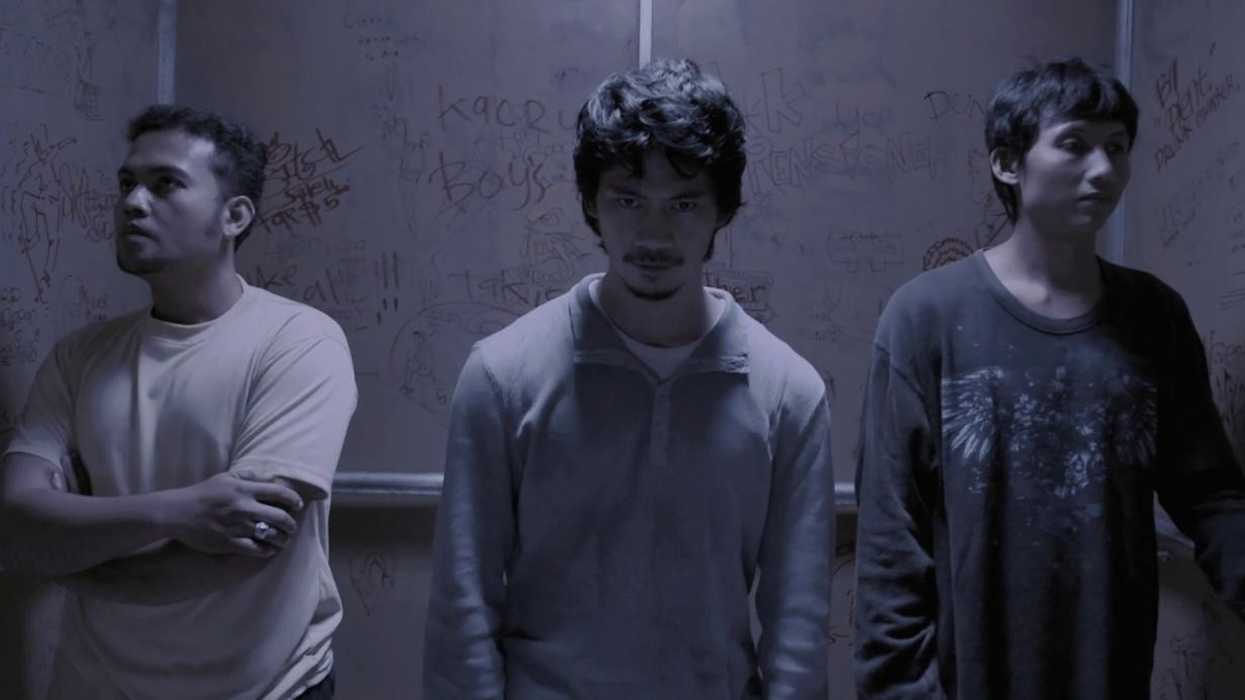
The Raid (2011)
Nobody shoots violence quite like Gareth Evans. When his movies punch, you feel every fractured bone, every desperate gasp, and every slam into concrete.
He made The Raid: Redemption (2011), and suddenly the world remembered that action films could be both brutally physical and artistically composed. Instead of making noise for the sake of it, Evans builds tension like a horror filmmaker and then explodes it with the precision of a surgeon holding a machete.
Beauty in the carnage, rhythm in the madness—that’s his signature.
This ranking pulls apart all six of his feature films and stacks them based on direction, storytelling, editing, action design, and sheer creative vision. We're looking at how well each film holds up today, what it brought to the genre, and yes—some personal bias will leak in. This isn’t a stats sheet—it’s a filmmaker’s journey.
While a couple of his early efforts show their budget, even his weakest movies offer something fascinating. And when he hits his stride, few can touch him.
Overview of Gareth Evans’ Style
Signature Elements
Evans carved a name for himself through The Raid films, but his signature flourishes go beyond body counts. His fight scenes are precision-built—long takes, real impacts, no shaky-cam nonsense. He introduced global audiences to Pencak Silat, an Indonesian martial art that became a storytelling device in itself. Evans’ characters fight to survive, but they also fight to say who they are.
His work is often defined by his collaborators. Iko Uwais—an ex-delivery guy turned action star—is practically Evans’ cinematic avatar. Joe Taslim (The Night Comes for Us) brought another layer of intensity. But Evans is so much more than the fists—Apostle (2018) and Havoc (2025) show his knack for slow-burn dread and bleak atmosphere. He’s not stuck in one lane; he’s just really, really good at the one most people can’t handle.
Evolution: From Low-Budget Indie to Genre Powerhouse
Evans started on the fringes with Footsteps (2006)—a micro-budget experiment that barely hinted at what was coming. Then Merantau (2009) introduced us to Iko Uwais and a kinetic fight style that hadn’t been seen in mainstream cinema before. By the time he made The Raid (2011), he had blown the ceiling off what we thought was possible with martial arts on screen. Each film since then has shown growth—sometimes uneven, sometimes divisive—but always bold. He’s a director who has constantly been reshaping his style, and not just replicating past glories.
The Ranking: From Worst to Best
06. Footsteps (2006)
Footsteps is a lo-fi psychological thriller about a man named Andrew (Gareth Evans’ regular, Michael David) who’s caught in a moral downward spiral after witnessing a violent act. It’s more of a character study than a narrative—and it's clearly made on a shoestring budget. Think early 2000s handheld digital grime with a dark, almost student-film aesthetic.
It lands here at the bottom not because it lacks ideas—but because it lacks craft. The camera work is raw in the clunky way, not the gritty way. There are long stretches where the film’s pacing just doesn’t hold. But beneath all the rough edges, you can already see Evans’ obsession with moral decay, claustrophobic tension, and violent consequence taking shape.
This film is more important as a timestamp than as a movie. If you're a filmmaker, this is proof that “just make your first film” is legit advice. Even if it’s rough. Even if nobody sees it. Footsteps is where Evans learned to speak cinema before he learned to roar.
05. Merantau (2009)
Merantau follows Yuda (Iko Uwais), a young man leaving his rural village for Jakarta as part of a cultural rite of passage. His journey turns sideways when he tries to protect a woman (Sisca Jessica) from human traffickers, turning him into an unlikely fighter on a bloody urban quest.
This is Evans’ first real swing at a full-length action movie, and while it’s miles ahead of Footsteps, it’s still finding its feet. The pacing dips in the second act, the villains are cookie-cutter, and the plot leans into melodrama. But the fight choreography? Wildly promising. The long-take stairwell fight and the tight hallway brawls are early glimpses of the kinetic madness that would become his signature.
What stands out here is the intention. Evans was building something from scratch: introducing a martial art to a global audience, shaping a new kind of action hero in Iko Uwais, and proving that style doesn’t need a $100M budget. There’s real inspiration for indie filmmakers here: a clear vision, grounded stakes, and a lot of sweat.
04. Havoc (2025)
Havoc follows a bruised, burned-out detective (Tom Hardy) who must claw his way through the criminal underbelly of a city after a drug deal goes south. It's Evans’ return to action after nearly a decade, and he comes back swinging—with bone-crunching set pieces and pitch-black tension layered into every frame.
It’s ranked mid-tier, not because it lacks punch, but because it doesn't escape the long shadow of The Raid. Havoc carries Evans' DNA—tight geography, escalating tension, gritty realism—but it’s less lean, less raw. The plot occasionally stumbles under its own weight, and Hardy’s performance, while intense, doesn’t quite feel iconic. Still, there are moments here that are absolute bangers.
Here’s what makes this one interesting: it shows Evans trying to grow the genre up with him. He’s no longer just showing off choreography—he’s weaving in themes of corruption, masculinity, and decay. For creators, it’s a lesson in evolving your language without losing your accent.
03. Apostle (2018)
Apostle stars Dan Stevens as Thomas, a drifter who infiltrates a remote island cult to rescue his sister. What starts as an undercover rescue mission devolves into a hallucinogenic spiral of torture, ritual, and something ancient lurking in the woods. It’s less The Raid, more The Wicker Man with a rusty bone saw.
Evans throws out his action handbook and dives headfirst into folk horror. The violence, when it hits, is gruesome and raw—but it’s the mood that dominates. The film’s slow-burn structure won’t be for everyone, and it drags in spots, but the atmosphere is relentlessly oppressive. Evans proves he’s not just an action guy; he’s got serious horror chops, too.
It’s refreshing to see a filmmaker step outside his comfort zone and not fall flat. For writers and directors looking to break genre, Apostle is a reminder that good storytelling isn’t about sticking to one formula, but about tone, control, and knowing when to let the madness bleed through.
02. The Raid 2 (2014)
Picking up hours after the first film, The Raid 2 follows Rama (Iko Uwais) as he goes undercover in Jakarta’s criminal underworld. What starts as a mission turns into a sprawling crime saga filled with betrayal, mob wars, and the most inventively violent set pieces this side of Oldboy.
This film is Evans at his most ambitious. There’s a prison yard brawl in the mud. There’s Hammer Girl. There’s Baseball Bat Man. Every fight feels like a story in itself, and the cinematography goes widescreen—both literally and narratively. The pacing drags in a few places, and not everyone vibed with the mob drama, but the action is so far ahead of the curve it’s not even fair.
If The Raid was lightning in a bottle, The Raid 2 is a full-blown storm system. For filmmakers, this is the masterclass in staging chaos with absolute control. It’s about scale—how to go bigger without losing intensity.
01. The Raid: Redemption (2011)
A SWAT team storms a high-rise controlled by a ruthless drug lord. Trapped inside, rookie cop Rama (Iko Uwais) must fight his way out—one floor at a time. That’s it. That’s the movie. And it slaps.
No film on this list hits harder or cleaner than The Raid. It’s brutally efficient: tight runtime, no fat, no fluff. The fights are intimate and devastating. Evans’ camera doesn’t flinch. The choreography redefined modern action cinema, inspiring everything from John Wick to Extraction. This movie is so good that it becomes a moment in film history.
There’s no other spot this one could be. The Raid is the high watermark for action films in the 21st century. For storytellers, it’s a crash course in clarity, rhythm, and momentum. Every punch tells a story. Every cut counts. And every scene earns its place.
What Makes Gareth Evans Unique?
At the top of the pile, The Raid: Redemption (2011) still reigns supreme—a raw, furious, minimalist masterpiece. But the list tells a fuller story. The Raid 2 (2014) proved Evans could expand the frame. Apostle (2018) showed he could change genres. Havoc (2025) may not outdo his earlier work, but it shows he’s not done evolving. And even the rough edges of Merantau (2009) and Footsteps (2006) have their place—they mark the start of something wild and unstoppable.
What sets Evans apart is his ability to make chaos look composed. He brings cultural specificity (Pencak Silat), architectural awareness (every fight is location-aware), and emotional stakes to scenes that could otherwise just be bloodbaths. He’s a stylist who never forgets the human cost.
Where he goes next is anyone’s guess—but wherever it is, chances are someone’s going to get kicked through a wall. And we’ll be watching, popcorn in hand.