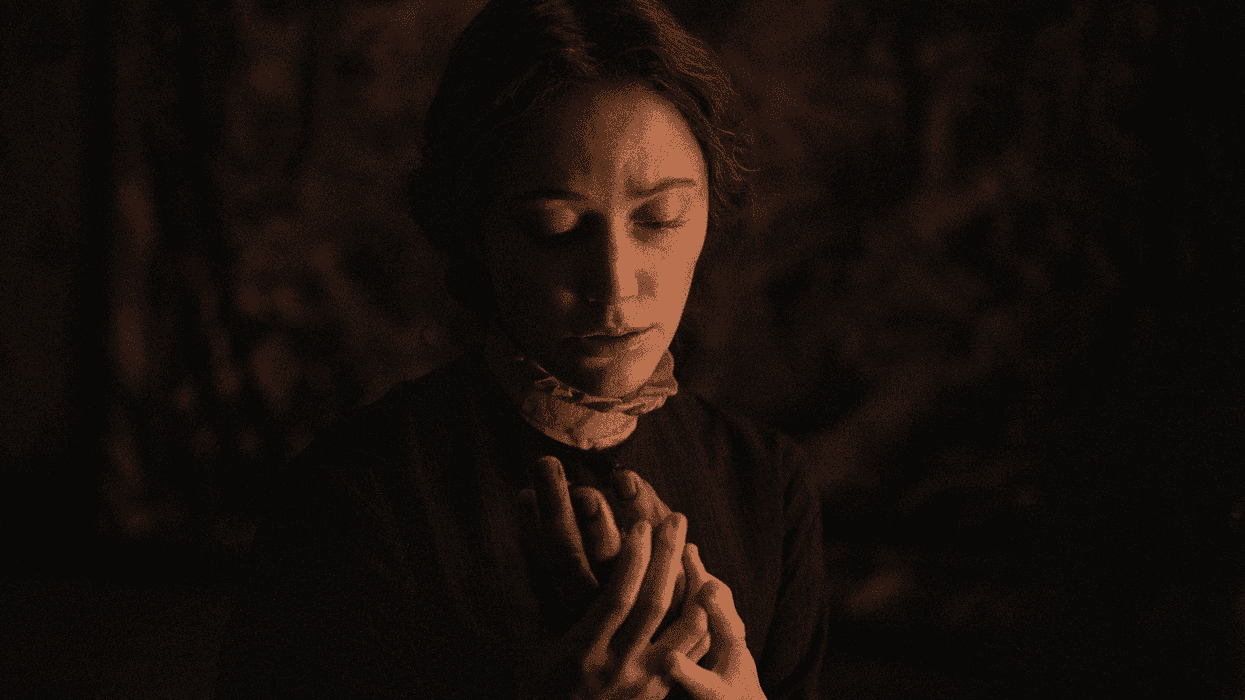
A governess walks up to a manor and peers into a dark window. A maid looks out and ducks when spotted. And in that moment, a director understands the whole movie. That's how you nail tone in a film like Victorian Psycho.
Victorian Psycho is Zachary Wigon's third feature, after The Heart Machine and Sanctuary. Maika Monroe plays Winifred Notty, an unhinged governess at a remote English estate in 1858. It premiered in Un Certain Regard at Cannes. Virginia Feito adapted her own novel.
We spoke with Wigon about how he found the film's slippery tone, how he built a camera that lives inside his killer's head, when plain coverage earns a spot, how he rehearsed with Monroe from another continent, and what staging violence taught him.
- YouTube www.youtube.com
Find the Scene That Unlocks the Tone
Tone is the conversation around this film. The Film Stage called the movie a rousing comedy as much as a thriller, for example. Comedy and horror often hold hands within genre, and Wigon's insight is that there was no formula, only a north star.
“So it was interesting because when I first read the novel, the novel was shot through with this funny, angry, grotesque, weird, unnerving sensibility all the way from start to finish. And it was really distinctive and consistent even as it was varying in that consistency, if that makes sense. So I was interested in preserving that and developing a script with Virginia that would stay true to that quality in her novel. So there was no formula to it. It was more like just an intuitive thing. You’re talking about sequences, you’re talking about scenes, pages start to come in, and it’s kind of an intuitive thing that you’re going with your gut on. The key thing was you want to have a north star. I remember when she sent me her first batch of pages, and it gets to Winifred approaches this house, she looks in a dark window, and then you see that there’s a maid inside the house, and the maid looks out, and then she ducks.
And I remember reading that, and I was like, 'Oh, okay, I get what this is.' You find these little skeleton key, North Star moments, and they cast light on everything else and how everything else is going to be presented.”
As a writer, you'll typically want to do this quickly so the reader knows exactly what they're in for. Wigon does it visually, as well, literally starting the film off-kilter with Winifred looking straight at us.
Put the Camera Inside Your Character's Head
Wigon shot with DP Nico Aguilar to establish the film's perspective. He worked from one rule, and the shot list grew out of it.
"The only principle that I was operating on was I wanted it to feel as subjective as possible," Wigon told us. "I wanted it to feel like you were as inside Winifred's head as you could be. And her head is a careening, frenetic, swerving, manic, strange place. So with that in mind, I sit down with that directive, and read the script, and start to write out the shot list as I'm reading the script and imagining the movie in my head."
Set one visual principle before you shot-list, then read the script through that lens.
Shoot Coverage When Your Character Is Pretending
Wigon used standard coverage only when Winifred is acting normal, so the plain grammar becomes part of her mask.
"So the only times that I was shooting coverage were situations where it felt like a visual flourish was not helpful for illuminating Winifred's interior state," he said. "So, in other words, a lot of the scenes where Winifred is closer to fitting in, so to speak—matter-of-fact conversations with Thomasin's character or with Ruth's character at the breakfast table or the lunch table—those were the moments where it made sense to use coverage because she's performing normality and so you cover it, you shoot it normally."
Otherwise, Wigon isn't interested in typical coverage, preferring that a film is visually interesting.
"I'm kind of happy to have the scene be built around a crazy Steadicam shot, as a lot of these scenes are."
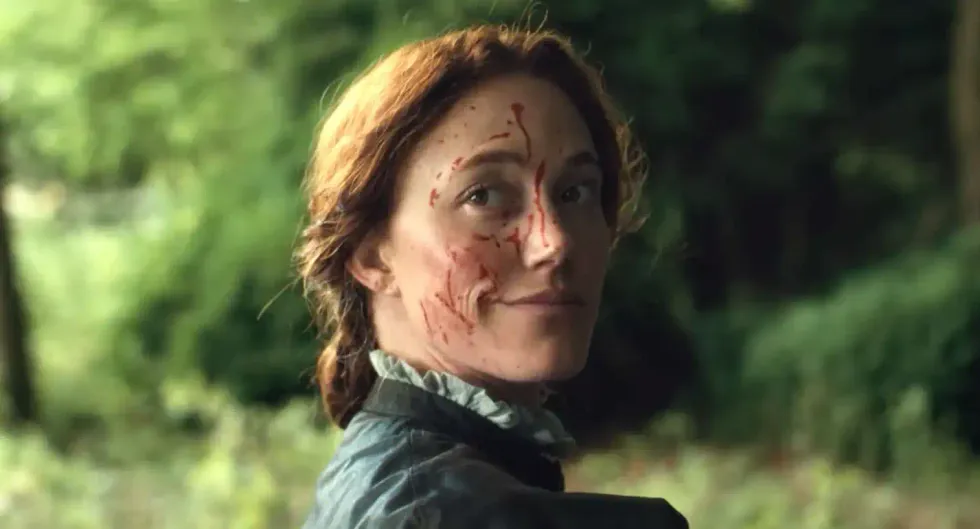 'Victorian Psycho' Credit: Bleecker Street
Rehearse Gently, Then Hand Over the Baton
Rehearsals are so valuable if you have time for them. They don't always have to look formal, either. Wigon and Monroe did it via Zoom initially.
"We had a lot of conversations just talking about the character, talking about the script, talking about the character's progression, their journey from scene to scene," he said. He added, "It's just a way to touch the movie. It's just a way to touch the script. It's very gentle. It's like you're really not getting into much of anything, but you're just starting to feel around in a darkened room."
Rehearsal shaped the character. For the physicality, Wigon asked questions and let Monroe bring options back. When you're asking a lot of an actor who is in practically every scene of a feature film, it can be mentally and physically exhausting. So how do you support them?
"I would say to her, 'What do you think it looks like when she's walking, when she's asleep in a kind of trance state?' And Maika would send me some videos and show me some options."
He let her shape that part of the performance in a way that resonated with her.
Treat Every Act of Violence Like Machinery
This is Wigon's biggest lesson from the film. The film has a lot of murderous scenes, which makes sense for a film about a Victorian psycho. One sequence had Monroe covered in fake blood in the cold for a technocrane shot at 4:30 in the morning.
"I think one of the things that was really fascinating about this was just learning about how incredibly painstaking the process is of depicting violence on screen and all the specificity and all the pieces of machinery, the moving machinery involved in an act of violence," Wigon said. "That was one of the most interesting parts of making the film was every act of violence and how absolutely meticulous and particular we had to be with every piece of that."