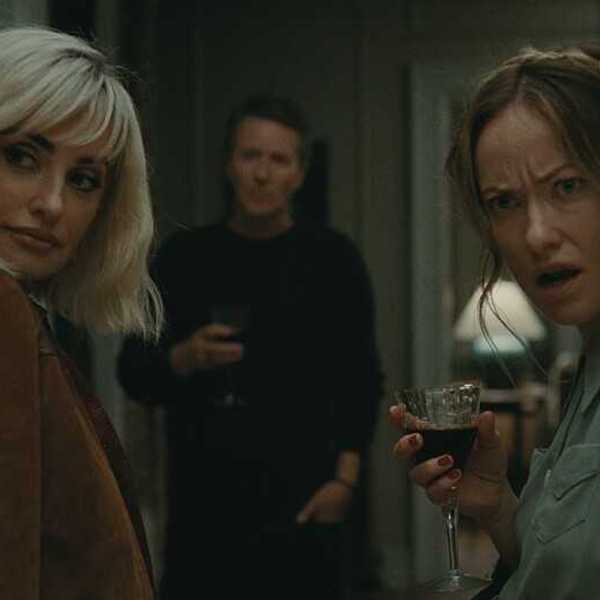
These Alternate Endings Could’ve Changed Cinema Forever
There’s no way you could have seen these endings coming.
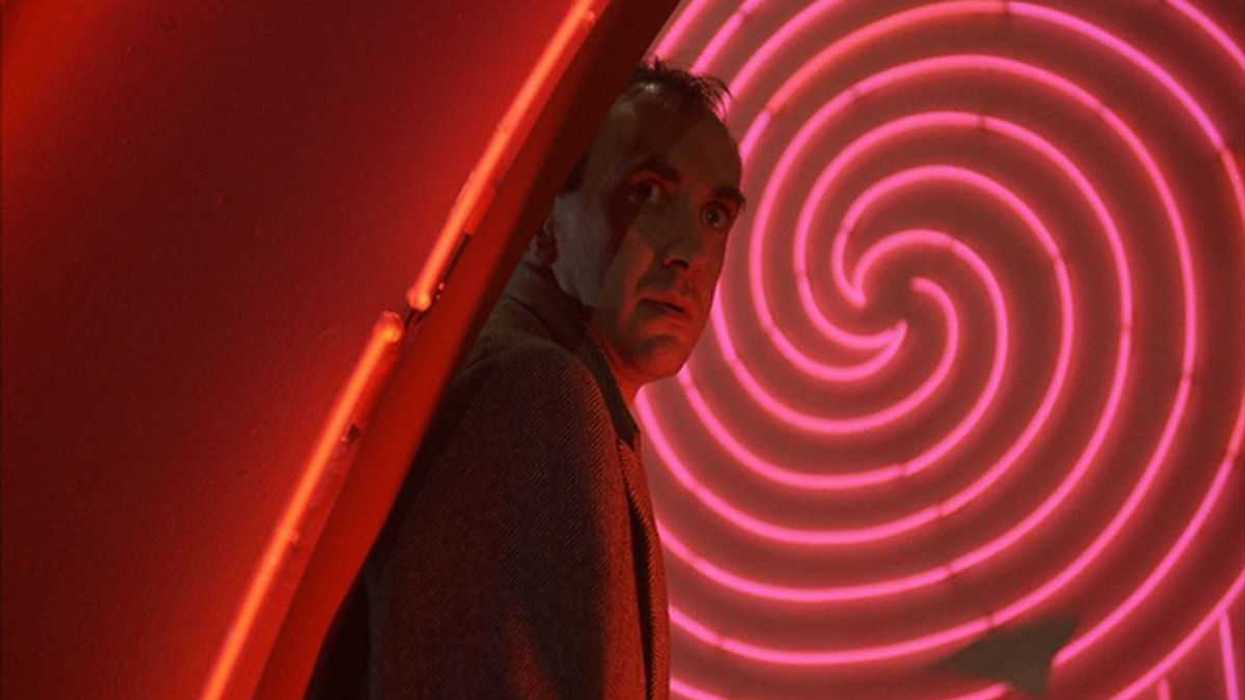
Brazil (1985)
While the beginning sets the tone for your narrative, the ending decides its fate. It is reflective of the grip you have over a story that you’ve chosen to narrate. As a writer, for your story can feel like a Herculean task—mainly because it's difficult to overlook the general expectations associated with any story. Other times, there are too many possibilities to choose from.
In this article, we’re listing some iconic films with their alternate endings (that we’re quite sure you never knew existed).
Alternate Endings of Some of the Most Iconic Films
1. Blade Runner
Ridley Scott’s neo-noir cyberpunk movie, Blade Runner, is set in a futuristic and dystopian L.A., following a conflict between humans and replicants through the journey of the blade runner, Rick Deckard (Harrison Ford), who has been hired by the former to kill the latter. Not many know that the original theatrical release of the film has a different ending than what’s widely available for streaming or buying.
Reportedly, the producers, fearing that the original ending, i.e., the one that is today the official ending of the film, would be too philosophical and subtextual for the general audience to comprehend, decided to end with a happy ending, mitigating any scope of ambiguity, declaring that Deckard and Rachel go on to have a great life together, in a voiceover. Hands down, the current ending is much more in alignment with Scott’s themes and vision than the other, as it poses serious questions centered on the story, such as “Is Deckard a replicant, too?” “What will happen to Rachel and Deckard now?”
2. Clue (1985)
Jonathan Lynn’s Clue revolves around a mysterious dinner in a strange, faraway mansion, to which six guests are anonymously invited. Things take an ugly turn when their host is mysteriously killed, turning them into primary suspects, leaving them to prove their innocence to each other while preventing being hunted by the unknown murderer.
Not sure if this was an innovative marketing tactic or the makers not being able to pick one single ending, but the classic who-dun-it film, Clue, was released with three different endings: one with Scarlet as the guilty, the other with Mrs. Peacock, and the last one (allegedly the true ending) revealing that various people had committed different murders.
3. Fatal Attraction (1987)
Adrian Lynne’s Fatal Attraction explores marital infidelity through New York lawyer Dan Gallagher (Michael Douglas), who hooks up with his colleague Alex (Glenn Close), while his wife and their daughter are away over the weekend. Justice strikes when Alex refuses to end the affair and let go of him.
Lynn’s original version ends with Alex killing herself, only to frame Gallaghar for her murder. Although his wife finds a tape where Alex states her intention to kill herself, it fails to save Gallagher from being convicted of the murder. In the end, everybody loses. On the contrary, the alternate ending (which made it to the final cut) ends with Douglas’ wife shooting Alex to death, and ultimately the couple begins a new life together, setting Douglas free with no consequences for his questionable acts and infidelity.
4. Little Shop of Horrors (1986)
Frank Oz’s Little Shop of Horrors meets all the standards of a quintessential B-grade dark comedy. Crushing on someone out of your league (and with a lot of suitors) is something, but feeding your competitors to a plant is a whole other level of pursuit of love. The narrative follows Seymour Krelborn (Rick Moranis), a nerdy florist who discovers a strange plant and names it Audrey II, after his co-worker and crush, Audrey (Ellen Greene). Things get out of hand when the plant reveals its carnivorous cravings and demands to be fed, slowly turning into a monster and wreaking havoc.
While the official ending features Seymour and Audrey defeating Audrey II and beginning a new life together, in the alternate ending, Audrey II emerges victorious. She kills Audrey first and eats her, followed by Seymour, whose glasses she spits out after she devours him. Audrey II’s buds then go on to become a must-have consumer good in the city that people in the countryside begin to consume. Before long, these consumers turn into the Audrey II alien army, attacking New York and the US Army, and scaling the Statue of Liberty. In the end, they break the fourth wall, as if to attack the audience. Honestly, I’m not sure why Oz chose the official ending because clearly the alternate one is too damn good, and if you ask me, it suits the undertone of the narrative.
5. Scott Pilgrim vs. The World (2010)
Edgar Wright’s Scott Pilgrim vs. The World got mixed reviews upon its release and continues to keep the audience divided. But not many know that there were three endings to this narrative. Funny how the narrative even got Scott (Michael Cera) in different minds (when it came to selecting an ending!) While the official ending depicts the titular character defeating his last and 7th contender to win his lady love, Ramona (Mary Elizabeth Winstead), the first alternate ending was Pilgrim realizing that Knives Chau (Ellen Wong) (his minor “rebound” girlfriend) is his true love and gives up the fight against Ramona’s exes to win her.
Reportedly, this ending, despite being shot, wasn’t ultimately selected. But here’s an alternate ending for which you might want to sit down. In this alternate ending (which Wright couldn’t manage to film), through a news report, Pilgrim is revealed to be a mentally disturbed serial killer who claims to have killed seven people, believing that he was in a video game. Talk about dark!
6. Brazil (1985)
An ending that caused a serious strife between the studio and director Terry Gilliam, I wonder what the real reason was that the studio wasn’t too happy about Gilliam’s initial ending. Is it because it is too close to an ugly truth? And we might not be ready for acceptance? The studio-selected ending in Brazil culminates the narrative in Sam’s freedom, as he escapes the clutches of the ministry with the realization of one of his daydreams—a much-relieving happy ending.
But Gilliam’s original ending leaves the narrative on a dark note, revealing that Sam (Jonathan Pryce) had been imagining his freedom all this time. In reality, he is doomed to rot in his chair till his end. Reportedly, Gilliam fought with all his might to get Universal Studios to accept his ending and even went on to publish full-page ads about his ending in Variety and held unauthorized screenings. It was only after Universal Pictures witnessed positive reactions to Gilliam’s ending that they allowed him to release the film with his alternate ending.
Which of these alternate endings for movies do you think deserved to be the official ending?