I don't know about you, but I love a good infographic. And over the weekend, I found a great one on Reddit that I wanted to share with you.
This one covers which movies were shot in Digital IMAX and which have the 15-perforation/70mm film and the towering 1.43:1 aspect ratio.
A community member from Cinema Vanguard has compiled a comprehensive chart detailing every film that utilizes these gold-standard formats.
Let's dive in.
Reading The Infographic
So, if you look at all the slides on there, I tried to make a breakdown of most of the movies on there and how much IMAX they feature. You'll see that over the years, the amount of footage shot with IMAX cameras changes.
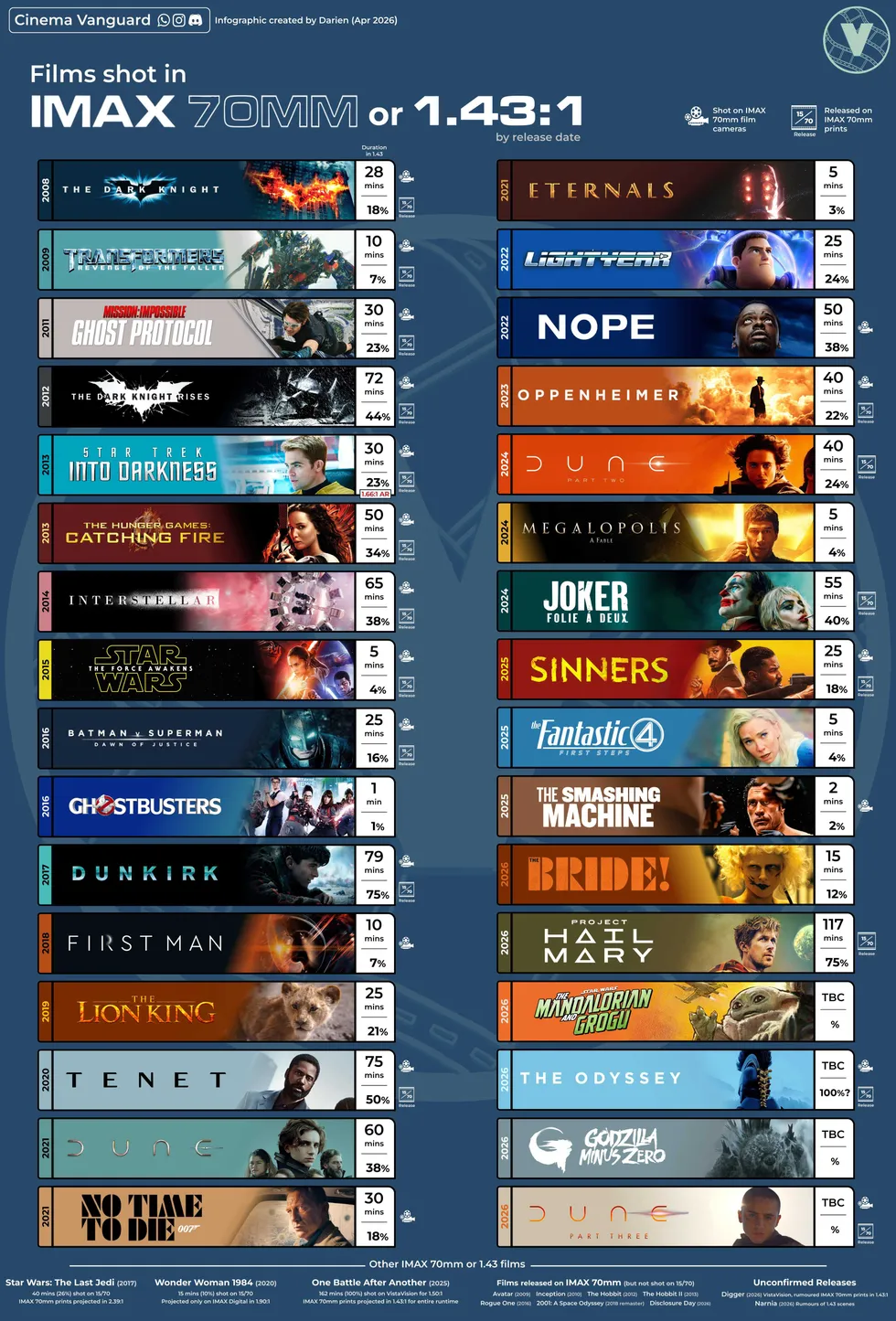
The Modern Classics (2008–2019)
These titles defined the early push for 15/70mm film and the tall 1.43:1 ratio in mainstream cinema. I listed how many minutes of IMAX are in each film and what percentage of that movie it counts as.
- The Dark Knight (2008): 28 mins (18%).
- Transformers: Revenge of the Fallen (2009): 10 mins (7%).
- Mission: Impossible - Ghost Protocol (2011): 30 mins (23%).
- The Dark Knight Rises (2012): 72 mins (44%).
- Star Trek Into Darkness (2013): 30 mins (23%).
- The Hunger Games: Catching Fire (2013): 50 mins (34%).
- Interstellar (2014): 65 mins (38%).
- Star Wars: The Force Awakens (2015): 5 mins (4%).
- Batman v Superman: Dawn of Justice (2016): 25 mins (16%).
- Dunkirk (2017): 79 mins (75%) – Currently holds the record for the highest percentage of 15/70mm footage in a major feature.
- First Man (2018): 10 mins (7%).
- The Lion King (2019): 25 mins (21%).
The Recent Surge (2020–2025)
- Tenet (2020): 75 mins (50%).
- Dune: Part One (2021): 60 mins (38%).
- No Time to Die (2021): 30 mins (18%).
- Eternals (2021): 5 mins (3%).
- Lightyear (2022): 25 mins (24%).
- Nope (2022): 50 mins (38%).
- Oppenheimer (2023): 40 mins (22%).
- Dune: Part Two (2024): 40 mins (24%).
- Joker: Folie à Deux (2024): 55 mins (40%).
- Sinners (2025): 25 mins (18%).
- The Fantastic Four: First Steps (2025): 5 mins (4%).
- The Smashing Machine (2025): 2 mins (2%).
The 2026 Slate (Confirmed & Anticipated)
- The Bride!: 15 mins (12%).
- Project Hail Mary: 117 mins (75%) – More time but the same percentage, so it technically beats Dunkirk for the most 1.43:1 footage.
- The Mandalorian and Grogu: (TBD)
- The Odyssey: (TBD) We've heard it's 100% IMAX, but it hasn't come out yet, so I don't want to make a prediction.
- Godzilla Minus Zero: (TBD)
- Dune: Messiah: (TBD)
Notable Exceptions & "Edge Cases"
The chart also lists films that have specific sequences or limited 1.43:1 releases:
- Star Wars: The Last Jedi (2017): Features some 15/70mm sequences.
- Wonder Woman 1984 (2020): 15 mins shot on 15/70mm.
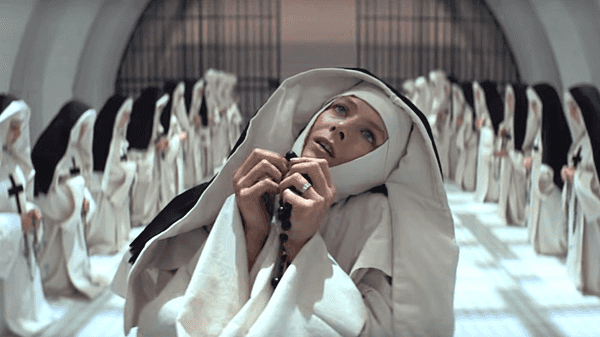
- One Battle After Another (2025): 102 mins shot on IMAX-certified digital for 1.43:1.
- Technical Exceptions: Films like Rogue One, Inception, and The Hobbit are noted for receiving 70mm prints despite not being shot on 15/70mm cameras.
Summing It All Up
If you’re a movie nerd like me, this infographic is a blast to scroll through—it’s incredible to see just how much IMAX has changed the cinematic landscape over the years.
What’s your take? Let me know what you think in the comments!