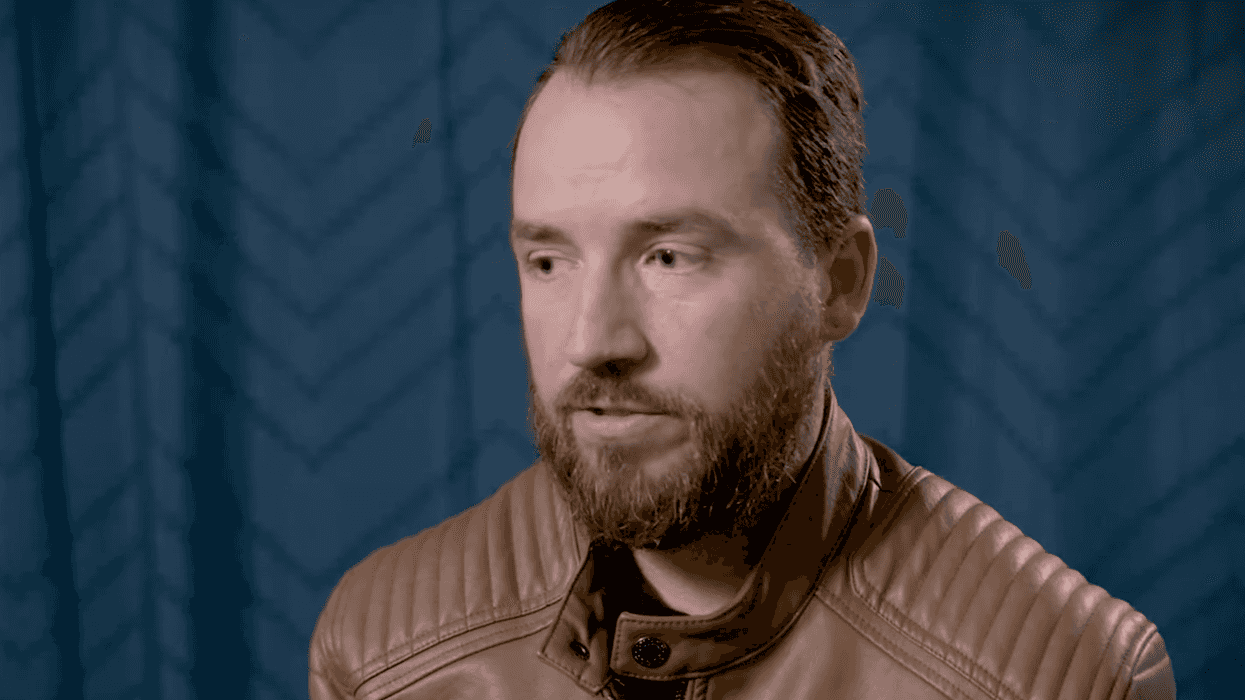
There you are: a young (or not so young) budding filmmaker with big stories and even bigger dreams. The problem is...you're kind of starting to worry that nobody is going to give a damn about your ideas. Well...they kind of don't.
In this video from Film Courage, filmmaker Jake Jalbert not only goes into detail about that (it's not all doom and gloom, promise) but also offers up some great advice to aspiring filmmakers: start small, build incrementally, and never let perfect become the enemy of good.
Check out the full video below.
- YouTube www.youtube.com
Jake Jalbert began his journey into producing and cinematography 14 years ago by shooting his first feature film, House Guest Massacre (2013), which stars Alex Vincent from the Child's Play franchise.
He has since worked as director of photography on studio films for The Asylum and Tubi, including Megaboa, Shark Waters, and DC Down.
Stop Pitching Ideas and Start Making Films
The most fundamental lesson Jalbert emphasizes is that "nobody cares" about your ideas.
"Everybody's got ideas. I have a ton of ideas. I have people coming to me with ideas," he said.
He's not trying to be mean. He's trying to offer a reality check.
"I love that they're reaching out to me, and I want people to reach out, because I'm happy to help," he said. He added, "You can't just have an idea, you have to go do something about it."
Instead of pitching elaborate concepts that require massive budgets, "take a thousand bucks ... create a five-minute short film, and then boom, you got something going. It's not an idea anymore. Put it on YouTube."
Make Your First Feature for $1,000
This philosophy directly challenges the common misconception that filmmakers need substantial funding to begin.
Jalbert advocates for starting with just $1,000 for your first feature film.
"You can work as a server and go get a thousand bucks and make a film. We did ours for $3,000. So, with the quality of cameras now, you should be able to do it for a thousand."
His own Terror Talk, shot for $5,000 in one location with one actor, demonstrates this principle. Jalbert notes the film garnered 30,000 views online and positive reviews.
Obviously, if you have more money, do it for more. The main point here is not to let a lack of budget freeze you as a filmmaker. Work with what you have, adapt your story, and just do it.
Develop Your Mindset Like an Entrepreneur
The mindset component is important to Jalbert. This can help with resilience, since filmmakers often get a lot of inevitable rejections.
"You need a good mindset. I'm constantly developing mine," Jalbert said.
Rather than studying only filmmaking, he studies entrepreneurs like Grant Cardone and Owen Cook, and Gary Vaynerchuk.
Having some additional background in marketing can be helpful, especially if you're aiming to produce, as well. And if you're into positive thinking, that can help you persist.
 Credit: ppengcreative/iStock
Treat Your Project as Already Funded
His approach to funding reflects this entrepreneurial thinking.
Instead of begging for investment, Jalbert positions his projects as "already funded" because he's already invested time and prep in the film.
"We're going to shoot the film regardless. So the film's 'funded.' When I call somebody, [I] say, 'Hey, are you interested in this project? We have our pitch deck, our video deck, all the stuff that we've got attached to it. It's funded, it's ready to go, but we could use extra money to make it a lot better.'"
This psychological shift—treating your own time and skills as valuable equity—might transform how investors perceive the opportunity.
If you get additional funding, he adds, don't count that money until the check has cleared. Because he's run into that too.
"It's almost better to just stay quiet, stay focused, keep meeting people. Don't think that this one person's going to invest in everything. Just keep meeting other people, you know, and if they happen to do it, cool. If they don't, you have other people. You have other things lined up. You're ready to go."
Create Your Own Events and Connections
His reality check about networking and distribution is sobering but necessary. Networking is valuable, but it's hard work with sometimes little reward.
"You can't meet everybody. So, yeah, go, talk, say hi, say what I'm doing, and meet people, but know there's probably only going to be one person you connect with."
Rather than chasing festival laurels, Jalbert advocates for creating your own events.
"I think the best networking is just doing. By creating a project. Doing a screening, throwing your own party," he said.
What about connecting in other ways? He says there's still value in reaching out via email. He got his rep by cold emailing agents and sending links to his work. Another collaborator, for their first contact, sent him a link, and Jalbert was able to assess him quickly and call him in immediately for a meeting.
It's a lot about volume here. You'll send out 50 emails, he says, and maybe hear back from one person. But that person can be your next creative partner.
Rent Equipment and Form Relationships
His equipment philosophy is fairly pragmatic. Rather than owning gear, Jalbert builds relationships and rents everything.
"I sold all my gear," he said.
He thinks there's very little gear you actually need. "I think lenses are good to have, if you're a DP. Have a set of lenses. Maybe have some monitors ... some arms and things like that."
His approach relies on his connections with other people who can provide access to cameras. When trying to get work, he worries about his day rate only and is able to assure a hiring manager that he can bring in a solid camera package via those connections.
Not being "a guy with a cool camera" helps keep the focus on his work.
"I want to be freelance. I wanted to get booked off how good a DP that I am. How good I am. My work. I wanted my work to sell me, not coming out with an ARRI Alexa."
This approach keeps him unencumbered for now. This isn't to say he won't someday invest in a VENICE or another nice camera. It just fits his workflow for now.
What do you think of his advice?