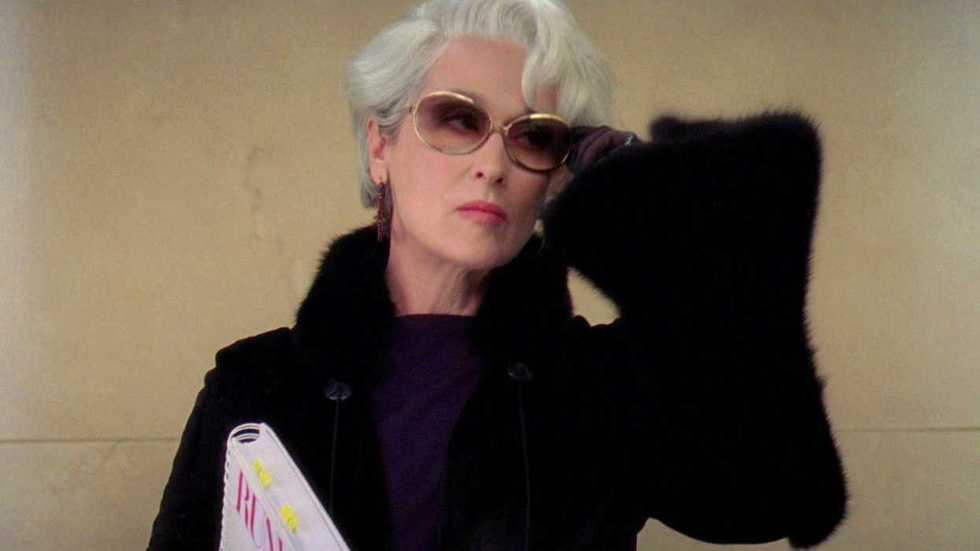
When it comes to introductions, there is perhaps no film that has given its title character a better first scene than 2006’s The Devil Wears Prada. The movie, which adapts the 2003 Lauren Weisberger novel of the same name (which is widely understood to be a roman à clef about her experience working for Vogue’s Anna Wintour), follows Andy Sachs (Anne Hathaway), an aspiring journalist who gets a job as an assistant to Miranda Priestly (Meryl Streep), the cruel, high-powered editor of the fictional fashion magazine Runway.
Let’s break down how the movie introduces Miranda, and how this scene perfectly sets the character up to become one of the premiere antagonists of 2000s cinema.
Miranda Priestly’s Power Is Shown in How She Affects Others
The first scene to feature Miranda Priestly is a slow burn that perfectly sets up what Andy can expect from the character who is about to change her life forever. One reason it works so well is that the movie has already introduced the world over which the tyrannical editor presides. In fact, Andy, who is well-meaning but poorly dressed, clumsy, and dismissive of the fashion world, already has her head spinning ahead of her interview for the assistant position.
She is in over her head, surrounded by glamorous magazine workers who are all dressed and made up like they are runway models themselves. This is a company populated with elegant, beautiful, hyper-confident women and men whose mien puts Andy on the back foot immediately.
One of the most important decisions made by screenwriter Aline Brosh McKenna is to not show Miranda right away in this introductory scene, but instead show the impact that her impending arrival has on this room of beautiful, capable people. Even though they seem entirely on top of things and comfortable in their own skins in a way that Andy isn’t, they are sent scrambling by the news that Miranda is about to arrive, earlier than anticipated.
They set out to make themselves even more perfect to match the standards that Miranda sets, touching up their makeup, tidying up their workspaces, and changing their outfits to cover up flaws that Andy likely never even noticed were there in the first place. This frenzy in the office has the exact same effect as the rippling water cup in Jurassic Park. It tells the audience that something earth-shakingly big and terrifying is approaching, and that the characters are in imminent danger.
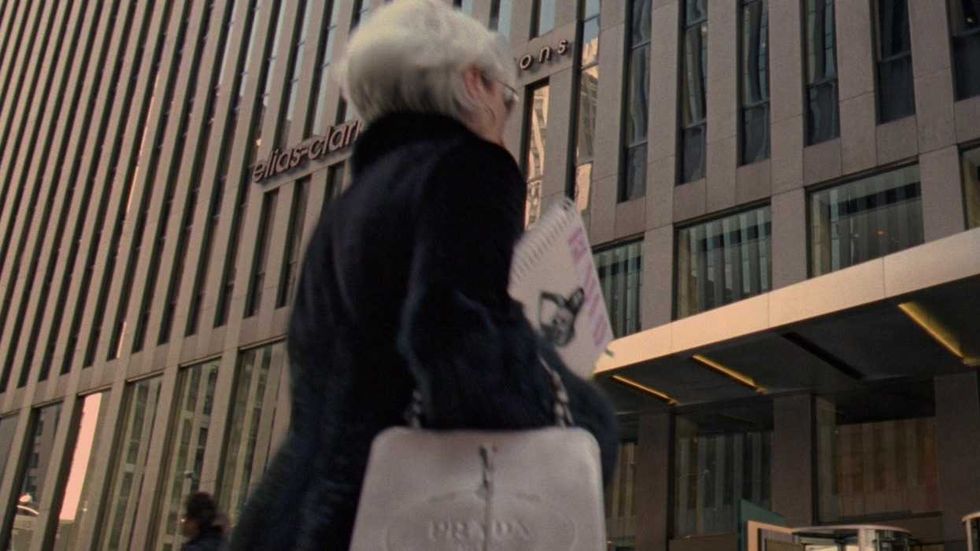
David Frankel also directs this scene perfectly, cutting back and forth between the frightened office workers and Miranda’s walk to the elevator. However, he refrains from showing Miranda’s face during these glimpses into her arrival, only showing glimpses of her back, her side, her feet, and her high-fashion ensemble. It’s as if the camera itself is terrified of looking her in the eye.
 ‘The Devil Wears Prada’ (2006)Credit: 20th Century Fox
This approach to staging Miranda’s walk also imbues the frame with a sense that the movie itself is scrambling to catch up with her, just like the Runway staff. Her movement is so swift, and her approach is so unexpected that there’s a sense that the camera itself can’t even get ahead of her in time to line up a good shot.
The Scene Gets Even Better When Miranda Arrives
Although the film has already come alive with energy at the mere thought of Miranda being in the building, the scene gets even better when she finally arrives in her domain. This begins with a perfect introductory shot when the elevator doors open to finally reveal her full face (complete with chic sunglasses, pursed lips, and steel-grey hairdo).
In addition to this moment giving Miranda a classic Hollywood introduction by using an impactful close-up shot, the added motion of the elevator doors makes it feel like a curtain is sweeping open in front of the character, allowing her to take the stage and assume her place as the grande dame of The Devil Wears Prada.
The writing, directing, and editing (by Mark Livolsi) have so far been working in tandem to make Miranda Priestly’s introduction unforgettable, and as the scene continues, the actors step up to the plate to make it a home run.
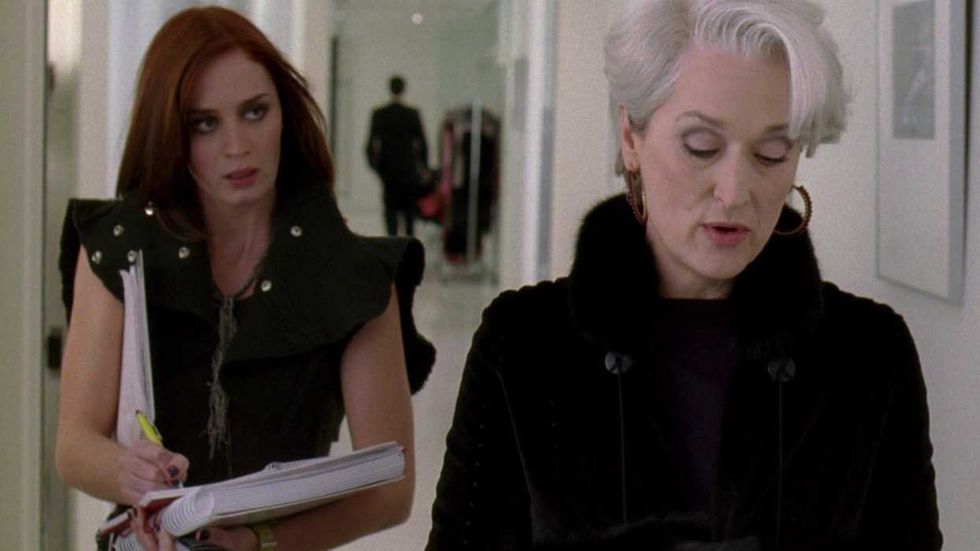
Emily Blunt (as Miranda’s first assistant, Emily Charlton) performs an incredible feat of physical acting by racing down the hall toward the lobby, then instantly turning on a dime and assuming a calm and composed expression to follow Miranda down the hallway as she issues non-stop orders.
This rapid transition from the heightened energy of the previous scene is underscored by Meryl Streep, who spends every second of the scene earning the Oscar nomination that came her way during that year’s awards season. Her Miranda is preternaturally calm, with her low-key energy forming a huge contrast with the high-strung characters she employs.
 ‘The Devil Wears Prada’ (2006)Credit: 20th Century Fox
Miranda’s calmness makes her feel downright regal. Her experience of the scene is that she is merely walking into work and beginning her day, while for everyone else, the moment feels terrifying and potentially catastrophic. This disparity emphasizes how much power the character wields. The way Streep plays her, Miranda is a character who is so powerful that she doesn’t need to raise her voice or wield her power in showy, extravagant ways. She could destroy anyone in her way with a flick of her pinky finger.
Obviously, it also doesn’t hurt that her dialogue in this scene is chock-full of casually withering barbs like “details of your incompetence do not interest me.”
All of this is what makes Miranda such a formidable opponent for Andy Sachs, who has try-hard written all over her. While Miranda has many other iconic scenes to come (the cerulean monologue, hello!), it’s hard to beat this introductory moment, which sets the stage for a tête-à-tête so sizzling that it made the relatively low-budget non-franchise film a box office juggernaut, outgrossing a number of other major 2006 theatrical releases at the domestic box office, including The Departed, Saw III, Brokeback Mountain, The Pink Panther, Step Up, and The Fast and the Furious: Tokyo Drift.
For more on The Devil Wears Prada, check out the archives of No Film School, which include coverage on how the movie handles body image pressure and why Miranda Priestly’s quiet voice is so effective.