Christopher Nolan's Oppenheimer earned widespread critical acclaim for its technical achievements and narrative structure.
But one thing that’s hardly ever discussed with Oppenheimer is how the narrative uses its women to add nuance to its complex story, allowing them to shine through.
J. Robert Oppenheimer's wife, Katherine Puening (played by Emily Blunt), is one of the story's strongest female characters.
In this article, we're analyzing how Blunt creates a compelling portrayal of Katherine, known as Kitty, despite her limited screen time.
Story and Themes
Oppenheimer, often considered Nolan’s dream project, is a biographical drama that revolves around the invention of the atomic bomb via the Manhattan Project and theoretical physicist Oppenheimer’s contribution.
The film is presented in a broken timeline, with the past juxtaposed with the present, in which Oppenheimer faces a full-blown security investigation by a Personnel Security Board over his security clearance—an elaborate conspiracy by Atomic Energy Commission Chairman Lewis Strauss (Robert Downey Jr.), who holds a personal grudge.
Oppenheimer is a poignant and emotional exploration of knowledge, power, morality, and the psychological burdens of being the nucleus of something world-changing.
Nolan draws outright parallels between Oppenheimer and Prometheus, the Titan punished for stealing fire from the gods to give it to humans.
Understanding the Romance Between Kitty and Oppenheimer
Kitty and Oppenheimer met in 1939 at a garden party in California, after his relationship with Jean Tatlock had ended. While his romance with Jean had passion, it lacked emotional stability.
When they first met, Kitty was already married. Soon, they began an affair, and eventually Kitty left her husband to marry Oppenheimer.
Kitty’s Contribution to Oppenheimer’s Character Arc
 Oppenheimer (2023)Source: Universal Pictures, Bitters End, Inc.
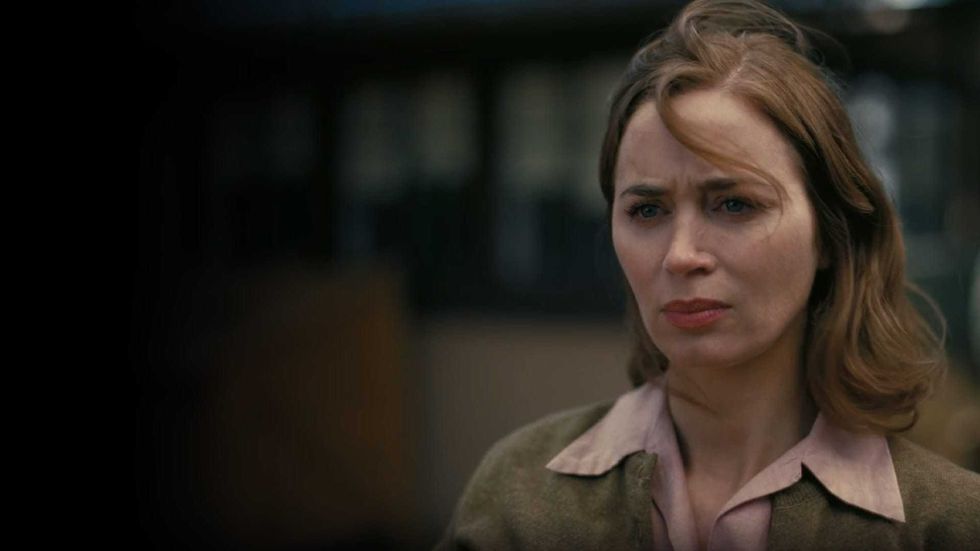
It’s interesting how personalities such as Oppenheimer, a man who seems detached from emotions and romance, undergo the most growth when they have the right partner in their life.
Oppenheimer is a complicated personality, yet Kitty understands him. She critiques him and helps him overcome his moral dilemmas.
Oppenheimer’s association with something as stressful and controversial as the Manhattan Project certainly takes its emotional toll. Kitty is his confidant and emotional anchor.
Kitty hardly ever expressed how much she loved Oppenheimer, but her actions say it all. She defended her husband at all times, shielding him from adversities as much as she could,
Emily Blunt as Kitty Oppenheimer
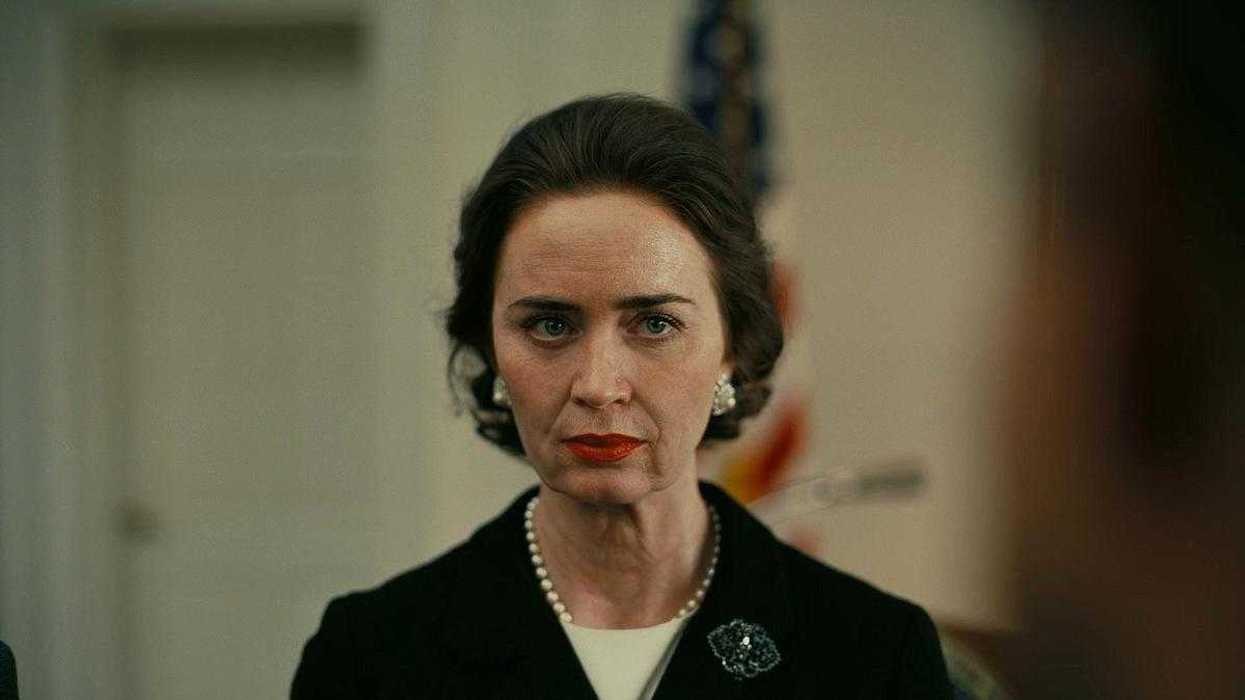
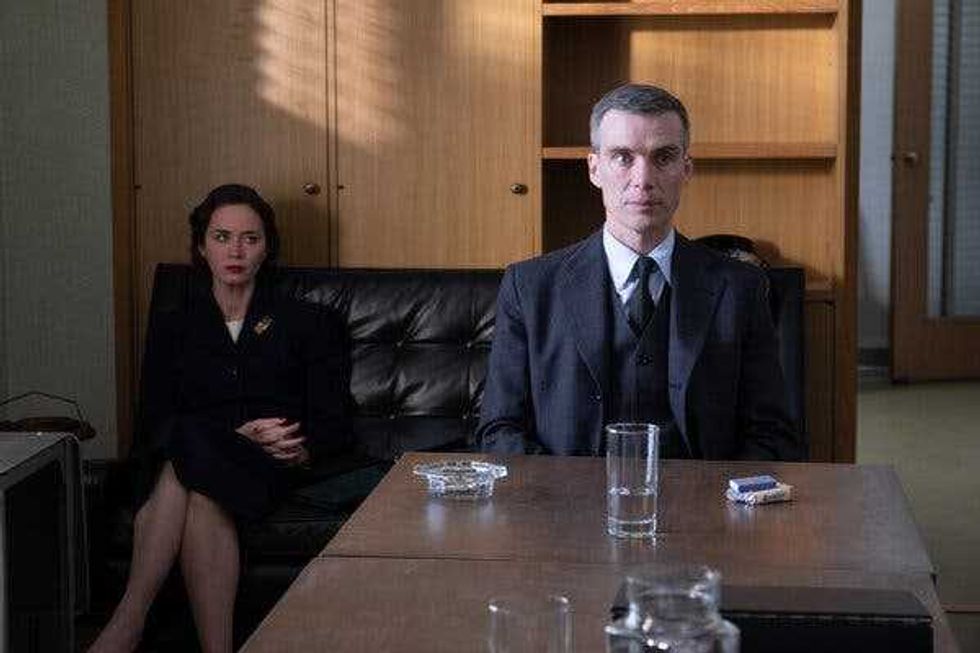
Blunt’s portrayal of Kitty is widely praised for its balance between intensity and subtlety.
As an individual, Kitty is intelligent, fiercely loyal to Oppenheimer, and can fight it out in a male-dominated world. She is graceful and a woman of few words.
 Oppenheimer (2023)Source: Universal Pictures, Bitters End, Inc.
She accepts Oppenheimer as he is and expects little more than his consistent presence in their family life. Married to a man like Oppenheimer, whose life is consumed by his work, Kitty struggles with alcoholism and depression.
Blunt’s Kitty is tough, charismatic, and fearless, yet deeply vulnerable. She imbues Kitty with emotional depth, moral clarity, and a fiery passion that makes her every minute unforgettable. She is Oppenheimer's rock in a tumultous life that he chose at will.
The Top 3 Most Memorable Scenes Featuring Kitty
1. Jean Tatlock’s Death
Jean’s death completely breaks Oppenheimer, mainly because he was not there for her when she needed him. Although he loved her, he couldn’t save her from herself.
On seeing her husband breaking down like a house of cards, she quickly goes to support him. Oppenheimer tells her that he was romantically involved with Jean and then abandoned her, even after she explicitly told him she needed him.
Kitty is shaken, but she doesn’t let it show. She is angry at her husband’s emotional cowardice. But the Manhattan Project was waiting for him. Cupping his face in her hands, she looks into her husband’s eyes and says, “You don’t get to commit the sin and then have us all feel sorry for you that it had consequences. You pull yourself together.”
Kitty critiques Oppenheimer for the reckless mistakes he has made in his life, but doesn’t let him forget that he is important—not only to the project but to her.
“You know a lot of people here depend on you,” she says before leaving.
2. Kitty Defends Oppenheimer to the End
At the security hearing, many old acquaintances reunite, including Edward Teller, one of the scientists who worked alongside Oppenheimer in the Manhattan Project. Teller's testimony proves damaging, as he questions whether Oppenheimer should retain security clearance.
When Teller attends a White House ceremony later, he meets Mr. and Mrs. Oppenheimer, smiling, as he extends his hand for a handshake. While the others reciprocate the courtesy, Kitty refuses to shake hands with him.
There are a few moments of awkward silence between Teller and her, as her face clearly tells him what she thinks. Taken aback by such bold, upfront expression of hatred, Teller walks away sheepishly.
3. Kitty Is Interrogated at the Hearing About Her Ties with the Communist Party
The exchange between Roger Robb (Jason Clarke), the attorney prosecuting the case, and Kitty demonstrates her intelligence and composure under pressure.
The more Robb tries to corner Kitty, the more she tangles him into his own trap, answering every word with sensibility and intelligence. By the end of it, she manages to provoke Robb enough to gain the upper hand.
Blunt is so good in this scene. She is intense yet calm, vulnerable yet fierce. Her demeanor is more restrained at first, but as soon as Robb tries to taint Oppenheimer or her image before the board, she responds with authority, despite being cornered.
To me, Blunt brought Kitty to life with her eyes—the way she gazes, blankly zones out in despair, or looks into the eye of her opponent fearlessly. Her performance adds emotional depth, balancing the film's focus on scientific and political conflicts.
Which is your favorite Blunt moment in the movie?