I’ve confessed several times before this that I’m guilty of rewatching films over and over again, and The Sixth Sense has and will always be on my rewatch list for two reasons. Firstly, it was one of the first psychological horror movies I ever watched, probably at the age of 10 or 11, so it's a core childhood memory. Secondly, it never fails to surprise me. Just when I think I’m done appreciating the movie on all levels, I stumble upon something new that completely blows my mind.
For example, I remember the time when the color of a particular character’s sweater, in the last scene, revealed a pattern in the visual language that I had completely missed in the last I-dont-know-how-many rewatches.
We’re well aware of M. Night Shyamalan’s masterful use of colors in his visual language, especially the color red.
In this article, we’re decoding Shyamalan’s use of red in The Sixth Sense.
[Spoilers Ahead!]
The Visual Symbolisms of Red and How Shyamalan Uses It
In color theory, Red is largely associated with passion, aggression, violence, or danger. But what artists often miss is that the hue of any color decides its emotional impact.
For instance, the red balloon in Albert Lamorisse’s The Red Balloon, and splashes of red in Wong Kar Wai’s In the Mood for Love’s are definitely not the same shade of red and so don't evoke similar emotions. At the same time, it also depends on how the color is being used in the composition, i.e., whether it is being used to stand out, highlight, or blend in.
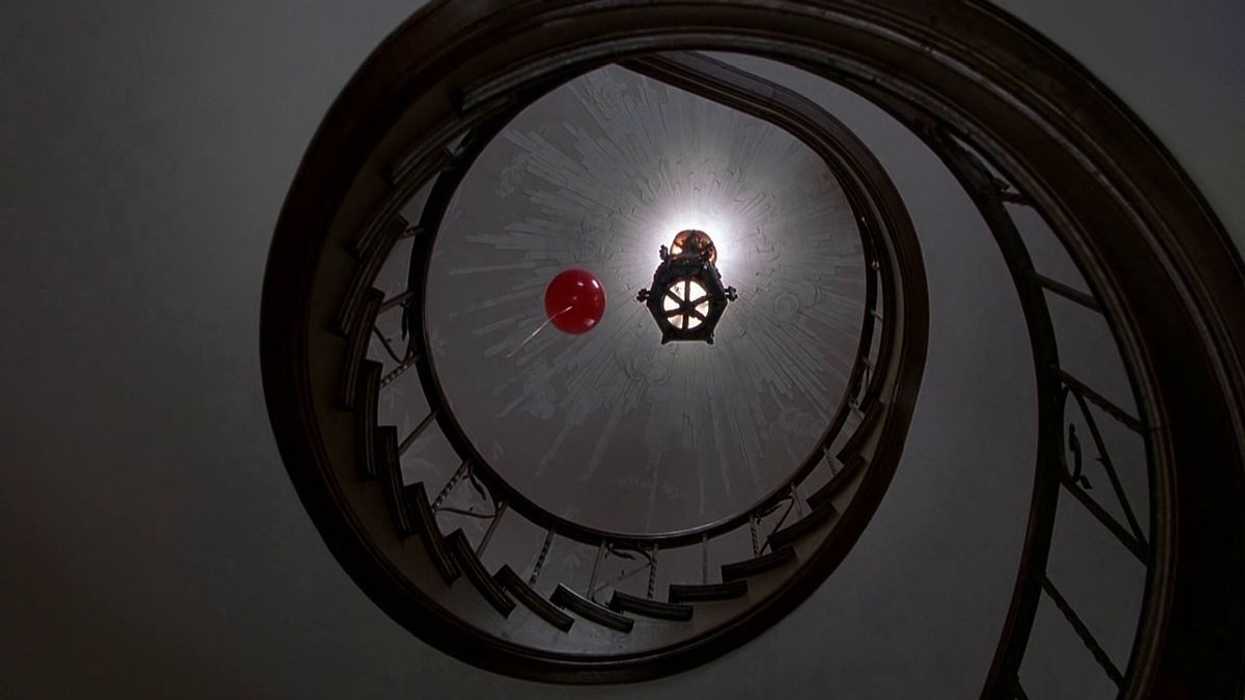
While Shyamalan has used red in different ways in different films, he uses red as a highlighter in The Sixth Sense. The narrative features two worlds: the living and the dead, cohabiting without knowing about each other.
Keeping the essence alive, Shyamalan drops the reds into the otherwise muted color palette.
 The Sixth Sense (1999)Source: Buena Vista Pictures Distribution
After a couple of rewatches, you realize how two different color palettes are actually representing two different worlds. Interestingly, the reds mark the dead or supernatural, while the muted colors represent the living (maybe Shyamalan wanted to hint at the lack of color in the life of mortals).
Here's how red finds its place throughout the narrative:
1. Cole’s Red Sweater and The Red Balloon
 The Sixth Sense (1999)Source: Buena Vista Pictures Distribution
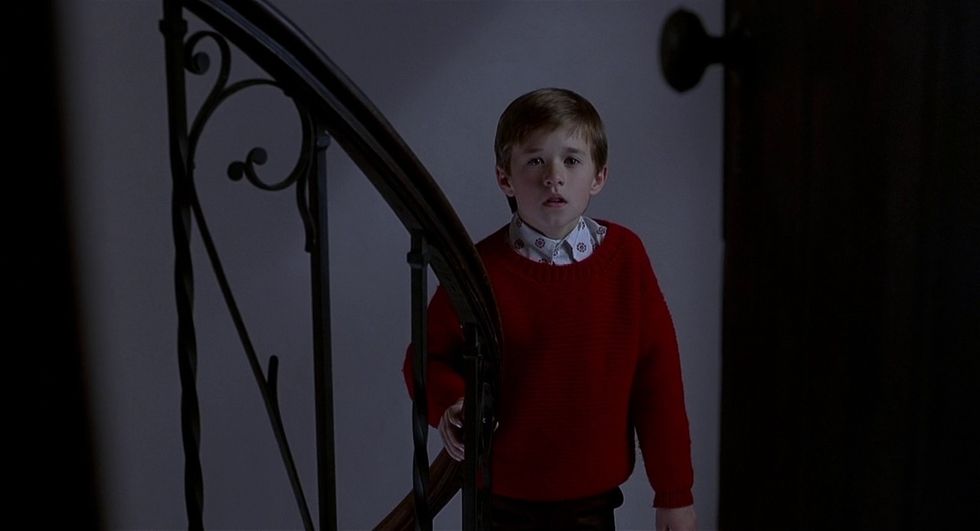
At his friend’s birthday party, Cole (Haley Joel Osment) stands out in his red sweater. Eventually, he follows a red balloon upstairs and ends up encountering a spirit. While the entire sequence is visually symbolic: both the balloon’s and Cole’s ascent up the staircase, Cole wearing red becomes premonitory of his association with the spirit world. Since the spirits are represented by red, Cole’s red sweater momentarily places Cole into the same plane as theirs, visually.
2. Deceased Kyra’s Mother’s Red Suit and Red Lips
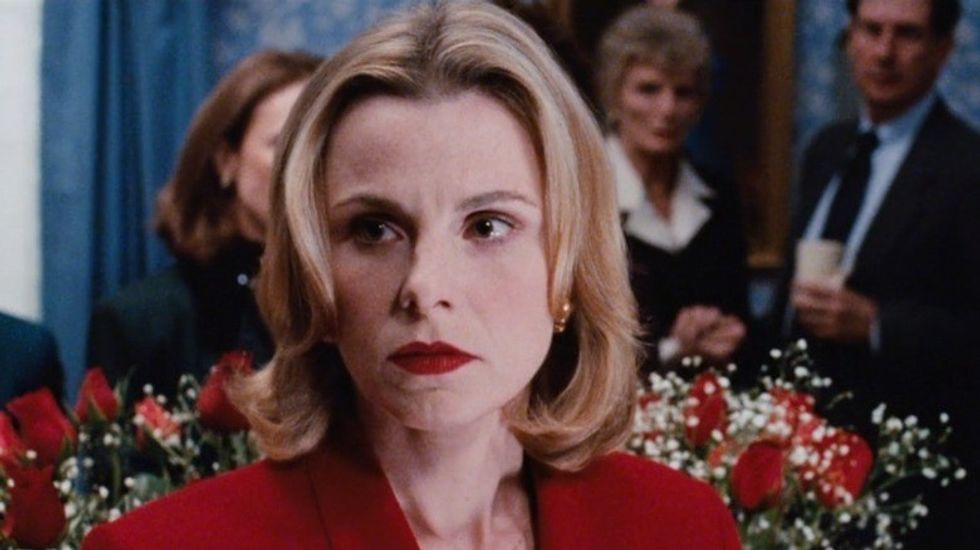 The Sixth Sense (1999)Source: Buena Vista Pictures Distribution
A more aggressive hue of red on Kyra’s step-mother, the deceased girl whom Cole helps to cross, is a visual expression of evil. By putting her in red, Shyamalan not only makes her stand out in a funeral home but also foreshadows her evil before Cole brings the truth to light.
3. Anna in Red
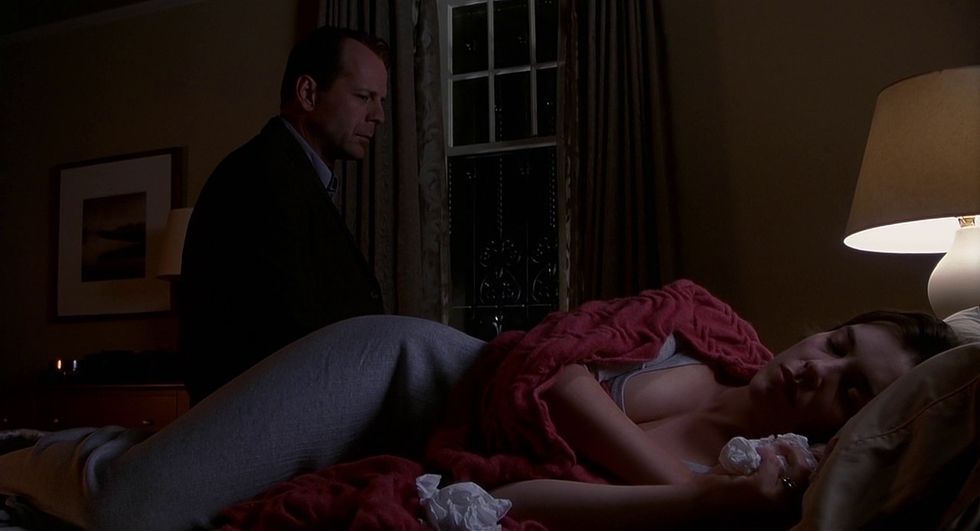 The Sixth Sense (1999)Source: Buena Vista Pictures Distribution
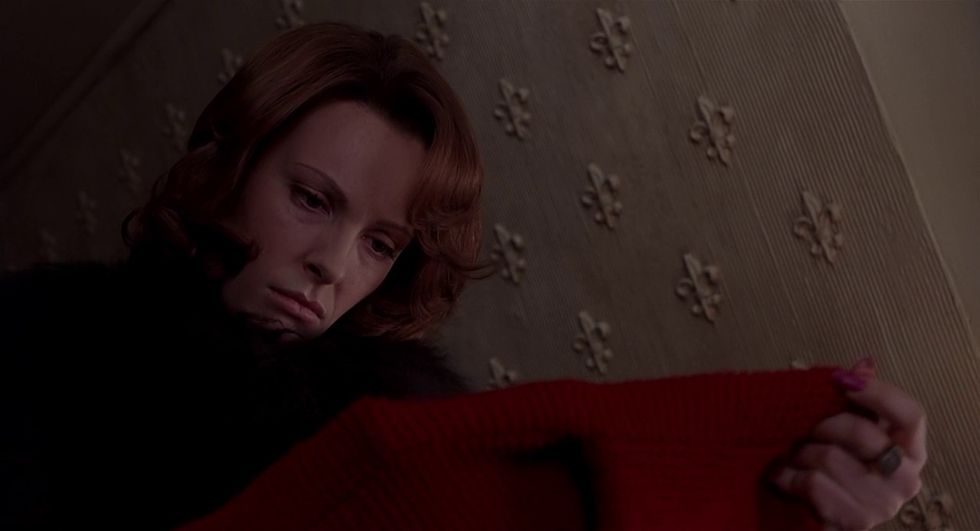
Anna is constantly wearing red throughout the narrative, although each time she donned a different shade of red, depending on her psychological state at the time.
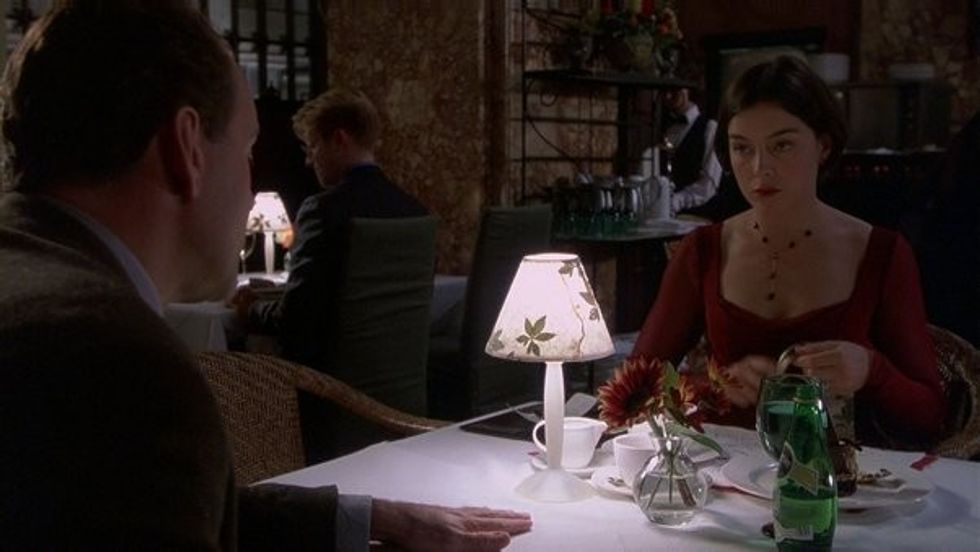 The Sixth Sense (1999)Source: Buena Vista Pictures Distribution
While in the scenes with Dr. Malcolm Crowne (Bruce Willis), she wears brighter reds, signifying the presence of Malcolm in her life even after his death. In the scene where she gifts a book to her potential lover, her red sweater is dull and faded, symbolising her efforts to move on from Malcolm.
4. The Red Door Knob
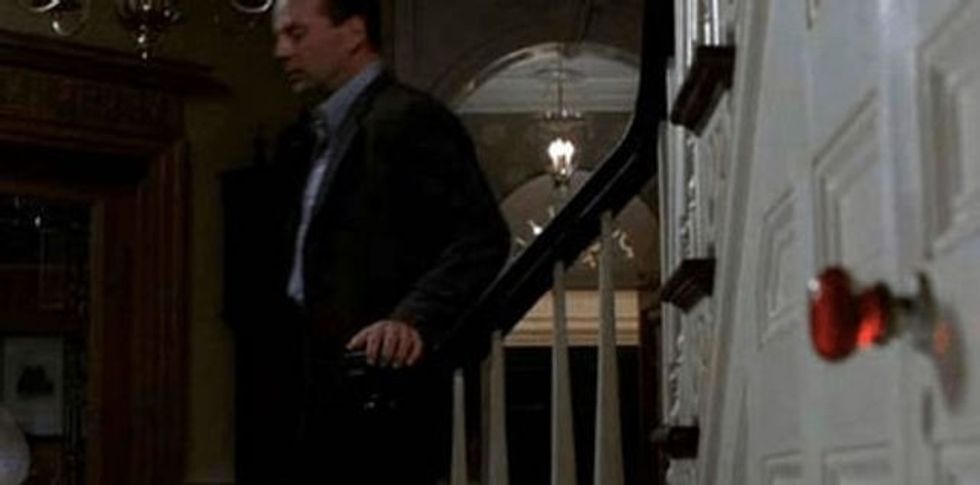 The Sixth Sense (1999)Source: Buena Vista Pictures Distribution
A blaring use of red by Shyamalan is the doorknob to Malcolm’s study, which Malcolm tries to open again and again but cannot. Here, Shyamalan shifts the burden of the red onto an inanimate object to signify that Malcolm is a paranormal presence.
5. Cole’s Scribbles
Cole uses red ink to scribble the voices of ghosts—a direct hint to Cole’s gift.
On careful examination, you will realize that Shyamalan has not only used red to symbolize the realm of spirits and the paranormal threat, but also as a sense of safety for Cole.
For instance, the red door on the church that Cole goes to when the voices of the spirits are haunting him, or his indoor tent with Jesus figurines, exudes red.
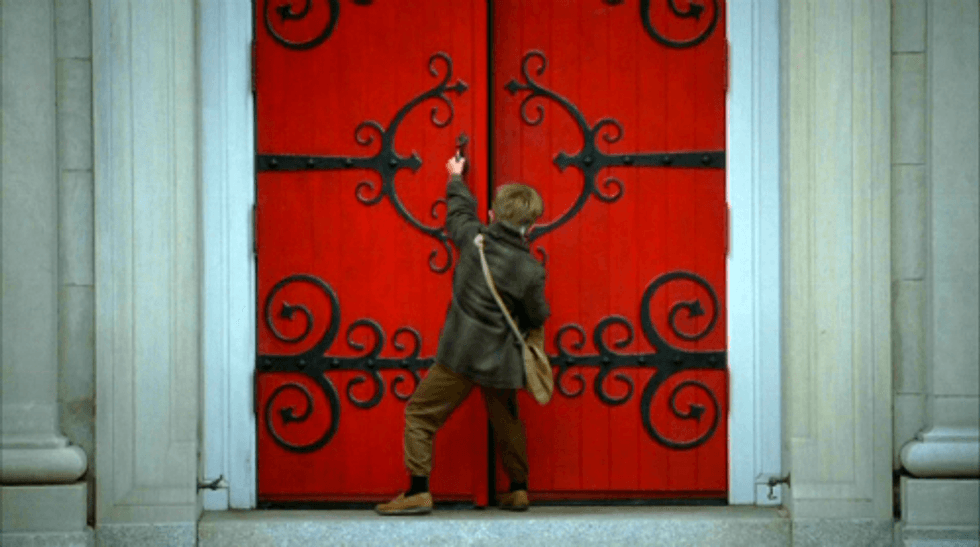 The Sixth Sense (1999)
Even when his mother finally acknowledges Cole’s gift, she is in a red sweater (for the first time in the entire film).
 The Sixth Sense (1999)
What do you think of Shyamalan’s use of red in The Sixth Sense? Which are your other favorite films that feature an ingenious use of colors?
- What Are the Symbols in 'Parasite' and What Do They Mean? ›
- What Do Birds Symbolize in Alfred Hitchcock's 'Psycho'? ›
- How Martin Scorsese Layers Symbolism and Color in 'The Departed' ›
- What Is Symbolism? ›
- Did You Know? ‘The Sixth Sense’ Almost Cut Its Most Famous Line ›
- 1999 Smash Hit Horror Movie Earns a Spot Among the Greatest Films in History ›