Ranking Zach Creggers Filmography
From debut to the latest 2025 release, we pit Zach Cregger’s directorial efforts against each other to see which film stands tall.
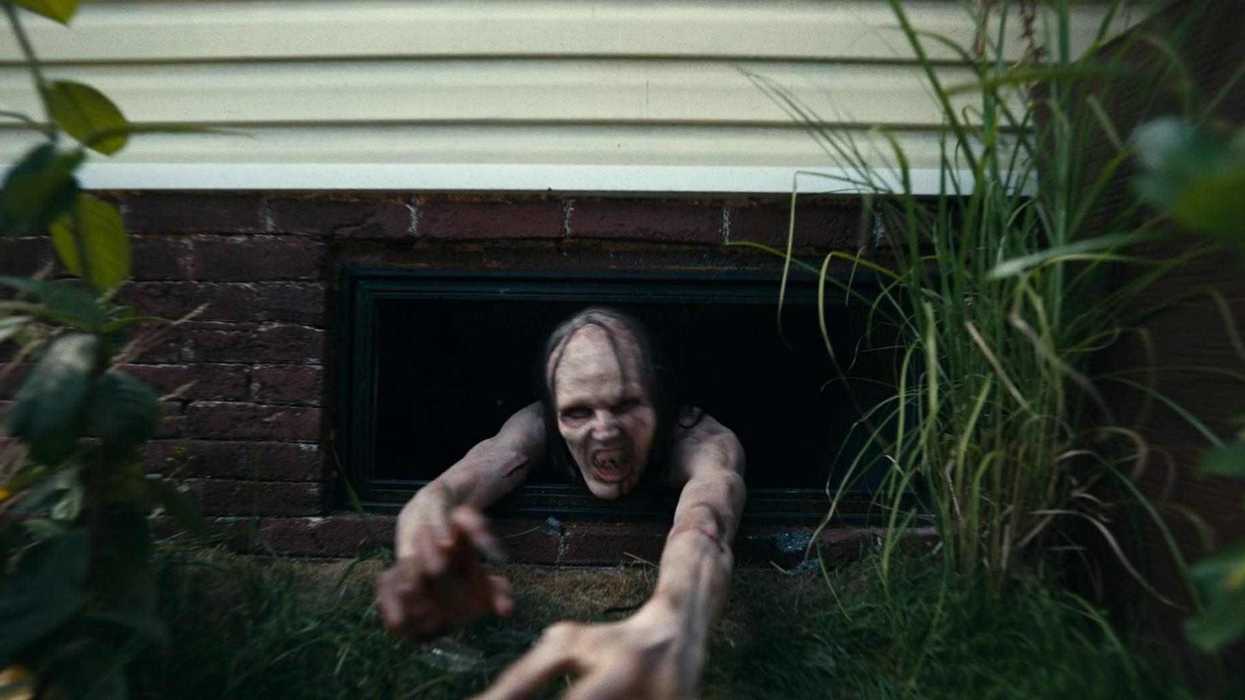
Barbarian (2022)
Zach Cregger’s career trajectory feels like a dare he made to himself—start in absurd, no-filter comedy and somehow pivot to bone-chilling, prestige horror.
Beginning with the shock-value antics of Miss March (2009) and The Civil War on Drugs (2011), Cregger seemed destined to remain in the sketch-comedy lane carved out by his days with The Whitest Kids U’ Know (2007-2011).
But then came Barbarian (2022), a film that proved he could trade punchlines for nightmares without losing his knack for surprise. By 2025, he’d doubled down with Weapons, cementing himself as one of the most unpredictable filmmakers working today.
For this ranking, the criteria are simple but not forgiving: directing craft, story execution, cultural footprint, and the ability to stick in your head after the credits. It’s as much about which of his films show him at the top of his game as it is about just ranking them.
And yes, there will be disagreements—because Cregger’s career is nothing if not polarizing.
Now, let’s break down all four of his films, from the one that showed promise but stumbled, to the one that grabbed the crown and refused to let go.
4. Miss March (2009)
Written by: Zach Cregger, Trevor Moore | Directed by: Zach Cregger, Trevor Moore
A raunchy road trip comedy gone sideways, Miss March follows Eugene (Cregger), who wakes from a four-year coma to discover his high-school girlfriend Cindi (Raquel Alessi) is now a Playboy centerfold. With his best friend Tucker (Trevor Moore), he embarks on a chaotic quest to win her back, facing a string of ridiculous—and occasionally offensive—misadventures.
The film’s sense of humor is unapologetically adolescent, which can be a blessing or a curse depending on the viewer’s tolerance for crude gags. While the chemistry between Cregger and Moore is genuine, the narrative often feels like a stretched-out sketch, with pacing that lurches between over-the-top absurdity and sudden sentimentality. It earned a place here for its ambition but also for being Cregger’s most uneven directorial work.
One clear takeaway is that comedic timing in a feature-length format demands a different muscle than sketch work. The movie serves as an early lesson in how pacing and tonal balance can make or break comedy, a lesson Cregger would clearly carry into his later, sharper projects.
3. The Civil War on Drugs (2011)
Written by: Trevor Moore, Zach Cregger | Directed by: Trevor Moore, Zach Cregger
Set during the American Civil War, this satirical comedy reimagines the era as one where soldiers fight not over slavery but over the criminalization of marijuana. Cregger and Moore play two clueless soldiers navigating the absurdity of this alternate history, encountering anachronistic jokes, historical inaccuracy on purpose, and a parade of surreal scenarios.
While the concept is creative, the execution leans heavily on inside-joke energy and sketch-comedy sensibilities. The low-budget feel works for some of the humor, but the satire doesn’t always land with the sharpness it needs to sustain its runtime. It’s a cult curiosity more than a widely celebrated hit, and its spot here reflects its niche appeal.
For creators, it’s a good reminder that bold concepts require equally bold execution. Satire works best when it sharpens its social commentary while aiming for laughs—something Cregger did, quite masterfully so, when layering subtext into horror.
2. Barbarian (2022)
Written by: Zach Cregger | Directed by: Zach Cregger
A late-night rental mix-up between Tess (Georgina Campbell) and Keith (Bill Skarsgård) in a rundown Detroit neighborhood sets the stage for a nightmare that mutates with each act. What starts as an awkward encounter escalates into one of the decade’s most surprising horror pivots, involving underground horrors, shifting timelines, and a constant refusal to let the audience feel safe.
Barbarian is the movie that made everyone sit up and say, “Wait—Zach Cregger made this?” The way it plays with structure, builds tension, and drops reveals at unexpected moments is pure confidence. It might not be his most technically intricate film, but it’s the one that rebranded him overnight—from “that comedy guy” to a filmmaker who could dominate horror with precision and nerve. The cultural impact it left in 2022 was immediate, sparking think-pieces, reaction videos, and endless spoiler-avoidance warnings.
What stands out for filmmakers here is the discipline to hold back. The film proves you don’t need to overexplain; you need to intrigue, unsettle, and then blindside your audience. Cregger’s restraint in certain scenes is exactly what makes the shocks hit harder.
1. Weapons (2025)
Written by: Zach Cregger | Directed by: Zach Cregger
Told through three intertwining narratives, Weapons unfolds in a small American town where a single act of violence connects strangers in ways they can’t see coming. The tone is unflinchingly tense—jumping from intimate character drama to dread-filled horror beats without losing its cohesion. Each storyline has its own rhythm, yet they all converge into a finale that’s as emotionally heavy as it is disturbing.
This is Cregger operating at his sharpest. The structural complexity that could have easily collapsed under its own weight instead feels deliberate and controlled. The visual storytelling is tighter, the character work more nuanced, and the horror less reliant on jump scares than on an accumulating sense of inevitability. If Barbarian was the announcement of a new horror voice, Weapons is the proof that voice can carry even heavier material without losing clarity or intensity.
The big creative lesson here is about ambition backed by discipline. Multi-threaded narratives can fall apart if even one arc falters, but Weapons shows how to give each thread its own identity while ensuring they serve a unified whole. It’s the kind of film that reminds you that control over chaos is just as thrilling as chaos itself.
Deep Dive: Comparing Cregger’s Evolution
From Comedy to Horror
Cregger’s first two films, Miss March and The Civil War on Drugs, were unmistakably rooted in sketch comedy. The humor was blunt, chaotic, and unafraid to push buttons. But Barbarian marked a tonal shift so dramatic it shocked his own fans. Instead of punchlines, the setups became slow-burn horror beats. Instead of awkward banter, silence carried the tension. By Weapons, he was blending the two worlds—retaining his comedic timing in the form of sharp scene construction while leaning fully into horror as a storytelling medium.
Directorial Style Analysis
Cregger’s early directing leaned on improvisation and exaggerated scenarios. Over time, his work adopted a tighter visual language—framing scenes to conceal as much as they reveal, manipulating pacing to control tension. Common threads still exist: a love for abrupt shifts, a playfulness with audience expectations, and a taste for extremes, whether comedic or horrific. His evolution is less about abandoning comedy and more about redirecting its unpredictability into horror.
Critical & Audience Reception
The numbers tell a clear story. Miss March flopped both critically and commercially, while The Civil War on Drugs remained a cult-only affair. Barbarian broke out with a 92% Rotten Tomatoes score, strong box office returns, and widespread social media buzz. Weapons earned praise for its craft but divided audiences with its pacing and structural complexity—solidifying Cregger’s growing reputation as a director who refuses to play it safe.
The Verdict: Why #1 Takes the Crown
Barbarian is Cregger’s peak (so far) because it’s the film where every gamble paid off. Its nonlinear structure, genre-shifting narrative, and ability to weaponize audience expectations made it both memorable and influential. While Weapons may be more technically polished, Barbarian hit at the right moment, with the right level of ambition, and redefined his career overnight.
What’s Next for Zach Cregger?
Post-Weapons, Cregger is attached to helm the upcoming Resident Evil reboot—a move that could push him deeper into mainstream horror while giving him a globally recognized franchise to play with. If his track record is any indication, he’ll find a way to twist audience expectations yet again. His career so far suggests one certainty: whatever genre he lands in, it won’t be the one you’re expecting.
Conclusion
If there’s one thread tying his work together, it’s the element of surprise—and that’s exactly why his next project will be worth watching. In a career built on left turns, the only safe bet is that Zach Cregger will never take the safe bet.
- How 'Barbarian' Director Zach Cregger Fought to Keep the Film's "Lack of Structure" ›
- What Does 2:17 Mean In 'Weapons'? (The Popular Theories Are Wrong) ›
- How 'Weapons' Taps Into Audiences' Desire for Original Horror ›
- The Shocking 'Weapons' Ending Explained ›
- Why 'Weapons' Is the Best Thing to Happen to Horror This Year ›
- Zach Cregger’s Resident Evil Movie Is Leaning In On His Biggest Strengths ›
- Zach Cregger Elfing ›
- 'Resident Evil' Trailer Goes Back to Survival Horror Roots ›
- Intersecting Tragedy, Memory, and the Gridiron in '14 Days in Gainesville' | No Film School ›