For Your Consideration: Studios Post Screenplays Online for Awards Season
One of the best ways to learn about screenwriting is to read produced screenplays. A little bit of Google research can certainly turn up several screenplays in various formats (some less helpful than others). Admittedly, finding a pirated copy of a screenplay online doesn’t make me feel that great, either, even if I’m just searching for it for my own educational purposes. This time of year, however, the Interwebs deliver a pleasant surprise for aspiring screenwriters everywhere: award-hopeful screenplays for your consideration (and available for legal downloading).
Obviously, we are very early in the awards season (it’s only Halloween, for Pete’s sake! And yes, I just invoked the name of Pete in 2012), so the official screenplay offerings have only just begun. As we move closer to the bigger awards, more studios will post screenplays online. When they do, we’ll be sure to post an update with a more complete list of downloadable screenplays. Here’s what is available so far:
- The Lorax, screenplay by Cinco Paul & Ken Daurio, based on the book by Dr. Seuss
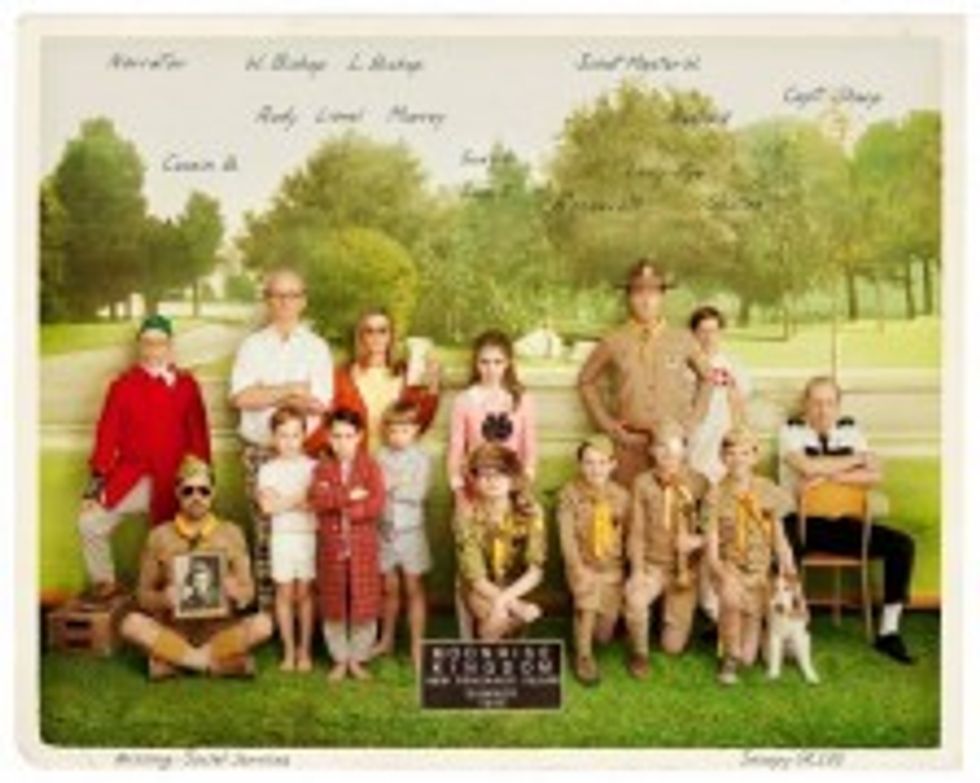
- Moonrise Kingdom, written by Wes Anderson & Roman Coppola
- ParaNorman, written by Chris Butler
- Snow White and the Huntsman, screenplay by Evan Daugherty and John Lee Hancock and Hossein Amini, story by Evan Daugherty, inspired by the Brothers Grimm’s “Little Snow White”
- Ted, screenplay by Seth MacFarlane and Alec Sulkin & Wellesley Wild, story by Seth MacFarlane
- This is 40, written by Judd Apatow
Don’t wait to download these PDFs. You never know when studios will decide to take them offline. For instance, the screenplay for Les Misérables was apparently posted online very briefly then removed by Universal Pictures (probably because the film hasn’t been released, and yet, the script for This is 40 is available online from Universal Pictures – go figure).
Also, in case you don’t already know the difference between ‘&’ and the word ‘and’ in writing credits, ‘&’ denotes a writing team while the word ‘and’ identifies writers that worked separately on a screenplay.
Most of the screenplays that studios post online for awards consideration are cleaned up versions of the final shooting script, but this isn’t always the case. The screenplay posted for Snow White and the Huntsman is the 2nd Blue Revision shooting script dated November 22, 2011, with all of the scene numbers, omitted scene slug lines, and letter pages intact.
Finally, please use these screenplays for your personal educational purposes only. That is, unless you are a member of the Writers Guild or another organization that gives out writing awards. In that case, feel free to ignore these screenplays entirely.
How do you use produced screenplays to improve your writing? Do you prefer to read a screenplay before watching a movie or do you go back to the script after a screening to see how the page translated to the film? Let us know in the Comments.
Links:
[via Go Into the Story]
Related Posts
- The Future of Pitching Screenplays? Post Your Pitch Online
- How Amazon Studios is Trying to Get Free Options to Privately Submitted Screenplays
- Amazon Studios Backtracks: New Terms Give Fair Treatment to Writers
22 COMMENTS
-
Edge on 10.31.12 @ 5:09PM
I read the script after watching the film. This allows me to read knowing exactly what kind of result the director was able to achieve. It also shows me potential ways to word a sequence so that a desired visual result is achieved. As a director I’m constantly trying to find new ways to communicate to others, and reading the script after watching the film is an excellent way to learn communication tricks/skills, in my opinion of course :D
-
DEEM on 10.31.12 @ 5:51PM
In my case, I read the screenplay of The Storm of the Century by Stephen King before watching the film. The screenplay contained scenes which didn’t appear in the film version. I was disappointed . I like those screenplays which contain well-written dialogs, that’s why I reread Sorkin’s A Few Good Men or Pinter’s Sleuth.
-
Binky on 10.31.12 @ 6:00PM
I *really* prefer to read the screenplay first if I can. It’s hard with classic films but can be very rewarding. However, there are a couple of films which have changed so much between drafts and I’ve been able to read the earlier versions—some of which I’d liked to have seen e.g. Frank Darabont’s unused Indiana Jones, or the original Back to the Future or Predator.
There’s at least one film I thought I’d actually seen (They), to the point of asking my wife if she remembered seeing it, but I’d just read the script. -
I read Aaron sorkin’s The social network before seeing the movie. i was trilled when i read the script. it was not the same feeling when i watched the movie. I guess Directors change and move things around. They have that power. For that reason, i think it’s not a good idea to “improve” your writing from a movie, except in my opinion you are directing the movie yourself. Reading screenplays serve that purpose better.
if you guys lay your hands on ARGO, we would really love to see that screenplay. -
I don’t like reading the screenplay until I’ve seen the film because I don’t want any expectations going into a film. Then if I really loved a film, I’ll seek out its screenplay and see 1) how the scenes I loved were written and 2) what was changed.
-
Christopher Boone on 11.1.12 @ 12:27PM
Personally, I like to see the film first, then read the screenplay to discover the writing that successfully disappeared into the final product. However, I’m far from absolute about this, and when I’m breaking a new story, I tend to seek out screenplays to films I haven’t seen yet to discover how a particular writer (or writers) visualized a scene on the page, then watch the film to see how the rest of the creative team realized the scene.
So, I guess I’m a switch hitter on this one (I was going to say I go both ways, but that could be too easy miscontrued on this information superhighway).
-
8 comments on story and writing, 291 comments on camera and price. And they said “the story is king”. Ha!
-
Jason on 11.5.12 @ 9:48AM
Yeah, the RED price drop article is approaching 400 comments. It’s like a REDuser thread haha. I don’t always comment on content related articles but I do read them. Come to think of it I don’t always comment on gear articles either but yet, I do read those too.
Shit, I’m not a commenter. Oh how I’ve failed you fellow generation y/millennials. Surely everyone’s voice is important, right? Right!?!?
-
-
brynn on 11.28.12 @ 3:07PM
Personally I like to read the script first, visualising it for myself without pretense to figure out how I would visually approach a scene. Then when I watch the movie, I compare my ideas to what was actually done. Normally I learn a lot each time I do this.
-
Thank you for letting us know about the availability of these screenplays!
11 pingbacks
- For Your Consideration: Studios Post Screenplays Online for Awards Season | The Film Sensei on 10.31.12 @ 3:20PM
- Greg Karpinski » Testing testing on 11.2.12 @ 8:34PM
- ‘Smashed’ and ‘Celeste and Jesse Forever’ Screenplays Now Available For Your Consideration - NoFilmSchool on 11.7.12 @ 7:35PM
- But Wait, There’s More! ‘Arbitrage’ and ‘Perks of Being a Wallflower’ Screenplays Now Available - NoFilmSchool on 11.8.12 @ 2:34PM
- But Wait, There’s More! ‘Arbitrage’ and ‘Perks of Being a Wallflower’ Screenplays Now Available | The Film Sensei on 11.8.12 @ 6:27PM
- Screenplays for ‘Beasts of the Southern Wild,’ ‘The Sessions,’ and More Now Online - NoFilmSchool on 11.15.12 @ 10:04PM
- Screenplays for ‘Beasts of the Southern Wild,’ ‘The Sessions,’ and More Now Online | The Film Sensei on 11.16.12 @ 1:37AM
- Ewa Pazera » Screenplays for ‘Beasts of the Southern Wild,’… on 11.17.12 @ 4:18PM
- ‘Rust and Bone’ and ‘Anna Karenina’ Screenplays Now Available For Your Consideration - NoFilmSchool on 11.26.12 @ 11:06AM
- Michael Haneke’s ‘Amour’ Screenplay Now Available For Your Consideration - NoFilmSchool on 12.3.12 @ 2:00PM
- Savor Lush ‘Moonrise Kingdom’ Visual Screenplay with BTS Stills, Maps, and Shooting Diagrams - NoFilmSchool on 01.20.13 @ 1:50PM


I have done both, but I think reading the script first is more educational for writers. If you watch the film first there’s the same disconnect as when you see the adaptation of a book you loved (except in reverse.) The script is liable to seem so flat by contrast. I’d rather read the script and love it, and then watch the film and have my mind blown.