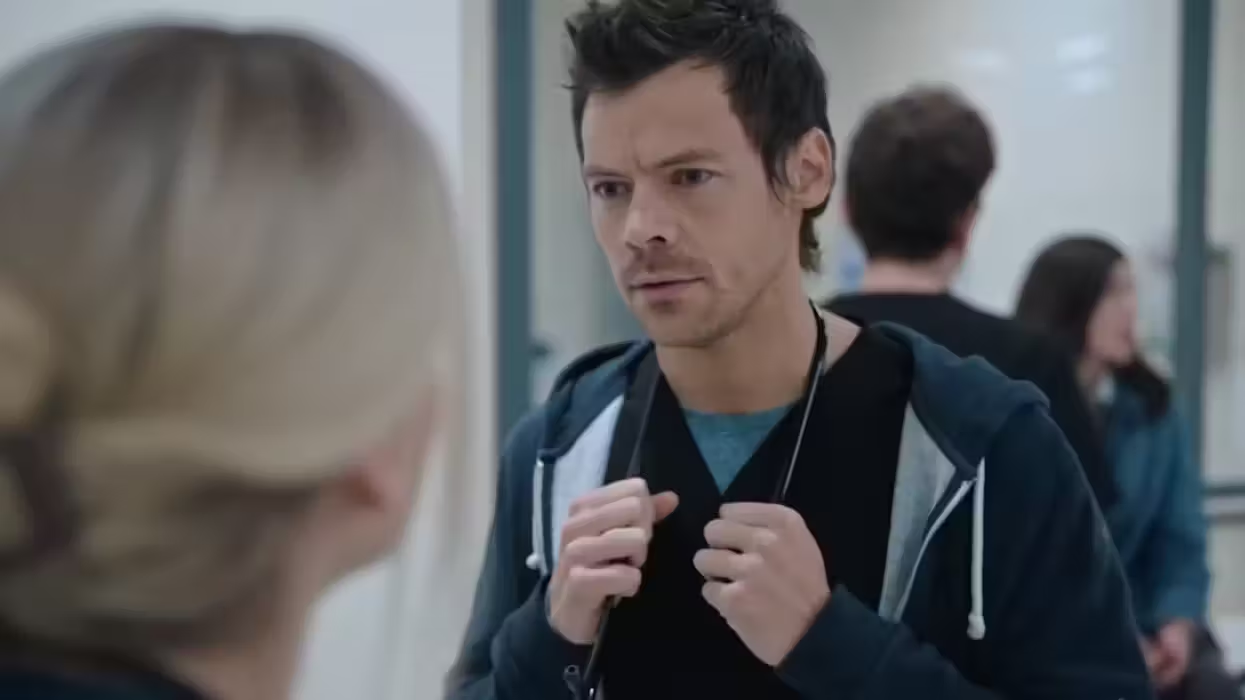
Every week, the editorial team at Saturday Night Live has less than 36 hours to turn raw footage into ready-to-air sketches, but editors Salerno and Makower find this to be the most exciting part of the job. Their now Emmy-nominated season 51 sketch “MAHAspital (The New Pitt)” is a perfect example of how, even under such tight timelines, the team can craft smart, award-worthy satire for today’s audiences.
The SNL editors leverage Premiere to streamline their incredibly fast workflows and collaborate on cuts leading all the way up to showtime. On “MAHAspital,” a sketch parodying the intensity of The Pitt and some controversial alternative medicine practices, Salerno and Makower leveraged the Essential Sound Panel to mimic the dramatic tone and intensity of HBO’s medical thriller while creating a stark contrast with the absurdity of the script. With such a rapid turnaround, constant communication is also critical, and Premiere allows the team to collaborate directly within their timelines without interrupting their workflows.
Read on for more from Salerno and Makower on crafting satire through precise scene assembly and experimental soundscaping.
Christopher, tell us a little bit about your work at SNL. What was your reaction when you first read the script for “MAHAspital?”
Christopher Salerno: Working at SNL has always been a privilege. I started as an assistant editor toward the end of Season 43 in 2018 and have since moved into one of the film unit editor roles.
This specific sketch, “MAHAspital (The New Pitt),” grabbed me from the moment I read the script. The two ideas fit together so naturally into such an absurd premise that you could tell on the page there was something special there. Once the footage started coming in and we saw how grounded and committed the performances were from the cast and host, Harry Styles, we knew we had all the ingredients to make something good.
- YouTube www.youtube.com
When you walk into the cutting room at 30 Rock, what’s the first thing you do to prepare your edit?
CS: At SNL, we have to start clean because it gets messy fast. To organize, we use a very specific folder and bin structure that has been refined over the years by our great post supervisor Matt Yonks and post coordinator Rachel Labianca, along with all of the editors who have come through the show before us.
That structure is essential to the way we work. With such a short turnaround and so many different people needing access to every part of the project and its assets, everyone has to know exactly where everything lives at all times. It’s one of those things that seems simple, but it’s just what allows us to move as quickly as we do.
Mak Makower: I usually come in with at least one caffeinated beverage in hand, which I sip on while I boot up Premiere and mentally prepare myself for the craziness to come. For this project specifically, I had an episode of The Pitt playing in the background between footage drops. It helped me get into the right headspace for the edit and gave me a little something to keep me company during the waiting periods. Once the footage started coming in, it was time to put the caffeine to work!
What conversations did you have with director Christopher Werner to align on the creative vision for the sketch? What did collaboration look like throughout production and post?
CS: The timeline on these projects moves so quickly that there’s really only a limited amount of time to catch up before the shoot. We typically find out which script we’ll be working on around 11 p.m. Wednesday, and by Friday morning the shoot and edit are already underway.
On “MAHAspital,” we spoke early with Christopher about honing the structure and tone of the sketch. We wanted to make sure we honored the intensity and grounded drama of The Pitt to perfectly contrast with the absurdity of what was actually happening in our hospital. If a shirtless RFK Jr. was going to wheel a bear into a busy emergency room to make jerky out of it, we wanted to make that feel as serious and intense as anything else happening on the show.
Chris, tell us about a favorite scene or moment from this sketch, and why it stands out to you.
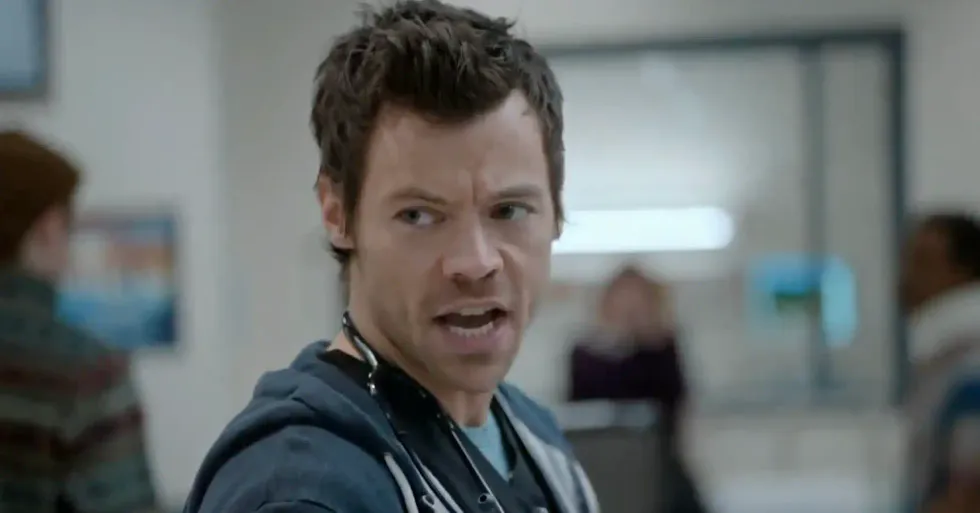
CS: My favorite scene from the sketch is when all of the doctors and nurses, played by Harry Styles, Ben Marshall, Veronika Slowikowska, and Jeremy Culhane, surround Kam Patterson after he’s been in a car accident and start rattling off ridiculous treatments, like a sound bath and full moon ceremony. The set, wardrobe, and performances are all so grounded, and the camerawork has so much energy that it made building tension in that scene happen completely naturally.
We use the music, soundscape, and pace of the edit to build the tension toward what feels like it should be a dramatic resolution or cure, just to cut back to Kam wearing a red light mask.
What Adobe tools did you use, and how do they assist your workflow on SNL?
CS: We edit everything in Premiere at SNL. Being able to prep and round-trip the finishing process so quickly means we can continue creatively working on the edit until the moment the final piece airs, without having to build in a huge window for finishing. We can send projects and scenes to our VFX artists who pull them into After Effects and work simultaneously alongside us, making revisions and adapting their compositions to our evolving cut. At the same time, we can prep AAF’s for our mixer and XML’s for our colorist to get to work as we rush toward the deadline.
I also rely heavily on the Essential Sound Panel and Premiere’s various audio tools. Sound design is such an important and underrated part of what makes an edit work, so we spend a lot of energy painstakingly building out the soundscape of these sketches.
MM: Because we have to move so quickly, having everything we need in one place is incredibly valuable. Being able to sync footage, send projects back and forth between editors, and import those projects directly into the main edit saves us so much time. Premiere allows multiple people to work efficiently at the same time while keeping everything organized and moving toward the final piece as quickly as possible.
 'Saturday Night Live'Image Courtesy of Saturday Night Live | NBC
What are some specific post-production challenges you face at SNL? How do you tackle them week to week?
CS: Every week at this show presents new and interesting challenges, even while we’re still finding ways to deal with the ones that never go away. The biggest of those is the compressed timeline. We work with a 36-hour window to shoot, edit, and finish the entire sketch. Our post schedule is incredibly compressed, and it only works because of years of refining the process and the huge, incredibly talented team we have executing it.
When the shoot for “MAHAspital” began at 8 a.m. on Friday, our great editing room assistant Brady Lees was on set and in constant communication with Mak, getting footage back to us on a rolling basis as quickly as possible. Mak led our amazing assistant editors, Kingsley Golder and Ian Dugan, in ingesting, organizing, and processing everything as it arrived. That allowed me to begin assembling scenes early Friday afternoon while the shoot was still happening, and simultaneously our VFX team led by Hannah Kim and our GFX team led by Jessie Poole and Mauricio Villa could begin prepping assets and tackling requests as they came in. Once the shoot wrapped Friday night, Mak and I divided up the remaining scenes and worked in tandem to finish our assembly in the early hours of Saturday morning.
It’s an around-the-clock relay race, with every department working simultaneously and handing things back and forth. That collaboration is the only reason something this ambitious can go from a script on Wednesday night to a finished piece on Saturday night.
MM: With less than 48 hours to create something ready to air on live television in front of millions of people, there’s very little room for error, and things are constantly changing right up until we go live.
The key to making it work is constant communication. Everyone has to stay completely in sync. We’re constantly sharing updates, giving notes, making changes, and adapting to new information. It’s an incredibly fast-paced and collaborative process, and that communication is what allows us to turn an idea into something ready for millions of people to watch in just a few hours.
Mak, what’s your favorite Premiere shortcut or hack, and why?
MM: My favorite Premiere hack is creating my own custom keyboard shortcuts. I’m always looking for ways to move faster and work as efficiently as possible, and customizing my shortcuts has completely changed my workflow. Being able to select clips and, with just a few keystrokes, create multicam sequences saves me a ton of time. It lets me spend less time navigating menus and more time actually editing, which is where I want to be!
What advice do you both have for aspiring filmmakers or content creators?
CS: My biggest piece of advice for aspiring filmmakers or content creators is to take every opportunity to learn and never turn your nose up at a learning opportunity. I’ve probably learned 75% of the technical craft of editing from YouTubers who are younger than me. You can learn something from almost anyone if you’re willing to listen, and inspiration can come from places you’d never expect.
MM: A piece of advice I have for aspiring filmmakers is to do what makes you happy and know your worth. This industry can be challenging, and it’s easy to get caught up in what you think you should be doing or comparing your journey to someone else’s. There is no single path to a successful creative career. Follow the projects and people that excite you, stay curious, and remember why you started creating in the first place.