How 'Godzilla Minus Zero' Just Redefined Mid-Budget Visual Effects and Box-Office Strategy
This is one of the most sensible Godzilla movies ever made.
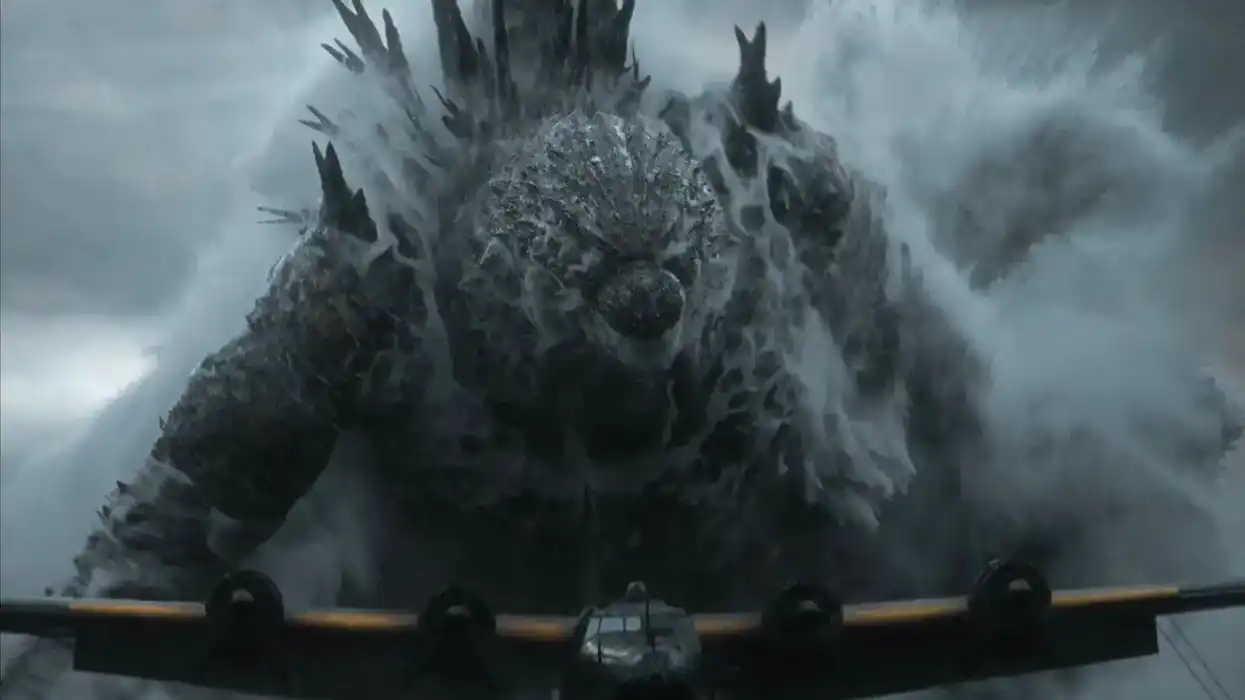
'Godzilla Minus Zero'
When Godzilla Minus One won an Academy Award for Best Visual Effects on a sub-$15 million budget, everyone had to reckon with it. It was like they released an actual kaiju on Hollywood's VFX community to stomp all over them.
Since then, we've seen a rise in AI, and other adaptations meant ot cut costs of visuals and to help make American monster movies as scary and visceral as the ones we see from Japan.
Well, now Godzilla Minus Zero, the sequel, is in theaters. And it has just as much of a visual flair on a budget, too.
Director Takashi Yamazaki's follow-up is an unprecedented box-office juggernaut, stomping all over the competition.
The movie debuted to $63 million worldwide, with a record-breaking $31.6M in North America. And it may have also solidified these movies as the future of mid-budget filmmaking, after it was reported the budget was probably around $18-20M.
You can't say that Toho is producing flukes; they're making movies people want to see on reasonable budgets that make money right away.
So, let's dive in.
- YouTubewww.youtube.com
1. Pipeline Efficiency
Okay, so I have to say from the start that the VFX community in Japan, where Toho makes its movies, is very, very different than in America.
In the last movie, there were a lot of allegations that they worked very long hours and were paid very little, which is how they keep budgets down, versus a Hollywood union system, which has rules and much higher wages.
And not always better conditions!
This is all alleged, so we need to take it with a grain of salt.
I am not an authority on this stuff, but I want everyone to keep in mind that these structures exist, and shouldn't be ignored in conversations about why these movies are able to keep their budgets so low.
Another factor is that places like Toho, who make these movies, employ VFX artists in-house, whereas in Hollywood it's all done by outside hiring and vendors bid on jobs.
Having people in-house is great; it provides more jobs and means they know the aesthetics and procedures other places might have to learn.
All this is to say that Toho is able to keep things relatively streamlined because they can do everything in-house, whereas if you were making a massive kaiju movie in Hollywood, your work would be distributed across dozens of global VFX houses, often burning millions on late-stage structural changes and other tweaks.
- YouTubewww.youtube.com
2. The IMAX Advantage
We know that IMAX is one of the biggest drivers to get butts into seats. So imagine you have a cheap overall budget AND you get to shoot on IMAX, which will drive your ticket prices up.
We'll put it this way: GKIDS put this movie on every IMAX and premium large-format screen in the country, and those screens delivered 74% of the gross.
The Odyssey only had 52% of its gross from PLF screens.
Premium screens accounted for over 34% of the opening weekend box office. For this movie, I expect that number to climb.
Godzilla Minus Zero holds the distinction of being the first Japanese production shot specifically targeting an IMAX immersive workflow.
They have these massive frames that make the fights feel more epic, and we get great attention to detail that adds scope and scale by maximizing how big things look on screen compared to humans.
3. The Power of Direct Distribution & Ground-Level Marketing
As reported by the Financial Times and Gizmodo, Toho’s strategy of taking international rights back in-house and partnering with targeted distributors like GKIDS paid off massively with this rollout.
The US and global marketing spend came in under $10 million. Which is so wild for a movie that made so much opening weekend here; they just released trailers and hoped people would talk about it, and they did.
It was a sequel, so they could bring back the original audience and attract more people who wanted to experience this and VFX again.
IMAX made it feel like an event people had to see to join the conversation.
Summing It All Up
These movies have really disrupted the way Hollywood looks at big releases. I am interested in whether they'll scale up for the third movie or keep it under $20 million again.
And I want to know where this movie ends up grossing, because for a film entirely in Japanese with only three really big action sequences, it's cleaning up with audiences everywhere. That'sa great sign for innovation and international hits to come.
- 'Godzilla Minus Zero': Toho Confirms Sequel to Oscar-Winning ‘Minus One’ ›
- 'Godzilla Minus Zero' Teaser Breakdown: How to Build Massive Stakes in Under 30 Seconds ›
- How a Small Team of Visual Effects Artists Pulled Off 'Godzilla Minus One' ›
- 'Godzilla Minus Zero' Full Trailer Breakdown: "This Isn't Godzilla We Are Talking About" ›