Any individual scene of David Lynch’s masterpiece, Mulholland Drive, is a total puzzle box, capable of hours of discussion and analysis. The initial diner scene between the characters of Dan and Herb is one that can feel somewhat detached from the rest of the story when viewed on its own. But it has deep thematic implications on how we as the audience should perceive what’s to come.
Let’s talk about what this scene is getting at, with full spoilers ahead.
What Happens in the Scene
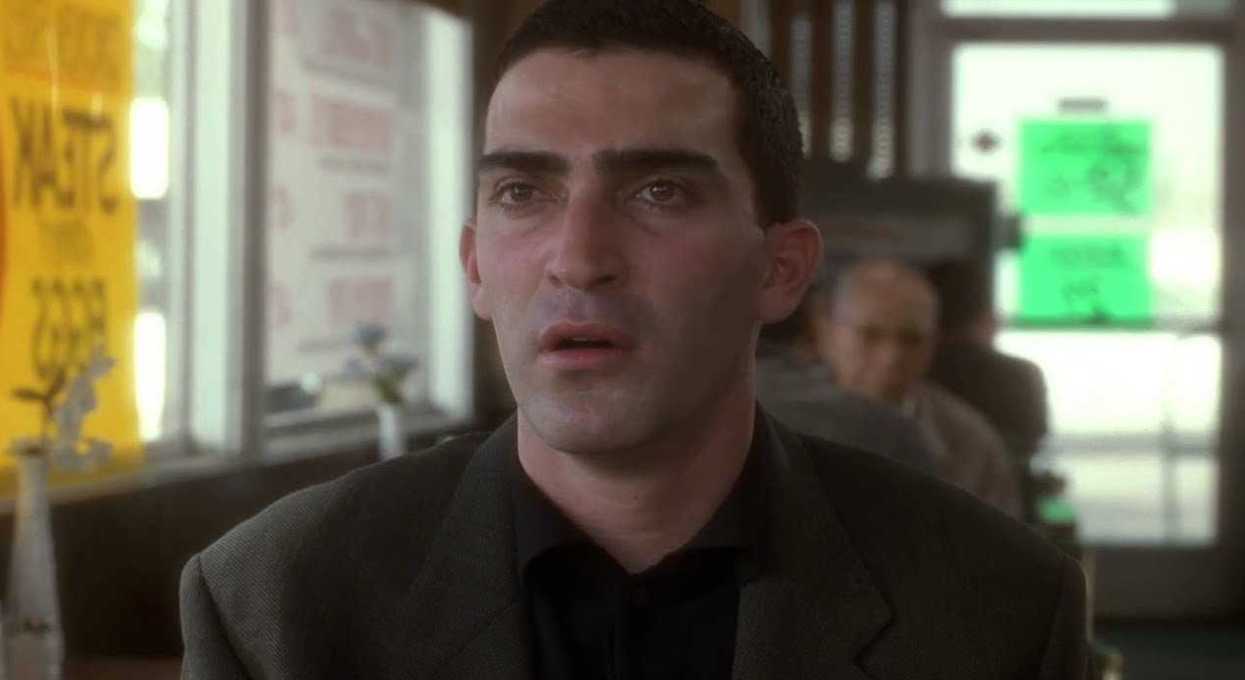
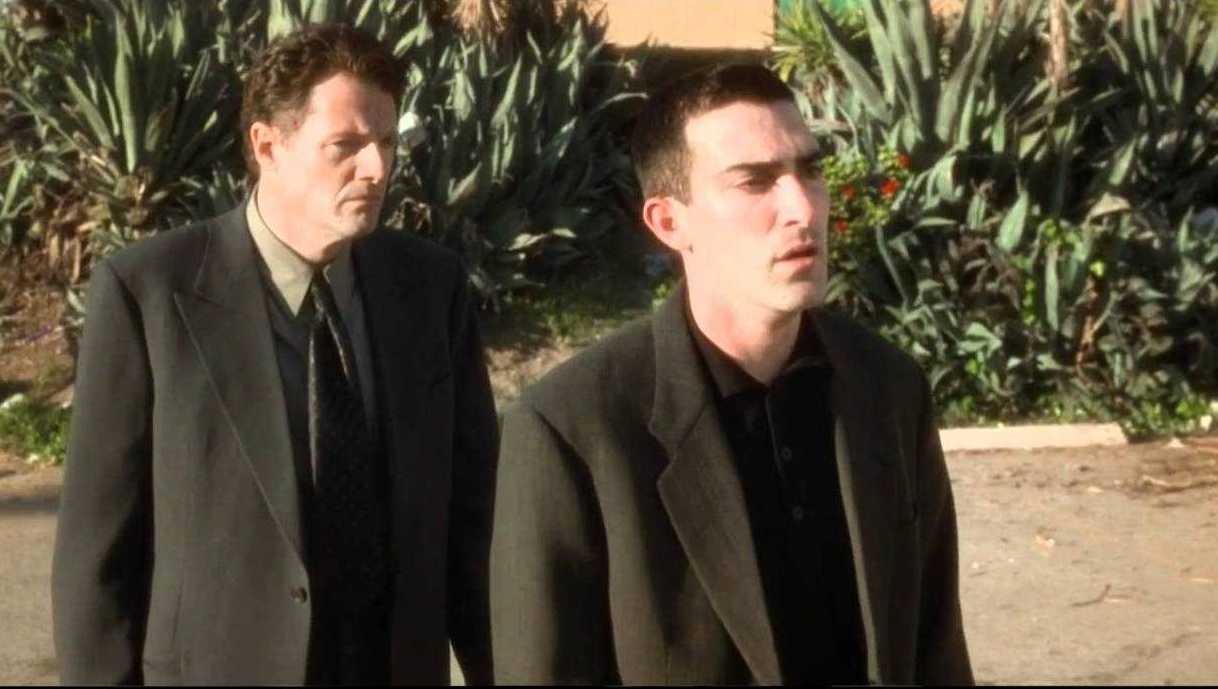
Dan and Herb sit in a booth at a Winkie’s Diner where they don’t appear to be doing much eating. Dan laments to Herb about a terrifying dream he had about a man he saw at the back of the diner, and that Herb was in the dream with him, standing near the cash register.
Herb doesn’t really take what Dan is saying seriously, and gets up to pay the bill. Dan realizes the dream is coming to life when Herb stands at the cash register in the same way he did in Dan’s dream. They sneak out back, and Dan reluctantly approaches the back alley. Out of the alley, a dirty, disheveled figure appears out of nowhere, draining the sound from the scene, and making Dan pass out from fear immediately before fading back behind the wall.
Nothing Is as It Seems
If you weren’t automatically clued in to what usually goes down in a David Lynch movie, or the preceding first few minutes of the film didn’t give it away, this scene surely announces that the film is going to be diving headfirst into maximalist, dreamlike qualities that are meant to confuse you. For how silly this scene may sound when explained out loud, when you actually sit down and watch it in the context of the film it is hard to not get the shivers up and down your spine. The lack of background sound in the initial diner scene, the draining of all sound upon the jump scare, and the total lack of explicit answers about the dream coming true are all meant to really frighten you. It all leads back to the central question: is any of it even real?
That’s not really for me to answer, but the Winkie’s diner does serve as a symbolic center point for the various dream worlds in the film, as well as a potential center point for the real-life Diane in the final act of the film. Like the Black Lodge in Twin Peaks before it, Winkie’s Diner feels almost like a portal between dimensions than your average run-of-the-mill diner. Name tags read differently, dreams become reality, and scary figures emerge from the back of alleys. But another big question leads back to that, directly.
Who is the Man in the Alley?
 ‘Mulholland Drive’Credit: Universal Pictures
There are a million ways you can interpret the role of the man behind the wall in Mulholland Drive, so don’t let anything I say here stop you from having your own thoughts on it. Personally, I choose to see him as the physical embodiment of both anxiety in Hollywood and the torturous weight of personal failure in the same town. Much of my reasoning actually comes from his brief appearance in the final minutes of the film.
As the film nears its conclusion, we are brought back to the alleyway again, where the man sits, holding the infamous blue box from throughout the film. He puts it in a bag and tosses it to the ground, where, from the bag, miniature, crazed versions of the elderly couple that greeted Betty, now Diane in the first act of the film, emerge. The couple makes their way to Diane’s house, grow to full size, and chase her, while screaming for her life, into her bedroom, where she takes her own life in bed, in the same position as the corpse found earlier by both Diane and Betty in the dream world.
The presence of the elderly couple in the house, tormenting Diane, likely serves as a manifestation of Diane’s horror of not living up to her full potential, like the couple initially told her that she would. Their manifestation from the man in the alleyway’s bag implies to me that they are vessels of the man’s physical embodiment of anxiety and self-hatred in the dark underbelly of Hollywood.
Draw Your Own Conclusions
It can be tough to analyze a single scene from Mulholland Drive because every point you make ignites needed discussion about another area of the film that gives your argument further context. So if you were ever wondering about this scene, or any scene in the film, certainly use this article as a stepping stone, but make sure that you form your own analysis and conclusions on the labyrinth of a film that is Mulholland Drive. It’s one of the most fulfilling, and admittedly maddening, experiences you can have as a scholar of the medium.
- How David Lynch Uses Subversion to Elicit Catharsis in 'Mulholland Drive' ›
- Watch: Three Ways David Lynch Uses Winkie's Diner to Blur Reality & Dreams in 'Mulholland Drive' ›
- Watch: Is 'Mulholland Drive' David Lynch's Most Lynchian Movie? ›
- The Blue Box in ‘Mulholland Drive’ Isn’t What You Think ›
- David Lynch Created the Perfect Jump Scare in ‘Mulholland Drive’ ›
- How David Lynch Messes With Your Head in 'Mulholland Drive' ›